返回列表
🧠 阿头学 · 💬 讨论题

超越“公司大脑”:以代码为核心的知识闭环构建

传统全量接入的“公司大脑”必然因信息冲突与权责缺失而失效,企业必须转向以代码库为权威锚点、强制归属权与自动化维护相结合的知识闭环系统。
打开原文 ↗

2026-08-01 原文链接 ↗
阅读简报
双语对照
完整翻译
原文
讨论归档

核心观点

  • 权责缺失是知识衰减的根因:没有明确DRI的文档必然随时间腐化,必须将文档所有权绑定到具体个人并建立强制交接机制。
  • “公司大脑”全量接入是质量陷阱:盲目连接Slack与邮件等所有数据源会导致冲突信息指数级放大,LLM检索质量必然断崖式下跌,必须采用“代码库→文档→通讯工具”的单向阶梯架构。
  • 内部搜索无法复制Google逻辑:企业内部查询信号极度稀疏且呈幂律分布,依赖全局算法优化纯属资源浪费,必须通过人工策展头部高频主题来覆盖80%以上的检索需求。
  • 150人邓巴数是组织记忆相变点:团队规模突破150人时隐性知识必然崩溃,知识库建设是生存刚需而非可选项,必须在临界点前完成从人际网络到制度记忆的强制切换。
  • 自动化维护是抗熵增的唯一解:人工更新无法应对超高速增长带来的文档爆炸,必须建立代码变更自动触发文档更新的机制,用量化健康度数据倒逼系统自进化。

跟我们的关联

  • 对 🧠Neta 意味着 RAG 架构必须彻底放弃“全量向量化”的粗放模式,下一步应建立以代码库为锚点的知识图谱,并在检索层引入来源权威性权重过滤,直接降低 Agent 幻觉率。
  • 对 👤ATou 意味着团队扩张至百人规模前必须强制推行文档 DRI 制度,下一步应选取核心业务线开展两周知识治理冲刺,用标杆案例倒逼全组迁移,避免后期陷入协作泥沼。
  • 对 🪞Uota 意味着内部工具开发需摒弃“大而全”的聚合逻辑,下一步应优先构建 Knowledge Health 数据看板,通过暴露过期文档与冲突链接的量化指标,利用工程师的纠错动机驱动系统迭代。

讨论引子

1. 当自动化 Agent 修改的文档出现业务错误时,责任应归属于算法提供方、文档 DRI 还是审批流程的设计者? 2. 强制将 Slack/DM 中的隐性知识抽离至文档系统,是否会实质性破坏工程师的即时沟通效率与心理安全感? 3. 在缺乏代码库的非技术型组织中,如何寻找替代“代码锚点”的权威数据源来构建同等效用的知识闭环?

沟通对每个组织来说都是痛苦的,甚至存在一个数值阈值,一旦超过就会立即崩溃。无论你称之为知识库、公司大脑还是维基,你都应该构建一个知识闭环来消除这种痛苦。http://x.com/i/article/2082982852086661120

内部知识库承载着构成公司 DNA 的知识产权(IP)、机密和部落知识。那么,为什么知识库通常都很糟糕?

@cerebras 发布了一篇关于他们如何构建内部知识库的优秀文章。该文章在第一周内获得了 250 万次浏览,是一周前 @AnthropicAI 关于 Claude Code 历史的文章浏览量的两倍多。

尽管我们拥有强大的 AI 能力,但普通知识库比以往任何时候都更像是一场灾难。昨天的知识工具并非为今天的工作流而构建。

我曾在 Stripe 和 Uber 的超高速增长阶段领导知识管理工作。我亲眼见证了一个优秀的知识库如何带来更快的入职速度、更高的生产力和更高的留存率。

在这篇文章中,我将解释:

  • 为什么大多数知识库都很糟糕

  • 优秀知识库的剖析

  • 如何推出一个知识库

I. 为什么大多数知识库都很糟糕

知识库的头号问题是缺乏归属权。没有问责制,一切都会衰减。

其次,它们是隐藏的。你可以逆向工程 Stripe 世界级的文档,或者研究 Vercel 精美的前端设计,因为它们是公开的。但你无法参观另一家公司的内部知识库。

知识库内部存在三种常见的失效模式:

  • 关于该主题没有信息。

  • 信息缺失或过时。

  • 存在相互冲突的信息。

如果出现以下情况,你的知识库可能很糟糕:

  • 信息分散且过时

  • 你的 Agent 没有获得正确的上下文

  • 你的许多问题仍然由队友回答

像任何工程问题一样,你应该衡量知识库的状态,查看问题所在以及你如何随时间改进。

每一个难题都需要从快速的多巴胺刺激开始,以吸引人们去解决它。最优秀的工程师通常是“自虐狂”,所以他们从通过数据看到问题中获得多巴胺刺激。

这就是为什么 Falconer 构建了第一个知识可观测性工具——Knowledge Health,来解决这个确切的问题。

II. 优秀知识库的剖析

从代码库开始

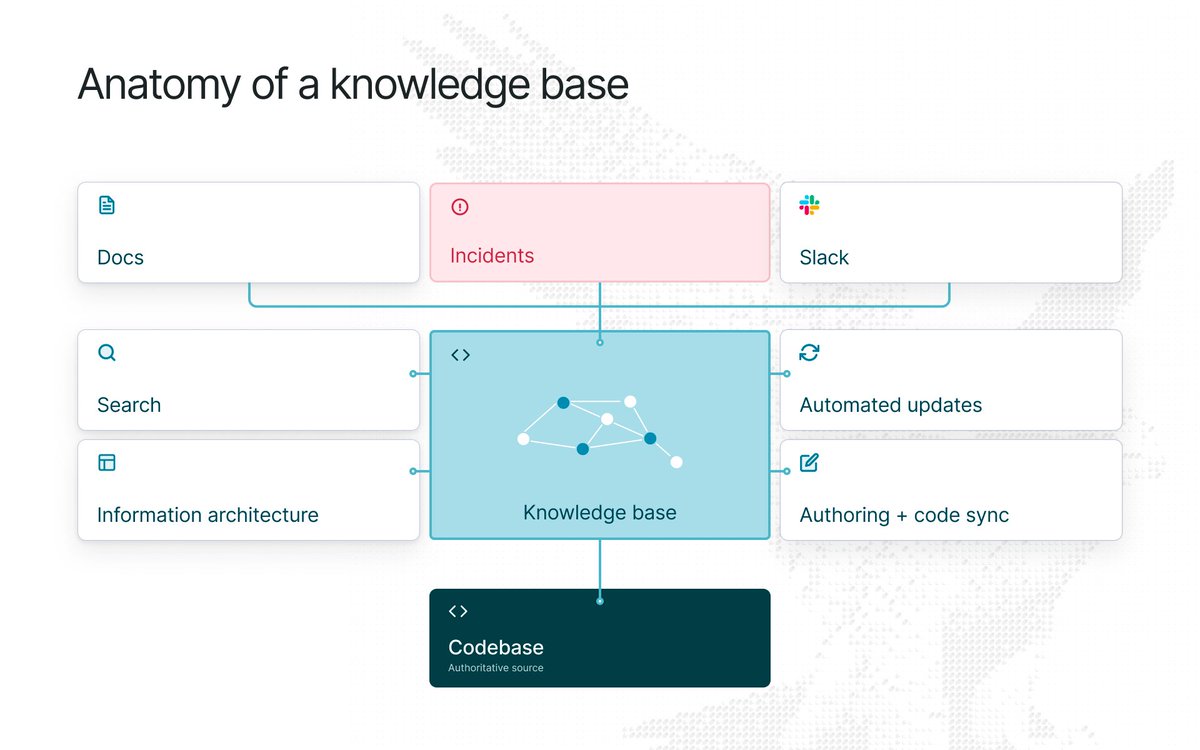
Cerebras 为其知识库选择了一组集中的数据源:代码、维基、事故、Slack。

这与当今流行的“照单全收”式方法相反,后者连接所有东西并称之为公司大脑。公司大脑的方法很诱人,因为你可以访问更多信息,但当信息相互冲突时,其质量会急剧下降。

最好的方法是构建一个强大的知识图谱,围绕你最可靠、最权威的来源构建:代码库。代码是结构化的、经过测试的和版本控制的。LLM 喜欢这种上下文,知识图谱更是以此为食。基准测试证明了这一点。

从那里开始,沿着来源的阶梯向上移动。文档通常缺乏维护,且不像代码那样经过组织或测试。

Slack 通常是最受欢迎的来源,但也是最嘈杂和最短暂的。Cerebras 理所当然地考虑了周围的对话来收集上下文。但关于 Slack,有两件重要的事情 Cerebras 没有说。

首先,知识通常被困在私信(DM)中,并分散在 Agent 无法访问的频道中。其次,Cerebras 将提炼的知识块存储在数据库中,但这并不是人类可以浏览、编辑和维护的界面。来自 Slack 的重要信息应该进入文档,因为它是人类和 Agent 最好的协作界面。

重新思考搜索

如果没人能找到,再好的知识也是无用的。Google 每天有数十亿次查询可供学习。但传统的搜索技术在组织内部不起作用,因为数据集很小。一个极受欢迎的公司页面或搜索查询一周内可能只有几百次点击。你无法像 Google 那样仅凭使用情况来优化搜索,因为信号并不存在。

但工程师确实会不断提出相似的问题,因此组织内的查询流行度遵循幂律分布。你可以根据公司优先级看到大部分搜索主题:发布计划、目标、路线图、OKR、事故。如果你跟踪流行度,你可以提高 80-90% 搜索的结果和回答质量。

有一个简单而强大的原则可以带来出色的搜索:当你精心策划底层知识时,你会得到更好的结果。删除旧的过时内容,合并冲突的来源,并更新文档。

将文档作为可靠来源

Cerebras 没有花太多时间谈论他们的文档,根据他们的图表,这是一个为管道提供数据的 Confluence 维基。然而,文档是王道!文档是协作想法、架构系统、收集历史以及定义公司未来的地方。文档中的反向链接讲述了相互关联的故事,并且日益成为 Agent 发布其编码会话工件和记忆的地方。机会在于将文档视为一等公民数据,具有归属、版本控制、引用和准确性。

文档应该是一个权威来源,而不是知识垃圾场。

信息架构

信息架构塑造了用户和 Agent 的浏览体验。如果你的信息是有组织的,就更容易找到和贡献。它就像你公司的目录。

知识图谱优于项目

Cerebras 按项目划分结果范围,这是一个好的开始,但对于成长中的公司来说,项目过于流动,无法作为依赖的范围。项目不断被启动、更改和弃用。一个好的知识图谱通过创建相关团队、文档和任务的集群,动态地取代项目。

自动化更新

没有自动化维护的知识注定会失败。想象一下你的代码库没有测试、审查、文件系统、版本控制和监控。如果某件事值得写下来,就值得保持更新。但没有合适的工具,这是不可能做到的。当 Stripe 达到 10,000 人时,我们有 500,000 份文档。管理所有这些知识需要复杂的工具。

扫描文档以查找过时信息,并在代码更改时自动进行更新,是唯一可扩展的方法。

投资于创作体验

良好的创作体验是让工程师捕获知识的关键。有些工程师喜欢像写代码一样写文档,这对 Agent 来说也很棒。有些工程师喜欢在 UI 中编写,这对于简单性和协作来说非常理想。

这就是为什么支持这两种用例是实践中唯一可行的方法。但是你需要双向同步,这样你就可以在 UI 中编辑文档,并将更改同步回仓库。这样,你的 Agent 就可以在仓库中疯狂地编写文档,并同步回人类可读的 UI。

III. 推出知识库

https://pmc.ncbi.nlm.nih.gov/articles/PMC8103230/#:~:text='Dunbar's%20number'%20is%20the%20notion,other%20individuals%20in%20the%20group

Cerebras 的员工每天提出 15,000 个问题,大约每人 15 个问题。有趣的是他们选择用来阐述问题的问题列表。这些是我们早在拥有 AI 之前就都在纠结的问题:

  • 我在哪里可以找到 X?

  • 谁负责 Y?

  • Z 是什么?

你也可以将这些添加到列表中:

  • 我们决定了什么?

  • 谁做的决定?

  • 我们为什么做这个决定?

这些问题变得越来越难以回答,因为代码库越来越大,而且对生成的代码的理解越来越少。没有人愿意放慢脚步并少构建东西,但我们所能做的是提高对系统和组织的理解

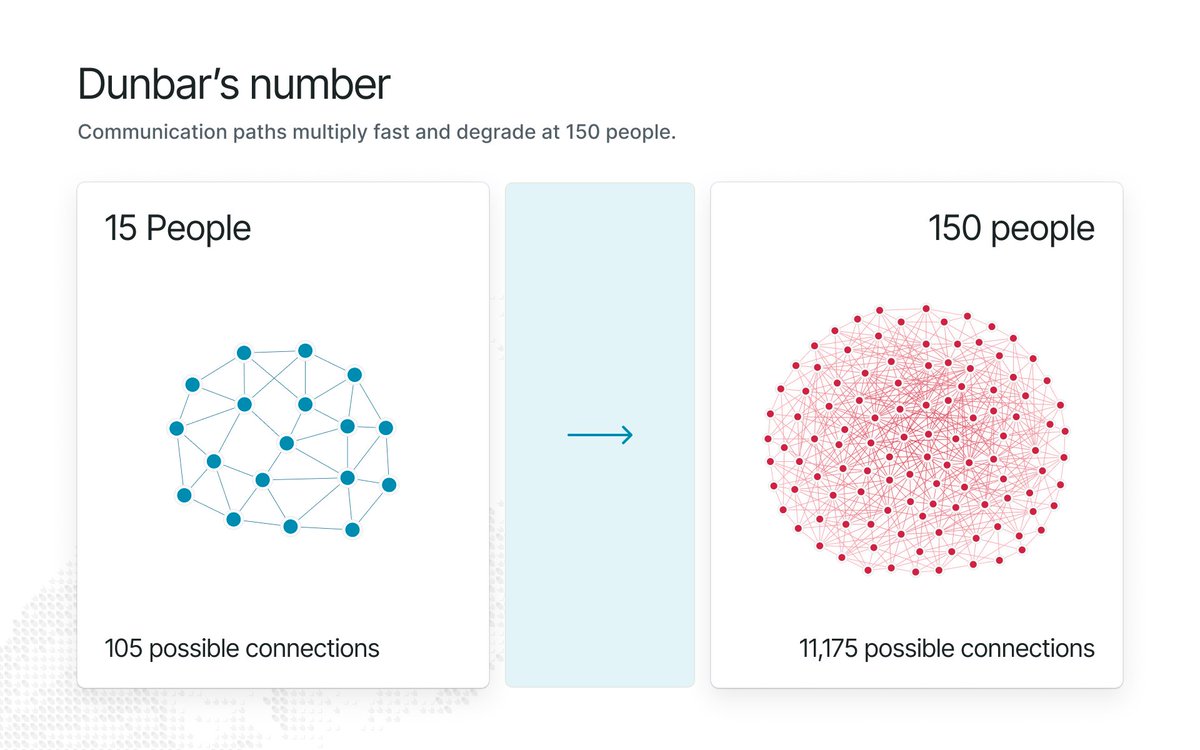
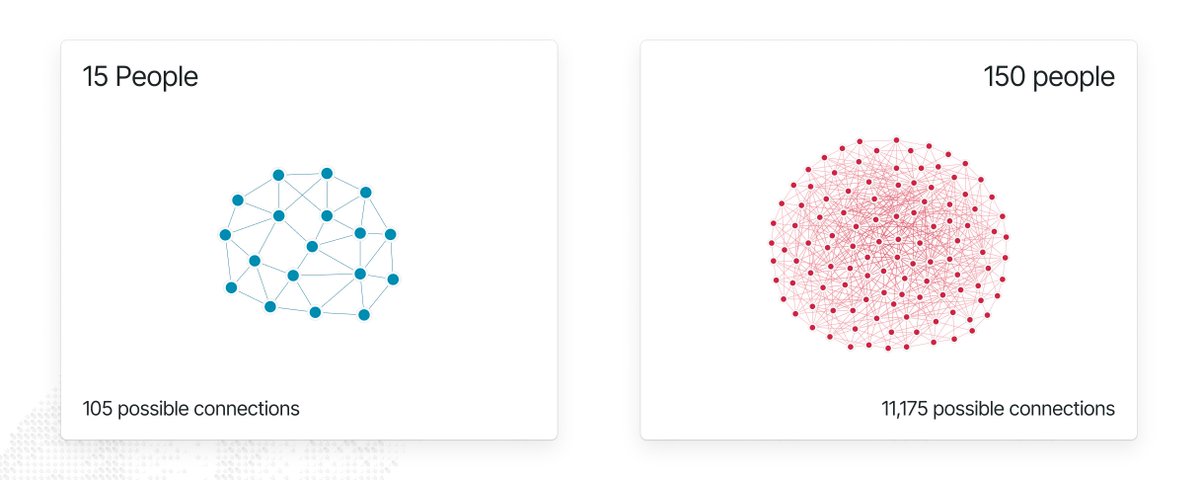
有一个组织数值,就像时钟一样精准,糟糕知识库的痛苦开始变得难以忍受:邓巴数。你脑海中大约能容纳 150 个稳定的关系,而在 150 人左右时,组织就开始不知道谁在做什么。我一次又一次地目睹这种情况发生,无一例外。

https://x.com/cerebras/status/2077822555159945507?s=20

建立问责制

与公司的大部分部门不同,知识库的所有者要么不存在,要么权力被剥夺,要么缺乏合适的工具。

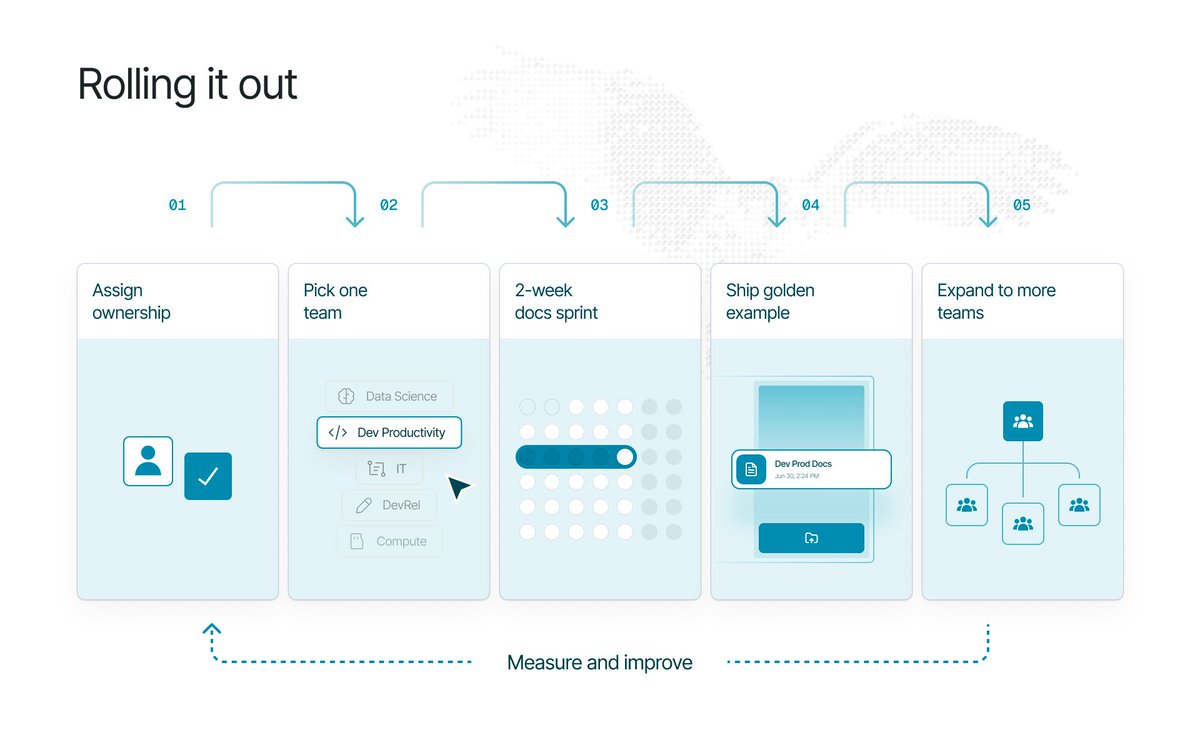
为整个知识库指定一名 DRI(直接负责人),并确保各个团队拥有自己的部分。

这就是为什么我们相信“文档所有者”这一概念。此人查看并批准对其文档的自动更新,可以看到跨文档的问题,并且当他们更换团队或离开公司时,他们的文档会被分配给新的所有者。

采用分阶段方法

Cerebras 允许团队构建连接到知识库的连接器。这意味着新的知识库可以在不等待每个团队迁移的情况下启动。但这些团队承担着自己的维护负担,这成为以后迁移到核心系统的动力。

对于大多数公司,我建议从更小的范围开始。从一个关键任务团队开始,彻底改革他们的文档。将其时间框定为一个两周的冲刺。有了正确的方法,生成的文档与其他团队的文档相比会有天壤之别。然后每个人都会效仿,有一个黄金榜样可以遵循。

“圣杯”触手可及

投资知识库会创造一个自我强化的飞轮。客户更快地获得功能和修复。管理者从团队中获得更高的生产力。IC(独立贡献者)被阻碍的频率降低。

Cerebras 提到了“单一事实来源”的圣杯,但表示这在实践中很少奏效。

事情在不断变化。人们不会通过不适合他们工作方式的界面进行贡献。工程师希望在 PR 评论中留下反馈,PM 希望在 Google Doc 中评论,经理在 Slack 中发出反馈。如果你让贡献变得痛苦,人们就会停止贡献。

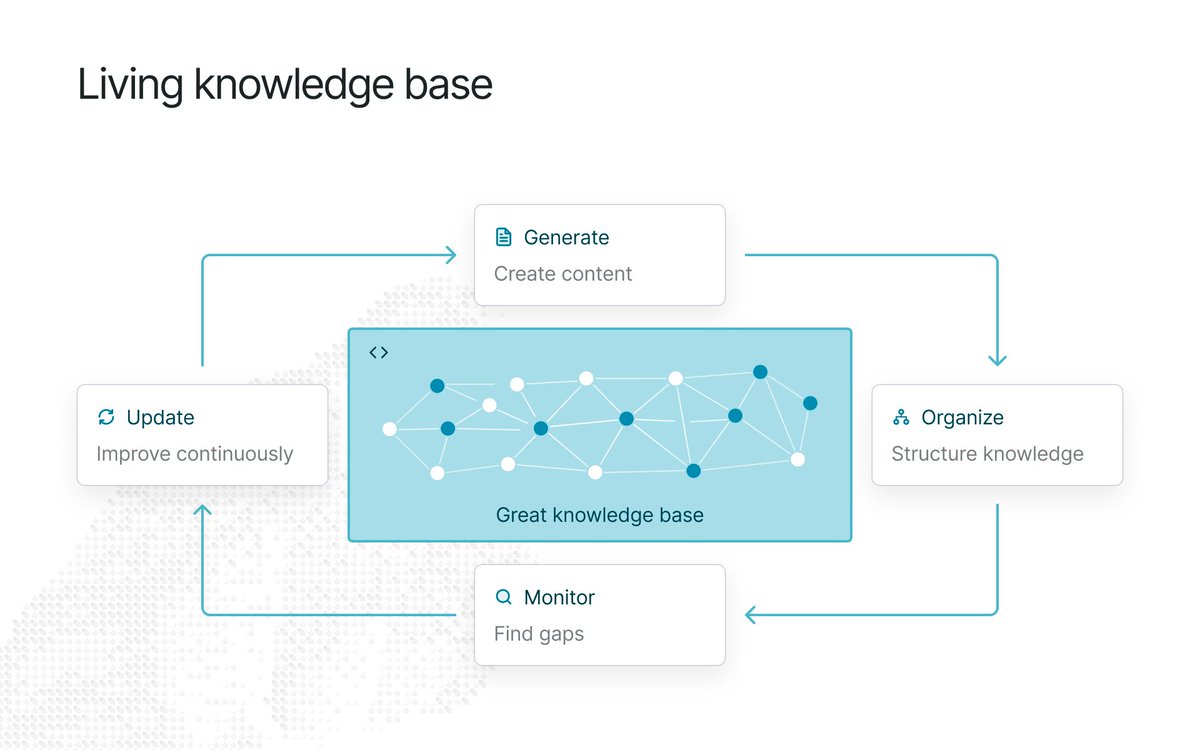
这就是为什么你需要一个能够支持活知识系统所有部分的系统:

  • 生成文档

  • 组织文档

  • 监控文档

  • 更新文档

需要做出的重要权衡是提供负责收集、连接和维护所有知识的中央系统。Falconer 提供了开箱即用的圣杯,人类和 Agent 可以在一个地方进行贡献消费。我们在这里相信和讨论的一切都内置在 Falconer 平台中,允许每个团队利用他们最重要的资产:他们的知识。

Communication is painful for every organization, and there's even a numerical threshold where it immediately starts to break down. Whether you call it a knowledge base, a company brain, or a wiki, you should build a knowledge loop to kill the pain. http://x.com/i/article/2082982852086661120
沟通对每个组织来说都是痛苦的,甚至存在一个数值阈值,一旦超过就会立即崩溃。无论你称之为知识库、公司大脑还是维基,你都应该构建一个知识闭环来消除这种痛苦。http://x.com/i/article/2082982852086661120

An internal knowledge base holds the IP, secrets, and tribal knowledge that makes up a company’s DNA. So why do knowledge bases usually suck?

内部知识库承载着构成公司 DNA 的知识产权(IP)、机密和部落知识。那么,为什么知识库通常都很糟糕?

@cerebras published an excellent post on how they built their internal knowledge base. It garnered 2.5M views in its first week, which is more than double the views of @AnthropicAI's post on the history of Claude Code a week earlier.

@cerebras 发布了一篇关于他们如何构建内部知识库的优秀文章。该文章在第一周内获得了 250 万次浏览,是一周前 @AnthropicAI 关于 Claude Code 历史的文章浏览量的两倍多。

Despite the power of AI at our disposal, the average knowledge base is more of a trash fire than ever. Yesterday’s knowledge tools are not built for today’s workflows.

尽管我们拥有强大的 AI 能力,但普通知识库比以往任何时候都更像是一场灾难。昨天的知识工具并非为今天的工作流而构建。

I led knowledge management at Stripe and Uber through their hypergrowth phases. I’ve seen how a great knowledge base leads to faster onboarding, greater productivity, higher retention.

我曾在 Stripe 和 Uber 的超高速增长阶段领导知识管理工作。我亲眼见证了一个优秀的知识库如何带来更快的入职速度、更高的生产力和更高的留存率。

In this post, I’ll explain:

在这篇文章中,我将解释:

  • why most knowledge bases suck
  • 为什么大多数知识库都很糟糕
  • the anatomy of a great knowledge base
  • 优秀知识库的剖析
  • how to roll one out
  • 如何推出一个知识库

I. Why most knowledge bases suck

I. 为什么大多数知识库都很糟糕

The number one problem with knowledge bases is that there’s no ownership. Without accountability, everything decays.

知识库的头号问题是缺乏归属权。没有问责制,一切都会衰减。

Secondly, they’re hidden. You can reverse-engineer Stripe’s world-class documentation or study Vercel’s beautiful frontend design because they’re public. You can’t tour another company’s internal knowledge base.

其次,它们是隐藏的。你可以逆向工程 Stripe 世界级的文档,或者研究 Vercel 精美的前端设计,因为它们是公开的。但你无法参观另一家公司的内部知识库。

There are three common failure modes within a knowledge base:

知识库内部存在三种常见的失效模式:

  • There’s no information on the topic.
  • 关于该主题没有信息。
  • There’s missing or outdated information.
  • 信息缺失或过时。
  • There are conflicting pieces of information.
  • 存在相互冲突的信息。

Your knowledge base might suck if:

如果出现以下情况,你的知识库可能很糟糕:

  • information is scattered and out of date
  • 信息分散且过时
  • your agents aren’t getting the right context
  • 你的 Agent 没有获得正确的上下文
  • many of your questions are still answered by teammates
  • 你的许多问题仍然由队友回答

Like any engineering problem, you should measure the state of your knowledge base to see where the issues are and how you’re improving over time.

像任何工程问题一样,你应该衡量知识库的状态,查看问题所在以及你如何随时间改进。

Every hard problem needs to start with a quick dopamine hit to hook people into solving it. The best engineers are typically masochists, so they get a dopamine hit from seeing the problems through data.

每一个难题都需要从快速的多巴胺刺激开始,以吸引人们去解决它。最优秀的工程师通常是“自虐狂”,所以他们从通过数据看到问题中获得多巴胺刺激。

This is why Falconer built the first knowledge observability tool, Knowledge Health, to solve this exact problem.
这就是为什么 Falconer 构建了第一个知识可观测性工具——Knowledge Health,来解决这个确切的问题。

II. The anatomy of a great knowledge base

II. 优秀知识库的剖析

Start with the codebase

从代码库开始

Cerebras picked a focused set of data sources for their knowledge base: code, wiki, incidents, Slack.

Cerebras 为其知识库选择了一组集中的数据源:代码、维基、事故、Slack。

This is counter to today’s popular kitchen-sink approach of connecting everything and calling it a company brain. The company brain approach is alluring because you get access to more information, but the quality of that information drops drastically when it conflicts with itself.

这与当今流行的“照单全收”式方法相反,后者连接所有东西并称之为公司大脑。公司大脑的方法很诱人,因为你可以访问更多信息,但当信息相互冲突时,其质量会急剧下降。

The best approach is a strong knowledge graph, architected around your most reliable, authoritative source: the codebase. Code is structured, tested, and versioned. LLMs love this context and knowledge graphs feast on it. The proof is in the benchmarks.

最好的方法是构建一个强大的知识图谱,围绕你最可靠、最权威的来源构建:代码库。代码是结构化的、经过测试的和版本控制的。LLM 喜欢这种上下文,知识图谱更是以此为食。基准测试证明了这一点。

From there, move up the ladder of sources. Documentation is often unmaintained and not organized or tested the way code is.

从那里开始,沿着来源的阶梯向上移动。文档通常缺乏维护,且不像代码那样经过组织或测试。

Slack is typically the most popular source, but also the noisiest and most ephemeral. Cerebras rightfully takes into account the surrounding conversation to gather context. But there are two important things Cerebras doesn’t say about Slack.

Slack 通常是最受欢迎的来源,但也是最嘈杂和最短暂的。Cerebras 理所当然地考虑了周围的对话来收集上下文。但关于 Slack,有两件重要的事情 Cerebras 没有说。

First, knowledge typically gets trapped in DMs and scattered across channels which agents can’t access. Second, Cerebras stores distilled knowledge chunks in a database, but that isn’t a surface humans can browse, edit, and maintain. Important information from Slack should make its way to documents, since it’s the best collaboration surface for humans and agents.

首先,知识通常被困在私信(DM)中,并分散在 Agent 无法访问的频道中。其次,Cerebras 将提炼的知识块存储在数据库中,但这并不是人类可以浏览、编辑和维护的界面。来自 Slack 的重要信息应该进入文档,因为它是人类和 Agent 最好的协作界面。

Re-think search

重新思考搜索

Great knowledge is useless if no one can find it. Google has billions of queries per day to learn from. But traditional search techniques don’t work within organizations, because the data sets are small. A wildly popular company page or search query might get a couple hundred hits in a week. You cannot optimize search just from usage the way Google can, because the signal isn’t there.

如果没人能找到,再好的知识也是无用的。Google 每天有数十亿次查询可供学习。但传统的搜索技术在组织内部不起作用,因为数据集很小。一个极受欢迎的公司页面或搜索查询一周内可能只有几百次点击。你无法像 Google 那样仅凭使用情况来优化搜索,因为信号并不存在。

But engineers do constantly ask questions that rhyme, so query popularity within an org follows a power law. You can see the bulk of search topics based on company priorities: release plans, goals, roadmaps, OKRs, incidents. If you track popularity, you can bolster results and answer quality for 80-90% of searches.

但工程师确实会不断提出相似的问题,因此组织内的查询流行度遵循幂律分布。你可以根据公司优先级看到大部分搜索主题:发布计划、目标、路线图、OKR、事故。如果你跟踪流行度,你可以提高 80-90% 搜索的结果和回答质量。

There’s a simple, yet powerful principle that leads to great search: when you curate the underlying knowledge, you get much better results. Delete old cruft, consolidate conflicting sources, and update the docs.

有一个简单而强大的原则可以带来出色的搜索:当你精心策划底层知识时,你会得到更好的结果。删除旧的过时内容,合并冲突的来源,并更新文档。

Use documents as a reliable source

将文档作为可靠来源

Cerebras doesn’t spend much time talking about their docs, which according to their graphic is a Confluence wiki feeding the pipeline. However, documents are king! Documents are where ideas are collaborated on, systems are architected, history is gathered, and where the company’s future is defined. Backlinks in docs tell the story of interconnectedness, and are increasingly where agents publish their artifacts and memories from coding sessions. The opportunity is to treat documents as first-class data, with attribution, version control, citations, and accuracy.

Cerebras 没有花太多时间谈论他们的文档,根据他们的图表,这是一个为管道提供数据的 Confluence 维基。然而,文档是王道!文档是协作想法、架构系统、收集历史以及定义公司未来的地方。文档中的反向链接讲述了相互关联的故事,并且日益成为 Agent 发布其编码会话工件和记忆的地方。机会在于将文档视为一等公民数据,具有归属、版本控制、引用和准确性。

Documentation should be an authoritative source, rather than a knowledge landfill.

文档应该是一个权威来源,而不是知识垃圾场。

Information architecture

信息架构

Information architecture shapes the browsing experience for users and agents. If your information is organized, it’s easier to find and contribute to. It’s like the table of contents for your company.

信息架构塑造了用户和 Agent 的浏览体验。如果你的信息是有组织的,就更容易找到和贡献。它就像你公司的目录。

Knowledge graph over projects

知识图谱优于项目

Cerebras scopes results by project, which is a good start, but projects within growing companies are too fluid to depend on as a scope. Projects are constantly being launched, changed, and deprecated. A good knowledge graph supersedes projects dynamically by creating clusters of related teams, documents, and tasks.

Cerebras 按项目划分结果范围,这是一个好的开始,但对于成长中的公司来说,项目过于流动,无法作为依赖的范围。项目不断被启动、更改和弃用。一个好的知识图谱通过创建相关团队、文档和任务的集群,动态地取代项目。

Automate updates

自动化更新

Knowledge without automated maintenance is doomed to fail. Imagine your codebase without tests, reviews, a filesystem, version control, and monitoring. If something is worth writing down, it’s worth keeping up to date. But it’s impossible to do this without the right tools. When Stripe hit 10,000 people, we had 500,000 documents. It takes sophisticated tools to manage all this knowledge.

没有自动化维护的知识注定会失败。想象一下你的代码库没有测试、审查、文件系统、版本控制和监控。如果某件事值得写下来,就值得保持更新。但没有合适的工具,这是不可能做到的。当 Stripe 达到 10,000 人时,我们有 500,000 份文档。管理所有这些知识需要复杂的工具。

Scanning your documents for outdated information and automatically making updates when code changes is the only approach that scales.

扫描文档以查找过时信息,并在代码更改时自动进行更新,是唯一可扩展的方法。

Invest in the authoring experience

投资于创作体验

A good authoring experience is the key to getting engineers to capture knowledge. Some engineers like writing docs as code, which is also great for agents. Some engineers like to write in a UI, which is ideal for simplicity and collaboration.

良好的创作体验是让工程师捕获知识的关键。有些工程师喜欢像写代码一样写文档,这对 Agent 来说也很棒。有些工程师喜欢在 UI 中编写,这对于简单性和协作来说非常理想。

This is why supporting both use cases is the only approach that works in practice. But you need a two-way sync so you can edit documents in the UI with changes synced back to a repo. This way your agent can go nuts documenting in the repo, and they get synced back to a human-readable UI.

这就是为什么支持这两种用例是实践中唯一可行的方法。但是你需要双向同步,这样你就可以在 UI 中编辑文档,并将更改同步回仓库。这样,你的 Agent 就可以在仓库中疯狂地编写文档,并同步回人类可读的 UI。

III. Rolling it out

III. 推出知识库

Cerebras employees ask 15,000 questions a day, which is about 15 questions per person. What’s interesting is the list of questions they chose to illustrate the problem. These are questions that we all struggled with long before having access to AI:

Cerebras 的员工每天提出 15,000 个问题,大约每人 15 个问题。有趣的是他们选择用来阐述问题的问题列表。这些是我们早在拥有 AI 之前就都在纠结的问题:

  • Where do I find X?
  • 我在哪里可以找到 X?
  • Who owns Y?
  • 谁负责 Y?
  • What is Z?
  • Z 是什么?

You can also add these to the list:

你也可以将这些添加到列表中:

  • What did we decide?
  • 我们决定了什么?
  • Who made the decision?
  • 谁做的决定?
  • Why did we decide this?
  • 我们为什么做这个决定?

These questions are getting even harder to answer because codebases are growing larger and there’s less understanding of the code being generated. No one wants to slow down and build less, but what we can do is improve our understanding of our systems and organizations.

这些问题变得越来越难以回答,因为代码库越来越大,而且对生成的代码的理解越来越少。没有人愿意放慢脚步并少构建东西,但我们所能做的是提高对系统和组织的理解

There’s an organizational number when, like clockwork, the pain of a poor knowledge base starts to become unbearable: Dunbar’s number. You can hold about 150 stable relationships in your head, and right around 150 people is when an org stops knowing who’s working on what. I’ve watched it happen over and over without fail.

有一个组织数值,就像时钟一样精准,糟糕知识库的痛苦开始变得难以忍受:邓巴数。你脑海中大约能容纳 150 个稳定的关系,而在 150 人左右时,组织就开始不知道谁在做什么。我一次又一次地目睹这种情况发生,无一例外。

Create accountability

建立问责制

Unlike most parts of a company, knowledge base owners are non-existent, disempowered, or lacking the right tools.

与公司的大部分部门不同,知识库的所有者要么不存在,要么权力被剥夺,要么缺乏合适的工具。

Give the overall knowledge base a DRI, and ensure individual teams own their sections.

为整个知识库指定一名 DRI(直接负责人),并确保各个团队拥有自己的部分。

This is why we believe in the concept of “document owner.” This person sees and approves auto-updates to their documents, can see the issues across documents, and when they change teams or leave the company, their documents get assigned to new owners.

这就是为什么我们相信“文档所有者”这一概念。此人查看并批准对其文档的自动更新,可以看到跨文档的问题,并且当他们更换团队或离开公司时,他们的文档会被分配给新的所有者。

Use a phased approach

采用分阶段方法

Cerebras allows teams to build connectors to the knowledge base. That means the new knowledge base could launch without waiting for every team to migrate. But those teams carry their own maintenance burden, which becomes motivation to migrate to the core system later.

Cerebras 允许团队构建连接到知识库的连接器。这意味着新的知识库可以在不等待每个团队迁移的情况下启动。但这些团队承担着自己的维护负担,这成为以后迁移到核心系统的动力。

For most companies, I recommend starting even smaller. Start with one mission-critical team and overhaul their docs. Timebox it to a two-week sprint. With the right approach, the resulting docs will feel like night and day in comparison to other teams’ docs. Then everyone will follow suit with a golden example to follow.

对于大多数公司,我建议从更小的范围开始。从一个关键任务团队开始,彻底改革他们的文档。将其时间框定为一个两周的冲刺。有了正确的方法,生成的文档与其他团队的文档相比会有天壤之别。然后每个人都会效仿,有一个黄金榜样可以遵循。

The Holy Grail is within reach

“圣杯”触手可及

Investing in a knowledge base creates a self-reinforcing flywheel. Customers get features and fixes faster. Managers get more productivity out of their teams. ICs are blocked less often.

投资知识库会创造一个自我强化的飞轮。客户更快地获得功能和修复。管理者从团队中获得更高的生产力。IC(独立贡献者)被阻碍的频率降低。

Cerebras references the Holy Grail of a “single source of truth,” but says it rarely works in practice.

Cerebras 提到了“单一事实来源”的圣杯,但表示这在实践中很少奏效。

Things change constantly. People won’t contribute through a surface that doesn’t fit how they work. Engineers want to leave feedback in PR comments, PMs want to comment in a Google Doc, managers dish out feedback in Slack. If you make contribution painful, people will stop contributing.

事情在不断变化。人们不会通过不适合他们工作方式的界面进行贡献。工程师希望在 PR 评论中留下反馈,PM 希望在 Google Doc 中评论,经理在 Slack 中发出反馈。如果你让贡献变得痛苦,人们就会停止贡献。

This is why you need a system that can support all the pieces for a living knowledge system:

这就是为什么你需要一个能够支持活知识系统所有部分的系统:

  • Generate the docs
  • 生成文档
  • Organize the docs
  • 组织文档
  • Monitor the docs
  • 监控文档
  • Update the docs
  • 更新文档

The important tradeoff to make is providing the central system responsible for collecting, connecting, and maintaining all the knowledge. Falconer offers the Holy Grail out of the box, where there’s one place for humans and agents to contribute and consume. Everything we believe and discuss here is built into the Falconer platform to allow every team to leverage their most important asset: their knowledge.

需要做出的重要权衡是提供负责收集、连接和维护所有知识的中央系统。Falconer 提供了开箱即用的圣杯,人类和 Agent 可以在一个地方进行贡献消费。我们在这里相信和讨论的一切都内置在 Falconer 平台中,允许每个团队利用他们最重要的资产:他们的知识。

Communication is painful for every organization, and there's even a numerical threshold where it immediately starts to break down. Whether you call it a knowledge base, a company brain, or a wiki, you should build a knowledge loop to kill the pain. http://x.com/i/article/2082982852086661120

An internal knowledge base holds the IP, secrets, and tribal knowledge that makes up a company’s DNA. So why do knowledge bases usually suck?

@cerebras published an excellent post on how they built their internal knowledge base. It garnered 2.5M views in its first week, which is more than double the views of @AnthropicAI's post on the history of Claude Code a week earlier.

Despite the power of AI at our disposal, the average knowledge base is more of a trash fire than ever. Yesterday’s knowledge tools are not built for today’s workflows.

I led knowledge management at Stripe and Uber through their hypergrowth phases. I’ve seen how a great knowledge base leads to faster onboarding, greater productivity, higher retention.

In this post, I’ll explain:

  • why most knowledge bases suck

  • the anatomy of a great knowledge base

  • how to roll one out

I. Why most knowledge bases suck

The number one problem with knowledge bases is that there’s no ownership. Without accountability, everything decays.

Secondly, they’re hidden. You can reverse-engineer Stripe’s world-class documentation or study Vercel’s beautiful frontend design because they’re public. You can’t tour another company’s internal knowledge base.

There are three common failure modes within a knowledge base:

  • There’s no information on the topic.

  • There’s missing or outdated information.

  • There are conflicting pieces of information.

Your knowledge base might suck if:

  • information is scattered and out of date

  • your agents aren’t getting the right context

  • many of your questions are still answered by teammates

Like any engineering problem, you should measure the state of your knowledge base to see where the issues are and how you’re improving over time.

Every hard problem needs to start with a quick dopamine hit to hook people into solving it. The best engineers are typically masochists, so they get a dopamine hit from seeing the problems through data.

This is why Falconer built the first knowledge observability tool, Knowledge Health, to solve this exact problem.

II. The anatomy of a great knowledge base
Start with the codebase

Cerebras picked a focused set of data sources for their knowledge base: code, wiki, incidents, Slack.

This is counter to today’s popular kitchen-sink approach of connecting everything and calling it a company brain. The company brain approach is alluring because you get access to more information, but the quality of that information drops drastically when it conflicts with itself.

The best approach is a strong knowledge graph, architected around your most reliable, authoritative source: the codebase. Code is structured, tested, and versioned. LLMs love this context and knowledge graphs feast on it. The proof is in the benchmarks.

From there, move up the ladder of sources. Documentation is often unmaintained and not organized or tested the way code is.

Slack is typically the most popular source, but also the noisiest and most ephemeral. Cerebras rightfully takes into account the surrounding conversation to gather context. But there are two important things Cerebras doesn’t say about Slack.

First, knowledge typically gets trapped in DMs and scattered across channels which agents can’t access. Second, Cerebras stores distilled knowledge chunks in a database, but that isn’t a surface humans can browse, edit, and maintain. Important information from Slack should make its way to documents, since it’s the best collaboration surface for humans and agents.

Re-think search

Great knowledge is useless if no one can find it. Google has billions of queries per day to learn from. But traditional search techniques don’t work within organizations, because the data sets are small. A wildly popular company page or search query might get a couple hundred hits in a week. You cannot optimize search just from usage the way Google can, because the signal isn’t there.

But engineers do constantly ask questions that rhyme, so query popularity within an org follows a power law. You can see the bulk of search topics based on company priorities: release plans, goals, roadmaps, OKRs, incidents. If you track popularity, you can bolster results and answer quality for 80-90% of searches.

There’s a simple, yet powerful principle that leads to great search: when you curate the underlying knowledge, you get much better results. Delete old cruft, consolidate conflicting sources, and update the docs.

Use documents as a reliable source

Cerebras doesn’t spend much time talking about their docs, which according to their graphic is a Confluence wiki feeding the pipeline. However, documents are king! Documents are where ideas are collaborated on, systems are architected, history is gathered, and where the company’s future is defined. Backlinks in docs tell the story of interconnectedness, and are increasingly where agents publish their artifacts and memories from coding sessions. The opportunity is to treat documents as first-class data, with attribution, version control, citations, and accuracy.

Documentation should be an authoritative source, rather than a knowledge landfill.

Information architecture

Information architecture shapes the browsing experience for users and agents. If your information is organized, it’s easier to find and contribute to. It’s like the table of contents for your company.

Knowledge graph over projects

Cerebras scopes results by project, which is a good start, but projects within growing companies are too fluid to depend on as a scope. Projects are constantly being launched, changed, and deprecated. A good knowledge graph supersedes projects dynamically by creating clusters of related teams, documents, and tasks.

Automate updates

Knowledge without automated maintenance is doomed to fail. Imagine your codebase without tests, reviews, a filesystem, version control, and monitoring. If something is worth writing down, it’s worth keeping up to date. But it’s impossible to do this without the right tools. When Stripe hit 10,000 people, we had 500,000 documents. It takes sophisticated tools to manage all this knowledge.

Scanning your documents for outdated information and automatically making updates when code changes is the only approach that scales.

Invest in the authoring experience

A good authoring experience is the key to getting engineers to capture knowledge. Some engineers like writing docs as code, which is also great for agents. Some engineers like to write in a UI, which is ideal for simplicity and collaboration.

This is why supporting both use cases is the only approach that works in practice. But you need a two-way sync so you can edit documents in the UI with changes synced back to a repo. This way your agent can go nuts documenting in the repo, and they get synced back to a human-readable UI.

III. Rolling it out

https://pmc.ncbi.nlm.nih.gov/articles/PMC8103230/#:~:text='Dunbar's%20number'%20is%20the%20notion,other%20individuals%20in%20the%20group

Cerebras employees ask 15,000 questions a day, which is about 15 questions per person. What’s interesting is the list of questions they chose to illustrate the problem. These are questions that we all struggled with long before having access to AI:

  • Where do I find X?

  • Who owns Y?

  • What is Z?

You can also add these to the list:

  • What did we decide?

  • Who made the decision?

  • Why did we decide this?

These questions are getting even harder to answer because codebases are growing larger and there’s less understanding of the code being generated. No one wants to slow down and build less, but what we can do is improve our understanding of our systems and organizations.

There’s an organizational number when, like clockwork, the pain of a poor knowledge base starts to become unbearable: Dunbar’s number. You can hold about 150 stable relationships in your head, and right around 150 people is when an org stops knowing who’s working on what. I’ve watched it happen over and over without fail.

https://x.com/cerebras/status/2077822555159945507?s=20

Create accountability

Unlike most parts of a company, knowledge base owners are non-existent, disempowered, or lacking the right tools.

Give the overall knowledge base a DRI, and ensure individual teams own their sections.

This is why we believe in the concept of “document owner.” This person sees and approves auto-updates to their documents, can see the issues across documents, and when they change teams or leave the company, their documents get assigned to new owners.

Use a phased approach

Cerebras allows teams to build connectors to the knowledge base. That means the new knowledge base could launch without waiting for every team to migrate. But those teams carry their own maintenance burden, which becomes motivation to migrate to the core system later.

For most companies, I recommend starting even smaller. Start with one mission-critical team and overhaul their docs. Timebox it to a two-week sprint. With the right approach, the resulting docs will feel like night and day in comparison to other teams’ docs. Then everyone will follow suit with a golden example to follow.

The Holy Grail is within reach

Investing in a knowledge base creates a self-reinforcing flywheel. Customers get features and fixes faster. Managers get more productivity out of their teams. ICs are blocked less often.

Cerebras references the Holy Grail of a “single source of truth,” but says it rarely works in practice.

Things change constantly. People won’t contribute through a surface that doesn’t fit how they work. Engineers want to leave feedback in PR comments, PMs want to comment in a Google Doc, managers dish out feedback in Slack. If you make contribution painful, people will stop contributing.

This is why you need a system that can support all the pieces for a living knowledge system:

  • Generate the docs

  • Organize the docs

  • Monitor the docs

  • Update the docs

The important tradeoff to make is providing the central system responsible for collecting, connecting, and maintaining all the knowledge. Falconer offers the Holy Grail out of the box, where there’s one place for humans and agents to contribute and consume. Everything we believe and discuss here is built into the Falconer platform to allow every team to leverage their most important asset: their knowledge.
📋 讨论归档

讨论进行中…