返回列表
🧠 阿头学 · 💬 讨论题

认知革命:心智外化的历史重演与加速阵痛

AI驱动的认知革命将复刻工业革命的宏观丰裕轨迹,但其压缩至五年的转型速度将击穿现有社会减震器,引发剧烈的结构性分配危机。
打开原文 ↗

2026-09-04 原文链接 ↗
阅读简报
双语对照
完整翻译
原文
讨论归档

核心观点

  • 成本暴跌激活长尾需求:认知成本趋零不会导致需求萎缩,而是遵循杰文斯悖论引爆过去因“思考太贵”被搁置的无限潜在需求。
  • 应用演进遵循“纺纱机到汽车”规律:当前AI编程仅是自动化单一技能的初级阶段,定义时代的终极应用尚未诞生。
  • 工作形态将瓦解工业时钟并重构人机分工:AI异步能力将强制工作节奏从“同步轮班”退回“任务驱动”,人类角色必须从执行者彻底转向监督者与责任承担者。
  • 短期阵痛源于速度错配而非技术本身:认知革命将“恩格斯停顿”压缩至五年,教育与社会安全网的滞后必然导致微观个体的剧烈淘汰。

跟我们的关联

  • 对 ATou 意味着个体必须从“知识生产者”转型为“意图定义与责任承担者”。下一步应建立AI辅助决策工作流,将重复性认知外包,聚焦于高杠杆的选择与信任背书。
  • 对 Neta 意味着传统“朝九晚五”的同步协作模式已失效,组织需转向异步任务编排。下一步应重构KPI考核体系,以“认知杠杆率”替代工时考核,并部署Agent监督系统。
  • 对 Uota 意味着产品竞争将从“功能平替”转向“长尾需求激活”。下一步需放弃在红海卷效率,转而寻找因思考成本过高而被搁置的垂直场景,用极轻资产吃下增量市场。

讨论引子

  • 当AI将“恩格斯停顿”压缩至五年时,现有的教育体系与社会保障网能否在物理上完成重构,还是必然引发一代人的结构性贫困?
  • 如果认知成本趋零,商业竞争的护城河是否会从“算力与算法垄断”彻底转移至“人类信任与责任承担能力”?
  • 在“机器起草条约、人类签字”的范式下,如何界定AI决策失误时的法律与伦理责任归属?

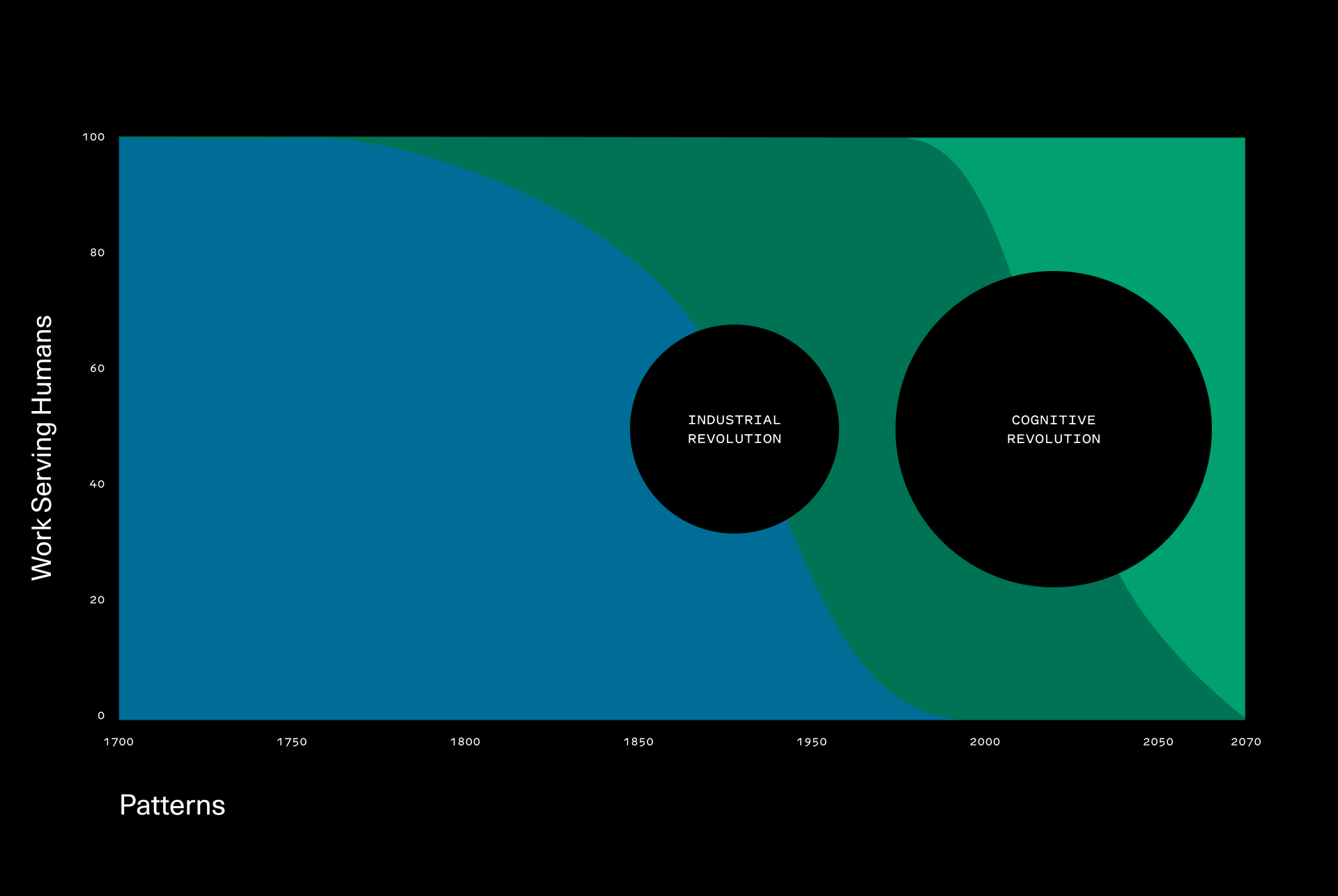
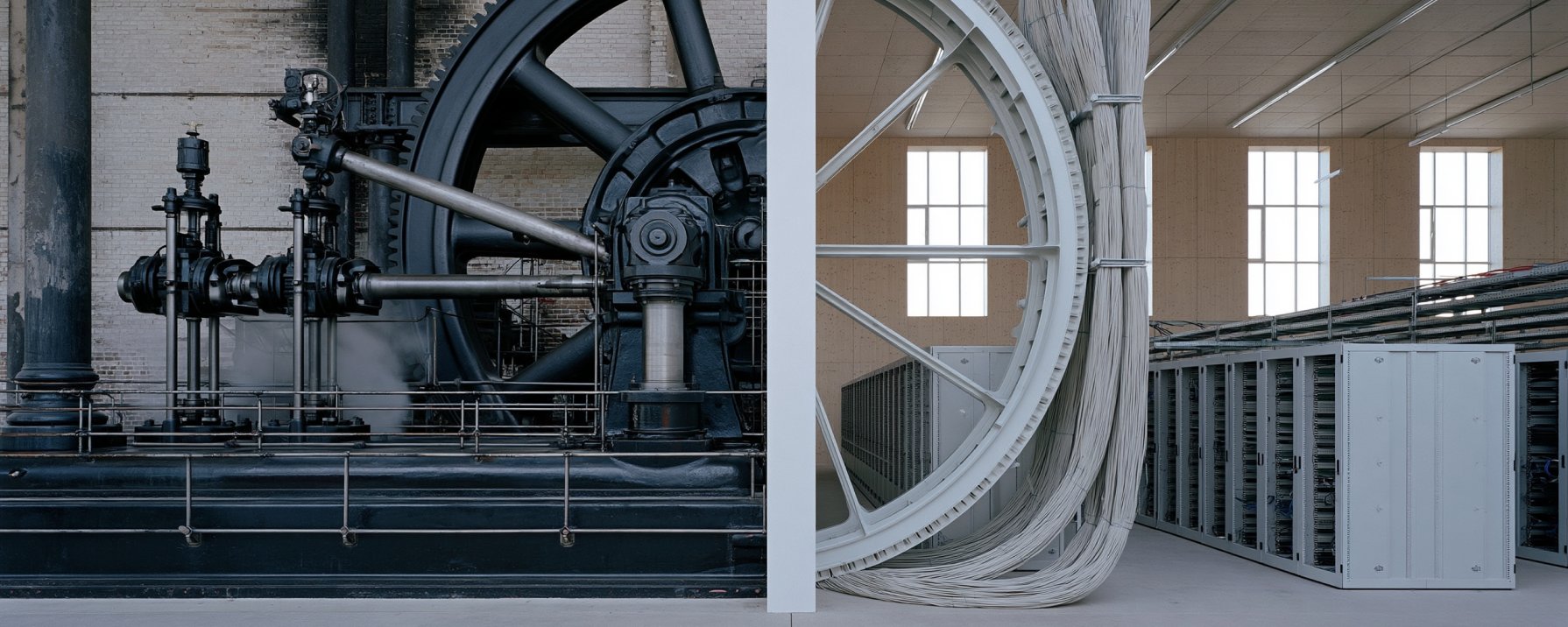
我们将肌肉力量外化,从而构建了现代世界。如今,我们正在将心智外化。 大多数早晨,我乘坐 Waymo 去上班。 这辆车正在完成体力工作(Physical Work):五千磅的金属与玻璃在 San Francisco Bay Area 穿梭。这辆车同时也在完成认知工作(Cognitive Work):读取路况并做出预测,其导致的严重伤害事故比人类驾驶员少了17倍。 这段体验无需我的肌肉出力,也无需我的心智参与。两者都已被外化。 这一次乘车浓缩了两场革命。体力革命已有200年历史。而认知革命才刚刚起步。 围绕这第二场革命的情绪,似乎是一杯由乐观、怀疑与焦虑调制而成的鸡尾酒。人们谈论着奇点(Singularity)、递归自我改进(Recursive Self-Improvement)、万亿美元级别的算力集群(Clusters)、超级智能(Superintelligence)、失业、社会动荡、大国竞赛。这一切令人目眩神迷。 我的观点远非如此令人目眩。我认为,我们已经经历过一场与未来几十年人工智能(AI)革命遥相呼应的转型:工业革命(Industrial Revolution)。

两种工作 我们可以将工作划分为体力工作与认知工作。大多数有价值的任务都需要两者兼备。 农业是最古老的例证之一。一万年来,耕作土地依靠的是肌肉力量,无论是人类的还是动物的。它同样需要洞察力:读懂季节更替、观察何种种子能带来何种收成,等等。 这两种工作截然不同。体力工作是力乘以距离:在空间中移动质量。认知工作则是思考。但两者都具有稀缺性,都有价格,并被应用于他人希望完成的任务中。在这两种情况下,一旦价格暴跌,供给便会汹涌而至。在大多数情况下,需求也会随之扩张以满足供给。

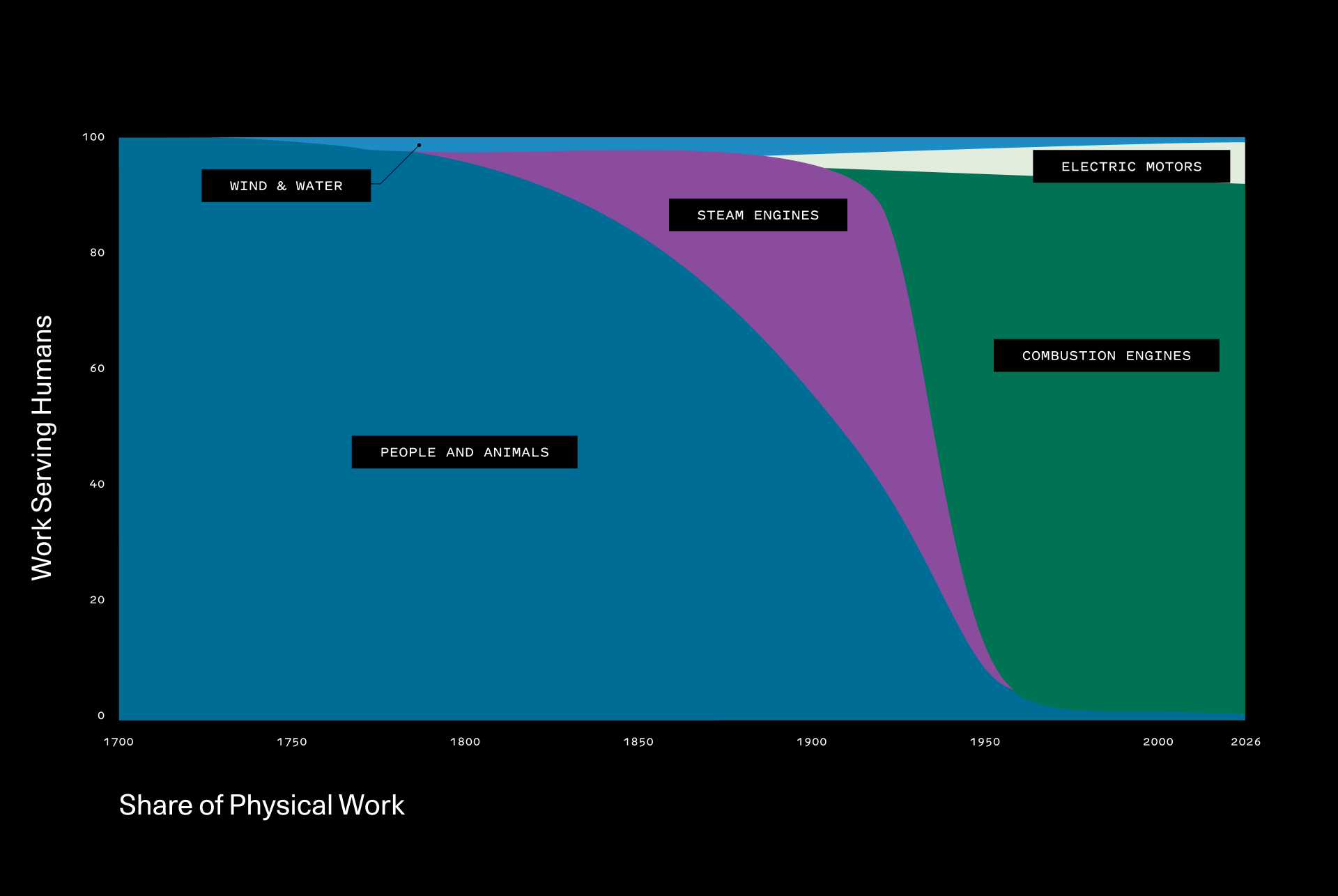
体力工作经历了什么 在人类历史的大部分时间里,几乎所有为人类完成的体力工作都依靠肌肉,无论是人类的还是动物的。上图在1700年之前是一条平线,而这条平线可以一直追溯到我们有记录的最早时期。 到了18世纪末和19世纪初,情况开始发生变化。先是蒸汽机,然后是内燃机和电动机。每一波浪潮都接管了更大份额的全球体力工作。在大约两个世纪的时间里,体力工作从99%依赖生物体转变为99.9%依赖机器。 如今,这些成果无处不在。你正在阅读这篇文章的屏幕。你身上穿的几乎每一件衣物。载你完成上一次旅行的飞机。现代生活中每一件普通产品背后由船舶、火车和卡车交织成的网络。在全球能源预算中,人类肌肉力量已是一个可以忽略不计的舍入误差。

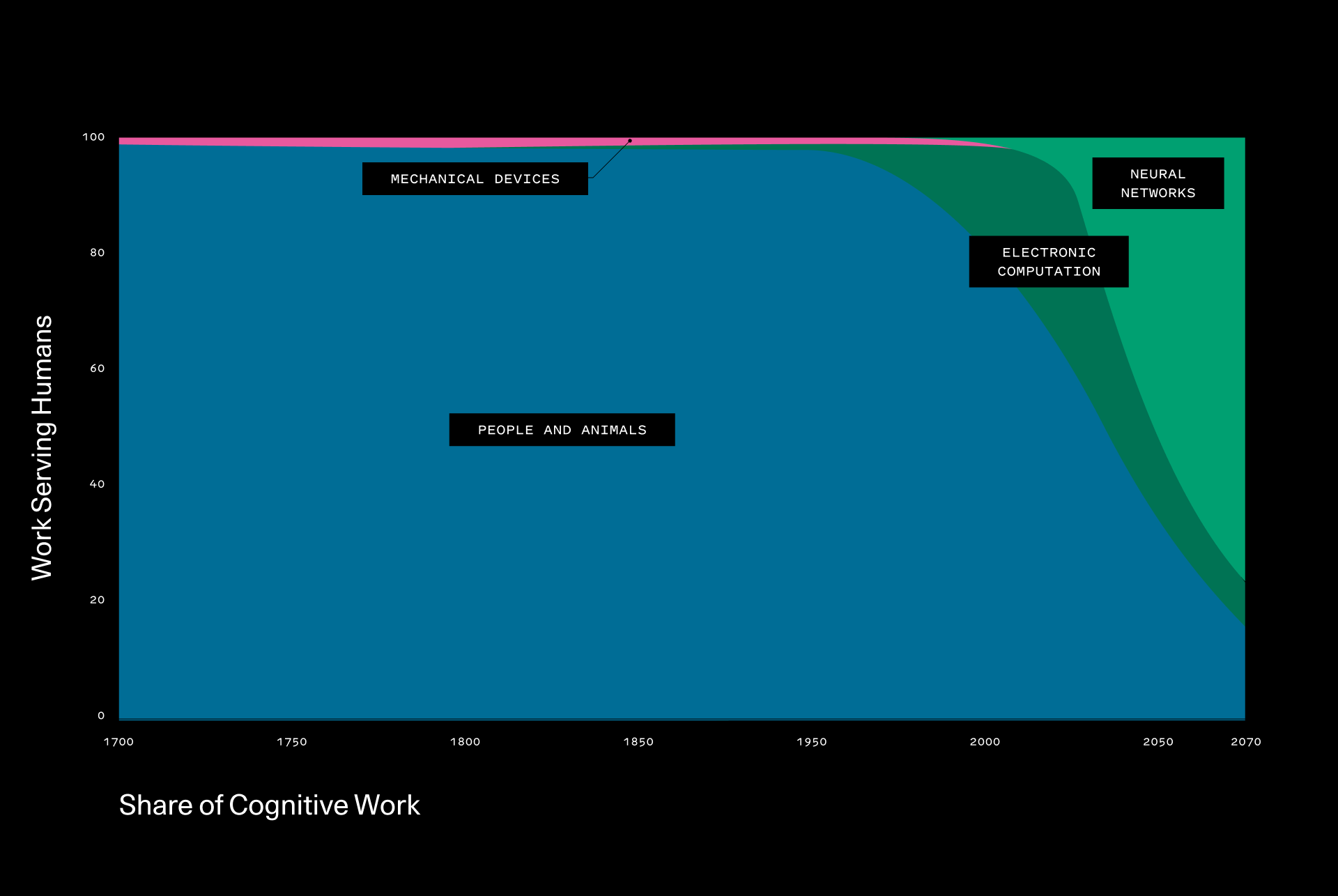
历史押韵:认知工作正在发生什么 在历史的大部分时间里,几乎所有的认知工作都由人类完成(外加牧羊犬等动物提供的一点辅助)。在此之上,仅有一层薄薄的机械辅助:能进行少量计算的工具,如钟表或 Pascal 的机械计算器。 随后,电子计算(Electronic Computation)时代来临。在一个世纪内,它从简单的计算和电子表格,扩展到每天24小时不间断运行数万亿乃至数千万亿次运算。为你规划通勤路线、处理工资单、计算保险费率……这些都是由机器完成的认知工作。 下一波浪潮是神经网络(Neural Networks)。这一浪潮极大地扩展了机器能够完成的认知工作类型。正如内燃机放大了工业革命的范围,神经网络也将加速认知革命(Cognitive Revolution)。 一个世纪前,99%的认知工作由人类完成。在不久的将来,99.9%将由机器完成。这并不是因为人类思考得少了,而是因为机器的计算量将呈指数级增长。 这两条曲线的平行关系极为鲜明。认知革命看起来将与工业革命非常相似。但它的规模将更大,速度将快得多。如果按工作性质划分全球经济,认知工作与体力工作可能会将约120万亿美元的全球经济大致平分。体力那一半已经经历了200年的机械化。而认知这一半才刚刚起步。 那么,这样一场革命究竟会发生什么?让我们回溯一下。

输入规模急剧扩大且成本骤降 工业时代需要大规模扩大输入型大宗商品:先是煤炭和铁,然后是石油和钢铁。铁是通过一种称为搅炼法(Puddling)的工艺制造的。钢则是通过贝塞麦炼钢法(Bessemer Process)制造的。 这种对应关系显而易见:电力与算力(Compute)。这里的“工艺”则是 Transformer 等算法。 这些组件的提供者是那个时代的巨头。Carnegie 和 U.S. Steel,Rockefeller 和 Standard Oil。以及 Henry Bessemer 这样的工艺设计者。现代的对等物则是 Jensen Huang 的 NVIDIA、Morris Chang 的 TSMC、Transformer 论文的作者、各大 Model Labs 的创始人,以及向数据中心投入数万亿美元的 Hyperscalers。曾经以炼油能力衡量国力的国家,未来将以电网容量和智能输出(Intelligence Output)来衡量。 1900年,一单位机械功的成本仅是1800年的一小部分。价格的暴跌使得大规模生产成为可能,也让这场革命变得普及,而不再是富人的新奇玩物。 认知成本的下降速度更快。每瓦特智能(Intelligence per Watt)的成本每年下降超过10倍。 随着价格下降,客户将疯狂地、近乎荒谬地购买更多的智能。

需求爆发以满足供给 1800年时,没有人飞往 Tokyo,没有人能在1月将草莓运过半个地球,也没有人给 Phoenix 安装空调。所有这些物理过程在当时要么不可能实现,要么成本高得令人望而却步。 一旦新技术被发明且价格暴跌,对体力工作的需求便呈爆炸式增长。William Jevons 在1865年指出了这一现象:更高效的发动机并没有减少英国的煤炭消耗,反而使其成倍增加。 认知工作也将遵循同样的模式,而这里的潜在需求在规模上几乎是无限的。地球上目前大多数问题都未被深入思考,因为思考的成本太高。医生时间有限,无法查阅最新文献。放射科医生花几分钟而不是几小时来研究扫描图像。小企业主没有预算聘请财务分析师。 当认知成本趋近于零时,每一个好奇心都能配备一支研究团队。 机器完成的思考量将呈数量级增长。这就引出了一个问题:所有这些思考将被用于何处?

应用时代 工业革命的最初应用是纺织。 纺纱和织布曾是技术活。纺织工人在社会中备受尊重:需要多年的学徒期、加入行会,且往往是家族世代相传的手艺。1764年,James Hargreaves 发明了 Spinning Jenny,使一人能同时纺八根线,后来达到八十根。服装价格迅速下跌,全球服装消费量呈爆炸式增长。 巨大的转变在于,人类从亲自执行任务转变为监督任务。一个人照看一台机器,其产量曾相当于一整屋的手工纺纱工。 这个时代最初的技术应用是 AI 编程(AI Coding)。编写软件是我们这个时代的精英手艺:技术门槛高、薪酬丰厚、需要十年才能精通。这也是第一个模式完全翻转的认知任务。如今机器完成了大部分工作,工程师的职责是指导、审查和修正。认知革命在此处率先获得商业牵引力(Commercial Traction),绝非偶然。 尽管纺织业拉开了工业革命的序幕,但它并未定义工业革命。工业革命的终极创新是汽车:围绕它生长出了一种文明,包括郊区、高速公路、供应链以及现代生活的整个地理格局。 编程智能体(Coding Agents)就是我们的 Spinning Jenny:第一幕,自动化一项需要技能的认知任务。而这场革命的汽车可能尚未被制造出来。它将是某种在思考资源稀缺时不可能存在的事物。 我的候选答案包括:以机器速度进行的科学研究、像幕僚长统筹 CEO 日程那样为你打理生活的个人智能体(Personal Agent),或是人类连接与协作方式的某种变革。在1800年,汽车也是难以预测的。

就业:焦虑所在之处 1800年,超过75%的美国劳动者在土地上耕作。机器接管了这项工作。如今,农业仅占美国就业的约1%。按照悲观者的算法,全国应该有超过74%的人失业。 相反,我们发明了1800年的农民根本无法命名的工作。放射科医生。软件工程师。播客制作人。空乘人员。机器并未终结劳动。它们消除了某些工作类别,并扩大了劳动总量。如今就业的人数比人类历史上任何时期都多,而且他们比祖先富裕得多。我所有的祖先在100年前都从事农业。我认识我的四位祖父母,他们都出生于农耕家庭。他们中没有人以务农终老。他们都认为晚年从事的非农工作,比家族世代从事的艰苦农活更舒适、更富足。 同样的趋势正在认知革命中成形。尽管 AI 编程领域出现了“Spinning Jenny”现象,但数据表明,对软件工程师(受 AI 影响最深的职业)的需求在加速攀升后已出现拐点(Inflection)。在接下来的几周,我们计划分享数据,支持 AI 正在转型的其他领域(包括法律服务和金融服务)招聘出现拐点的趋势。 机器完成认知工作并不意味着人类将停止认知工作,正如拖拉机并不意味着人类停止体力活动一样。具体的任务会发生改变。曾经手动构建模型的初级分析师,将转变为指挥上百个模型的人。此外,我们目前尚无法命名的工作类别将会增长,就像工业革命期间发动机发明后,“工程师”成为了一种职业一样。 与工业革命一样,宏观叙事将是胜利的。但微观个体的故事却往往并非如此。Lancashire 的手工织布工并未被重新培训为火车头工程师。他们中的许多人只是被淘汰了,这种失落感延续了一代人。经济史学家 Robert Allen 为这一时期命名:Engels' pause。1780年至1840年间,英国工人人均产出增长了46%。实际工资仅增长了12%。 Luddites 对他们自身生活的判断没有错,错的是对他们子孙后代的判断。1840年至1900年间,英国工人人均产出增长了90%,实际工资增长了123%。工资最终追上了生产力,并随后超越了它。 停顿(Pause)并非必然结局。Mark Zuckerberg 最近说得很好:“没有任何规则规定 AI 提升自动化的速度必须快于它提升个人能力或创造新技能需求的速度。”人类对新技能的需求,无论好坏,都将永无止境。 这一次的不同之处在于速度。工业革命给了一个农家子弟四十年的时间去成为工厂工人。而这场革命可能只给五年。社会的减震器,如教育、再培训和安全网,是为旧时代的时钟设计的。未来二十年的核心政策问题是:我们能否帮助人类以与工作变革同样快的速度完成转型。

教育 工业革命至少在两个方面催生了现代教育体系。 首先,它使大众教育成为可能。当大多数人必须下地干活时,儿童就是劳动力。机器接管体力工作,才使儿童得以坐在教室里,也使社会有能力资助他们。现代大学之所以存在,是因为社会不再需要每个健全的身体都待在田野里,而是可以将文明的青年一代转向认知技能的培养。 其次,尽管不那么令人愉悦,它塑造了教育的形态。工厂需要能够阅读说明书、进行算术、准时上班并在同步轮班中执行标准化任务的工人。因此,我们建造的学校看起来简直像工厂:铃声。排排坐。固定课表。按年龄批量处理。标准化产出。大众教育在很大程度上就是工业岗位培训。 认知革命颠覆了这两种动态。如果机器负责认知,那么工厂模式的学校就等同于手工纺纱培训。但更深层的变革在于交付端。纵观历史,教育的硬性约束一直是师生比。Benjamin Bloom 在1984年量化了这一约束的代价:接受一对一掌握学习(Mastery Learning)辅导的普通学生,其表现优于传统课堂中98%的学生。 这一约束正在瓦解。拥有无限耐心、无尽知识的辅导教师的边际成本正趋近于零。研究发现,人机混合辅导比传统教育更有效且成本更低。此外,新型混合 AI 方法有助于在公共教育成本高昂得令人望而却步的地区普及教育。

医疗 现代医学同样由工业革命奠定。大规模生产为我们提供了规模化的青霉素,使疫苗得以配送的冷藏技术,以及孕育了制药业的化学工业。 认知革命将这一进程推得更远。药物发现是在一个人类无法理解的庞大空间中进行搜索,而这正是认知成本下降时最能规模化扩展的工作。通过预测几乎所有已知蛋白质的结构,AlphaFold 解决了一个曾经需要耗费整个职业生涯才能取得微小突破的难题。目前仍有数千种疾病无药可治,并非因为它们无法攻克,而是因为针对每种疾病的研究成本从未被患者数量所证明是合理的。当这一成本崩溃时,长尾需求(Long Tail)将像其他所有潜在需求一样变得可被满足。 治愈疾病一直是每一代医生的抱负。这是第一代不再受限于医生数量的时代。 还有临床实践中的医生。无论在美国还是全球,我们都面临着巨大的医生短缺,需求远超供给。这个问题对我而言意义深远,因为我长期以来一直看到家人中的医疗工作者在努力满足患者需求时疲于奔命。更便宜、更易获取的认知工具不会导致医生休假;相反,它们将让更多患者获得更高质量的护理。鉴于对更好医疗的需求几乎是无限的,可扩展的智能(Scalable Intelligence)将有助于将我们的医疗模式从被动治疗转向主动护理。

日常生活的形态 除了工作和学校,工业革命彻底改变了日常生活的肌理,以至于我们现在将其产物误认为是人类天性。认知革命将再次改变它们。 钟表时间。在工厂出现之前,农村工作遵循季节和日照。但工厂主需要数百人同时开始和停止工作。机器按时间表运行,因此人类也必须如此。严格的轮班制、工作日、工作周,乃至现代计时本身:这些都是工业发明,距今不过两个世纪。认知革命松开了它们的束缚。当你的机器同事持续且异步地工作时,没有理由让一百个人在朝九晚五间同步思考。工作将重新回归任务节奏,而非钟表节奏。 家庭与工作。在人类历史的大部分时间里,工作发生在家庭内部或周边:农场、家庭作坊、家族生意。工业化将工作场所从家庭空间中剥离,因为工作必须在机器所在的地方进行。日常通勤就是这种分离的残留物。认知革命逆转了这一趋势,因为机器如今无处不在,而历史上最强大的工具之一就装在你的口袋里。家庭与工作正在重新融合。 全球贸易与权力。工业国家进口原材料并出口制成品,这种不对称性推动了帝国主义。新的原材料是能源、算力和算法。制成品是智能。上一次出现这种不对称时,它定义了一个世纪的国际秩序与动荡:铺设铁路和冶炼钢铁的同一工业基础,最终也制造出了原子弹。智能也将以同样的方式、但更快地具备军民两用(Dual-Use)属性。错过认知革命的国家将处于劣势,并为此承受数代人的苦难。

何以为人 顺着这条线索,你最终会触及对 AI 焦虑背后的真正问题:如果机器负责思考,我们存在的意义是什么? 上一次革命已经回答了体力层面的问题。在工业革命末期,人类并未停止身体活动。我们依然是具身(Embodied)的生物。 比例上,从事高强度体力工作的人变少了。然而,为了运动和目的而活动的人却大大增加:我们跑马拉松、登山,并花钱享受在闷热房间里保持瑜伽姿势的特权。在此过程中,我们创建了体育联盟,甚至现代奥运会也是工业革命的产物。 认知也将经历同样的迁移。国际象棋是一个清晰的例子。1997年,Deep Blue 击败了 Garry Kasparov,Kasparov 后来半开玩笑地称自己是第一个工作受到机器威胁的知识工作者。国际象棋并未消亡。如今下棋的人比历史上任何时候都多。当 AlphaGo 击败 Lee Sedol 时,研究人员发现,此后人类职业围棋手所下棋步的新颖性显著增加。超人类机器让人类的对弈更具创造力,而非相反。人机协作的“半人马”(Centaur)时代虽然短暂,但人类的时代从未终结。 本文的批评者会辩称“这次不一样”。具体而言,他们会指出人类曾是地球上最聪明的动物,而这是人类独有的特质首次被机器取代。这是不正确的。至少有两个原因说明其错误。首先,思考并非人类独有。动物也会思考。甚至自然界也遵循复杂且“智能”的模式。其次,许多人类独有的技能机器早已超越。例如,生火严格来说是人类技能……而现在你的炉灶只需按一下按钮就能做到。书写和传递信息(互联网)也是如此。制造工具(人类与黑猩猩)也是如此,但现在机器制造了我们的大部分工具。然后 Einstein 彻底重塑了它——人类强势回归——通过一个全新的人类思想实验,才得以精确绘制 Mercury 的轨道!飞行曾是一项超人类任务,直到飞机使其变得触手可及。这次确实不同,但并没有那么不同。 在经济层面最长久保留人类属性的,是那些从一开始就不是真正认知的东西:渴望事物、在它们之间做出选择、为选择承担责任,以及获得他人的信任。机器可以起草条约。但仍需有人签字。2500多年前,希腊哲学家 Protagaros 写道:“人是万物的尺度。”的确,我们所体验到的价值,在于我们能为他人提供什么。

结语:我们曾走过这条路 站得足够远来看,这其实是一个故事。纵观历史,人类一直在工作:用我们的肌肉,也用我们的心智。两次,我们制造了机器,将工作接管并外化给机器。 第一次,我们感到恐惧,这种恐惧在短期内是合理的,但在长期来看是错误的。机器接管大部分体力工作后的世界,变得无比丰裕、健康且富有人性。 同样的交易现在再次摆在桌面上,规模更大,速度更快。认知革命将是动荡的、分布不均的,且令人极度不适。而且,它将以与上一次相同的方式结束:世界变得好到难以辨认,其成果如此彻底地编织进日常生活中,以至于我们的孙辈将直接生活在其中。 我们曾走过这条路。这一次,我们可以睁着眼睛航行:从容地塑造转型,共享繁荣,并铭记外化心智的最终目的,是为了提升我们的人性。

We externalized our muscles and built the modern world. Now we are externalizing our minds.

我们将肌肉力量外化,从而构建了现代世界。如今,我们正在将心智外化。

Most mornings I ride to work in a Waymo.

大多数早晨,我乘坐 Waymo 去上班。

The car is doing physical work: five thousand pounds of metal and glass moving across the San Francisco Bay Area. The car is also doing cognitive work: reading the road and making predictions that result in 17x fewer serious-injury crashes than human drivers.

这辆车正在完成体力工作(Physical Work):五千磅的金属与玻璃在 San Francisco Bay Area 穿梭。这辆车同时也在完成认知工作(Cognitive Work):读取路况并做出预测,其导致的严重伤害事故比人类驾驶员少了17倍。

The experience asks nothing of my muscles and nothing of my mind. Both have been externalized.

这段体验无需我的肌肉出力,也无需我的心智参与。两者都已被外化。

This one ride encapsulates two revolutions. The physical one is 200 years old. The cognitive one has barely started.

这一次乘车浓缩了两场革命。体力革命已有200年历史。而认知革命才刚刚起步。

It seems the mood around that second revolution is a cocktail of optimism, skepticism and anxiety. Talk of a singularity. Recursive self-improvement. Trillion-dollar clusters. Superintelligence. Unemployment. Social disruption. A race between superpowers. It’s dizzying.

围绕这第二场革命的情绪,似乎是一杯由乐观、怀疑与焦虑调制而成的鸡尾酒。人们谈论着奇点(Singularity)、递归自我改进(Recursive Self-Improvement)、万亿美元级别的算力集群(Clusters)、超级智能(Superintelligence)、失业、社会动荡、大国竞赛。这一切令人目眩神迷。

My view is far from dizzying. I think we have already undergone a transition that rhymes with the AI revolution in the coming decades: the Industrial Revolution.

我的观点远非如此令人目眩。我认为,我们已经经历过一场与未来几十年人工智能(AI)革命遥相呼应的转型:工业革命(Industrial Revolution)。

Two Kinds of Work

两种工作

We can bifurcate work into physical work and cognitive work. Most valuable tasks necessitate both.

我们可以将工作划分为体力工作与认知工作。大多数有价值的任务都需要两者兼备。

Agriculture is one of the oldest examples. Working the land took muscle, ours and our animals', for ten thousand years. It also took insight: reading the seasons, observing which seed produced which yield, etc.

农业是最古老的例证之一。一万年来,耕作土地依靠的是肌肉力量,无论是人类的还是动物的。它同样需要洞察力:读懂季节更替、观察何种种子能带来何种收成,等等。

The two kinds of work are different. Physical work is force times distance: moving mass through space. Cognitive work is thinking. But both are scarce, have a price, and get applied to a task somebody wants done. In both cases when price collapses, supply floods in. In most cases, demand expands to meet supply.

这两种工作截然不同。体力工作是力乘以距离:在空间中移动质量。认知工作则是思考。但两者都具有稀缺性,都有价格,并被应用于他人希望完成的任务中。在这两种情况下,一旦价格暴跌,供给便会汹涌而至。在大多数情况下,需求也会随之扩张以满足供给。

What Happened to Physical Work

体力工作经历了什么

For most of history, nearly all physical work done for humans was done by muscle, ours and animals. The chart above goes flat before the 1700s, and the flat part runs back as far as we do.

在人类历史的大部分时间里,几乎所有为人类完成的体力工作都依靠肌肉,无论是人类的还是动物的。上图在1700年之前是一条平线,而这条平线可以一直追溯到我们有记录的最早时期。

In the late 1700s and early 1800s things started to change. First steam, then combustion and the electric motor. Each wave took a larger share of the world's physical work. Over the course of about two centuries, physical work went from 99% biological to 99.9% machine.

到了18世纪末和19世纪初,情况开始发生变化。先是蒸汽机,然后是内燃机和电动机。每一波浪潮都接管了更大份额的全球体力工作。在大约两个世纪的时间里,体力工作从99%依赖生物体转变为99.9%依赖机器。

Today the results are everywhere. The screen you’re reading this on. Nearly every article of clothing you’re wearing. The plane that carried you on your last trip. The lattice of ships, trains and trucks behind every ordinary product in modern life. Human muscle is a rounding error in the global energy budget.

如今,这些成果无处不在。你正在阅读这篇文章的屏幕。你身上穿的几乎每一件衣物。载你完成上一次旅行的飞机。现代生活中每一件普通产品背后由船舶、火车和卡车交织成的网络。在全球能源预算中,人类肌肉力量已是一个可以忽略不计的舍入误差。

History Rhymes: What’s Happening to Cognitive Work

历史押韵:认知工作正在发生什么

For most of history, essentially all cognitive work was done by humans (plus a small assist from animals like the sheepdog). On top of that sat a thin mechanical sliver: tools that computed a little, like the clock or Pascal's mechanical calculator.

在历史的大部分时间里,几乎所有的认知工作都由人类完成(外加牧羊犬等动物提供的一点辅助)。在此之上,仅有一层薄薄的机械辅助:能进行少量计算的工具,如钟表或 Pascal 的机械计算器。

Then came electronic computation. Inside a century, it spread from simple calculations and spreadsheets to trillions then quadrillions of operations running 24 hours per day. Navigating your commute, processing payroll, pricing your insurance…this is all cognitive work done by machines.

随后,电子计算(Electronic Computation)时代来临。在一个世纪内,它从简单的计算和电子表格,扩展到每天24小时不间断运行数万亿乃至数千万亿次运算。为你规划通勤路线、处理工资单、计算保险费率……这些都是由机器完成的认知工作。

The next wave is neural networks. This wave drastically expands the types of cognitive work machines can do. Just as combustion engines magnified the scope of the Industrial Revolution, neural networks are set to accelerate the Cognitive Revolution.

下一波浪潮是神经网络(Neural Networks)。这一浪潮极大地扩展了机器能够完成的认知工作类型。正如内燃机放大了工业革命的范围,神经网络也将加速认知革命(Cognitive Revolution)。

A century ago, 99% of cognitive work was done by humans. In the near future, 99.9% will be done by machines. Not because humans will think less, but because machines will compute much much more.

一个世纪前,99%的认知工作由人类完成。在不久的将来,99.9%将由机器完成。这并不是因为人类思考得少了,而是因为机器的计算量将呈指数级增长。

The parallel in the two curves is stark. The Cognitive Revolution will look a lot like the Industrial Revolution. But it will be bigger and much faster. Divide the global economy by the nature of work, and cognitive and physical work could split a ~$120 trillion world economy roughly equally. The physical half has been mechanizing for 200 years. The cognitive half has barely started.

这两条曲线的平行关系极为鲜明。认知革命看起来将与工业革命非常相似。但它的规模将更大,速度将快得多。如果按工作性质划分全球经济,认知工作与体力工作可能会将约120万亿美元的全球经济大致平分。体力那一半已经经历了200年的机械化。而认知这一半才刚刚起步。

So what actually happens in a revolution like this? Let’s run it back.

那么,这样一场革命究竟会发生什么?让我们回溯一下。

Inputs Scale Massively and Get Cheap

输入规模急剧扩大且成本骤降

The industrial age required massively scaling up input commodities: first coal and iron, then oil and steel. Iron was made by a process known as puddling. Steel was made by a process called the Bessemer process.

工业时代需要大规模扩大输入型大宗商品:先是煤炭和铁,然后是石油和钢铁。铁是通过一种称为搅炼法(Puddling)的工艺制造的。钢则是通过贝塞麦炼钢法(Bessemer Process)制造的。

The parallel is clear: electricity and compute. The “process” here are algorithms like the Transformer.

这种对应关系显而易见:电力与算力(Compute)。这里的“工艺”则是 Transformer 等算法。

The providers of those components were the titans of their era. Carnegie and U.S. Steel, Rockefeller and Standard Oil. Process designers like Henry Bessemer. The modern equivalents are Jensen Huang's NVIDIA, Morris Chang’s TSMC, authors of the Transformer paper, founders of the great Model Labs and the hyperscalers pouring trillions into data centers. Nations that once measured power in refining capacity will measure it in grid capacity and intelligence output.

这些组件的提供者是那个时代的巨头。Carnegie 和 U.S. Steel,Rockefeller 和 Standard Oil。以及 Henry Bessemer 这样的工艺设计者。现代的对等物则是 Jensen Huang 的 NVIDIA、Morris Chang 的 TSMC、Transformer 论文的作者、各大 Model Labs 的创始人,以及向数据中心投入数万亿美元的 Hyperscalers。曾经以炼油能力衡量国力的国家,未来将以电网容量和智能输出(Intelligence Output)来衡量。

A unit of mechanical work in 1900 cost a small fraction of what it cost in 1800. That collapse in price made mass production possible, and made the revolution universal rather than a curiosity for the rich.

1900年,一单位机械功的成本仅是1800年的一小部分。价格的暴跌使得大规模生产成为可能,也让这场革命变得普及,而不再是富人的新奇玩物。

The cost of cognition is collapsing faster. Intelligence per Watt has been falling more than 10x per year.

认知成本的下降速度更快。每瓦特智能(Intelligence per Watt)的成本每年下降超过10倍。

With price decline, customers will buy wildly, absurdly more intelligence.

随着价格下降,客户将疯狂地、近乎荒谬地购买更多的智能。

Demand Explodes to Meet Supply

需求爆发以满足供给

Nobody in 1800 flew to Tokyo, shipped strawberries across a hemisphere in January, or air-conditioned Phoenix. All these are physical processes that either were impossible or impractically expensive.

1800年时,没有人飞往 Tokyo,没有人能在1月将草莓运过半个地球,也没有人给 Phoenix 安装空调。所有这些物理过程在当时要么不可能实现,要么成本高得令人望而却步。

Demand for physical work exploded once new technologies were invented and price collapsed. William Jevons identified the phenomenon in 1865: more efficient engines did not reduce Britain's coal consumption. They multiplied it.

一旦新技术被发明且价格暴跌,对体力工作的需求便呈爆炸式增长。William Jevons 在1865年指出了这一现象:更高效的发动机并没有减少英国的煤炭消耗,反而使其成倍增加。

Cognition will follow the same pattern, and here the latent demand is almost unbounded in scale. Most problems on Earth currently go un-thought-about, because thinking is expensive. A doctor has limited time and doesn’t review the latest literature. A radiologist studies a scan for minutes instead of hours. A small business owner has no budget for a financial analyst.

认知工作也将遵循同样的模式,而这里的潜在需求在规模上几乎是无限的。地球上目前大多数问题都未被深入思考,因为思考的成本太高。医生时间有限,无法查阅最新文献。放射科医生花几分钟而不是几小时来研究扫描图像。小企业主没有预算聘请财务分析师。

When cognition costs approach zero, every curiosity can get a research team.

当认知成本趋近于零时,每一个好奇心都能配备一支研究团队。

The amount of thinking done by machines will grow by orders of magnitude. Which raises the question, what will all that thinking be spent on?

机器完成的思考量将呈数量级增长。这就引出了一个问题:所有这些思考将被用于何处?

The Application Era

应用时代

The primal application of the Industrial Revolution was spinning textiles.

工业革命的最初应用是纺织。

Spinning and weaving were skilled work. Textile makers were respected in your society: years of apprenticeship, a craft guild, a trade the family had held for generations. In 1764, James Hargreaves built the Spinning Jenny, which let one person spin eight threads at once, and later eighty. Clothing prices fell rapidly and global clothing consumption exploded.

纺纱和织布曾是技术活。纺织工人在社会中备受尊重:需要多年的学徒期、加入行会,且往往是家族世代相传的手艺。1764年,James Hargreaves 发明了 Spinning Jenny,使一人能同时纺八根线,后来达到八十根。服装价格迅速下跌,全球服装消费量呈爆炸式增长。

The big change was the human moving from performing the task to supervising it. One person tending a frame produced what a room of hand-spinners once had.

巨大的转变在于,人类从亲自执行任务转变为监督任务。一个人照看一台机器,其产量曾相当于一整屋的手工纺纱工。

The primal skilled application of this era is AI coding. Writing software is our era's elite craft: highly skilled, highly paid, a decade to master. And it is the first cognitive task where the pattern has fully flipped. The machine now completes most of the work, and the engineer's job is to direct, review and correct it. It’s no accident that this is where the Cognitive Revolution found its first commercial traction.

这个时代最初的技术应用是 AI 编程(AI Coding)。编写软件是我们这个时代的精英手艺:技术门槛高、薪酬丰厚、需要十年才能精通。这也是第一个模式完全翻转的认知任务。如今机器完成了大部分工作,工程师的职责是指导、审查和修正。认知革命在此处率先获得商业牵引力(Commercial Traction),绝非偶然。

While textiles kicked off the industrial revolution, they did not define it. The ultimate innovation of the industrial revolution was the automobile: a civilization grew around it, including suburbs, highways, supply chains, and the entire geography of modern life.

尽管纺织业拉开了工业革命的序幕,但它并未定义工业革命。工业革命的终极创新是汽车:围绕它生长出了一种文明,包括郊区、高速公路、供应链以及现代生活的整个地理格局。

Coding agents are our Spinning Jennies: the first act, automating a skilled cognitive task. The automobile of this revolution has probably not been built yet. It will be something that was impossible while thinking was scarce.

编程智能体(Coding Agents)就是我们的 Spinning Jenny:第一幕,自动化一项需要技能的认知任务。而这场革命的汽车可能尚未被制造出来。它将是某种在思考资源稀缺时不可能存在的事物。

My candidates: science conducted at machine speed, the personal agent that serves your life the way a chief of staff organizes a CEO's, or something in how humans connect and coordinate. In 1800, the automobile would have been hard to predict.

我的候选答案包括:以机器速度进行的科学研究、像幕僚长统筹 CEO 日程那样为你打理生活的个人智能体(Personal Agent),或是人类连接与协作方式的某种变革。在1800年,汽车也是难以预测的。

Employment: Where the Anxiety Lives

就业:焦虑所在之处

In 1800, over 75% of American workers worked the land. Machines came for that work. Today, farming is about 1% of U.S. employment. By the pessimists' arithmetic, over 74% of the country should be unemployed.

1800年,超过75%的美国劳动者在土地上耕作。机器接管了这项工作。如今,农业仅占美国就业的约1%。按照悲观者的算法,全国应该有超过74%的人失业。

Instead we invented work no farmer in 1800 could have named. Radiologist. Software engineer. Podcast producer. Flight attendant. The machines did not end labor. They eliminated categories of work and expanded the total amount of it. There are more people employed today than at any point in human history, and they are vastly richer than their ancestors. All of my ancestors worked in agriculture 100 years ago. I knew all four of my grandparents, all of whom were born to farming families. None of them finished their lives in agriculture. All of them considered the non-agricultural work they did at the end of their lives more pleasant and prosperous than the hard agricultural work their families had done for generations.

相反,我们发明了1800年的农民根本无法命名的工作。放射科医生。软件工程师。播客制作人。空乘人员。机器并未终结劳动。它们消除了某些工作类别,并扩大了劳动总量。如今就业的人数比人类历史上任何时期都多,而且他们比祖先富裕得多。我所有的祖先在100年前都从事农业。我认识我的四位祖父母,他们都出生于农耕家庭。他们中没有人以务农终老。他们都认为晚年从事的非农工作,比家族世代从事的艰苦农活更舒适、更富足。

The same is taking shape in the Cognitive revolution. Despite the “spinning Jenny” phenomena in AI coding, data supports that demand for software engineers, the most AI exposed occupation was accelerating higher, has inflected. In the coming week, we plan to share data supporting inflections in hiring in other areas being transformed by AI, including Legal Services and Financial Services.

同样的趋势正在认知革命中成形。尽管 AI 编程领域出现了“Spinning Jenny”现象,但数据表明,对软件工程师(受 AI 影响最深的职业)的需求在加速攀升后已出现拐点(Inflection)。在接下来的几周,我们计划分享数据,支持 AI 正在转型的其他领域(包括法律服务和金融服务)招聘出现拐点的趋势。

Machines doing cognitive work will not mean humans stop doing cognitive work any more than the tractor meant humans stopped doing physical things. The specific tasks change. The junior analyst who builds the model by hand becomes the person directing a hundred models. Further, categories of work we cannot currently name will grow the way "engineer" became a job following the invention of the engine during the Industrial Revolution.

机器完成认知工作并不意味着人类将停止认知工作,正如拖拉机并不意味着人类停止体力活动一样。具体的任务会发生改变。曾经手动构建模型的初级分析师,将转变为指挥上百个模型的人。此外,我们目前尚无法命名的工作类别将会增长,就像工业革命期间发动机发明后,“工程师”成为了一种职业一样。

Like in the industrial revolution, the aggregate story will be triumphant. But, the individual story will frequently not be. The handloom weavers of Lancashire were not retrained into locomotive engineers. Many of them simply lost, and their losses spanned a generation. The economic historian Robert Allen gave the period a name: Engels' pause. Between 1780 and 1840, British output per worker rose 46%. Real wages rose 12%.

与工业革命一样,宏观叙事将是胜利的。但微观个体的故事却往往并非如此。Lancashire 的手工织布工并未被重新培训为火车头工程师。他们中的许多人只是被淘汰了,这种失落感延续了一代人。经济史学家 Robert Allen 为这一时期命名:Engels' pause。1780年至1840年间,英国工人人均产出增长了46%。实际工资仅增长了12%。

Luddites were not wrong about their own lives, but about their children’s and grandchildren's. Between 1840 and 1900, British output per worker rose 90% and real wages rose 123%. Wages caught up to productivity, and then outran it.

Luddites 对他们自身生活的判断没有错,错的是对他们子孙后代的判断。1840年至1900年间,英国工人人均产出增长了90%,实际工资增长了123%。工资最终追上了生产力,并随后超越了它。

Apause is not a foregone conclusion. Mark Zuckerberg put this well recently: “There is no rule that AI must increase automation faster than it increases individuals' capabilities or demand for new skills.” Humanity’s demand for new skills, for better and worse, will be insatiable.

停顿(Pause)并非必然结局。Mark Zuckerberg 最近说得很好:“没有任何规则规定 AI 提升自动化的速度必须快于它提升个人能力或创造新技能需求的速度。”人类对新技能的需求,无论好坏,都将永无止境。

The difference this time is speed. The Industrial Revolution gave a farmhand's son forty years to become a factory hand. This revolution may offer five. Society's shock absorbers, like education, retraining, and safety nets, were designed for the old clock. The central policy question of the next two decades is whether we can help humans transform as fast as the jobs do.

这一次的不同之处在于速度。工业革命给了一个农家子弟四十年的时间去成为工厂工人。而这场革命可能只给五年。社会的减震器,如教育、再培训和安全网,是为旧时代的时钟设计的。未来二十年的核心政策问题是:我们能否帮助人类以与工作变革同样快的速度完成转型。

Education

教育

The Industrial Revolution created the modern education system, in at least two ways.

工业革命至少在两个方面催生了现代教育体系。

First, it made mass education possible. When most of humanity had to work the fields, children were labor. Machines taking over the physical work is what freed children to sit in classrooms and freed societies to fund them. The modern university exists because society no longer needed every able body in the field, and could redirect a civilization's youth toward cognitive skill-building instead.

首先,它使大众教育成为可能。当大多数人必须下地干活时,儿童就是劳动力。机器接管体力工作,才使儿童得以坐在教室里,也使社会有能力资助他们。现代大学之所以存在,是因为社会不再需要每个健全的身体都待在田野里,而是可以将文明的青年一代转向认知技能的培养。

Second, and less flatteringly, it shaped what education became. The factory needed workers who could read instructions, do arithmetic, show up on time and perform standardized tasks in synchronized shifts. So we built schools that look suspiciously like factories: Bells. Rows. Fixed schedules. Batch processing by age. Standardized outputs. Mass education was, in large part, industrial job training.

其次,尽管不那么令人愉悦,它塑造了教育的形态。工厂需要能够阅读说明书、进行算术、准时上班并在同步轮班中执行标准化任务的工人。因此,我们建造的学校看起来简直像工厂:铃声。排排坐。固定课表。按年龄批量处理。标准化产出。大众教育在很大程度上就是工业岗位培训。

The Cognitive Revolution upends both of these dynamics. If machines do the cognition, the factory-model school is the equivalent of training for hand-spinning. But the deeper change is on the delivery side. For all of history, the binding constraint on education was the ratio of teachers to students. Benjamin Bloom quantified the cost of that constraint in 1984: the average student tutored one-to-one with mastery learning outperformed 98% of students in a conventional classroom.

认知革命颠覆了这两种动态。如果机器负责认知,那么工厂模式的学校就等同于手工纺纱培训。但更深层的变革在于交付端。纵观历史,教育的硬性约束一直是师生比。Benjamin Bloom 在1984年量化了这一约束的代价:接受一对一掌握学习(Mastery Learning)辅导的普通学生,其表现优于传统课堂中98%的学生。

That constraint is dissolving. The marginal cost of an infinitely patient, endlessly knowledgeable tutor is approaching zero. Hybrid human-AI tutors are found to be more effective and less costly than traditional education. Further, new hybrid AI approaches could help spread education in parts of the world where public education has been prohibitively expensive.

这一约束正在瓦解。拥有无限耐心、无尽知识的辅导教师的边际成本正趋近于零。研究发现,人机混合辅导比传统教育更有效且成本更低。此外,新型混合 AI 方法有助于在公共教育成本高昂得令人望而却步的地区普及教育。

Health

医疗

Modern medicine was also built by the industrial revolution. Mass production gave us penicillin at scale, refrigeration that made vaccines deliverable, and the chemical industry that spawned the pharmaceutical industry.

现代医学同样由工业革命奠定。大规模生产为我们提供了规模化的青霉素,使疫苗得以配送的冷藏技术,以及孕育了制药业的化学工业。

The Cognitive Revolution pushes this much further. Drug discovery is a search across a space too large for humans to comprehend, which is exactly the work that scales best when cognition gets cheap. By predicting structures for virtually every known protein, AlphaFold solved a challenge where even minor breakthroughs previously demanded entire lifelong careers.Thousands of diseases currently have no treatment, not because they are unsolvable but because the cost of investigating each was never justified by the number of patients. When that cost collapses, the long tail becomes addressable the way every other latent demand does.

认知革命将这一进程推得更远。药物发现是在一个人类无法理解的庞大空间中进行搜索,而这正是认知成本下降时最能规模化扩展的工作。通过预测几乎所有已知蛋白质的结构,AlphaFold 解决了一个曾经需要耗费整个职业生涯才能取得微小突破的难题。目前仍有数千种疾病无药可治,并非因为它们无法攻克,而是因为针对每种疾病的研究成本从未被患者数量所证明是合理的。当这一成本崩溃时,长尾需求(Long Tail)将像其他所有潜在需求一样变得可被满足。

Curing disease has been the ambition of every generation of physicians. This is the first generation where the binding constraint is no longer how many of them there are.

治愈疾病一直是每一代医生的抱负。这是第一代不再受限于医生数量的时代。

Then there are the doctors in clinical practice. We face a massive shortage of physicians both in the United States and globally, with demand far exceeding supply. This issue is deeply personal to me, as I have long seen healthcare workers in my family stretched thin attempting to meet patient needs. Cheaper, accessible cognitive tools will not lead to doctors taking time off; instead, they will allow more patients to receive higher-quality care. Given the virtually limitless demand for better healthcare, scalable intelligence can help shift our medical model from reactive treatment to proactive care.

还有临床实践中的医生。无论在美国还是全球,我们都面临着巨大的医生短缺,需求远超供给。这个问题对我而言意义深远,因为我长期以来一直看到家人中的医疗工作者在努力满足患者需求时疲于奔命。更便宜、更易获取的认知工具不会导致医生休假;相反,它们将让更多患者获得更高质量的护理。鉴于对更好医疗的需求几乎是无限的,可扩展的智能(Scalable Intelligence)将有助于将我们的医疗模式从被动治疗转向主动护理。

The Shape of Daily Life

日常生活的形态

Beyond work and school, the Industrial Revolution changed the texture of ordinary life so thoroughly that we now mistake its artifacts for human nature. The Cognitive Revolution will change them once again.

除了工作和学校,工业革命彻底改变了日常生活的肌理,以至于我们现在将其产物误认为是人类天性。认知革命将再次改变它们。

Clock time. Before factories, rural work followed seasons and sunlight. But a factory owner needed hundreds of people to start and stop simultaneously. The machine ran on a schedule, so the humans had to. Rigid shifts, the workday, the work week, modern timekeeping itself: these are industrial inventions, barely two centuries old. The Cognitive Revolution loosens their grip. When your machine colleagues work continuously and asynchronously, there is no reason for a hundred humans to think in unison from nine to five. Work drifts back toward task rhythms rather than clock rhythms.

钟表时间。在工厂出现之前,农村工作遵循季节和日照。但工厂主需要数百人同时开始和停止工作。机器按时间表运行,因此人类也必须如此。严格的轮班制、工作日、工作周,乃至现代计时本身:这些都是工业发明,距今不过两个世纪。认知革命松开了它们的束缚。当你的机器同事持续且异步地工作时,没有理由让一百个人在朝九晚五间同步思考。工作将重新回归任务节奏,而非钟表节奏。

Home and Work. Work happened in and around the home for most of human history: the farm, the cottage workshop, the family trade. Industrialization pulled the workplace out of domestic space because the work had to happen where the machine was. The daily commute is the residue of that separation. The Cognitive Revolution reverses it, because the machine now lives everywhere and one of the most powerful tools in history fits in your pocket. Home and work are recombining.

家庭与工作。在人类历史的大部分时间里,工作发生在家庭内部或周边:农场、家庭作坊、家族生意。工业化将工作场所从家庭空间中剥离,因为工作必须在机器所在的地方进行。日常通勤就是这种分离的残留物。认知革命逆转了这一趋势,因为机器如今无处不在,而历史上最强大的工具之一就装在你的口袋里。家庭与工作正在重新融合。

Global trade and power. Industrial nations imported raw materials and exported finished goods, an asymmetry that drove imperialism. The new raw materials are energy, compute and algorithms. The finished good is intelligence. The last time this asymmetry appeared, it defined a century of international order and disorder: the same industrial base that laid rail and poured steel also eventually created atomic bombs. Intelligence will be dual-use in the same way, and faster. Nations that miss the Cognitive Revolution will be disadvantaged and suffer for many generations.

全球贸易与权力。工业国家进口原材料并出口制成品,这种不对称性推动了帝国主义。新的原材料是能源、算力和算法。制成品是智能。上一次出现这种不对称时,它定义了一个世纪的国际秩序与动荡:铺设铁路和冶炼钢铁的同一工业基础,最终也制造出了原子弹。智能也将以同样的方式、但更快地具备军民两用(Dual-Use)属性。错过认知革命的国家将处于劣势,并为此承受数代人的苦难。

What Remains Human

何以为人

Follow the thread and you eventually arrive at the real question underneath the anxiety about AI: If the machines do the thinking, what are we for?

顺着这条线索,你最终会触及对 AI 焦虑背后的真正问题:如果机器负责思考,我们存在的意义是什么?

The last revolution already answered the physical version. At the end of the Industrial Revolution, humans did not stop moving their bodies. We remained embodied creatures.

上一次革命已经回答了体力层面的问题。在工业革命末期,人类并未停止身体活动。我们依然是具身(Embodied)的生物。

Proportionally, fewer of us work intense physical jobs. However, far more of us move for sport and purpose: we run marathons, climb mountains, and pay for the privilege of holding yoga poses in uncomfortably hot rooms. Along the way, we created sports-leagues and even the modern Olympics were the result of the Industrial Revolution.

比例上,从事高强度体力工作的人变少了。然而,为了运动和目的而活动的人却大大增加:我们跑马拉松、登山,并花钱享受在闷热房间里保持瑜伽姿势的特权。在此过程中,我们创建了体育联盟,甚至现代奥运会也是工业革命的产物。

Cognition will make the same migration. Chess is a clean example. Deep Blue beat Garry Kasparov in 1997 and Kasparov later half-jokingly described himself as the first knowledge worker whose job was threatened by a machine. Chess did not die. More people play it today than at any point in history. When AlphaGo beat Lee Sedol, researchers found that the novelty of moves played by human Go professionals increased significantly afterward. Superhuman machines made human play more creative, not less. The “centaur” era of machine-human collaboration was brief, but the human era never ended.

认知也将经历同样的迁移。国际象棋是一个清晰的例子。1997年,Deep Blue 击败了 Garry Kasparov,Kasparov 后来半开玩笑地称自己是第一个工作受到机器威胁的知识工作者。国际象棋并未消亡。如今下棋的人比历史上任何时候都多。当 AlphaGo 击败 Lee Sedol 时,研究人员发现,此后人类职业围棋手所下棋步的新颖性显著增加。超人类机器让人类的对弈更具创造力,而非相反。人机协作的“半人马”(Centaur)时代虽然短暂,但人类的时代从未终结。

Critics of this essay will argue that “this time is different.” Specifically, they will point out that humans were the smartest animals on earth and that this is the first time something uniquely human is displaced by a machine. That is incorrect. It is incorrect for at least two reasons. First, thinking is not uniquely human. Animals think. Even nature follows complex and “intelligent” patterns. Second, there are many uniquely human skills that machines exceed already. For example, making fire is strictly a human skill…and now your stove does it with the press of a button. Same with writing and transferring information (the internet). Same with making tools (us and chimpanzees), but now machines make most of our tools. And then Einstein reinvented it completely-- humans making a comeback -- with a new human thought experiment that was needed to accurately plot the orbit of Mercury! Flight was a super-human task until airplanes made it accessible. This time is different, but not that different.

本文的批评者会辩称“这次不一样”。具体而言,他们会指出人类曾是地球上最聪明的动物,而这是人类独有的特质首次被机器取代。这是不正确的。至少有两个原因说明其错误。首先,思考并非人类独有。动物也会思考。甚至自然界也遵循复杂且“智能”的模式。其次,许多人类独有的技能机器早已超越。例如,生火严格来说是人类技能……而现在你的炉灶只需按一下按钮就能做到。书写和传递信息(互联网)也是如此。制造工具(人类与黑猩猩)也是如此,但现在机器制造了我们的大部分工具。然后 Einstein 彻底重塑了它——人类强势回归——通过一个全新的人类思想实验,才得以精确绘制 Mercury 的轨道!飞行曾是一项超人类任务,直到飞机使其变得触手可及。这次确实不同,但并没有那么不同。

What stays economically human the longest is what was never really cognition to begin with: wanting things, choosing between them, being accountable for the choice, and being trusted by other people. The machine can draft the treaty. Someone still has to sign it. Over 2500 years ago, Greek philosopher Protagaros wrote "Man is the measure of all things." Indeed, value as we experience it is in what we offer to other people.

在经济层面最长久保留人类属性的,是那些从一开始就不是真正认知的东西:渴望事物、在它们之间做出选择、为选择承担责任,以及获得他人的信任。机器可以起草条约。但仍需有人签字。2500多年前,希腊哲学家 Protagaros 写道:“人是万物的尺度。”的确,我们所体验到的价值,在于我们能为他人提供什么。

Conclusion: We Have Made This Trip Before

结语:我们曾走过这条路

Stand far enough back and this is all one story. For all of history, humans did the work: with our muscles and with our minds. Twice, we built machines that took the work and externalized it to machines.

站得足够远来看,这其实是一个故事。纵观历史,人类一直在工作:用我们的肌肉,也用我们的心智。两次,我们制造了机器,将工作接管并外化给机器。

The first time, we were terrified, and the fear was short-term justified and long-term wrong. The world after the machines took most of the physical work was profoundly more abundant, healthy and humane.

第一次,我们感到恐惧,这种恐惧在短期内是合理的,但在长期来看是错误的。机器接管大部分体力工作后的世界,变得无比丰裕、健康且富有人性。

The same trade is on the table now, at greater scale and higher speed. The Cognitive Revolution will be turbulent, unevenly distributed, and deeply uncomfortable . And, it will end the way the last one did: with the world unrecognizably better, its results so completely woven into daily life that our grandchildren will live inside them.

同样的交易现在再次摆在桌面上,规模更大,速度更快。认知革命将是动荡的、分布不均的,且令人极度不适。而且,它将以与上一次相同的方式结束:世界变得好到难以辨认,其成果如此彻底地编织进日常生活中,以至于我们的孙辈将直接生活在其中。

We have made this trip before.This time, we can navigate it with our eyes open: shaping the transition calmly, sharing the prosperity, and remembering that the goal of externalizing our minds is ultimately to elevate our humanity.
我们曾走过这条路。这一次,我们可以睁着眼睛航行:从容地塑造转型,共享繁荣,并铭记外化心智的最终目的,是为了提升我们的人性。

We externalized our muscles and built the modern world. Now we are externalizing our minds. Most mornings I ride to work in a Waymo. The car is doing physical work: five thousand pounds of metal and glass moving across the San Francisco Bay Area. The car is also doing cognitive work: reading the road and making predictions that result in 17x fewer serious-injury crashes than human drivers. The experience asks nothing of my muscles and nothing of my mind. Both have been externalized. This one ride encapsulates two revolutions. The physical one is 200 years old. The cognitive one has barely started. It seems the mood around that second revolution is a cocktail of optimism, skepticism and anxiety. Talk of a singularity. Recursive self-improvement. Trillion-dollar clusters. Superintelligence. Unemployment. Social disruption. A race between superpowers. It’s dizzying. My view is far from dizzying. I think we have already undergone a transition that rhymes with the AI revolution in the coming decades: the Industrial Revolution. Two Kinds of Work We can bifurcate work into physical work and cognitive work. Most valuable tasks necessitate both. Agriculture is one of the oldest examples. Working the land took muscle, ours and our animals', for ten thousand years. It also took insight: reading the seasons, observing which seed produced which yield, etc. The two kinds of work are different. Physical work is force times distance: moving mass through space. Cognitive work is thinking. But both are scarce, have a price, and get applied to a task somebody wants done. In both cases when price collapses, supply floods in. In most cases, demand expands to meet supply. What Happened to Physical Work For most of history, nearly all physical work done for humans was done by muscle, ours and animals. The chart above goes flat before the 1700s, and the flat part runs back as far as we do. In the late 1700s and early 1800s things started to change. First steam, then combustion and the electric motor. Each wave took a larger share of the world's physical work. Over the course of about two centuries, physical work went from 99% biological to 99.9% machine. Today the results are everywhere. The screen you’re reading this on. Nearly every article of clothing you’re wearing. The plane that carried you on your last trip. The lattice of ships, trains and trucks behind every ordinary product in modern life. Human muscle is a rounding error in the global energy budget. History Rhymes: What’s Happening to Cognitive Work For most of history, essentially all cognitive work was done by humans (plus a small assist from animals like the sheepdog). On top of that sat a thin mechanical sliver: tools that computed a little, like the clock or Pascal's mechanical calculator. Then came electronic computation. Inside a century, it spread from simple calculations and spreadsheets to trillions then quadrillions of operations running 24 hours per day. Navigating your commute, processing payroll, pricing your insurance…this is all cognitive work done by machines. The next wave is neural networks. This wave drastically expands the types of cognitive work machines can do. Just as combustion engines magnified the scope of the Industrial Revolution, neural networks are set to accelerate the Cognitive Revolution. A century ago, 99% of cognitive work was done by humans. In the near future, 99.9% will be done by machines. Not because humans will think less, but because machines will compute much much more. The parallel in the two curves is stark. The Cognitive Revolution will look a lot like the Industrial Revolution. But it will be bigger and much faster. Divide the global economy by the nature of work, and cognitive and physical work could split a ~$120 trillion world economy roughly equally. The physical half has been mechanizing for 200 years. The cognitive half has barely started. So what actually happens in a revolution like this? Let’s run it back. Inputs Scale Massively and Get Cheap The industrial age required massively scaling up input commodities: first coal and iron, then oil and steel. Iron was made by a process known as puddling. Steel was made by a process called the Bessemer process. The parallel is clear: electricity and compute. The “process” here are algorithms like the Transformer. The providers of those components were the titans of their era. Carnegie and U.S. Steel, Rockefeller and Standard Oil. Process designers like Henry Bessemer. The modern equivalents are Jensen Huang's NVIDIA, Morris Chang’s TSMC, authors of the Transformer paper, founders of the great Model Labs and the hyperscalers pouring trillions into data centers. Nations that once measured power in refining capacity will measure it in grid capacity and intelligence output. A unit of mechanical work in 1900 cost a small fraction of what it cost in 1800. That collapse in price made mass production possible, and made the revolution universal rather than a curiosity for the rich. The cost of cognition is collapsing faster. Intelligence per Watt has been falling more than 10x per year. With price decline, customers will buy wildly, absurdly more intelligence. Demand Explodes to Meet Supply Nobody in 1800 flew to Tokyo, shipped strawberries across a hemisphere in January, or air-conditioned Phoenix. All these are physical processes that either were impossible or impractically expensive. Demand for physical work exploded once new technologies were invented and price collapsed. William Jevons identified the phenomenon in 1865: more efficient engines did not reduce Britain's coal consumption. They multiplied it. Cognition will follow the same pattern, and here the latent demand is almost unbounded in scale. Most problems on Earth currently go un-thought-about, because thinking is expensive. A doctor has limited time and doesn’t review the latest literature. A radiologist studies a scan for minutes instead of hours. A small business owner has no budget for a financial analyst. When cognition costs approach zero, every curiosity can get a research team. The amount of thinking done by machines will grow by orders of magnitude. Which raises the question, what will all that thinking be spent on? The Application Era The primal application of the Industrial Revolution was spinning textiles. Spinning and weaving were skilled work. Textile makers were respected in your society: years of apprenticeship, a craft guild, a trade the family had held for generations. In 1764, James Hargreaves built the Spinning Jenny, which let one person spin eight threads at once, and later eighty. Clothing prices fell rapidly and global clothing consumption exploded. The big change was the human moving from performing the task to supervising it. One person tending a frame produced what a room of hand-spinners once had. The primal skilled application of this era is AI coding. Writing software is our era's elite craft: highly skilled, highly paid, a decade to master. And it is the first cognitive task where the pattern has fully flipped. The machine now completes most of the work, and the engineer's job is to direct, review and correct it. It’s no accident that this is where the Cognitive Revolution found its first commercial traction. While textiles kicked off the industrial revolution, they did not define it. The ultimate innovation of the industrial revolution was the automobile: a civilization grew around it, including suburbs, highways, supply chains, and the entire geography of modern life. Coding agents are our Spinning Jennies: the first act, automating a skilled cognitive task. The automobile of this revolution has probably not been built yet. It will be something that was impossible while thinking was scarce. My candidates: science conducted at machine speed, the personal agent that serves your life the way a chief of staff organizes a CEO's, or something in how humans connect and coordinate. In 1800, the automobile would have been hard to predict. Employment: Where the Anxiety Lives In 1800, over 75% of American workers worked the land. Machines came for that work. Today, farming is about 1% of U.S. employment. By the pessimists' arithmetic, over 74% of the country should be unemployed. Instead we invented work no farmer in 1800 could have named. Radiologist. Software engineer. Podcast producer. Flight attendant. The machines did not end labor. They eliminated categories of work and expanded the total amount of it. There are more people employed today than at any point in human history, and they are vastly richer than their ancestors. All of my ancestors worked in agriculture 100 years ago. I knew all four of my grandparents, all of whom were born to farming families. None of them finished their lives in agriculture. All of them considered the non-agricultural work they did at the end of their lives more pleasant and prosperous than the hard agricultural work their families had done for generations. The same is taking shape in the Cognitive revolution. Despite the “spinning Jenny” phenomena in AI coding, data supports that demand for software engineers, the most AI exposed occupation was accelerating higher, has inflected. In the coming week, we plan to share data supporting inflections in hiring in other areas being transformed by AI, including Legal Services and Financial Services. Machines doing cognitive work will not mean humans stop doing cognitive work any more than the tractor meant humans stopped doing physical things. The specific tasks change. The junior analyst who builds the model by hand becomes the person directing a hundred models. Further, categories of work we cannot currently name will grow the way "engineer" became a job following the invention of the engine during the Industrial Revolution. Like in the industrial revolution, the aggregate story will be triumphant. But, the individual story will frequently not be. The handloom weavers of Lancashire were not retrained into locomotive engineers. Many of them simply lost, and their losses spanned a generation. The economic historian Robert Allen gave the period a name: Engels' pause. Between 1780 and 1840, British output per worker rose 46%. Real wages rose 12%. Luddites were not wrong about their own lives, but about their children’s and grandchildren's. Between 1840 and 1900, British output per worker rose 90% and real wages rose 123%. Wages caught up to productivity, and then outran it. Apause is not a foregone conclusion. Mark Zuckerberg put this well recently: “There is no rule that AI must increase automation faster than it increases individuals' capabilities or demand for new skills.” Humanity’s demand for new skills, for better and worse, will be insatiable.

The difference this time is speed. The Industrial Revolution gave a farmhand's son forty years to become a factory hand. This revolution may offer five. Society's shock absorbers, like education, retraining, and safety nets, were designed for the old clock. The central policy question of the next two decades is whether we can help humans transform as fast as the jobs do. Education The Industrial Revolution created the modern education system, in at least two ways. First, it made mass education possible. When most of humanity had to work the fields, children were labor. Machines taking over the physical work is what freed children to sit in classrooms and freed societies to fund them. The modern university exists because society no longer needed every able body in the field, and could redirect a civilization's youth toward cognitive skill-building instead. Second, and less flatteringly, it shaped what education became. The factory needed workers who could read instructions, do arithmetic, show up on time and perform standardized tasks in synchronized shifts. So we built schools that look suspiciously like factories: Bells. Rows. Fixed schedules. Batch processing by age. Standardized outputs. Mass education was, in large part, industrial job training. The Cognitive Revolution upends both of these dynamics. If machines do the cognition, the factory-model school is the equivalent of training for hand-spinning. But the deeper change is on the delivery side. For all of history, the binding constraint on education was the ratio of teachers to students. Benjamin Bloom quantified the cost of that constraint in 1984: the average student tutored one-to-one with mastery learning outperformed 98% of students in a conventional classroom. That constraint is dissolving. The marginal cost of an infinitely patient, endlessly knowledgeable tutor is approaching zero. Hybrid human-AI tutors are found to be more effective and less costly than traditional education. Further, new hybrid AI approaches could help spread education in parts of the world where public education has been prohibitively expensive. Health Modern medicine was also built by the industrial revolution. Mass production gave us penicillin at scale, refrigeration that made vaccines deliverable, and the chemical industry that spawned the pharmaceutical industry. The Cognitive Revolution pushes this much further. Drug discovery is a search across a space too large for humans to comprehend, which is exactly the work that scales best when cognition gets cheap. By predicting structures for virtually every known protein, AlphaFold solved a challenge where even minor breakthroughs previously demanded entire lifelong careers.Thousands of diseases currently have no treatment, not because they are unsolvable but because the cost of investigating each was never justified by the number of patients. When that cost collapses, the long tail becomes addressable the way every other latent demand does. Curing disease has been the ambition of every generation of physicians. This is the first generation where the binding constraint is no longer how many of them there are. Then there are the doctors in clinical practice. We face a massive shortage of physicians both in the United States and globally, with demand far exceeding supply. This issue is deeply personal to me, as I have long seen healthcare workers in my family stretched thin attempting to meet patient needs. Cheaper, accessible cognitive tools will not lead to doctors taking time off; instead, they will allow more patients to receive higher-quality care. Given the virtually limitless demand for better healthcare, scalable intelligence can help shift our medical model from reactive treatment to proactive care. The Shape of Daily Life Beyond work and school, the Industrial Revolution changed the texture of ordinary life so thoroughly that we now mistake its artifacts for human nature. The Cognitive Revolution will change them once again. Clock time. Before factories, rural work followed seasons and sunlight. But a factory owner needed hundreds of people to start and stop simultaneously. The machine ran on a schedule, so the humans had to. Rigid shifts, the workday, the work week, modern timekeeping itself: these are industrial inventions, barely two centuries old. The Cognitive Revolution loosens their grip. When your machine colleagues work continuously and asynchronously, there is no reason for a hundred humans to think in unison from nine to five. Work drifts back toward task rhythms rather than clock rhythms. Home and Work. Work happened in and around the home for most of human history: the farm, the cottage workshop, the family trade. Industrialization pulled the workplace out of domestic space because the work had to happen where the machine was. The daily commute is the residue of that separation. The Cognitive Revolution reverses it, because the machine now lives everywhere and one of the most powerful tools in history fits in your pocket. Home and work are recombining. Global trade and power. Industrial nations imported raw materials and exported finished goods, an asymmetry that drove imperialism. The new raw materials are energy, compute and algorithms. The finished good is intelligence. The last time this asymmetry appeared, it defined a century of international order and disorder: the same industrial base that laid rail and poured steel also eventually created atomic bombs. Intelligence will be dual-use in the same way, and faster. Nations that miss the Cognitive Revolution will be disadvantaged and suffer for many generations. What Remains Human Follow the thread and you eventually arrive at the real question underneath the anxiety about AI: If the machines do the thinking, what are we for? The last revolution already answered the physical version. At the end of the Industrial Revolution, humans did not stop moving their bodies. We remained embodied creatures. Proportionally, fewer of us work intense physical jobs. However, far more of us move for sport and purpose: we run marathons, climb mountains, and pay for the privilege of holding yoga poses in uncomfortably hot rooms. Along the way, we created sports-leagues and even the modern Olympics were the result of the Industrial Revolution. Cognition will make the same migration. Chess is a clean example. Deep Blue beat Garry Kasparov in 1997 and Kasparov later half-jokingly described himself as the first knowledge worker whose job was threatened by a machine. Chess did not die. More people play it today than at any point in history. When AlphaGo beat Lee Sedol, researchers found that the novelty of moves played by human Go professionals increased significantly afterward. Superhuman machines made human play more creative, not less. The “centaur” era of machine-human collaboration was brief, but the human era never ended. Critics of this essay will argue that “this time is different.” Specifically, they will point out that humans were the smartest animals on earth and that this is the first time something uniquely human is displaced by a machine. That is incorrect. It is incorrect for at least two reasons. First, thinking is not uniquely human. Animals think. Even nature follows complex and “intelligent” patterns. Second, there are many uniquely human skills that machines exceed already. For example, making fire is strictly a human skill…and now your stove does it with the press of a button. Same with writing and transferring information (the internet). Same with making tools (us and chimpanzees), but now machines make most of our tools. And then Einstein reinvented it completely-- humans making a comeback -- with a new human thought experiment that was needed to accurately plot the orbit of Mercury! Flight was a super-human task until airplanes made it accessible. This time is different, but not that different.

What stays economically human the longest is what was never really cognition to begin with: wanting things, choosing between them, being accountable for the choice, and being trusted by other people. The machine can draft the treaty. Someone still has to sign it. Over 2500 years ago, Greek philosopher Protagaros wrote "Man is the measure of all things." Indeed, value as we experience it is in what we offer to other people. Conclusion: We Have Made This Trip Before Stand far enough back and this is all one story. For all of history, humans did the work: with our muscles and with our minds. Twice, we built machines that took the work and externalized it to machines. The first time, we were terrified, and the fear was short-term justified and long-term wrong. The world after the machines took most of the physical work was profoundly more abundant, healthy and humane. The same trade is on the table now, at greater scale and higher speed. The Cognitive Revolution will be turbulent, unevenly distributed, and deeply uncomfortable . And, it will end the way the last one did: with the world unrecognizably better, its results so completely woven into daily life that our grandchildren will live inside them. We have made this trip before.This time, we can navigate it with our eyes open: shaping the transition calmly, sharing the prosperity, and remembering that the goal of externalizing our minds is ultimately to elevate our humanity.
📋 讨论归档

讨论进行中…