返回列表
🧠 阿头学 · 💬 讨论题 · 💰投资

高利润率是最好的风险对冲——韩国半导体的"情绪错杀"与交易机会

市场用一天摧毁的市值,超过了未来几十年能源成本上升的实际损失——这不是基本面恶化,是数学与情绪的错配,也是你学会"参数化恐慌"的最好教材。
打开原文 ↗

2026-03-08 原文链接 ↗
阅读简报
双语对照
完整翻译
原文
讨论归档

核心观点

  • 高利润率是终极护城河,不是成本控制。 SK海力士58%的经营利润率意味着能源成本即使翻倍,对利润率的伤害也只有0.7%-2.4%。这揭示了一个残酷真相:与其在微观成本上死磕,不如追求能"印钞"的绝对高毛利和定价权。这对Neta的启示是:2026年出海必须走向高毛利商业模式,而不是陷入薄利拼成本的工具层。
  • "成本占比低"不等于"风险不存在",但确实等于"市场反应过度"。 电费占SK海力士收入仅1%-2%,材料成本占COGS 15%-20%,直接+间接能源冲击合计3%-4%。这些数字本身没问题,但两份批判都指出:作者用"高利润率"直接推导"可轻松转嫁成本"是逻辑跳跃。定价权不是无限的,尤其内存是强周期商品。真正的风险不在成本本身,而在周期下行时利润率压缩后,同样的成本冲击就变成致命伤。
  • LNG供应分散是真的,但"物理断供概率低"≠"价格风险小"。 韩国82%的LNG来自不经霍尔木兹的航线(澳洲24.6%、美国12.2%等),这个论证站得住。但两份批判都抓住了一个漏洞:全球LNG市场通过现货价格、替代采购、航运保险相互联动,韩国即便直接进口,全球市场重新定价照样会传导到KEPCO和工业电价。作者把"物理航线安全"偷换成了"价格和供应风险都不大"。
  • 氦风险被严重低估了,因为证据只有公司自述。 两份批判都指出这是硬伤:SK海力士说"已确保多元化供应链和充足库存"是标准IR话术,不等于风险可忽略。真正要证明安全,至少该给库存天数、替代来源、再生回收能力、关键节点依赖度。拿管理层自述替代独立验证,论证等级过低。
  • 真正的风险是宏观二阶效应,而非单点原料短缺——这是两份批判的共识,也是作者自己承认但轻描淡写的。 油价冲击如何外溢到汇率、需求、风险偏好、全球资本开支,这才是对三星/SK海力士的致命威胁。作者把这个最大的风险压缩成几个粗略百分比,甚至自己说"非常难建模",却又得出非常笃定的结论。这个自信程度和证据质量不匹配。

跟我们的关联

👤ATou

  • 参数化恐慌的方法论:这篇文章最大的价值不在结论(韩国是买点),而在过程——如何把"能源危机"这种宏大叙事拆成可验证的数字(电费占收入1%-2%、材料占COGS 15%-20%)。你要成为top 0.0001%的AI指挥官,核心能力就是让自己和团队都按这个方式工作:先参数化,再判断是否值得反应。否则团队会被舆论、竞品动作、行业热词牵着走。
  • "薄利行业vs寡头高利行业"的风险筛选法:同样的外部冲击,对5%-10%利润率公司可能致命,对50%+利润率且有提价权的公司通常只是噪音。这个框架适用于看投资、看竞争对手、看自己业务。对Neta来说,提醒你产品战略要尽量走向"用户愿意为结果付费"的强定价权结构。

🧠Neta

  • 算力成本焦虑的真实威胁程度:Neta目前最大的隐患往往是模型API/算力成本的波动。这篇文章提醒你:如果Neta的商业模式是"薄如刀刃"的低毛利买量变现,任何算力成本上涨都会致命;但如果Neta能提供极高的情绪价值,建立类似"寡头"的不可替代性,你完全可以把算力成本转嫁给C端用户(提价或推高级订阅)。2026年出海,必须追求高毛利的商业模式。
  • 海外增长中的汇率杠杆:韩国出口商在危机中反而受益于"赚美元、花韩元"的汇率差。Neta作为出海产品,天然具备这种优势:赚取高净值地区的美元/欧元,支付国内(或低成本地区)的人民币研发成本。在做2026年海外增长模型时,必须把汇率波动作为核心变量纳入利润测算,甚至可以利用强势美元周期加大对弱势货币国家的买量投放。

🪞Uota

  • "叙事与现实的错位"是Agent的最大价值:华尔街的AI算法因为"错误的数学"被收割,你要做那个写出"正确数学"的指挥官。可以部署Agent去实时监控海外社交媒体(Reddit/X)上的情绪关键词(如对某类AI产品的恐慌/狂热),并让另一个Agent去爬取真实的底层数据(如实际下载量/API成本)。当Agent发现"大众情绪极度恐慌"但"底层数据毫无影响"时,就是Neta在海外做反向营销、低价买量或品牌宣发的最佳时机。

讨论引子

1. 如果Neta的毛利率只有20%而不是70%,我们对"算力成本上升"的应对策略会完全不同。那么,我们现在的商业模型到底是在追求高毛利还是高流量?这两条路的长期收益率差异有多大? 这个问题逼迫团队做一个根本性的选择:是做"工具"(薄利、规模化)还是做"服务"(高毛利、定价权)。

2. 这篇文章说"一天摧毁的市值超过了未来几十年的损失",这意味着市场在用情绪定价。那么,Neta在海外的品牌宣发策略,是应该在竞品被"情绪错杀"时反向出击,还是应该跟风制造恐慌来压低对手估值? 这涉及到伦理和长期战略的权衡。

3. 如果我们能像SK海力士一样,用硬核数据(而不是PR话术)来回应市场恐慌,这对Neta的融资、品牌、用户信心会有多大帮助?我们现在有这样的数据透明度吗? 这个问题指向Neta的信息披露和品牌建设策略。

确实,韩国股票会通过“与油挂钩”的 LNG/JKM 价格承受更高的能源成本——但这主要影响的是那些靠薄如刀刃的 5%–10% 利润率勉强生存的公司。

然而,考虑到内存价格已经大幅上涨(例如三星在 Q2 将 NAND 价格翻倍),即便 KEPCO 电价上调 70%,对三星 / SK 海力士的实质影响也很有限。

根据披露的财务信息与 DIGITIMES 的数据,SK 海力士年度电费超过 ₩1 万亿(~$750M)。相对于 FY2025 营收 ₩97.15 万亿,这大约只占 1%–2% 的收入。

SK 海力士在 2025 年 Q4 的经营利润率为 58%。在这样的背景下,能源成本冲击很小:

如果我们用“能源成本上涨 50%”来建模:

  • 对 SK 海力士季度营业利润(OP,₩19.17T)的冲击:~₩1340 亿–~₩1460 亿(0.76%)

  • 对三星 DS 季度营业利润(₩16.4T)的冲击:~₩4070 亿(2.4%)

能源成本每上升 50%,大约会使 SK 海力士利润率下降 0.7%,使三星经营利润率下降 2.4%。

分析师预计,SK 海力士在 2026 年传统 DRAM 上的利润率可能达到 70%+。即使能源成本上升 100%,也不会对韩国半导体的经营利润率构成有意义的威胁。

不过,这对经营利润率只有 5%–10% 的公司就很要命。

输家:传统重工业制造(钢铁、基础化工、普通平板玻璃)。 赢家:三星 / SK 海力士。

主要风险来自供应链的二阶效应,例如材料成本上升。这非常难建模,但举个例子:

如果某家工业公司对原材料(化学品、特种气体)强推 30% 的涨价,对晶圆厂的伤害也微乎其微。

材料成本大约占半导体 COGS 的 15%–20%,因此从数学上看,材料成本上升 30% 只会让 SK 海力士的经营利润率额外下降约 ~2%。

直接(公用事业)与间接(材料)合计 3%–4% 的能源逆风,很容易被一个“能印出 70% 利润率(并且还能提价)”的寡头格局所吸收。

在大多数情况下,这些成本很可能会通过 NAND/DRAM 的提价转嫁给 hyperscalers(超大规模云厂商)。

在最坏的情形里,如果油价上涨 3 倍或 5 倍:

油价飙升数百个百分点的主要影响有两点:

  • 全球宏观经济冲击,导致全球通胀(影响每一家公司,从 $GOOGL 到 $COST)。

  • KRW(韩元)在 USD/KRW 汇率上的失控式波动。

由于高油价持续导致的韩元贬值,是一个真实的二阶风险;但从历史上看,韩国内存出口商在收入端往往受益于韩元走弱。三星 / SK 海力士的大部分销售以美元计价,而成本以韩元计价。因此,KRW 走弱实际上会增厚出口商的利润率,从而部分抵消能源成本逆风。

但如果出现油价暴涨 5 倍这种极端情况,在那个末日般的世界里,唯一值得做多的只有原油本身、$LMT / $NOC 这类军工承包商、美国本土能源生产商,以及美元。

这几乎不可能发生。

金融媒体和算法很可能会恐慌,但如果原油只是从 $91 涨到 $120,同时 KEPCO 提高能源成本:

数据表明,这对三星 / SK 海力士本身影响不大,主要冲击的是那些经营利润率薄如刀刃的参与者。

  1. LNG:

如果霍尔木兹海峡(Hormuz)关闭,韩国绝大多数 LNG 进口不会受到影响。

媒体一直在引用“经由 Hormuz 的 LNG 流向中国、印度、韩国、日本”等说法。但如果我们查看韩国的贸易数据,这只占其总进口的一小部分。

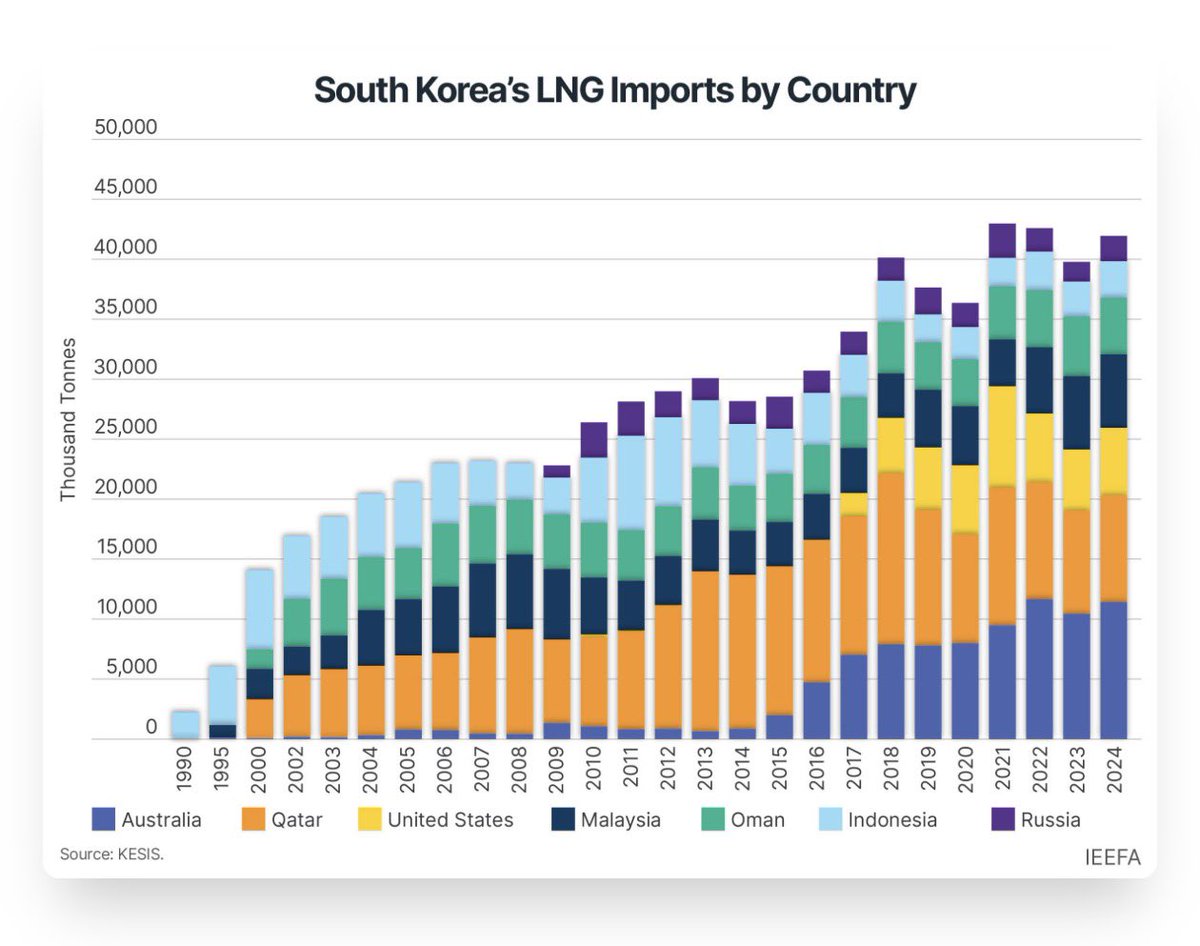
大多数进口来自不经过 Hormuz 的航线,例如澳大利亚(24.6%)、美国(12.2%)、马来西亚、印尼(~20%)以及俄罗斯/萨哈林(~4.6%)。其余则由尼日利亚、秘鲁、文莱、巴布亚新几内亚(PNG)等较小来源补足。

2024 年进口的 82% 是与油价挂钩的长期合约;而正如我们在上面建模的那样,能源成本每上升 50%,会让 opex(运营费用)受损 1%–2%。但在 DRAM/NAND 提价、经营利润率冲到 70%+ 的情况下,这只会造成非常小的凹陷。

即便真有影响,成本也会被转嫁给 hyperscalers。

韩国从 2022 年吸取了教训并分散了来源,因此 LNG 供应中断的影响很小。主要担忧在于:油价上涨会推高 LNG。

  1. 氦:

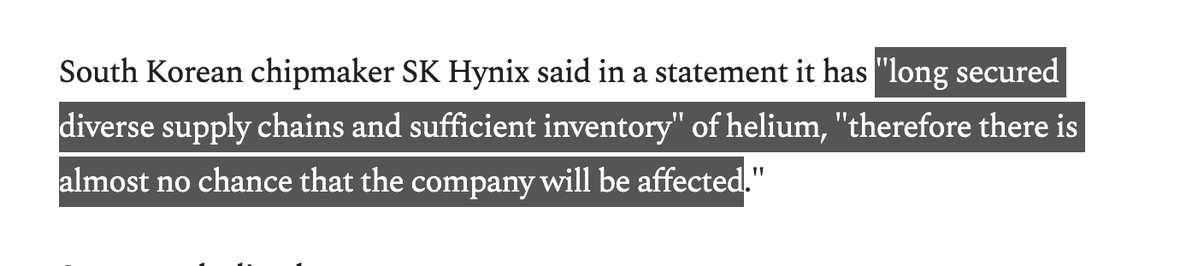
SK 海力士声明:“长期以来已确保多元化的供应链与充足的氦库存。”

“因此,公司几乎不可能受到[氦]影响。

现实是,从 $TSM 到 SK 海力士这类更大的玩家,早已为应对海外事件而分散了供应链。

氦对半导体供应链至关重要,但媒体叙事过于耸动。尤其是当最大的内存公司发布了强硬声明,明确表示公司[SK 海力士]不可能受到影响时。

_

但对韩国股市中的三星 / SK 海力士而言,围绕原油/LNG/氦的恐惧看起来与现实脱节:

那些因为氦与 KEPCO 电价上调就抛售 SK 海力士的算法,依据的是错误的数学。这从根本上说不是供应链问题。

真正的主要威胁,是油价与能源成本引发的全球宏观经济冲击——影响从消费品到通胀的一切。

3 月 3 日“黑色星期二”的崩盘中,KOSPI 下跌 7.2%,SK 海力士在单一交易时段下跌 11.5%,而引爆点恰恰就是这些能源安全恐慌。当然,杠杆带来的强制平仓也火上浇油。

然而,基本面与价格行为之间的脱节,正是交易机会。如果利润率真的受到威胁,那么这轮抛售就是合理的。

但这次抛售在一天之内摧毁的市值,超过了未来几十年能源成本上调所可能造成的损失。

正因为数学并不支持这种恐惧,韩国才是一个“可买”的标的:市场在情绪化抛售,而不是看到即便油价/能源成本上升,结构性扩张的盈利能力仍在发生。

The sentiment around KOSPI | $EWY (SK Hynix / Samsung) on

Crude Oil / LNG / Helium either:

Disrupting Supply or Compressing Margins are overblown.

The supply chain disruption and energy cost threats to SK Hynix, Samsung are sensationalized noise.

Here's why:

  1. Crude Oil:

The a likely scenario if oil prices increase 31% and oil floats to $120/bbl:

In this case, the effect on oil has almost no material impact on SK Hynix and South Korean memory equities.

There are increased energy costs via oil-pegged LNG/JKM prices on Korean equities, mainly for companies surviving on razor-thin 5% to 10% margins.

However, a KEPCO 70% rate hike has little material affect on Samsung/SK Hynix, given memory prices have soared with Samsung doubling NAND prices Q2.

From disclosed financial from, their SK Hynix's annual electricity bill exceeds ₩1 trillion per DIGITIMES (~$750M). Which against FY2025 revenue of ₩97.15 trillion represents roughly 1–2% of revenue.

SK Hynix posted a 58% operating margin in Q4 2025. Against this backdrop, the energy cost shock is small:

If we model a 50% increase in energy costs:

  • Hit to SK Hynix quarterly OP (₩19.17T): ~₩134 billion-~₩146 billion (0.76%)

  • Hit to Samsung DS quarterly OP (₩16.4T): ~₩407 billion (2.4%)

Every 50% energy cost spike would shave roughly .7% off SK Hynix margins and 2.4% off Samsung operating margins.

Analysts project SK Hynix margins could reach 70%+ on conventional DRAM in 2026. Energy costs do not meaningfully threaten Korean semiconductor operating margins, even if they were to increase by 100%.

However, this is material to companies with low operating margins of 5-10%

The Losers: Traditional heavy manufacturing (steel, basic chemicals, standard flat glass). The Winners: Samsung/SK Hynix.

The main risk is second-order effects on supply chains such as increased material costs. This is very hard to model, but in an example where:

an industrial company forces 30% price hikes on raw materials (chemicals, specialty gases), it barely dents the fabs.

Materials are roughly 15-20% of semiconductor COGS, so mathematically, a 30% spike in material costs only shaves an additional ~2% off SK Hynix's operating margins.

A combined 3-4% direct (utilities) and indirect (materials) energy headwind is easily absorbed by an oligopoly printing 70% margins (and increasing prices).

In majority of cases, the costs likely get passed down to hyperscalers through NAND/DRAM price hikes.

In the very worst case scenario of oil prices increasing 3x or 5x.

The main affect on oil increasing hundreds of percent are two factors:

  • Global macroeconomic shock, causing global inflation (affecting every single company, from $GOOGL to $COST).

  • KRW (South korean Won) USD/KRW exchange rate blowout.

KRW depreciation from sustained high oil is a real second order risk, but historically Korean memory exporters benefit from won weakness on the revenue side. The majority of Samsung/SK Hynix sales are dollar denominated wheras costs are won denominated. So a weaker KRW is actually margin accretive for exporters, which partially offsets the energy cost headwind.

But in an extreme case of oil prices hiking 5x, the only longs in that apocalyptic world are crude oil itself, defense contractors like $LMT / $NOC, domestic US energy producers, and the US Dollar.

This is unlikely to happen.

The financial media and algorithms will likely panic, but , if crude oil goes from $91 to $120 and KEPCO increases energy costs:

The data shows there's little affect on Samsung / SK Hynix in specific, and the main impact are on players with razer-thin operating margins.

  1. LNG:

If the Hormuz closed, the majority of South Korea’s LNG imports would be unaffected.

The media has been quoting Hormuz + LNG flows going to China, INdia, SK, and Japan. But if we look at the trade data from South Korea, that’s just a fraction of their total imports.

Majority of imports arrive via Hormuz free routes, eg. Australia (24.6%), US (12.2%), Malaysia, Indonesia (~20%), and Russia/Sakhalin (~4.6%). Then the rest filled in with minor sources from Nigeria, Peru, Brunei, PNG, etc.

The 82% of 2024 important were long term contracts that were oil-indexed, and as we've modeled above, increasing energy costs would hurt opex by 1-2% per 50% increase, but given DRAM/NAND price hikes and operating margins hitting 70%+, this would make a very little dent.

Even if they did, costs would be passed onto hyperscalers.

South Korea learned their lesson from 2022 and diversified sources, and there's little impact on LNG supply disruption. The main concern is oil impacting hiking of LNG.

  1. Helium:

SK Hynix statement: “Long secured diverse supply chains and sufficient inventory" of helium.

"Therefore there is almost no chance that the company will be affected [by helium].

The reality is larger players like $TSM to SK Hynix have diversified their supply chains against foreign events.

Helium is critical to semiconductor supply chains, but the media narrative is sensational. Especially when the largest memory company puts out an assertive statement that there’s no chance the company [SK Hynix] will be affected.

_

But to South Korean equities in Samsung/SK Hynix, fears around Oil/LNG/Helium look disconnected from reality:

The algorithms selling off SK Hynix because of helium and KEPCO rate hikes are acting on bad math. It is fundamentally a supply chain non-issue.

The main threat is oil and energy costs on global macroeconomic shock affecting everything from consumer goods to inflation.

March 3 "Black Tuesday" crash dropped KOSPI dropped 7.2% and SK Hynix fell 11.5% in a single session on exactly these energy security fears as the main catalyst. Of course, forced liquidations from leverage added fuel to the fire.

However, the disconnect between fundamentals and price action is the trade. If margins were actually threatened, the selloff would be justified.

But, the sell-off destroyed more value in one day than DECADES of hiked energy cost increases could have.

The fact that the math doesn't support the fear is precisely why it's Korea is a buy, as markets are selling off on emotion rather than looking at the structural expanding profitability despite increasing oil/energy costs.

围绕 KOSPI | $EWY(SK 海力士 / 三星)在

原油 / LNG / 氦方面的市场情绪——不论是:

“扰乱供应”还是“挤压利润”——都被夸大了。

所谓供应链中断与能源成本威胁 SK 海力士、三星的说法,是被渲染过度的噪音。

原因如下:

  1. 原油:

一个可能的情景是:油价上涨 31%,原油上行到 $120/桶(bbl):

在这种情况下,油价变化对 SK 海力士以及韩国内存相关股票几乎没有实质性影响。

确实,韩国股票会通过“与油挂钩”的 LNG/JKM 价格承受更高的能源成本——但这主要影响的是那些靠薄如刀刃的 5%–10% 利润率勉强生存的公司。

然而,考虑到内存价格已经大幅上涨(例如三星在 Q2 将 NAND 价格翻倍),即便 KEPCO 电价上调 70%,对三星 / SK 海力士的实质影响也很有限。

根据披露的财务信息与 DIGITIMES 的数据,SK 海力士年度电费超过 ₩1 万亿(~$750M)。相对于 FY2025 营收 ₩97.15 万亿,这大约只占 1%–2% 的收入。

SK 海力士在 2025 年 Q4 的经营利润率为 58%。在这样的背景下,能源成本冲击很小:

如果我们用“能源成本上涨 50%”来建模:

  • 对 SK 海力士季度营业利润(OP,₩19.17T)的冲击:~₩1340 亿–~₩1460 亿(0.76%)

  • 对三星 DS 季度营业利润(₩16.4T)的冲击:~₩4070 亿(2.4%)

能源成本每上升 50%,大约会使 SK 海力士利润率下降 0.7%,使三星经营利润率下降 2.4%。

分析师预计,SK 海力士在 2026 年传统 DRAM 上的利润率可能达到 70%+。即使能源成本上升 100%,也不会对韩国半导体的经营利润率构成有意义的威胁。

不过,这对经营利润率只有 5%–10% 的公司就很要命。

输家:传统重工业制造(钢铁、基础化工、普通平板玻璃)。 赢家:三星 / SK 海力士。

主要风险来自供应链的二阶效应,例如材料成本上升。这非常难建模,但举个例子:

如果某家工业公司对原材料(化学品、特种气体)强推 30% 的涨价,对晶圆厂的伤害也微乎其微。

材料成本大约占半导体 COGS 的 15%–20%,因此从数学上看,材料成本上升 30% 只会让 SK 海力士的经营利润率额外下降约 ~2%。

直接(公用事业)与间接(材料)合计 3%–4% 的能源逆风,很容易被一个“能印出 70% 利润率(并且还能提价)”的寡头格局所吸收。

在大多数情况下,这些成本很可能会通过 NAND/DRAM 的提价转嫁给 hyperscalers(超大规模云厂商)。

在最坏的情形里,如果油价上涨 3 倍或 5 倍:

油价飙升数百个百分点的主要影响有两点:

  • 全球宏观经济冲击,导致全球通胀(影响每一家公司,从 $GOOGL 到 $COST)。

  • KRW(韩元)在 USD/KRW 汇率上的失控式波动。

由于高油价持续导致的韩元贬值,是一个真实的二阶风险;但从历史上看,韩国内存出口商在收入端往往受益于韩元走弱。三星 / SK 海力士的大部分销售以美元计价,而成本以韩元计价。因此,KRW 走弱实际上会增厚出口商的利润率,从而部分抵消能源成本逆风。

但如果出现油价暴涨 5 倍这种极端情况,在那个末日般的世界里,唯一值得做多的只有原油本身、$LMT / $NOC 这类军工承包商、美国本土能源生产商,以及美元。

这几乎不可能发生。

金融媒体和算法很可能会恐慌,但如果原油只是从 $91 涨到 $120,同时 KEPCO 提高能源成本:

数据表明,这对三星 / SK 海力士本身影响不大,主要冲击的是那些经营利润率薄如刀刃的参与者。

  1. LNG:

如果霍尔木兹海峡(Hormuz)关闭,韩国绝大多数 LNG 进口不会受到影响。

媒体一直在引用“经由 Hormuz 的 LNG 流向中国、印度、韩国、日本”等说法。但如果我们查看韩国的贸易数据,这只占其总进口的一小部分。

大多数进口来自不经过 Hormuz 的航线,例如澳大利亚(24.6%)、美国(12.2%)、马来西亚、印尼(~20%)以及俄罗斯/萨哈林(~4.6%)。其余则由尼日利亚、秘鲁、文莱、巴布亚新几内亚(PNG)等较小来源补足。

2024 年进口的 82% 是与油价挂钩的长期合约;而正如我们在上面建模的那样,能源成本每上升 50%,会让 opex(运营费用)受损 1%–2%。但在 DRAM/NAND 提价、经营利润率冲到 70%+ 的情况下,这只会造成非常小的凹陷。

即便真有影响,成本也会被转嫁给 hyperscalers。

韩国从 2022 年吸取了教训并分散了来源,因此 LNG 供应中断的影响很小。主要担忧在于:油价上涨会推高 LNG。

  1. 氦:

SK 海力士声明:“长期以来已确保多元化的供应链与充足的氦库存。”

“因此,公司几乎不可能受到[氦]影响。

现实是,从 $TSM 到 SK 海力士这类更大的玩家,早已为应对海外事件而分散了供应链。

氦对半导体供应链至关重要,但媒体叙事过于耸动。尤其是当最大的内存公司发布了强硬声明,明确表示公司[SK 海力士]不可能受到影响时。

_

但对韩国股市中的三星 / SK 海力士而言,围绕原油/LNG/氦的恐惧看起来与现实脱节:

那些因为氦与 KEPCO 电价上调就抛售 SK 海力士的算法,依据的是错误的数学。这从根本上说不是供应链问题。

真正的主要威胁,是油价与能源成本引发的全球宏观经济冲击——影响从消费品到通胀的一切。

3 月 3 日“黑色星期二”的崩盘中,KOSPI 下跌 7.2%,SK 海力士在单一交易时段下跌 11.5%,而引爆点恰恰就是这些能源安全恐慌。当然,杠杆带来的强制平仓也火上浇油。

然而,基本面与价格行为之间的脱节,正是交易机会。如果利润率真的受到威胁,那么这轮抛售就是合理的。

但这次抛售在一天之内摧毁的市值,超过了未来几十年能源成本上调所可能造成的损失。

正因为数学并不支持这种恐惧,韩国才是一个“可买”的标的:市场在情绪化抛售,而不是看到即便油价/能源成本上升,结构性扩张的盈利能力仍在发生。

相关笔记

The supply chain disruption and energy cost threats to SK Hynix, Samsung are sensationalized noise.

Here's why:

  1. Crude Oil:

The a likely scenario if oil prices increase 31% and oil floats to $120/bbl:

In this case, the effect on oil has almost no material impact on SK Hynix and South Korean memory equities.

There are increased energy costs via oil-pegged LNG/JKM prices on Korean equities, mainly for companies surviving on razor-thin 5% to 10% margins.

However, a KEPCO 70% rate hike has little material affect on Samsung/SK Hynix, given memory prices have soared with Samsung doubling NAND prices Q2.

From disclosed financial from, their SK Hynix's annual electricity bill exceeds ₩1 trillion per DIGITIMES (~$750M). Which against FY2025 revenue of ₩97.15 trillion represents roughly 1–2% of revenue.

SK Hynix posted a 58% operating margin in Q4 2025. Against this backdrop, the energy cost shock is small:

If we model a 50% increase in energy costs:

  • Hit to SK Hynix quarterly OP (₩19.17T): ~₩134 billion-~₩146 billion (0.76%)

  • Hit to Samsung DS quarterly OP (₩16.4T): ~₩407 billion (2.4%)

Every 50% energy cost spike would shave roughly .7% off SK Hynix margins and 2.4% off Samsung operating margins.

Analysts project SK Hynix margins could reach 70%+ on conventional DRAM in 2026. Energy costs do not meaningfully threaten Korean semiconductor operating margins, even if they were to increase by 100%.

However, this is material to companies with low operating margins of 5-10%

The Losers: Traditional heavy manufacturing (steel, basic chemicals, standard flat glass). The Winners: Samsung/SK Hynix.

The main risk is second-order effects on supply chains such as increased material costs. This is very hard to model, but in an example where:

an industrial company forces 30% price hikes on raw materials (chemicals, specialty gases), it barely dents the fabs.

Materials are roughly 15-20% of semiconductor COGS, so mathematically, a 30% spike in material costs only shaves an additional ~2% off SK Hynix's operating margins.

A combined 3-4% direct (utilities) and indirect (materials) energy headwind is easily absorbed by an oligopoly printing 70% margins (and increasing prices).

In majority of cases, the costs likely get passed down to hyperscalers through NAND/DRAM price hikes.

In the very worst case scenario of oil prices increasing 3x or 5x.

The main affect on oil increasing hundreds of percent are two factors:

  • Global macroeconomic shock, causing global inflation (affecting every single company, from $GOOGL to $COST).

  • KRW (South korean Won) USD/KRW exchange rate blowout.

KRW depreciation from sustained high oil is a real second order risk, but historically Korean memory exporters benefit from won weakness on the revenue side. The majority of Samsung/SK Hynix sales are dollar denominated wheras costs are won denominated. So a weaker KRW is actually margin accretive for exporters, which partially offsets the energy cost headwind.

But in an extreme case of oil prices hiking 5x, the only longs in that apocalyptic world are crude oil itself, defense contractors like $LMT / $NOC, domestic US energy producers, and the US Dollar.

This is unlikely to happen.

The financial media and algorithms will likely panic, but , if crude oil goes from $91 to $120 and KEPCO increases energy costs:

The data shows there's little affect on Samsung / SK Hynix in specific, and the main impact are on players with razer-thin operating margins.

  1. LNG:

If the Hormuz closed, the majority of South Korea’s LNG imports would be unaffected.

The media has been quoting Hormuz + LNG flows going to China, INdia, SK, and Japan. But if we look at the trade data from South Korea, that’s just a fraction of their total imports.

Majority of imports arrive via Hormuz free routes, eg. Australia (24.6%), US (12.2%), Malaysia, Indonesia (~20%), and Russia/Sakhalin (~4.6%). Then the rest filled in with minor sources from Nigeria, Peru, Brunei, PNG, etc.

The 82% of 2024 important were long term contracts that were oil-indexed, and as we've modeled above, increasing energy costs would hurt opex by 1-2% per 50% increase, but given DRAM/NAND price hikes and operating margins hitting 70%+, this would make a very little dent.

Even if they did, costs would be passed onto hyperscalers.

South Korea learned their lesson from 2022 and diversified sources, and there's little impact on LNG supply disruption. The main concern is oil impacting hiking of LNG.

  1. Helium:

SK Hynix statement: “Long secured diverse supply chains and sufficient inventory" of helium.

"Therefore there is almost no chance that the company will be affected [by helium].

The reality is larger players like $TSM to SK Hynix have diversified their supply chains against foreign events.

Helium is critical to semiconductor supply chains, but the media narrative is sensational. Especially when the largest memory company puts out an assertive statement that there’s no chance the company [SK Hynix] will be affected.

_

But to South Korean equities in Samsung/SK Hynix, fears around Oil/LNG/Helium look disconnected from reality:

The algorithms selling off SK Hynix because of helium and KEPCO rate hikes are acting on bad math. It is fundamentally a supply chain non-issue.

The main threat is oil and energy costs on global macroeconomic shock affecting everything from consumer goods to inflation.

March 3 "Black Tuesday" crash dropped KOSPI dropped 7.2% and SK Hynix fell 11.5% in a single session on exactly these energy security fears as the main catalyst. Of course, forced liquidations from leverage added fuel to the fire.

However, the disconnect between fundamentals and price action is the trade. If margins were actually threatened, the selloff would be justified.

But, the sell-off destroyed more value in one day than DECADES of hiked energy cost increases could have.

The fact that the math doesn't support the fear is precisely why it's Korea is a buy, as markets are selling off on emotion rather than looking at the structural expanding profitability despite increasing oil/energy costs.

📋 讨论归档

讨论进行中…