返回列表
🧠 阿头学 · 💬 讨论题

PM的“问题解压”术:用AI把预设方案还原为底层需求

该文章主张用AI强制将团队预设的“解决方案”解压为底层问题与替代框架,虽精准击中PM分诊能力不足的痛点,但其本质是披着方法论外衣的SaaS营销软文,且“唯证据论”会系统性扼杀早期创新。
打开原文 ↗

2026-08-11 原文链接 ↗
阅读简报
双语对照
完整翻译
原文
讨论归档

核心观点

  • 方案即压缩问题 团队抛出的功能需求实为模糊痛点的失真压缩包,PM的核心杠杆在于逆向解压而非直接评估方案优劣。
  • AI强制结构化分诊 借助AI工作流可强制输出假设挑战、替代框架与证据状态,有效解决人类PM在时间压力下跳过关键验证步骤的认知惰性。
  • 证据状态决定生死 个人想法库中90%的提案因缺乏可验证证据被直接淘汰,证明PM的真正瓶颈是需求分诊能力而非创意生成量。
  • 非对抗性影响力策略 将“阻挡路线图”转化为“深挖底层问题”,能在保全团队面子的前提下夺回产品定义权,避免政治动量反噬。

跟我们的关联

  • 对 ATou 意味着需将“需求评审”升级为“意图解压”,下一步应在PRD模板中强制加入“证据状态”与“三种替代框架”字段,拦截无数据支撑的伪需求。
  • 对 Neta 意味着AI提示词库需从“生成执行”转向“诊断分诊”,下一步应将该八步协议封装为内部Agent工作流,用于自动化过滤低质量Backlog。
  • 对 Uota 意味着跨部门协作需放弃“方案对抗”话术,下一步应在立项会前使用解压协议输出问题陈述,将技术争论转化为对底层痛点的共识验证。

讨论引子

  • 当“证据状态”检查成为硬性门槛时,团队如何避免系统性过滤掉缺乏历史数据但具备颠覆潜力的0到1创新?
  • AI生成的“完整八步输出”若存在业务上下文误读或幻觉,PM应建立何种校验机制以防止认知外包带来的决策风险?
  • 在强政治动量与沉没成本已存的团队中,仅靠“问题解压”能否真正化解冲突,还是仅仅将否决的对抗性推迟到了第31天?

如果你是一位在入职第一天就发现路线图里塞满了团队想让你发布的解决方案的 PM,你肯定已经知道那种糟糕的感觉了。你若反驳,便显得像是在阻碍;你若答应,便会失去信念。让你摆脱困境的一招是:把每个人递给你的解决方案视为团队隐约感觉到但尚未清晰表述的问题的压缩版、不精确的坦白,然后将其解压还原为底层的问题。

团队递给你一句“我们需要一个新的通知系统”。你的工作就是将其解压还原为底层问题,然后检查他们选择的方案是否是对该问题的三种合理回应之一,还是说他们完全跳到了错误的方案上。

这是作为一名 PM 走进一条已经写好的路线图时,我学到的最可靠的一招。它也可以反向运行,解决相反的 PM 问题,即当你自己有太多半生不熟的想法却无法进行分诊(triage)时。同一个技能,双向适用。

反转,反转,总是反转

大多数发现(Discovery)建议都会说:停下来,先做研究,当你有了问题陈述后再回来。给出这些建议的人假设团队会允许你拖慢他们的进度。在现实生活中,持有解决方案的团队背后有着政治和情感上的动量。告诉他们停下来去做研究,就是在第 30 天耗尽你影响力的方法。

相反,你把解决方案作为研究的起点。你把提议的方案视为一个研究素材:团队中某人感受到的真实痛点的证据,被压缩成了一个答案。你的工作就是将其解压还原为底层问题,这样团队就能看到他们实际上是在回应什么。

这让你在面对预先制定好的路线图时拥有不同的姿态。与其站在它面前阻挡它,不如在它下面深挖,找出它原本要解决的问题。

/problem-first

让我带你通过一个真实案例。团队说:“我们需要建立一个新的通知系统。”

problem-first 技能在一个 AI 调用中运行并返回八个部分。返回结果如下:

跳跃式解决方案诊断(Solution-jumping diagnosis)。 团队检测到了什么信号让他们提出这个建议?可能是:用户遗漏信息,关于丢失上下文的工单,抱怨产品没有在内容变化时通知他们。

底层问题(Underlying problem)。 用户无法看到产品内部状态何时发生变化,这种可见性的缺失削弱了他们对产品正在代表他们执行操作的信任。

假设挑战(Assumption challenges)。 每一项都包含“如果错误的风险”和验证测试。例如:

  • 假设:用户想要更多通知。如果错误的风险:我们增加了噪音,采用率下降。验证:从当前系统中提取通知互动数据。
  • 假设:传递机制损坏了。如果错误的风险:我们重建底层管道,但问题依然存在。验证:阅读最近 50 条标记为“遗漏更新”的支持工单。
  • 假设:用户想要实时推送。如果错误的风险:我们交付了干扰,他们会将其关闭。验证:在接下来的 5 次用户访谈中提问。

问题陈述(Problem statement)。 依赖产品进行时间敏感决策的用户难以知道他们的上下文何时发生了变化,因为产品不会主动显示状态变化,这导致了信任丧失和被动的支持负担。成功意味着用户无需手动检查即可发现相关变化。

三种替代框架(Three alternative framings)。 三种揭示了大多数团队在此阶段所做跳跃的框架:

  • 框架 A:用户不知道上下文何时改变。解决方案空间:状态变化指示器,活动流。
  • 框架 B:用户不信任系统正在工作。解决方案空间:状态可见性,审计日志,置信信号。
  • 框架 C:用户希望将监控委托给产品。解决方案空间:订阅,智能摘要,代理驱动的警报。

注意,这些都不是团队所指的那种“通知系统”。第一个框架指向 UI 状态模式,第二个指向信任和状态问题,第三个更接近于代理。每一个都会导致不同的构建,但团队的简报将这三者折叠成了一个单一的功能规格。这就是你想在它变成一个季度的工程时间之前捕捉到的动作。

其中有三个部分是处于压力下的人类 PM 经常跳过的:带有风险和验证的假设挑战、三种替代框架以及草拟消息。跳过框架,你就会在看到两个同样可行的替代方案之前就致力于一个解决方案,而这些方案本会导致不同的构建。跳过消息,你最终会在尴尬的周一站会上陷入窘境,因为你已经悄悄停止了路线图上的工作,而团队中没人知道原因。

反向用途,献给想法多多的人

这是对我个人帮助最大的版本。我是那种有很多想法的 PM,所以我的笔记填满的速度比我的信念能跟上的速度还快。大量的生成,糟糕的分诊。

我开始反向运行这个技能。你输入自己的想法,要求它提取你认为它在解决的问题,并检查证据状态字段。

大多数想法都死在“证据状态:无”这一步。

我在一个大约 50 个想法的待办列表上运行了这个流程。90% 死于证据状态。3-5 个幸存下来,背后有真实的问题。1 个在接下来的一周被提出,并且证据包已经组装好了。

运行这个分诊协议终于疏通了我那个想法多多的部分。是的,如今 Agent 可以构建任何东西,但你仍然需要花时间在每个想法上,哪怕只是写一个让 /goal 执行的规格(而且通常需要更多的精力去照看)。

在产生想法上更加自律对我没有帮助,对其他这种思维模式的 PM 可能也没帮助。根据我的经验,真正的约束是分诊能力,而不是想法生成。当你运行这个技能时,你会得到一个解决实际瓶颈的分诊协议。

为什么在 AI 上运行比在脑海中运行更好

你可以在没有 AI 的情况下做这种脑力工作。毕竟,人们已经这样做了几十年了。拥有一小时和安静办公室的人类 PM 可以产出大部分这些部分,但在时间压力下,大多数 PM 会跳过那些困难的部分。他们跳过带有风险和验证的假设挑战。他们跳过三种替代框架。他们肯定跳过草拟消息,这就是为什么这么多新 PM 最终要么毫无信念地默默执行,要么让团队感到被突袭。

在 AI 中运行此流程可确保每次都运行每个部分,因为必须完成所有八个输出,运行才会产生任何可用的结果。

运行该技能大约需要 90 秒,并产出所有八个部分。手写相同的输出大约需要一个小时,而且往往会遗漏较难的部分。

该技能所在的位置

problem-first 是 PM OS(产品经理的 AI 操作系统)中 200 多个技能之一。它在 Claude Code、Cowork 或 Cursor 中运行,基于你公司的上下文文件,因此假设挑战和验证计划会基于你的产品、你的用户和你的真实约束返回,而不是那些可能来自任何博客文章的通用 PM 建议。

你不需要组装任何东西。PM OS 将 problem-first 连接到更广泛的操作层,与战略、研究、决策、利益相关者工作和测量等工作流并列。

如果你想要完整的系统,它在这里。

If you're a PM who walked in on day one to find a roadmap full of solutions the team wants you to ship, you know the bad feeling already. You can't push back without looking obstructionist, and you can't say yes without losing your conviction. The move that gets you out: treat every solution someone hands you as a compressed, imprecise confession of a problem the team senses but hasn't articulated, then decompress it back into the problem underneath.
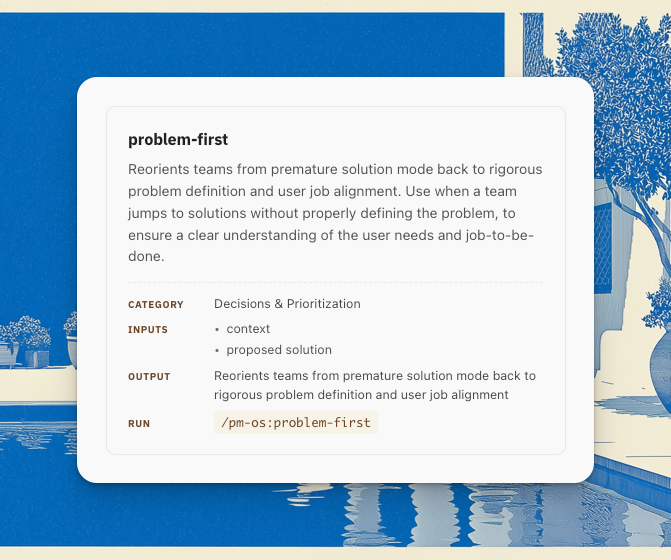
The team handed you "we need a new notification system." Your job is to decompress that into the problem underneath, then check whether the solution they picked is one of three reasonable responses to that problem, or whether they jumped to the wrong one entirely.

This is the most reliable move I've learned as a PM walking into a roadmap that's already been written. It also runs in reverse for the opposite PM problem, which is when you're the one with too many half-baked ideas and no way to triage them. Same skill, both directions.

如果你是一位在入职第一天就发现路线图里塞满了团队想让你发布的解决方案的 PM,你肯定已经知道那种糟糕的感觉了。你若反驳,便显得像是在阻碍;你若答应,便会失去信念。让你摆脱困境的一招是:把每个人递给你的解决方案视为团队隐约感觉到但尚未清晰表述的问题的压缩版、不精确的坦白,然后将其解压还原为底层的问题。

团队递给你一句“我们需要一个新的通知系统”。你的工作就是将其解压还原为底层问题,然后检查他们选择的方案是否是对该问题的三种合理回应之一,还是说他们完全跳到了错误的方案上。

这是作为一名 PM 走进一条已经写好的路线图时,我学到的最可靠的一招。它也可以反向运行,解决相反的 PM 问题,即当你自己有太多半生不熟的想法却无法进行分诊(triage)时。同一个技能,双向适用。

Invert, invert, always invert

Most discovery advice says to stop, do research first, and come back when you have a problem statement. The people giving that advice assume the team will let you slow them down. In real life, teams holding solutions have political and emotional momentum behind those solutions. Telling them to halt and do research is how you burn your influence on day 30.

Instead, you use the solution as the starting point for the research. You treat the proposed solution as a research artifact: evidence of a real pain someone on the team felt, compressed into an answer. Your job is to decompress it back into the underlying problem so the team can see what they were actually responding to.

That gives you a different posture in front of the prebaked roadmap. Instead of standing in front of it blocking it, you're digging underneath it to find the problem it was meant to solve.

反转,反转,总是反转

大多数发现(Discovery)建议都会说:停下来,先做研究,当你有了问题陈述后再回来。给出这些建议的人假设团队会允许你拖慢他们的进度。在现实生活中,持有解决方案的团队背后有着政治和情感上的动量。告诉他们停下来去做研究,就是在第 30 天耗尽你影响力的方法。

相反,你把解决方案作为研究的起点。你把提议的方案视为一个研究素材:团队中某人感受到的真实痛点的证据,被压缩成了一个答案。你的工作就是将其解压还原为底层问题,这样团队就能看到他们实际上是在回应什么。

这让你在面对预先制定好的路线图时拥有不同的姿态。与其站在它面前阻挡它,不如在它下面深挖,找出它原本要解决的问题。

/problem-first

Let me walk you through a real example. Team says: "we need to build a new notification system."

The problem-first skill runs in one AI call and returns eight sections. This is what comes back:

Solution-jumping diagnosis. What signal did the team detect that made them propose this? Probably: users miss things, support tickets about lost context, complaints that the product doesn't tell them when stuff changes.

Underlying problem. Users can't see when state changes inside the product, and the gap in visibility erodes their trust that the product is doing anything on their behalf.

Assumption challenges. Each with risk-if-wrong and a validation test. Examples:

  • Assumption: users want more notifications. Risk if wrong: we add noise, adoption drops. Validation: pull notification engagement data from current system.

  • Assumption: the delivery mechanism is broken. Risk if wrong: we rebuild plumbing and the problem stays. Validation: read the last 50 support tickets tagged "missed update."

  • Assumption: users want real-time push. Risk if wrong: we ship interruption and they turn it off. Validation: ask in the next 5 user interviews.

Problem statement. Users who rely on the product for time-sensitive decisions struggle to know when their context has changed, because the product doesn't surface state changes proactively, which leads to lost trust and reactive support load. Success would mean users discover relevant changes without checking manually.

Three alternative framings. Three framings that surface the jump most teams made at this stage:

  • Framing A: users don't know when context changed. Solution space: state-change indicators, activity feeds.

  • Framing B: users don't trust the system is working. Solution space: status visibility, audit trails, confidence signals.

  • Framing C: users want to delegate watching to the product. Solution space: subscriptions, smart digests, agent-driven alerts.

Notice none of those are "a notification system" in the way the team meant it. The first framing points to a UI state pattern, the second to a trust-and-status problem, and the third is closer to an agent. Each one would lead to a different build, but the team's brief had folded all three into a single feature spec. That's the move you want to catch before it becomes a quarter of engineering time.

Three sections in there that a human PM under pressure reliably skips: the assumption challenges with risk and validation, the three alternative framings, and the draft message. Skip the framings, and you commit to one solution before seeing the two equally viable alternatives that would have led to different builds. Skip the message, and you end up in an awkward Monday standup where you've quietly stopped working on the roadmap and nobody on the team knows why.

/problem-first

让我带你通过一个真实案例。团队说:“我们需要建立一个新的通知系统。”

problem-first 技能在一个 AI 调用中运行并返回八个部分。返回结果如下:

跳跃式解决方案诊断(Solution-jumping diagnosis)。 团队检测到了什么信号让他们提出这个建议?可能是:用户遗漏信息,关于丢失上下文的工单,抱怨产品没有在内容变化时通知他们。

底层问题(Underlying problem)。 用户无法看到产品内部状态何时发生变化,这种可见性的缺失削弱了他们对产品正在代表他们执行操作的信任。

假设挑战(Assumption challenges)。 每一项都包含“如果错误的风险”和验证测试。例如:

  • 假设:用户想要更多通知。如果错误的风险:我们增加了噪音,采用率下降。验证:从当前系统中提取通知互动数据。
  • 假设:传递机制损坏了。如果错误的风险:我们重建底层管道,但问题依然存在。验证:阅读最近 50 条标记为“遗漏更新”的支持工单。
  • 假设:用户想要实时推送。如果错误的风险:我们交付了干扰,他们会将其关闭。验证:在接下来的 5 次用户访谈中提问。

问题陈述(Problem statement)。 依赖产品进行时间敏感决策的用户难以知道他们的上下文何时发生了变化,因为产品不会主动显示状态变化,这导致了信任丧失和被动的支持负担。成功意味着用户无需手动检查即可发现相关变化。

三种替代框架(Three alternative framings)。 三种揭示了大多数团队在此阶段所做跳跃的框架:

  • 框架 A:用户不知道上下文何时改变。解决方案空间:状态变化指示器,活动流。
  • 框架 B:用户不信任系统正在工作。解决方案空间:状态可见性,审计日志,置信信号。
  • 框架 C:用户希望将监控委托给产品。解决方案空间:订阅,智能摘要,代理驱动的警报。

注意,这些都不是团队所指的那种“通知系统”。第一个框架指向 UI 状态模式,第二个指向信任和状态问题,第三个更接近于代理。每一个都会导致不同的构建,但团队的简报将这三者折叠成了一个单一的功能规格。这就是你想在它变成一个季度的工程时间之前捕捉到的动作。

其中有三个部分是处于压力下的人类 PM 经常跳过的:带有风险和验证的假设挑战、三种替代框架以及草拟消息。跳过框架,你就会在看到两个同样可行的替代方案之前就致力于一个解决方案,而这些方案本会导致不同的构建。跳过消息,你最终会在尴尬的周一站会上陷入窘境,因为你已经悄悄停止了路线图上的工作,而团队中没人知道原因。

The reverse use, for the ideas person

This is the version that helped me most personally. I'm the kind of PM who has a lot of ideas, so my notes fill up faster than my conviction can keep pace with. Lots of generation, lousy triage.

I started running the skill in reverse. You feed in your own idea, ask it to extract the problem you think it's solving, and check the evidence status field.

Most ideas die at "Evidence Status: none."

I ran this across a backlog of about 50 ideas. 90% died at evidence status. 3-5 survived with real problems underneath. 1 got pitched the following week with the evidence pack already assembled.

Running this triage protocol finally unblocked the part of me that has lots of ideas. Yes, agents can build anything these days, but you still need to spend time on each idea, even just to write a spec for /goal to execute (and usually it takes more work to babysit).

Being more disciplined about generating ideas doesn't help me, and probably doesn't help other PMs wired this way. In my experience, the real constraint is triage capacity, not idea generation. When you run the skill, you get a triage protocol that addresses the actual bottleneck.

反向用途,献给想法多多的人

这是对我个人帮助最大的版本。我是那种有很多想法的 PM,所以我的笔记填满的速度比我的信念能跟上的速度还快。大量的生成,糟糕的分诊。

我开始反向运行这个技能。你输入自己的想法,要求它提取你认为它在解决的问题,并检查证据状态字段。

大多数想法都死在“证据状态:无”这一步。

我在一个大约 50 个想法的待办列表上运行了这个流程。90% 死于证据状态。3-5 个幸存下来,背后有真实的问题。1 个在接下来的一周被提出,并且证据包已经组装好了。

运行这个分诊协议终于疏通了我那个想法多多的部分。是的,如今 Agent 可以构建任何东西,但你仍然需要花时间在每个想法上,哪怕只是写一个让 /goal 执行的规格(而且通常需要更多的精力去照看)。

在产生想法上更加自律对我没有帮助,对其他这种思维模式的 PM 可能也没帮助。根据我的经验,真正的约束是分诊能力,而不是想法生成。当你运行这个技能时,你会得到一个解决实际瓶颈的分诊协议。

Why this runs better on AI than in your head

You can do this mental work without AI. People have been doing it for decades, after all. A human PM with an hour and a quiet office can produce most of these sections, but under time pressure most PMs skip the hard ones. They skip the assumption challenges with risk and validation. They skip the three alternative framings. They definitely skip the draft message, which is why so many new PMs end up either quietly executing without conviction or making the team feel ambushed.

Running this in AI ensures every section runs every time, because you have to complete all eight outputs before the run produces anything you can use.

Running the skill takes about 90 seconds and produces all eight sections. Writing the same output by hand takes about an hour, and tends to miss the harder sections.

为什么在 AI 上运行比在脑海中运行更好

你可以在没有 AI 的情况下做这种脑力工作。毕竟,人们已经这样做了几十年了。拥有一小时和安静办公室的人类 PM 可以产出大部分这些部分,但在时间压力下,大多数 PM 会跳过那些困难的部分。他们跳过带有风险和验证的假设挑战。他们跳过三种替代框架。他们肯定跳过草拟消息,这就是为什么这么多新 PM 最终要么毫无信念地默默执行,要么让团队感到被突袭。

在 AI 中运行此流程可确保每次都运行每个部分,因为必须完成所有八个输出,运行才会产生任何可用的结果。

运行该技能大约需要 90 秒,并产出所有八个部分。手写相同的输出大约需要一个小时,而且往往会遗漏较难的部分。

Where this skill lives

problem-first is one of the 200+ skills inside PM OS, the Product Manager's AI Operating System. It runs in Claude Code, Cowork or Cursor on top of your company context files, so the assumption challenges and validation plans come back grounded in your product, your users, and your real constraints, instead of generic PM advice that could have come from any blog post.
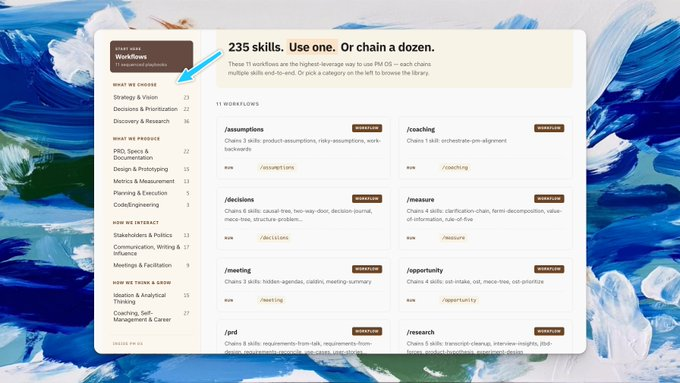
You don't have to assemble any of it. PM OS wires problem-first into the broader operating layer alongside workflows for strategy, research, decisions, stakeholder work, and measurement.

该技能所在的位置

problem-first 是 PM OS(产品经理的 AI 操作系统)中 200 多个技能之一。它在 Claude Code、Cowork 或 Cursor 中运行,基于你公司的上下文文件,因此假设挑战和验证计划会基于你的产品、你的用户和你的真实约束返回,而不是那些可能来自任何博客文章的通用 PM 建议。

你不需要组装任何东西。PM OS 将 problem-first 连接到更广泛的操作层,与战略、研究、决策、利益相关者工作和测量等工作流并列。

If you want the full system, it's here.

如果你想要完整的系统,它在这里。

If you're a PM who walked in on day one to find a roadmap full of solutions the team wants you to ship, you know the bad feeling already. You can't push back without looking obstructionist, and you can't say yes without losing your conviction. The move that gets you out: treat every solution someone hands you as a compressed, imprecise confession of a problem the team senses but hasn't articulated, then decompress it back into the problem underneath.

The team handed you "we need a new notification system." Your job is to decompress that into the problem underneath, then check whether the solution they picked is one of three reasonable responses to that problem, or whether they jumped to the wrong one entirely.

This is the most reliable move I've learned as a PM walking into a roadmap that's already been written. It also runs in reverse for the opposite PM problem, which is when you're the one with too many half-baked ideas and no way to triage them. Same skill, both directions.

Invert, invert, always invert

Most discovery advice says to stop, do research first, and come back when you have a problem statement. The people giving that advice assume the team will let you slow them down. In real life, teams holding solutions have political and emotional momentum behind those solutions. Telling them to halt and do research is how you burn your influence on day 30.

Instead, you use the solution as the starting point for the research. You treat the proposed solution as a research artifact: evidence of a real pain someone on the team felt, compressed into an answer. Your job is to decompress it back into the underlying problem so the team can see what they were actually responding to.

That gives you a different posture in front of the prebaked roadmap. Instead of standing in front of it blocking it, you're digging underneath it to find the problem it was meant to solve.

/problem-first

Let me walk you through a real example. Team says: "we need to build a new notification system."

The problem-first skill runs in one AI call and returns eight sections. This is what comes back:

Solution-jumping diagnosis. What signal did the team detect that made them propose this? Probably: users miss things, support tickets about lost context, complaints that the product doesn't tell them when stuff changes.

Underlying problem. Users can't see when state changes inside the product, and the gap in visibility erodes their trust that the product is doing anything on their behalf.

Assumption challenges. Each with risk-if-wrong and a validation test. Examples:

  • Assumption: users want more notifications. Risk if wrong: we add noise, adoption drops. Validation: pull notification engagement data from current system.

  • Assumption: the delivery mechanism is broken. Risk if wrong: we rebuild plumbing and the problem stays. Validation: read the last 50 support tickets tagged "missed update."

  • Assumption: users want real-time push. Risk if wrong: we ship interruption and they turn it off. Validation: ask in the next 5 user interviews.

Problem statement. Users who rely on the product for time-sensitive decisions struggle to know when their context has changed, because the product doesn't surface state changes proactively, which leads to lost trust and reactive support load. Success would mean users discover relevant changes without checking manually.

Three alternative framings. Three framings that surface the jump most teams made at this stage:

  • Framing A: users don't know when context changed. Solution space: state-change indicators, activity feeds.

  • Framing B: users don't trust the system is working. Solution space: status visibility, audit trails, confidence signals.

  • Framing C: users want to delegate watching to the product. Solution space: subscriptions, smart digests, agent-driven alerts.

Notice none of those are "a notification system" in the way the team meant it. The first framing points to a UI state pattern, the second to a trust-and-status problem, and the third is closer to an agent. Each one would lead to a different build, but the team's brief had folded all three into a single feature spec. That's the move you want to catch before it becomes a quarter of engineering time.

Three sections in there that a human PM under pressure reliably skips: the assumption challenges with risk and validation, the three alternative framings, and the draft message. Skip the framings, and you commit to one solution before seeing the two equally viable alternatives that would have led to different builds. Skip the message, and you end up in an awkward Monday standup where you've quietly stopped working on the roadmap and nobody on the team knows why.

The reverse use, for the ideas person

This is the version that helped me most personally. I'm the kind of PM who has a lot of ideas, so my notes fill up faster than my conviction can keep pace with. Lots of generation, lousy triage.

I started running the skill in reverse. You feed in your own idea, ask it to extract the problem you think it's solving, and check the evidence status field.

Most ideas die at "Evidence Status: none."

I ran this across a backlog of about 50 ideas. 90% died at evidence status. 3-5 survived with real problems underneath. 1 got pitched the following week with the evidence pack already assembled.

Running this triage protocol finally unblocked the part of me that has lots of ideas. Yes, agents can build anything these days, but you still need to spend time on each idea, even just to write a spec for /goal to execute (and usually it takes more work to babysit).

Being more disciplined about generating ideas doesn't help me, and probably doesn't help other PMs wired this way. In my experience, the real constraint is triage capacity, not idea generation. When you run the skill, you get a triage protocol that addresses the actual bottleneck.

Why this runs better on AI than in your head

You can do this mental work without AI. People have been doing it for decades, after all. A human PM with an hour and a quiet office can produce most of these sections, but under time pressure most PMs skip the hard ones. They skip the assumption challenges with risk and validation. They skip the three alternative framings. They definitely skip the draft message, which is why so many new PMs end up either quietly executing without conviction or making the team feel ambushed.

Running this in AI ensures every section runs every time, because you have to complete all eight outputs before the run produces anything you can use.

Running the skill takes about 90 seconds and produces all eight sections. Writing the same output by hand takes about an hour, and tends to miss the harder sections.

Where this skill lives

problem-first is one of the 200+ skills inside PM OS, the Product Manager's AI Operating System. It runs in Claude Code, Cowork or Cursor on top of your company context files, so the assumption challenges and validation plans come back grounded in your product, your users, and your real constraints, instead of generic PM advice that could have come from any blog post.

You don't have to assemble any of it. PM OS wires problem-first into the broader operating layer alongside workflows for strategy, research, decisions, stakeholder work, and measurement.

If you want the full system, it's here.

📋 讨论归档

讨论进行中…