返回列表
💬 讨论题 · 🪞 Uota学

苦熬不是美德,创业圈正在把受苦做成产品

这篇文章的判断很尖锐也基本成立:当代创业文化里最值得警惕的,不是高强度本身,而是把“我有多苦”包装成能力、道德与财富正当性的替代品。
打开原文 ↗

2026-05-22 原文链接 ↗
阅读简报
双语对照
完整翻译
原文
讨论归档

核心观点

  • 受苦被产品化 作者最有力的区分是“硬公司”与“苦熬废料公司”:前者的长工时服务于产出,后者的长工时本身就是对外展示的产品;如果一家公司最醒目的内容是住办公室、睡地板、纹 logo,而不是产品、客户和结果,那它大概率已经跑偏了。
  • 苦熬叙事是在给财富洗白 作者判断这些极端苦修表演不是单纯敬业,而是在回答“你凭什么这么有钱”这个问题;这点很刺耳,但现实中确实常见:当组织拿苦难痕迹替代价值证明,本质上是在用受苦感制造财富合法性。
  • 媒体在制造创业圣徒传 文章把播客、传记、长帖、二手解读看成一套“圣徒传装置”,这个类比夸张但有效;离真实工作越远,人物越容易被神化,复杂的人会被提纯成可供崇拜的符号,这对内容行业和投资叙事都是危险信号。
  • 高标准不等于苦难表演 作者拿 Frank Slootman 做反例,这个对照是站得住的:真正强硬的组织可以极高压、极严苛,但没必要把艰难戏剧化;判断力比忍耐秀更重要,一个长期睡眠不足又把自虐当身份的人,通常不可能持续做出好决策。
  • 作者的替代方案有洞察也有浪漫化 作者主张“财富意味着责任”,反对装穷式苦修,赞成把剩余投入到美、慈善和可传承之物上;这比苦难营销更诚实,但他对“贵族美德”的赞美明显带有审美偏见,不是无争议答案。

跟我们的关联

  • 对 ATou 意味着什么、下一步怎么用 ATou 如果做内容、访谈或人物叙事,最该防的是把“苦”“疯”“all in”误当成真实能力信号;下一步可以直接用“结果/判断/苦难表演”三分法筛选值得写的人和公司。
  • 对 Neta 意味着什么、下一步怎么用 Neta 看组织时不能只看强度,要看强度是否转化成产品复利;下一步可以把“工时是手段还是产品”做成一个固定诊断问题,用于评估团队文化和 AI 工作流是否在制造伪忙碌。
  • 对 Uota 意味着什么、下一步怎么用 Uota 如果关心身份、审美与现代性,这篇文章提供了一个很强的观察框架:今天很多成功者不是没有价值观,而是在用苦难表演逃避价值判断;下一步可以追问,财富除了自证清白之外,还能指向什么更高的责任。
  • 对投资意味着什么、下一步怎么用 投资上最实用的启发是警惕“创始人神话替代商业事实”;下一步尽调时要少听传奇,多看产品、留存、组织稳定性和 leader 的判断质量,尤其要警惕把忠诚仪式当文化优势的团队。

讨论引子

1. 一家公司到底是“高标准硬公司”,还是“苦熬废料公司”,最可靠的识别信号是什么? 2. 创业者公开讲自己的痛苦,到哪一步是透明,哪一步就变成了营销和道德绑架? 3. 如果“苦熬叙事”不再提供财富正当性,今天的创始人和新富阶层应该用什么来证明自己配得上资源?

最近有位播客主持人发了一条帖,讲的是他刚采访过的一位创始人。按他的说法,这是他几十年来记录过的所有狠人创始人里,最硬核的一个。

每一个细节都比前一个更极端,铺陈的方式像中世纪编年史家不断加码圣徒的苦修事迹,直到会众彻底伏倒,连教堂地板都快被压弯。

这家公司一周工作七天,也许甚至八天。创始人住在办公室,睡在办公室,吃也在办公室。他还在里面修了个咖啡馆,因为即便身边也都是狠人创始人,也没有哪个狠人狠到会在凌晨一点、两点、三点、四点、五点非喝咖啡不可。公司里有三分之二的人把公司 logo 纹在自己身上,像给牲口打烙印一样。

这条帖子的结尾,还顺手讥讽了一下那些周五在家远程上班的朝九晚五打工人,那些安逸的人,那些温和的人,那些活该下地狱的人。他们在这套叙事里存在的唯一作用,就是作为反衬,说明这位创始人有多认真、多硬核,投入得有多深,已经远远超出了普通人对休息、家庭生活,以及大楼之外人生的欲望。

没有人问这家公司到底是做什么的。

它做什么根本不重要。公司本身根本不是重点,就像圣徒传传统里,某位圣徒到底行过哪些具体神迹,永远都不是重点。真正重要的是神迹之前的苦难,是让神迹成为可能的弃绝。记录硬核创始人这件事,本质上就是圣徒传。

而且是最精确、最中世纪意义上的圣徒传。那是为教化信徒、让信徒在道德上臣服而写成的圣人行实。八百年来,这种结构一点没变,只不过如今变成了世俗版本。圣徒放弃世俗安逸。圣徒承受常人承受不了的东西。圣徒被某种东西支撑着,观众能看到证据,却永远无法真正拥有它。圣徒纯粹受苦的能力,与信徒只能赞叹这种受苦的能力之间的距离,正是信仰运作的装置。圣徒不是我,也不是你。我们只是那个听修士从修道院回来讲圣徒故事的农民。我们的角色就是被它打动,让灵魂一点点更靠近主的美德。

我一直反复想到那些纹身。二十个人把一家初创公司的 logo 永久纹在自己皮肤上。纹身是人类身体最古老的奉献信物。朝圣者攻下耶路撒冷、参与十字军东征后,就是用这种方式给自己留下标记。罗马士兵也是用这种方式表明自己先属于军团,后属于自己。但现在,取代军团、取代你的神的,是一个企业 logo。这是某种东西最终升级后的样子,我觉得值得盯着看,因为它说明了我们所处的位置,比任何人愿意大声说出来的都更糟。

这暴露出的是,人类历史上最富有的一代人,已经害怕到不敢被看成一个阶级,害怕到不敢让自己的位置变得清晰可见,于是开始表演那些在富士康工厂里、在近乎奴役条件下组装 iPhone 的人的生活。他们这样做,不是出于对那些工人的团结,也不是出于对劳动尊严的政治信念,驱动他们的是恐惧。是一种非常具体的恐惧,害怕被人看见自己有钱,害怕被人看见自己享受这些钱。害怕剩余价值暴露出来,害怕这些剩余没有被伪装成等量痛苦的产物。一周七天工作制,是富士康的排班。睡在办公室,是富士康宿舍。楼里建咖啡馆,是富士康食堂。但这里没有人逼他们劳动,也没有防自杀网。

这些人是在公开、自愿地表演一种处境,而当这种处境被强加在别无选择的人身上时,我们都能正确地称它为剥削。而我们居然会为这种表演喝彩,因为这种表演回答了这个文化无法用别的方式回答的问题。

你凭什么配得上这么多东西。你为什么这么有钱。

因为我在受苦。因为我不睡觉。因为我把自己的人生献给了比我更大的东西,因为我的员工把我的符号刻进他们的肉里,而我用敞口塑料盒吃剩饭,身体一点点腐烂,坐死在桌前,因为我已经十一天没离开这栋楼了,因为我和我写出来的代码一样,都不再是血肉之躯。那些定义我的身体能力,生殖、爱、欲望,都已经不存在了。它们都被消灭了,献祭给了某种更高的东西。相信我,我一点都没享受这个过程。就算我享受了,也只是因为我把这种享受当成了献祭,献给更高的东西。我是个病态的人。我是条码。

我们本该觉得这件事比现在恶心得多。一个人如果是被生活所迫,被迫承受这种条件,我们会把它叫成它本来的名字,剥削,也会要求纠正它。可当这些条件是由那些本来可以拿人生去做任何别的事的人自愿表演出来的,真的是任何事,整个人类可能性范围内的任何事。那些没有建起来的图书馆,那些没人照料的花园,那些本可以资助却没有资助的美好之物。我们看到的看似是纪律,实际上却是我们文明史上最奢侈的一种经济剩余浪费。我们在看一群比美第奇家族还自由的人,用自己的自由去假装自己比深圳流水线工人还不自由,而我们还在鼓掌。

Frank Slootman 是我心中的英雄。

Slootman 先后管理过 Data Domain、ServiceNow 和 Snowflake,这三家公司都是企业软件史上要求最苛刻的公司之一。任何在这些公司待过的人都会告诉你同样的话。那种强度是真实的,标准是严酷而精确的,文化从不包容平庸,也不包容舒适,而且从来没假装过自己会包容。这些公司都极其艰难,里面的人也都极其拼命,最后给股东带来了惊人的回报。

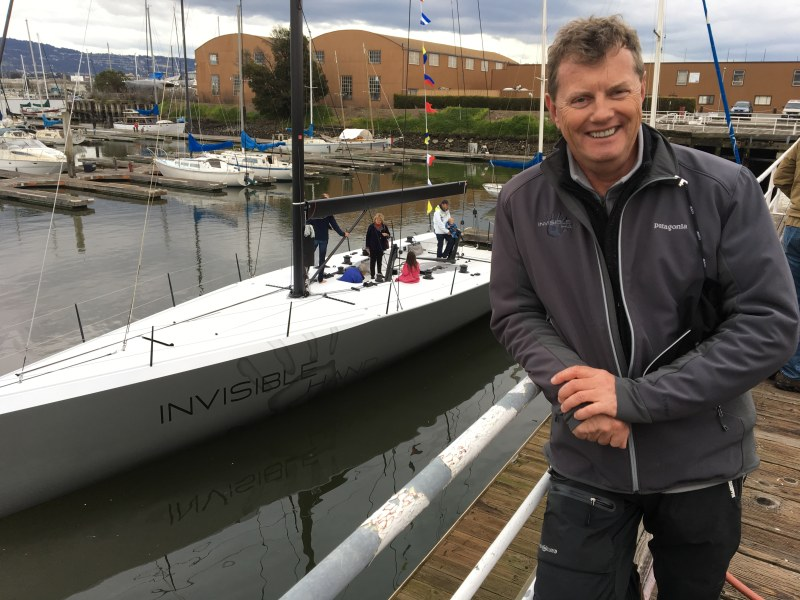
Slootman 没做的一件事,也许正是他的荷兰文化背景让他根本做不出来的一件事,就是表演这种艰难。他不会睡地板,不会在楼里修咖啡馆,也不会发子弹点列出自己的作息。他玩 Pac52 竞赛帆船,那种造价几千万美元、需要全职船员、对技能和花费要求都极高的远洋赛船。他毫无歉意地开着它们横渡太平洋。而在他出海期间,Snowflake 交出了公司历史上最漂亮的季度业绩。

公司不是靠受苦建起来的。受苦与他的判断正交,而恰恰因为他不表演受苦,他的判断才更好。他是在一种清明的状态下做决策,而表演受苦这种事在结构上就会阻断这种清明。一个没睡觉、超过一百天没离开大楼、又把自己的身份组织在向外展示忍耐力这件事上的人,不可能对任何事做出好判断,尤其不可能对他声称自己正在为之忍耐的那件事做出好判断。

我想在硬公司和苦熬废料公司之间,做一个非常具体也非常狭窄的区分。因为从外面看,这两种东西很容易被当成一回事。它们都意味着长工时。都意味着牺牲。都意味着把人推到舒适边界之外很远的地方。但区别在于,这些时间到底是为了什么。在硬公司里,工时是服务于产出的。那些工时是建造某个东西的成本,没人会去记录这个成本,因为成本不是产品。在苦熬废料公司里,工时本身就是产出。对这些工时的记录,对受苦的表演,本身才是产品。受苦才是真正被制造出来的东西,而公司在某种非常真实的意义上,只是一台把人的努力转换成努力感的机器。

Snowflake 没人把 logo 纹在自己身上。他们忙着认真干活,根本没空。

现在已经长出一整套为苦熬废料经济服务的媒体结构。我想尽量小心地描述它,因为至少在它最边缘的位置上,很多参与者都是我的亲近朋友。我不觉得他们在做一件愤世嫉俗的事。我觉得真正有害的是这个结构本身,而处在里面的人,大多是在真诚地运作于一种他们还没有完全看清含义的形式之中。这个世界大多数事情其实都是这样,我自己在这方面也并非没有虚伪之处。

我的朋友 Eric Jorgensen 写过一本关于 Elon Musk 的书。David Senra 的播客主题一直围绕人物传记,他采访了 Jorgensen,聊 Musk。于是最后产出的结构,变成了一个人跟另一个人聊另一个人写的另一个人的故事,而在这整条链条里,没有任何一个人真的造火箭、经营公司,或者做那条链条想要歌颂的那些工作。真正的工作在上游。我们在下游看到的,是靠近工作的表演。我一直在想这个问题,因为它看起来像是每多隔一层,每多离 Musk 以及 Musk 每天到底在干什么远一步,神圣感不但没有被稀释,反而 somehow 被浓缩了。

传记比 Musk 本人更纯粹。我知道这话听起来有点怪。但你可以把它想成圣髑,真正意义上的中世纪圣髑。Musk 要面对诉讼,要面对火箭爆炸,还要忍受在互联网上一边挨打一边发帖的尴尬。书不用面对这些。故事把好的部分吸收走了,执拗、愿意受苦、把自我服从于使命,而 Elon 身上那些令人尴尬的部分,那些让他显得像一个真实的人的部分,都被留在后面了。

教会当年对圣徒遗骨做的也是同样的事。你从托马斯身上取下一节指骨,装进金盒子里,带着它绕欧洲走,人们一看见就会流泪。他们在这根手指面前感受到的东西,是面对托马斯本人永远感受不到的,因为托马斯本人是个会有看法、会有怀疑、晚饭时可能说出奇怪话的人。手指只是待在那里,纯粹地神圣。它是完美的。

而且这东西会不断递归。会有人去采访采访者,聊他采访那位传记作者的经历。会有人发长帖讨论那场采访。还会有人发长帖讨论那条长帖。每多一层,就离任何真实的东西更远一步,也离对建造者特质的纯粹表演更近一步。1215 年的第四次拉特朗大公会议就试图压住这种事。没成功。永远不会成功。你没法管制人对靠近神圣之物的渴望,因为这种渴望没有底,而真正神圣的供给永远都少得可怜。

我也想诚实一点,承认自己在这里的虚伪,因为这个论证要求我这么做。

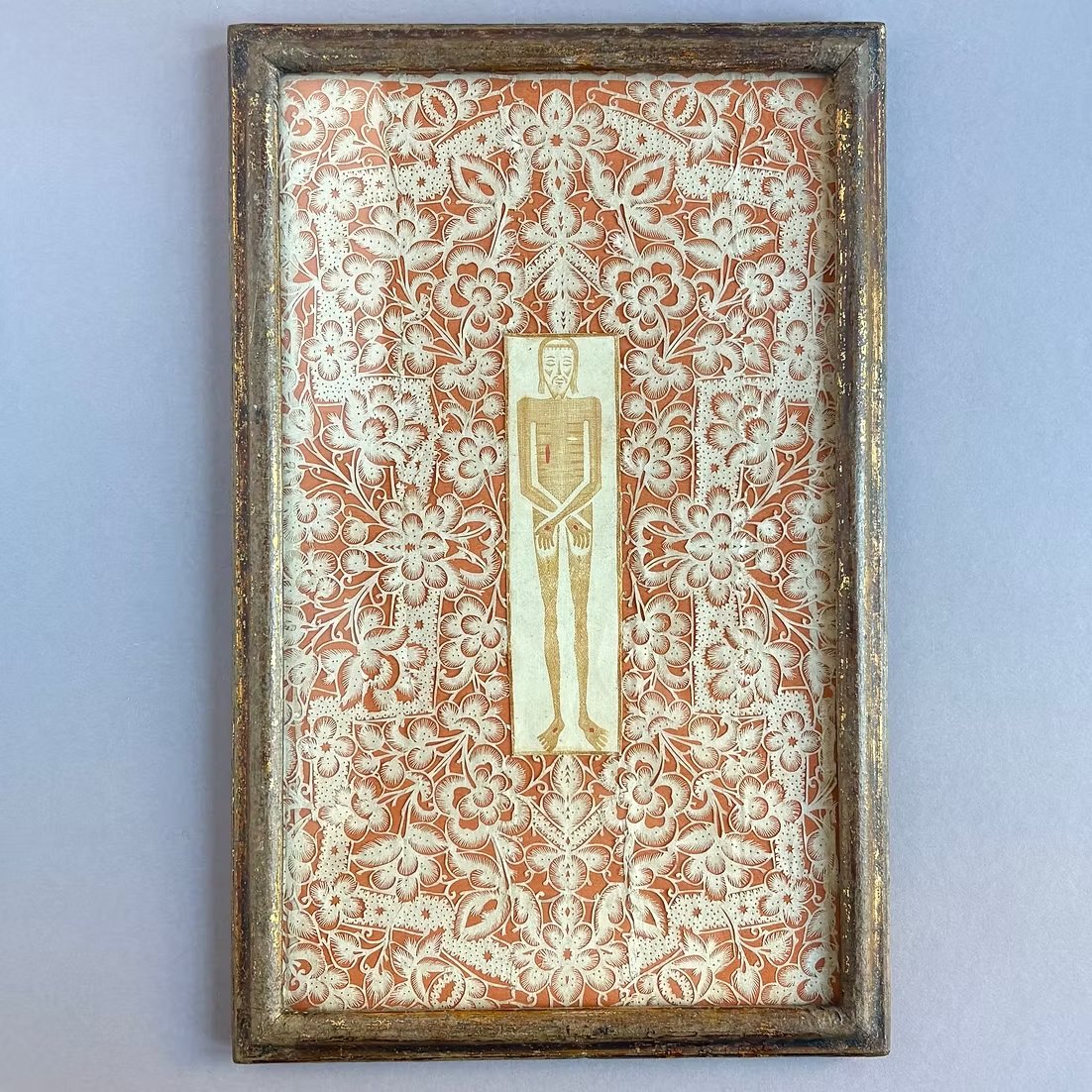
不久前,我在纽约一个书展上买到了一件宗教敬拜艺术品。那是一幅赭红色调的雕版作品,描绘的是贝桑松圣裹尸布,手工镂刻在一张白纸上,叠放在橙色衬纸之上,上面还有一位修道院女子在十七或十八世纪某个时候做出的复杂花卉纹样。

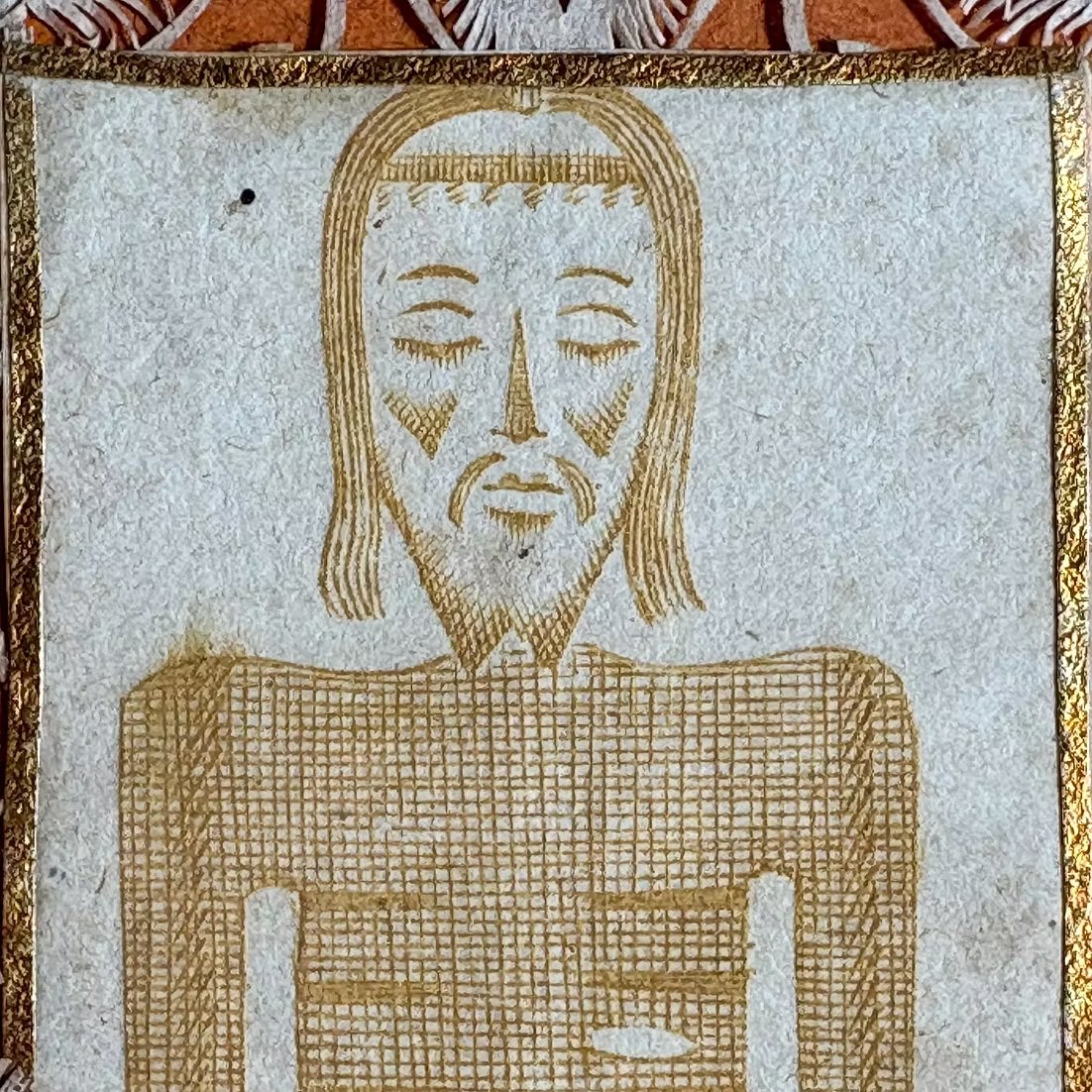
基督的身体被极淡地描绘在金色墨迹里。伤口则是手工点上的红色颜料,边缘又描了金。上色的人把伤口点在了错误的一侧,因为她是把基督的形象当作普通肖像来画的,她并不明白裹尸布是身体印痕,因此应当是镜像。这是一个小小的人为错误,在这件作品里穿越了三百年。

贝桑松圣裹尸布几乎可以肯定是都灵裹尸布的复制品,或者至少是因为都灵圣物出现在当地而被催生出来的一件物件。它最早见于 1523 年的记载,起初并不太受重视。曾有一位教士拒绝挪动雕像,为它的圣髑箱腾地方,但在接下来的两个世纪里,它逐渐成了极受崇敬的圣物,复活节时能吸引将近三万人前来朝拜,据说还治好了眼疾,也被拿来抵御瘟疫。制作这些虔敬复制品的修女们,Annociades、Carmelites、Clarissans,把自己完全献给了默观生活。她们用金丝和丝绸做装饰来框住图像,并把最精美的画板留给最显赫的朝圣者展示。

1794 年 5 月 24 日,这块裹尸布被撕毁,布料被拿去给革命军伤员包扎。圣物已经不存在了,留下来的只有复制品、版画、刺绣,以及那些与世隔绝的修女们剪出来的纸刻。很多情况下,她们甚至从未亲眼见过自己在复制的东西。我的这张纸刻,很可能是一件复制品的复制品的复制品的复制品。它所复制的圣物,本身也很可能只是一个复制品,描绘的是一个如今已经不在这片大地上的身体。做出它的那位女子明白,重点不在纸,不在刀工,也不在伤口,而在于整条链条的存在,是为了传递某种无法被原物本身容纳的东西。

我每天早晨祈祷时都会看它,看那张橙色衬纸,看粗糙的裁切,看那个落在错误一边的伤口。每天早晨,看着它,我感受到的都是同一种东西。那种藉由凝视它而与神性相遇的感觉,那种基督美德与受难中苦痛的体现,对我来说是真实的,就像我对信仰所知道的一切那样真实。这条链条之所以有效,是因为链条上的每一环都指向某个它自己无法容纳的东西。即便距离已经大到惊人,它的价值仍然因为这种指向而被澄清了。

苦熬废料经济并不指向任何超越它自身的东西。它只指向对它自身的崇拜。圣髑就是展品,展品就是圣髑,观众聚集起来,看圣髑匣被打开,里面是另一个更小的圣髑匣,再里面还有一个,更里面还有一个,而最中央什么都没有。我说的不是神秘主义者在无法用语言描述上帝时说的那种发光的虚无,我说的是真的什么都没有。坟墓是空的,而且不是因为复活。它从一开始就是空的。

几个月前我参加了一场晚宴,那种这个城市偶尔还会产出的、奇异混种式的饭桌。坐在我旁边的女人,后来发现竟然是某条王室血脉的继承人,那种古老到只有非欧洲财富如今还被允许如此古老的家族。财富经过几代积累,已经发展出学校、医院、信托,甚至还有国家和董事席位,虽然没人特别想要这些东西,但它们仍被维持着,因为维持本身就是这条血脉的意义。

她为她所说的有精神气的贵族的消亡而叹息。我花了整场晚餐的大部分时间才真正明白她的意思。对她来说,有精神气的贵族,是一群活在美丽生活中的美丽的人,把消费美好之物当成一种神圣使命,是把贵族美德演成一种活的展览,向人展示当人生摆脱必要性之后,可以活成什么样。摆脱必要性,不等于摆脱责任。那些贵族的生活,无论表面多么金碧辉煌,看起来其实都非常不好过。他们被不可思议数量的责任压得喘不过气。

她有理由为此哀悼。她的同辈,那些当代其他显赫家族的血脉,如今正朝各个方向被更糟的东西腐蚀掉。

现代富人已经分裂成两种人,看上去不同,内里却有同样的空洞。第一种是毫无方向地消费,一百万美元的 F1 贵宾套票、看起来像停车楼一样的超级游艇、毫无区分感也毫无优雅可言地批量采购昂贵体验,而它和便宜体验的区别,只在于支付时需要的钞票面额不同。这不是贵族式消费。这只是毫无所指的炫耀性消费,取向只围绕消费这个动作本身。

第二种人更隐蔽,也正是他们生产出了圣徒传和那些纹身。他们朝相反方向逃得太远,结果抵达了一个我觉得真的很变态的地方。这些人太害怕被人看见自己享受剩余,于是把自己全部可见的存在组织成一种劳动表演。这种表演越来越夸张,越来越升级,最后已经和它无意识模仿的富士康条件没有区别。在超级游艇和旧金山每月两万美元公寓里铺在地板上的床垫之间,几乎没有人去做那件每一个拥有如此之多剩余的旧文明都明白是根本义务的事。

几乎没有人。我有一位很亲近的朋友,是创始人,真的做起过公司,也真的卖掉过公司。他住在一栋漂亮又昂贵的房子里,家里摆着 John Muir 的摇椅,1976 年的 Nakashima 餐桌,四十年代价值几千美元的 Navajo Crystal 地毯,六十年代价格高得离谱的 JBL Paragon 音箱。他对这些东西毫不羞愧,这恰恰是他对我来说异常而重要的地方。他不表演清苦,也不为自己的剩余道歉。他活在一堆古老而美丽的物件之中,而这些物件都是由极其在意制作本身的人做出来的。

而且他的人生是通过这些物件指向某种东西的,就像我的纸刻是通过橙色衬纸和放错位置的伤口指向某种东西一样。他是我在这个行业里认识的极少数明白一件事的人之一,那就是财富产生的剩余是一种责任,而这种责任要求你去表演贵族美德来回应它。当然,这个回应首先是基督要我们做的事,慈善、善行、去丰富那些比我们少得多的人,但也包括表演贵族美德,活得好,活得显眼,活得不带歉意,去展示当人生摆脱必要性、又朝向美时,可以是什么样子。

我常常想到欧洲贵族,因为他们对这个问题有一个我们没有、而我也不确定我们是否有能力拥有的答案。你之所以有钱,是因为上帝把你放在那里。作为交换,你欠下了义务,而且是很具体的义务,欠那片庄园,庄园在你出生前就存在,也会在你死后继续存在,而你维护它,不是因为那很舒服,说实话,维护这种大宅子听起来真的很惨,而是因为你和它的关系本质上是托管。你欠佃户,欠教会,欠军团,欠郡县,欠季节,最终也欠你的上帝,一场贵族之美的表演。

美国式的表达,或许最后一次能在镀金时代的铁路大亨身上看到,稍稍不同。Carnegie 建图书馆,Rockefeller 建学院,Frick 建了一座美丽的博物馆。剩余通过你流向某个会比你活得更久的东西,哪怕国家本身无法提供那种捐赠制度的机制。

但即便如此,这些也不是靠精英竞争赢来的奖赏。领主不会靠比佃户更辛苦工作来证明自己的庄园合理。Carnegie 也不会睡在地上的床垫上。剩余把你从必要性中解放出来,让你能够承担那些没有剩余的人承担不了的义务。而你如何承担这些义务,才是别人唯一认可的正当性来源。

也许正是在这种倒转之中,一切开始变坏。一个已经与贵族和解的社会知道,钱来自继承、历史和上帝。没有任何意义上是贵族自己挣来了这些钱,所以这些钱天然就预装了义务。如果你活在一个精英主义社会里,你就必须相信每一美元都是理性市场返还给你的、直接而公平的贡献回报。如果账都结清了,如果每一美元都是你自己挣来的,那就再没有什么需要交出去的了。

于是你必须持续表演自己是如何挣到这些钱的,提供你受过苦的证据,提供回报与苦难成比例的证据,提供你谁也不欠、市场也没有任何不公平之处的证据。看我有多痛苦。看我受了多少伤。

996 是一种大规模生产、中央计划式的创造方法。它不适合发明新东西。它只适合像齿轮一样去放大机械流程。伟大的作品不会诞生在每周一百小时工作之后,它只会出现在短暂、飘忽、随机的小瞬间里,接受这一点吧

你可以用 996 组装一部 iPhone,但你不可能用它设计出一部 iPhone。

伟大的工作一直都要求牺牲,也常常需要残酷的工时,这一点我并不否认。我反对的是方向。很多这样的人,其中不少还是朋友,拥有历史上任何阶级都不曾拥有过的经济自由,却自由地选择去模拟中国装配流水线的条件,并把它称作美德。

在一个自动化会把几乎所有东西的成本都压到接近零的世界里,唯一真正重要的问题,是你到底想要什么。你消费什么。你往身体里放什么。你往心里放什么。这是唯一剩下的约束,而且这个约束会直接落在你的品格上,落在你自己对何为美、何为值得的判断上。如果我们是带着这样一代人走进那个世界的,这一代人的全部准备,就是睡在办公室地板上、因为工作过度把自己搞出自身免疫疾病,那这一切到底图什么。

这话也许不太讨喜,不过:

自然贵族,哪怕很愚蠢,哪怕是继承来的,野鸡和可笑的帽子,供暖费比一个人全年收入还高的宅子,也比我们现在造出来的东西更诚实,也更好。贵族不会为了证明自己的财富配得上而睡地板。他不会把家族纹章烙在自己皮肤上。他有钱,因为他就是有钱,这一点所有人都知道,他自己也知道。而他的文化会追问的那个问题,也是它唯一觉得值得追问的问题,是他会拿这些钱做什么。他会建什么能在他死后留下来的东西。他会照料什么本来就不属于他的东西。

圣徒传装置只会继续加码。

多年以后,会有一位播客主持人走进一间办公室。这家公司每周工作十四天,每天二十八小时。

创始人住在办公室,睡在办公室,或者也许根本不睡,而是 24/7 工作在那间办公室里。每个员工都把 logo 纹在脸上。播客主持人走过这栋楼,就像朝圣者经过圣髑一样。缓慢地。虔敬地。带着奉献感。

走过一张张桌子,员工们还在工作。唯一的区别是,他们现在已经死了,他们是为工作而死的,但他们的骨架仍然挂在 slack 频道和没完没了的 ai agent 工作流上,每一个都是,头骨上的 logo 依旧清晰可辨。角落里有人正坐着写一本关于那位创始人的书,而那位创始人自己也是一具坐在桌前的骷髅,旁边就是他建的咖啡馆。这本书会写得很好。还会有人去采访别人,聊这本书。这场采访会非常火。观众会感到那种敬畏,也会感到那种自惭形秽,而圣徒传这种形式存在至今,本来就是为了制造这种感觉。在这整条链条里的任何一个环节,都不会有人去问这家公司到底做了什么,因为公司从来都不是重点。

特别感谢 Marshall Kibbey Rare Books,把那件漂亮的纸刻卖给了我。

A podcaster recently posted about a founder that he had just interviewed. The founder was the most hardcore founder he's ever encountered after decades of chronicling the most hardcore founders.

最近有位播客主持人发了一条帖,讲的是他刚采访过的一位创始人。按他的说法,这是他几十年来记录过的所有狠人创始人里,最硬核的一个。

Each detail was more extreme than the one that came before it, enumerated in the way that a medieval chronicler would escalate the mortifications of the saints until the congregation was sufficiently prostrate that the church floorboards were bending under them.

每一个细节都比前一个更极端,铺陈的方式像中世纪编年史家不断加码圣徒的苦修事迹,直到会众彻底伏倒,连教堂地板都快被压弯。

The company works seven, maybe even eight days a week. The founder lives, sleeps, and eats in his office. He built a cafe inside because even though he lives amongst other hardcore founders, there is no founder hardcore enough to demand coffee at one, two, three, four, or five in the morning. Two thirds of the company have tattooed themselves with the logo of the company like a cattle brand.

这家公司一周工作七天,也许甚至八天。创始人住在办公室,睡在办公室,吃也在办公室。他还在里面修了个咖啡馆,因为即便身边也都是狠人创始人,也没有哪个狠人狠到会在凌晨一点、两点、三点、四点、五点非喝咖啡不可。公司里有三分之二的人把公司 logo 纹在自己身上,像给牲口打烙印一样。

The post closed with a jab at the 9 to 5ers working from home on Fridays, the comfortable, the moderate, and the damned, who exist in his frame only to establish, by contrast, how serious and hardcore this founder is, how committed and how far beyond the ordinary human appetite for rest and domesticity and life outside the building.

这条帖子的结尾,还顺手讥讽了一下那些周五在家远程上班的朝九晚五打工人,那些安逸的人,那些温和的人,那些活该下地狱的人。他们在这套叙事里存在的唯一作用,就是作为反衬,说明这位创始人有多认真、多硬核,投入得有多深,已经远远超出了普通人对休息、家庭生活,以及大楼之外人生的欲望。

No one asks what the company does.

没有人问这家公司到底是做什么的。

It doesn't matter what the company does. The company is beside the point in the same way that the specific miracles attributed to a particular saint are always beside the point in the hagiographic tradition. What matters is the suffering that preceded it and the renunciation that made it possible. This act, the act of chronicling the hardcore founder, is hagiography.

它做什么根本不重要。公司本身根本不是重点,就像圣徒传传统里,某位圣徒到底行过哪些具体神迹,永远都不是重点。真正重要的是神迹之前的苦难,是让神迹成为可能的弃绝。记录硬核创始人这件事,本质上就是圣徒传。

Hagiography in its precise and medieval sense. The chronicles of the lives of the saints that were composed for the edification and moral subjugation of the faithful. We have not progressed on the structure in 800 years, we’ve only made it secular. The saint renounces worldly comfort. The saint endures what ordinary men cannot. The saint is sustained by something the audience can see the evidence of, but can never quite possess. And the distance between the saint's capacity for pure suffering and the faithful's capacity for admiring it is the apparatus of faith. I am not the saint and you are not the saint. We are the peasant who is hearing about the saint from the friar who visits the monastery. The role is to be moved by it, to move our souls ever closer to the virtue of our Lord.

而且是最精确、最中世纪意义上的圣徒传。那是为教化信徒、让信徒在道德上臣服而写成的圣人行实。八百年来,这种结构一点没变,只不过如今变成了世俗版本。圣徒放弃世俗安逸。圣徒承受常人承受不了的东西。圣徒被某种东西支撑着,观众能看到证据,却永远无法真正拥有它。圣徒纯粹受苦的能力,与信徒只能赞叹这种受苦的能力之间的距离,正是信仰运作的装置。圣徒不是我,也不是你。我们只是那个听修士从修道院回来讲圣徒故事的农民。我们的角色就是被它打动,让灵魂一点点更靠近主的美德。

I keep circling back to the tattoos. 20 people have a startup's logo on their skin. Permanently. The tattoo is the oldest medium of devotion available to the human body. It's the same medium the pilgrims used to mark themselves after reaching Jerusalem in conquest and crusade. The same medium that Roman soldiers used to signify that they belonged to the legion before they belonged to themselves. But instead of the legion, instead of your god, the tattoo is of a corporate logo. It's the terminal escalation of something that I think is worth looking at, because it says something much worse about where we are than anyone seems comfortable saying out loud.

我一直反复想到那些纹身。二十个人把一家初创公司的 logo 永久纹在自己皮肤上。纹身是人类身体最古老的奉献信物。朝圣者攻下耶路撒冷、参与十字军东征后,就是用这种方式给自己留下标记。罗马士兵也是用这种方式表明自己先属于军团,后属于自己。但现在,取代军团、取代你的神的,是一个企业 logo。这是某种东西最终升级后的样子,我觉得值得盯着看,因为它说明了我们所处的位置,比任何人愿意大声说出来的都更糟。

What this reveals is that the wealthiest generation of human beings in the history of our species has become so frightened of being seen as a class so terrified of their position being legible that it has begun performing the lives of people who assemble iPhones in near-slavery conditions in Foxconn plants. Their motivation does not come from a place of solidarity with those workers. And it's not a political conviction about the dignity of labor, the motivation is terror. The specific terror of being seen to have money and to enjoy it. The terror of the surplus being visible and not disguised as the product of equivalent suffering. The seven day work week is the Foxconn schedule, the sleeping in the office is the Foxconn dormitory, the cafe built inside is the Foxconn canteen, but there is no one forcing them to labor, no suicide nets.

这暴露出的是,人类历史上最富有的一代人,已经害怕到不敢被看成一个阶级,害怕到不敢让自己的位置变得清晰可见,于是开始表演那些在富士康工厂里、在近乎奴役条件下组装 iPhone 的人的生活。他们这样做,不是出于对那些工人的团结,也不是出于对劳动尊严的政治信念,驱动他们的是恐惧。是一种非常具体的恐惧,害怕被人看见自己有钱,害怕被人看见自己享受这些钱。害怕剩余价值暴露出来,害怕这些剩余没有被伪装成等量痛苦的产物。一周七天工作制,是富士康的排班。睡在办公室,是富士康宿舍。楼里建咖啡馆,是富士康食堂。但这里没有人逼他们劳动,也没有防自杀网。

These are people that are performing voluntarily in public the precise conditions that we correctly identify as exploitation when they are imposed on a person who has no alternative. And we celebrate the performance because the performance answers the question that this culture has no answer to otherwise.

这些人是在公开、自愿地表演一种处境,而当这种处境被强加在别无选择的人身上时,我们都能正确地称它为剥削。而我们居然会为这种表演喝彩,因为这种表演回答了这个文化无法用别的方式回答的问题。

Why do you deserve so much? Why are you so rich?

你凭什么配得上这么多东西。你为什么这么有钱。

Because I suffer. Because I do not sleep. Because I've given up my life to something greater than myself because my employees have scarred their flesh with my symbol and I eat from open containers the leftover food and my body rots, as I sit at the desk, because I have not left this building in 11 days because I am no more of the lines of code that I produce than I am flesh and life. The corporeal faculties that define me, reproduction, love and lust no longer exist. They have eliminated them in service of something greater, and trust me when I say I'm not enjoying any of this. And if I am, I'm enjoying it only because I'm giving it up in sacrifice for something greater. I’m a sicko. I’m barcode.

因为我在受苦。因为我不睡觉。因为我把自己的人生献给了比我更大的东西,因为我的员工把我的符号刻进他们的肉里,而我用敞口塑料盒吃剩饭,身体一点点腐烂,坐死在桌前,因为我已经十一天没离开这栋楼了,因为我和我写出来的代码一样,都不再是血肉之躯。那些定义我的身体能力,生殖、爱、欲望,都已经不存在了。它们都被消灭了,献祭给了某种更高的东西。相信我,我一点都没享受这个过程。就算我享受了,也只是因为我把这种享受当成了献祭,献给更高的东西。我是个病态的人。我是条码。

We should find this considerably more disgusting than we do. When we impose these conditions on a person by necessity we call it what it is, exploitation and we call for its remedy. When they are performed voluntarily by people who could be doing literally anything else with their lives, anything, the whole range of human possibility available to them. Every library unbuilt, every garden untended, every beautiful thing in the world unfunded. We are witnessing a thing that looks like discipline, but is actually the most extravagant waste of economic surplus in the history of our civilization. We are watching people who have more freedom than the Medicis use that freedom to pretend they have less freedom than the line worker in Shenzhen, and we applaud it.

我们本该觉得这件事比现在恶心得多。一个人如果是被生活所迫,被迫承受这种条件,我们会把它叫成它本来的名字,剥削,也会要求纠正它。可当这些条件是由那些本来可以拿人生去做任何别的事的人自愿表演出来的,真的是任何事,整个人类可能性范围内的任何事。那些没有建起来的图书馆,那些没人照料的花园,那些本可以资助却没有资助的美好之物。我们看到的看似是纪律,实际上却是我们文明史上最奢侈的一种经济剩余浪费。我们在看一群比美第奇家族还自由的人,用自己的自由去假装自己比深圳流水线工人还不自由,而我们还在鼓掌。

Frank Slootman is a hero of mine.

Frank Slootman 是我心中的英雄。

Slootman ran Data Domain, ServiceNow, and Snowflake, three of the most intensely demanding companies in the history of enterprise software. And everyone who works at any of them will tell you the same thing. The intensity was real, the standards were exacting and brutal, and the culture did not accommodate mediocrity or comfort and had never pretended otherwise. These were intensely hard companies and the people inside them worked intensely hard and they produced just incredible returns for shareholders.

Slootman 先后管理过 Data Domain、ServiceNow 和 Snowflake,这三家公司都是企业软件史上要求最苛刻的公司之一。任何在这些公司待过的人都会告诉你同样的话。那种强度是真实的,标准是严酷而精确的,文化从不包容平庸,也不包容舒适,而且从来没假装过自己会包容。这些公司都极其艰难,里面的人也都极其拼命,最后给股东带来了惊人的回报。

What Slootman did not do, and what perhaps his Dutch cultural values made impossible for him to do, was perform the hardness. He did not sleep on the floor. He didn't build a cafe inside the building. He did not post bullet points about his schedule. He campaigned Pac52s, ocean racing yachts costing tens of millions of dollars, requiring full-time crews that require serious skill and expense. And he sailed them across the Pacific without apology. And Snowflake turned in the best quarters in its history while he was at sea.

Slootman 没做的一件事,也许正是他的荷兰文化背景让他根本做不出来的一件事,就是表演这种艰难。他不会睡地板,不会在楼里修咖啡馆,也不会发子弹点列出自己的作息。他玩 Pac52 竞赛帆船,那种造价几千万美元、需要全职船员、对技能和花费要求都极高的远洋赛船。他毫无歉意地开着它们横渡太平洋。而在他出海期间,Snowflake 交出了公司历史上最漂亮的季度业绩。

The company was not built by suffering. Suffering was orthogonal to his judgment and his judgment was better because he was not performing suffering. He was making decisions from a position of clarity that the performance of suffering specifically and structurally prevents. A person who has not slept and has not left a building in over 100 days and has organized his identity around the demonstration of his own endurance is not in a position to make good decisions about anything, including and especially the thing that he is supposedly enduring for.

公司不是靠受苦建起来的。受苦与他的判断正交,而恰恰因为他不表演受苦,他的判断才更好。他是在一种清明的状态下做决策,而表演受苦这种事在结构上就会阻断这种清明。一个没睡觉、超过一百天没离开大楼、又把自己的身份组织在向外展示忍耐力这件事上的人,不可能对任何事做出好判断,尤其不可能对他声称自己正在为之忍耐的那件事做出好判断。

I want to make a specific and narrow distinction between a hard company and a grindslop company. Because from the outside, it's easy to think these two things are the same. They both involve long hours. They both involve sacrifice. They both involve pushing people far past the point of comfort. But the difference is what the hours are for. In a hard company, the hours serve an output. The hours are the cost of the thing being built and no one is documenting the cost because the cost is not the product. In a grindslop company, the hours are the output. The documentation of those hours and the performance of suffering is the product. The suffering is the thing being built and the company is, in some very real sense, a machine for converting human effort into the feeling of exerting human effort.

我想在硬公司和苦熬废料公司之间,做一个非常具体也非常狭窄的区分。因为从外面看,这两种东西很容易被当成一回事。它们都意味着长工时。都意味着牺牲。都意味着把人推到舒适边界之外很远的地方。但区别在于,这些时间到底是为了什么。在硬公司里,工时是服务于产出的。那些工时是建造某个东西的成本,没人会去记录这个成本,因为成本不是产品。在苦熬废料公司里,工时本身就是产出。对这些工时的记录,对受苦的表演,本身才是产品。受苦才是真正被制造出来的东西,而公司在某种非常真实的意义上,只是一台把人的努力转换成努力感的机器。

No one at Snowflake was tattooing the logo on their body. They were too busy doing their damn jobs.

Snowflake 没人把 logo 纹在自己身上。他们忙着认真干活,根本没空。

There is a media structure that has grown to serve the grindslop economy, and I want to describe it with care because many of the people involved at least at the very edges edges of it are close friends of mine. And I don't think what they're doing is cynical. I think the structure is the damaging thing and the people that are inside of it are operating in good faith within a form whose implications they have not fully seen, which is how most of our world works and I am not without my hypocrisy in this regard.

现在已经长出一整套为苦熬废料经济服务的媒体结构。我想尽量小心地描述它,因为至少在它最边缘的位置上,很多参与者都是我的亲近朋友。我不觉得他们在做一件愤世嫉俗的事。我觉得真正有害的是这个结构本身,而处在里面的人,大多是在真诚地运作于一种他们还没有完全看清含义的形式之中。这个世界大多数事情其实都是这样,我自己在这方面也并非没有虚伪之处。

My friend Eric Jorgensen wrote a book about Elon Musk. David Senra, whose podcast is organized around the subjects of biographies, interviewed Jorgensen about Musk. The output of this produced something that structurally was a guy talking to a guy about a guy about a guy and at no point in this chain did anyone build a rocket or run a company or do any of the work that the chain exists to celebrate. That work is upstream. What we're watching downstream is performances of proximity to work. And I keep thinking about this because it seems like every additional layer of remove, every additional step away from Musk and whatever it is Musk actually does all day, doesn't dilute the holiness but actually concentrates it somehow.

我的朋友 Eric Jorgensen 写过一本关于 Elon Musk 的书。David Senra 的播客主题一直围绕人物传记,他采访了 Jorgensen,聊 Musk。于是最后产出的结构,变成了一个人跟另一个人聊另一个人写的另一个人的故事,而在这整条链条里,没有任何一个人真的造火箭、经营公司,或者做那条链条想要歌颂的那些工作。真正的工作在上游。我们在下游看到的,是靠近工作的表演。我一直在想这个问题,因为它看起来像是每多隔一层,每多离 Musk 以及 Musk 每天到底在干什么远一步,神圣感不但没有被稀释,反而 somehow 被浓缩了。

The biography is purer than Musk. I know how that sounds. But think about it like a relic, like an actual medieval relic. Musk has to deal with lawsuits and the rockets blowing up and the indignity of posting through it on the internet. The book carries none of that. The story has absorbed the good parts, the relentlessness and the willingness to suffer and the subordination of self to mission, and everything embarrassing about Elon, the parts that make him a real person, got left behind.

传记比 Musk 本人更纯粹。我知道这话听起来有点怪。但你可以把它想成圣髑,真正意义上的中世纪圣髑。Musk 要面对诉讼,要面对火箭爆炸,还要忍受在互联网上一边挨打一边发帖的尴尬。书不用面对这些。故事把好的部分吸收走了,执拗、愿意受苦、把自我服从于使命,而 Elon 身上那些令人尴尬的部分,那些让他显得像一个真实的人的部分,都被留在后面了。

It's the same thing the church did with the bones of saints. You take a finger bone out of Thomas and you put it in a golden box and you carry it around Europe and people weep when they see it. They feel something in the presence of that finger that they could never feel in the presence of Thomas because Thomas was a guy who had opinions and doubts and might say something weird at dinner. The finger just sits there being holy. It's perfect.

教会当年对圣徒遗骨做的也是同样的事。你从托马斯身上取下一节指骨,装进金盒子里,带着它绕欧洲走,人们一看见就会流泪。他们在这根手指面前感受到的东西,是面对托马斯本人永远感受不到的,因为托马斯本人是个会有看法、会有怀疑、晚饭时可能说出奇怪话的人。手指只是待在那里,纯粹地神圣。它是完美的。

And the thing recurses. Someone will interview the interviewer about interviewing the biographer. Someone will thread about the interview. Someone will thread about the thread. Every layer is further from anything real and closer to the pure performance of the attributes of building. The Fourth Lateran Council tried to shut this down in 1215. It didn't work. It never works. You can't regulate the demand for proximity to the sacred because the demand is bottomless and the supply of actual sanctity is always tiny.

而且这东西会不断递归。会有人去采访采访者,聊他采访那位传记作者的经历。会有人发长帖讨论那场采访。还会有人发长帖讨论那条长帖。每多一层,就离任何真实的东西更远一步,也离对建造者特质的纯粹表演更近一步。1215 年的第四次拉特朗大公会议就试图压住这种事。没成功。永远不会成功。你没法管制人对靠近神圣之物的渴望,因为这种渴望没有底,而真正神圣的供给永远都少得可怜。

I want to be honest about my own hypocrisy here because the argument requires it.

我也想诚实一点,承认自己在这里的虚伪,因为这个论证要求我这么做。

I bought a piece of devotional art at a book fair in New York not too long ago. It was a sanguine engraving of the Holy Shroud of Besançon hand cut into a sheet of white paper, an intricate floral motif by a woman in a convent sometime in the 17th or 18th century, laid over a backing sheet of orange paper.

不久前,我在纽约一个书展上买到了一件宗教敬拜艺术品。那是一幅赭红色调的雕版作品,描绘的是贝桑松圣裹尸布,手工镂刻在一张白纸上,叠放在橙色衬纸之上,上面还有一位修道院女子在十七或十八世纪某个时候做出的复杂花卉纹样。

Christ's body is depicted faintly in delicate gold ink. The wounds were touched by hand in red pigment with the edges gilded. The colorist got the wound on the wrong side because she was painting the depiction of Christ as a conventional portrait, because she did not understand that the shroud was a body imprint and therefore a mirror image. This is a small human error propagated in the work across 300 years.

基督的身体被极淡地描绘在金色墨迹里。伤口则是手工点上的红色颜料,边缘又描了金。上色的人把伤口点在了错误的一侧,因为她是把基督的形象当作普通肖像来画的,她并不明白裹尸布是身体印痕,因此应当是镜像。这是一个小小的人为错误,在这件作品里穿越了三百年。

The Shroud of Besançon was almost certainly a copy of the Shroud of Turin, or at least an artifact prompted by the Turin relic's presence in the region. It was first recorded in 1523 without much esteem at first. A canon refused to move statues to make room for its reliquary, but over the next two centuries it became an object of enormous veneration and drew crowds of nearly 30,000 at Easter and was credited with cures for the eyes and invoked against plague. The nuns that produced these devotional copies, Annociades, Carmelites, Clarissans, committed themselves purely to a contemplative life, framed the image in ornaments of gold and silk and reserved the finest panels for display to the most illustrious pilgrims.

贝桑松圣裹尸布几乎可以肯定是都灵裹尸布的复制品,或者至少是因为都灵圣物出现在当地而被催生出来的一件物件。它最早见于 1523 年的记载,起初并不太受重视。曾有一位教士拒绝挪动雕像,为它的圣髑箱腾地方,但在接下来的两个世纪里,它逐渐成了极受崇敬的圣物,复活节时能吸引将近三万人前来朝拜,据说还治好了眼疾,也被拿来抵御瘟疫。制作这些虔敬复制品的修女们,Annociades、Carmelites、Clarissans,把自己完全献给了默观生活。她们用金丝和丝绸做装饰来框住图像,并把最精美的画板留给最显赫的朝圣者展示。

On the 24th of May 1794, the shroud was torn apart and the cloth was used to bandage the wounded of the Revolutionary Army. The relic does not exist anymore, but what remains are the copies, the engravings, the embroideries, and the paper cuts made by cloistered women who in many cases never saw the thing they were reproducing. My paper cut is likely a copy of a copy of a copy of a copy of a relic that in itself is probably a copy depicting a body that is not here on this earth anymore that was made by a woman who understood that the point was not the paper or the cutting or the wound, but that the whole chain existed to transmit something that was not able to be contained in the original.

1794 年 5 月 24 日,这块裹尸布被撕毁,布料被拿去给革命军伤员包扎。圣物已经不存在了,留下来的只有复制品、版画、刺绣,以及那些与世隔绝的修女们剪出来的纸刻。很多情况下,她们甚至从未亲眼见过自己在复制的东西。我的这张纸刻,很可能是一件复制品的复制品的复制品的复制品。它所复制的圣物,本身也很可能只是一个复制品,描绘的是一个如今已经不在这片大地上的身体。做出它的那位女子明白,重点不在纸,不在刀工,也不在伤口,而在于整条链条的存在,是为了传递某种无法被原物本身容纳的东西。

I look at it every morning during my prayers, the orange paper and the rough cutting, the wound on the wrong side. And every morning I feel the same thing looking at it. The encounter with the divine I feel by looking at it, the embodiment of the virtue of Christ and his suffering during the Passion, is real in the way that I know anything about my faith. The chain works because every link in that chain was pointed towards something that the chain itself could not hold and even if the distance is enormous its value was clarified by the pointing.

我每天早晨祈祷时都会看它,看那张橙色衬纸,看粗糙的裁切,看那个落在错误一边的伤口。每天早晨,看着它,我感受到的都是同一种东西。那种藉由凝视它而与神性相遇的感觉,那种基督美德与受难中苦痛的体现,对我来说是真实的,就像我对信仰所知道的一切那样真实。这条链条之所以有效,是因为链条上的每一环都指向某个它自己无法容纳的东西。即便距离已经大到惊人,它的价值仍然因为这种指向而被澄清了。

The grindslop economy is not pointed towards anything beyond itself. It is pointed simply at the worship of itself. The relic is the exhibit and the exhibit is the relic and the audience gathers to see the reliquary opened and inside is another smaller reliquary and inside that is another and in the center there's nothing. And I don't mean the luminous nothing that the mystics describe when they run out of language for God, I mean actually nothing. The tomb is empty, and not because of the Resurrection. It was just always empty.

苦熬废料经济并不指向任何超越它自身的东西。它只指向对它自身的崇拜。圣髑就是展品,展品就是圣髑,观众聚集起来,看圣髑匣被打开,里面是另一个更小的圣髑匣,再里面还有一个,更里面还有一个,而最中央什么都没有。我说的不是神秘主义者在无法用语言描述上帝时说的那种发光的虚无,我说的是真的什么都没有。坟墓是空的,而且不是因为复活。它从一开始就是空的。

I ended up at a dinner a few months back, one of those odd cross-pollinated tables the city still produces, and the woman next to me turned out to be the heiress to a royal line that is old in the way that non-European fortunes are still permitted to be old. Accumulated over generations the wealth had developed schools and hospitals and trusts and even countries and board seats that no one particularly wanted but maintained because the maintenance was the point of the line.

几个月前我参加了一场晚宴,那种这个城市偶尔还会产出的、奇异混种式的饭桌。坐在我旁边的女人,后来发现竟然是某条王室血脉的继承人,那种古老到只有非欧洲财富如今还被允许如此古老的家族。财富经过几代积累,已经发展出学校、医院、信托,甚至还有国家和董事席位,虽然没人特别想要这些东西,但它们仍被维持着,因为维持本身就是这条血脉的意义。

She bemoaned the death of what she called the spirited aristocrat and it took me most of the dinner to understand what she meant. The spirited aristocrat for her was beautiful people inhabiting beautiful lives, consuming beautiful things as a sacred vocation, the performance of aristocratic virtue as a living exhibition of what a human life can be when freed from necessity. Freed from necessity which is different from freed from obligation. The lives of these aristocrats, no matter how gilded, seem incredibly unpleasant. They are buried in unbelievable amounts of obligation.

她为她所说的有精神气的贵族的消亡而叹息。我花了整场晚餐的大部分时间才真正明白她的意思。对她来说,有精神气的贵族,是一群活在美丽生活中的美丽的人,把消费美好之物当成一种神圣使命,是把贵族美德演成一种活的展览,向人展示当人生摆脱必要性之后,可以活成什么样。摆脱必要性,不等于摆脱责任。那些贵族的生活,无论表面多么金碧辉煌,看起来其实都非常不好过。他们被不可思议数量的责任压得喘不过气。

She was right to mourn it. Her peers, the other contemporary lines of great families, are being rotted away by something much worse in every direction.

她有理由为此哀悼。她的同辈,那些当代其他显赫家族的血脉,如今正朝各个方向被更糟的东西腐蚀掉。

The modern rich have split into two populations that look different but share the same vacancy. The first consumes without orientation, the million dollar F1 hospitality packages and the mega yachts that look like parking structures and the undifferentiated graceless bulk acquisition of expensive experience that differs from the inexpensive only in the denomination of the bills required to pay for it. This is not aristocratic consumption. This is conspicuous consumption pointed at nothing, oriented around the act of consumption itself.

现代富人已经分裂成两种人,看上去不同,内里却有同样的空洞。第一种是毫无方向地消费,一百万美元的 F1 贵宾套票、看起来像停车楼一样的超级游艇、毫无区分感也毫无优雅可言地批量采购昂贵体验,而它和便宜体验的区别,只在于支付时需要的钞票面额不同。这不是贵族式消费。这只是毫无所指的炫耀性消费,取向只围绕消费这个动作本身。

The second population, which is subtler, is the one that has produced the hagiography and the tattoos. It has fled so far in the opposite direction that it arrived somewhere that I believe is genuinely perverse. These people are so frightened of being seen to enjoy the surplus that they've organized their entire visible existence around the performance of labor so elaborate and escalating that the performance is indistinguishable from Foxconn conditions it unconsciously imitates. Between the mega yacht and the mattress on the floor of the San Francisco $20,000 a month apartment, there is almost no one doing the thing that every previous civilization with as much surplus understood as a fundamental obligation of having an unequal and rich society.

第二种人更隐蔽,也正是他们生产出了圣徒传和那些纹身。他们朝相反方向逃得太远,结果抵达了一个我觉得真的很变态的地方。这些人太害怕被人看见自己享受剩余,于是把自己全部可见的存在组织成一种劳动表演。这种表演越来越夸张,越来越升级,最后已经和它无意识模仿的富士康条件没有区别。在超级游艇和旧金山每月两万美元公寓里铺在地板上的床垫之间,几乎没有人去做那件每一个拥有如此之多剩余的旧文明都明白是根本义务的事。

Almost no one. I have a dear friend, a founder, someone who built and sold a real company, who lives in a beautiful and expensive house with John Muir's rocking chair in his house. A Nakashima dining table from 1976. Thousands of dollars of Navajo Crystal rugs from the 40s. JBL Paragon speakers from the 60s that cost ungodly amounts. He has no shame about any of this, and that is what makes him unusual and important to me. He's not performing austerity. He's not apologizing for his surplus. He lives among old and beautiful objects that are made by people who cared enormously about the making.

几乎没有人。我有一位很亲近的朋友,是创始人,真的做起过公司,也真的卖掉过公司。他住在一栋漂亮又昂贵的房子里,家里摆着 John Muir 的摇椅,1976 年的 Nakashima 餐桌,四十年代价值几千美元的 Navajo Crystal 地毯,六十年代价格高得离谱的 JBL Paragon 音箱。他对这些东西毫不羞愧,这恰恰是他对我来说异常而重要的地方。他不表演清苦,也不为自己的剩余道歉。他活在一堆古老而美丽的物件之中,而这些物件都是由极其在意制作本身的人做出来的。

And his life is pointed at something through those objects, the way my paper cut is pointed at something through the orange paper and the misplaced wound. He is one of the few people I know in this industry who understands that surplus from wealth is a responsibility requiring the performance of aristocratic virtue as an answer. And that answer is of course to do what Christ calls us to do, charity, good works, the enrichment of those who have much less than us, but also the performance of aristocratic virtue, to live well and visibly and without apology, demonstrating what a life can be when it's freed from necessity and pointed towards beauty.

而且他的人生是通过这些物件指向某种东西的,就像我的纸刻是通过橙色衬纸和放错位置的伤口指向某种东西一样。他是我在这个行业里认识的极少数明白一件事的人之一,那就是财富产生的剩余是一种责任,而这种责任要求你去表演贵族美德来回应它。当然,这个回应首先是基督要我们做的事,慈善、善行、去丰富那些比我们少得多的人,但也包括表演贵族美德,活得好,活得显眼,活得不带歉意,去展示当人生摆脱必要性、又朝向美时,可以是什么样子。

I think a lot about the European aristocracies because they had an answer to this that we don't have and I'm not sure we're capable of having. You had money because God put you there and in return you owed, specifically, to the estate which was there before you were born and will be there after you die and which you were maintaining not because it was pleasant, I mean maintaining these manor houses sounds genuinely miserable, but because your relationship to the thing was custodial. You owed to the tenants, the church, the regiment, the county, the season, and ultimately to your God, a performance of aristocratic beauty.

我常常想到欧洲贵族,因为他们对这个问题有一个我们没有、而我也不确定我们是否有能力拥有的答案。你之所以有钱,是因为上帝把你放在那里。作为交换,你欠下了义务,而且是很具体的义务,欠那片庄园,庄园在你出生前就存在,也会在你死后继续存在,而你维护它,不是因为那很舒服,说实话,维护这种大宅子听起来真的很惨,而是因为你和它的关系本质上是托管。你欠佃户,欠教会,欠军团,欠郡县,欠季节,最终也欠你的上帝,一场贵族之美的表演。

The American expression of this, perhaps last seen in the railroad barons of the Gilded Age, was subtly different. Carnegie built his libraries, Rockefeller built colleges, and Frick built a beautiful museum. Surplus passed through you on its way to something that would outlast you even if the state could not provide the mechanism of endowment.

美国式的表达,或许最后一次能在镀金时代的铁路大亨身上看到,稍稍不同。Carnegie 建图书馆,Rockefeller 建学院,Frick 建了一座美丽的博物馆。剩余通过你流向某个会比你活得更久的东西,哪怕国家本身无法提供那种捐赠制度的机制。

But still these were not meritocratic bounties. The lord does not justify his estate by working harder than the tenants. Carnegie did not sleep on a mattress on the ground. The surplus freed you to meet obligations that people without surplus could not meet and how you met them was the only justification anyone would accept.

但即便如此,这些也不是靠精英竞争赢来的奖赏。领主不会靠比佃户更辛苦工作来证明自己的庄园合理。Carnegie 也不会睡在地上的床垫上。剩余把你从必要性中解放出来,让你能够承担那些没有剩余的人承担不了的义务。而你如何承担这些义务,才是别人唯一认可的正当性来源。

This inversion is perhaps where it all went sideways. A society that's come to terms with its aristocrats knew that money came from inheritance and history and God. There was no sense in which an aristocrat earned the money so the money came preloaded with obligation. If you live in a meritocratic society, you have to believe that every dollar is a direct and fair contribution returned to you by the rational market. If you're all squared up and you earned every dollar there's nothing left to give.

也许正是在这种倒转之中,一切开始变坏。一个已经与贵族和解的社会知道,钱来自继承、历史和上帝。没有任何意义上是贵族自己挣来了这些钱,所以这些钱天然就预装了义务。如果你活在一个精英主义社会里,你就必须相信每一美元都是理性市场返还给你的、直接而公平的贡献回报。如果账都结清了,如果每一美元都是你自己挣来的,那就再没有什么需要交出去的了。

And you have to perform that earning continuously to provide proof that you suffered, proof that the return was proportional, proof that you don't owe anything to anyone or that the market was unfair in any way. Look how much I suffer. Look how much I hurt.

于是你必须持续表演自己是如何挣到这些钱的,提供你受过苦的证据,提供回报与苦难成比例的证据,提供你谁也不欠、市场也没有任何不公平之处的证据。看我有多痛苦。看我受了多少伤。

“996” is a mass production / central planning approach to creation. it doesn’t work for inventing new things. it only works for cog like scaling of mechanical processes. great work doesn’t happen after 100 hour weeks, it only appears in tiny fleeting random moments, embrace that

996 是一种大规模生产、中央计划式的创造方法。它不适合发明新东西。它只适合像齿轮一样去放大机械流程。伟大的作品不会诞生在每周一百小时工作之后,它只会出现在短暂、飘忽、随机的小瞬间里,接受这一点吧

You can assemble an iPhone with 996, but you could have never designed one.

你可以用 996 组装一部 iPhone,但你不可能用它设计出一部 iPhone。

Great work has always demanded sacrifice and often brutal hours and I'm not disputing this. What I'm disputing is the direction. These people, many of them friends, have more economic freedom than any class in history and they've chosen, freely, to simulate the conditions of a Chinese assembly line and call it virtue.

伟大的工作一直都要求牺牲,也常常需要残酷的工时,这一点我并不否认。我反对的是方向。很多这样的人,其中不少还是朋友,拥有历史上任何阶级都不曾拥有过的经济自由,却自由地选择去模拟中国装配流水线的条件,并把它称作美德。

In a world in which automation will collapse the cost of everything to basically zero, the only question that matters is what do you actually want. What do you consume. What do you put in your body. What you put in your heart. This is the only constraint left and it's a constraint placed squarely on your character and your own sense of what's beautiful and worthwhile. If we approach this world with a generation whose entire preparation has been sleeping on office floors and giving themselves autoimmune disorders from working too hard, then what's the point.

在一个自动化会把几乎所有东西的成本都压到接近零的世界里,唯一真正重要的问题,是你到底想要什么。你消费什么。你往身体里放什么。你往心里放什么。这是唯一剩下的约束,而且这个约束会直接落在你的品格上,落在你自己对何为美、何为值得的判断上。如果我们是带着这样一代人走进那个世界的,这一代人的全部准备,就是睡在办公室地板上、因为工作过度把自己搞出自身免疫疾病,那这一切到底图什么。

It’s perhaps an unsavory argument, but:

这话也许不太讨喜,不过:

A natural aristocracy, even a silly one, even an inherited one, pheasants and silly hats and houses that cost more to heat than a person earns in a year, is more honest and more good than what we've built. The aristocrat does not sleep on the floor to prove that his wealth is deserved. He does not brand his skin with the crest of the family. He has money because he has money, and everyone knows that, including him. And the question his culture asks, the only question it considers worth asking, is what he will do with it? What he will build that outlasts him? What he will tend that was not his to begin with?

自然贵族,哪怕很愚蠢,哪怕是继承来的,野鸡和可笑的帽子,供暖费比一个人全年收入还高的宅子,也比我们现在造出来的东西更诚实,也更好。贵族不会为了证明自己的财富配得上而睡地板。他不会把家族纹章烙在自己皮肤上。他有钱,因为他就是有钱,这一点所有人都知道,他自己也知道。而他的文化会追问的那个问题,也是它唯一觉得值得追问的问题,是他会拿这些钱做什么。他会建什么能在他死后留下来的东西。他会照料什么本来就不属于他的东西。

The hagiographic apparatus can only intensify.

圣徒传装置只会继续加码。

Years from now, a podcaster will walk through an office. The company worked 14 days a week, twenty eight hours a day.

多年以后,会有一位播客主持人走进一间办公室。这家公司每周工作十四天,每天二十八小时。

The founder lived and slept, or perhaps even never slept but worked- 24/7 in that office. Every employee had the logo tattooed on their face. The podcaster walks through the building in the same way a pilgrim walks past relics. Slowly. Reverently. With devotion.

创始人住在办公室,睡在办公室,或者也许根本不睡,而是 24/7 工作在那间办公室里。每个员工都把 logo 纹在脸上。播客主持人走过这栋楼,就像朝圣者经过圣髑一样。缓慢地。虔敬地。带着奉献感。

Past desks where employees still work. The only difference now is that those employees are dead, they died in service of the work, but their skeletons still linger over the slack channels and the endless ai agent workflows, every one of them, the logo still legible on their skulls, and someone is there in the corner writing a book about the founder who is also a skeleton seated at his desk next to the cafe he built, and the book will be very good, and someone will interview someone about the book, and the interview will be very popular, and the audience will feel the awe and the inadequacy that the hagiographic form has always existed to produce, and no one at any point in this chain will ask what the company did because the company was always beside the point.

走过一张张桌子,员工们还在工作。唯一的区别是,他们现在已经死了,他们是为工作而死的,但他们的骨架仍然挂在 slack 频道和没完没了的 ai agent 工作流上,每一个都是,头骨上的 logo 依旧清晰可辨。角落里有人正坐着写一本关于那位创始人的书,而那位创始人自己也是一具坐在桌前的骷髅,旁边就是他建的咖啡馆。这本书会写得很好。还会有人去采访别人,聊这本书。这场采访会非常火。观众会感到那种敬畏,也会感到那种自惭形秽,而圣徒传这种形式存在至今,本来就是为了制造这种感觉。在这整条链条里的任何一个环节,都不会有人去问这家公司到底做了什么,因为公司从来都不是重点。

With particular thanks to Marshall Kibbey Rare Books, who sold me the beautiful paper cut.

特别感谢 Marshall Kibbey Rare Books,把那件漂亮的纸刻卖给了我。

A podcaster recently posted about a founder that he had just interviewed. The founder was the most hardcore founder he's ever encountered after decades of chronicling the most hardcore founders.

Each detail was more extreme than the one that came before it, enumerated in the way that a medieval chronicler would escalate the mortifications of the saints until the congregation was sufficiently prostrate that the church floorboards were bending under them.

The company works seven, maybe even eight days a week. The founder lives, sleeps, and eats in his office. He built a cafe inside because even though he lives amongst other hardcore founders, there is no founder hardcore enough to demand coffee at one, two, three, four, or five in the morning. Two thirds of the company have tattooed themselves with the logo of the company like a cattle brand.

The post closed with a jab at the 9 to 5ers working from home on Fridays, the comfortable, the moderate, and the damned, who exist in his frame only to establish, by contrast, how serious and hardcore this founder is, how committed and how far beyond the ordinary human appetite for rest and domesticity and life outside the building.

No one asks what the company does.

It doesn't matter what the company does. The company is beside the point in the same way that the specific miracles attributed to a particular saint are always beside the point in the hagiographic tradition. What matters is the suffering that preceded it and the renunciation that made it possible. This act, the act of chronicling the hardcore founder, is hagiography.

Hagiography in its precise and medieval sense. The chronicles of the lives of the saints that were composed for the edification and moral subjugation of the faithful. We have not progressed on the structure in 800 years, we’ve only made it secular. The saint renounces worldly comfort. The saint endures what ordinary men cannot. The saint is sustained by something the audience can see the evidence of, but can never quite possess. And the distance between the saint's capacity for pure suffering and the faithful's capacity for admiring it is the apparatus of faith. I am not the saint and you are not the saint. We are the peasant who is hearing about the saint from the friar who visits the monastery. The role is to be moved by it, to move our souls ever closer to the virtue of our Lord.

I keep circling back to the tattoos. 20 people have a startup's logo on their skin. Permanently. The tattoo is the oldest medium of devotion available to the human body. It's the same medium the pilgrims used to mark themselves after reaching Jerusalem in conquest and crusade. The same medium that Roman soldiers used to signify that they belonged to the legion before they belonged to themselves. But instead of the legion, instead of your god, the tattoo is of a corporate logo. It's the terminal escalation of something that I think is worth looking at, because it says something much worse about where we are than anyone seems comfortable saying out loud.

What this reveals is that the wealthiest generation of human beings in the history of our species has become so frightened of being seen as a class so terrified of their position being legible that it has begun performing the lives of people who assemble iPhones in near-slavery conditions in Foxconn plants. Their motivation does not come from a place of solidarity with those workers. And it's not a political conviction about the dignity of labor, the motivation is terror. The specific terror of being seen to have money and to enjoy it. The terror of the surplus being visible and not disguised as the product of equivalent suffering. The seven day work week is the Foxconn schedule, the sleeping in the office is the Foxconn dormitory, the cafe built inside is the Foxconn canteen, but there is no one forcing them to labor, no suicide nets.

These are people that are performing voluntarily in public the precise conditions that we correctly identify as exploitation when they are imposed on a person who has no alternative. And we celebrate the performance because the performance answers the question that this culture has no answer to otherwise.

Why do you deserve so much? Why are you so rich?

Because I suffer. Because I do not sleep. Because I've given up my life to something greater than myself because my employees have scarred their flesh with my symbol and I eat from open containers the leftover food and my body rots, as I sit at the desk, because I have not left this building in 11 days because I am no more of the lines of code that I produce than I am flesh and life. The corporeal faculties that define me, reproduction, love and lust no longer exist. They have eliminated them in service of something greater, and trust me when I say I'm not enjoying any of this. And if I am, I'm enjoying it only because I'm giving it up in sacrifice for something greater. I’m a sicko. I’m barcode.

We should find this considerably more disgusting than we do. When we impose these conditions on a person by necessity we call it what it is, exploitation and we call for its remedy. When they are performed voluntarily by people who could be doing literally anything else with their lives, anything, the whole range of human possibility available to them. Every library unbuilt, every garden untended, every beautiful thing in the world unfunded. We are witnessing a thing that looks like discipline, but is actually the most extravagant waste of economic surplus in the history of our civilization. We are watching people who have more freedom than the Medicis use that freedom to pretend they have less freedom than the line worker in Shenzhen, and we applaud it.

Frank Slootman is a hero of mine.

Slootman ran Data Domain, ServiceNow, and Snowflake, three of the most intensely demanding companies in the history of enterprise software. And everyone who works at any of them will tell you the same thing. The intensity was real, the standards were exacting and brutal, and the culture did not accommodate mediocrity or comfort and had never pretended otherwise. These were intensely hard companies and the people inside them worked intensely hard and they produced just incredible returns for shareholders.

What Slootman did not do, and what perhaps his Dutch cultural values made impossible for him to do, was perform the hardness. He did not sleep on the floor. He didn't build a cafe inside the building. He did not post bullet points about his schedule. He campaigned Pac52s, ocean racing yachts costing tens of millions of dollars, requiring full-time crews that require serious skill and expense. And he sailed them across the Pacific without apology. And Snowflake turned in the best quarters in its history while he was at sea.

The company was not built by suffering. Suffering was orthogonal to his judgment and his judgment was better because he was not performing suffering. He was making decisions from a position of clarity that the performance of suffering specifically and structurally prevents. A person who has not slept and has not left a building in over 100 days and has organized his identity around the demonstration of his own endurance is not in a position to make good decisions about anything, including and especially the thing that he is supposedly enduring for.

I want to make a specific and narrow distinction between a hard company and a grindslop company. Because from the outside, it's easy to think these two things are the same. They both involve long hours. They both involve sacrifice. They both involve pushing people far past the point of comfort. But the difference is what the hours are for. In a hard company, the hours serve an output. The hours are the cost of the thing being built and no one is documenting the cost because the cost is not the product. In a grindslop company, the hours are the output. The documentation of those hours and the performance of suffering is the product. The suffering is the thing being built and the company is, in some very real sense, a machine for converting human effort into the feeling of exerting human effort.

No one at Snowflake was tattooing the logo on their body. They were too busy doing their damn jobs.

There is a media structure that has grown to serve the grindslop economy, and I want to describe it with care because many of the people involved at least at the very edges edges of it are close friends of mine. And I don't think what they're doing is cynical. I think the structure is the damaging thing and the people that are inside of it are operating in good faith within a form whose implications they have not fully seen, which is how most of our world works and I am not without my hypocrisy in this regard.

My friend Eric Jorgensen wrote a book about Elon Musk. David Senra, whose podcast is organized around the subjects of biographies, interviewed Jorgensen about Musk. The output of this produced something that structurally was a guy talking to a guy about a guy about a guy and at no point in this chain did anyone build a rocket or run a company or do any of the work that the chain exists to celebrate. That work is upstream. What we're watching downstream is performances of proximity to work. And I keep thinking about this because it seems like every additional layer of remove, every additional step away from Musk and whatever it is Musk actually does all day, doesn't dilute the holiness but actually concentrates it somehow.

The biography is purer than Musk. I know how that sounds. But think about it like a relic, like an actual medieval relic. Musk has to deal with lawsuits and the rockets blowing up and the indignity of posting through it on the internet. The book carries none of that. The story has absorbed the good parts, the relentlessness and the willingness to suffer and the subordination of self to mission, and everything embarrassing about Elon, the parts that make him a real person, got left behind.

It's the same thing the church did with the bones of saints. You take a finger bone out of Thomas and you put it in a golden box and you carry it around Europe and people weep when they see it. They feel something in the presence of that finger that they could never feel in the presence of Thomas because Thomas was a guy who had opinions and doubts and might say something weird at dinner. The finger just sits there being holy. It's perfect.

And the thing recurses. Someone will interview the interviewer about interviewing the biographer. Someone will thread about the interview. Someone will thread about the thread. Every layer is further from anything real and closer to the pure performance of the attributes of building. The Fourth Lateran Council tried to shut this down in 1215. It didn't work. It never works. You can't regulate the demand for proximity to the sacred because the demand is bottomless and the supply of actual sanctity is always tiny.

I want to be honest about my own hypocrisy here because the argument requires it.
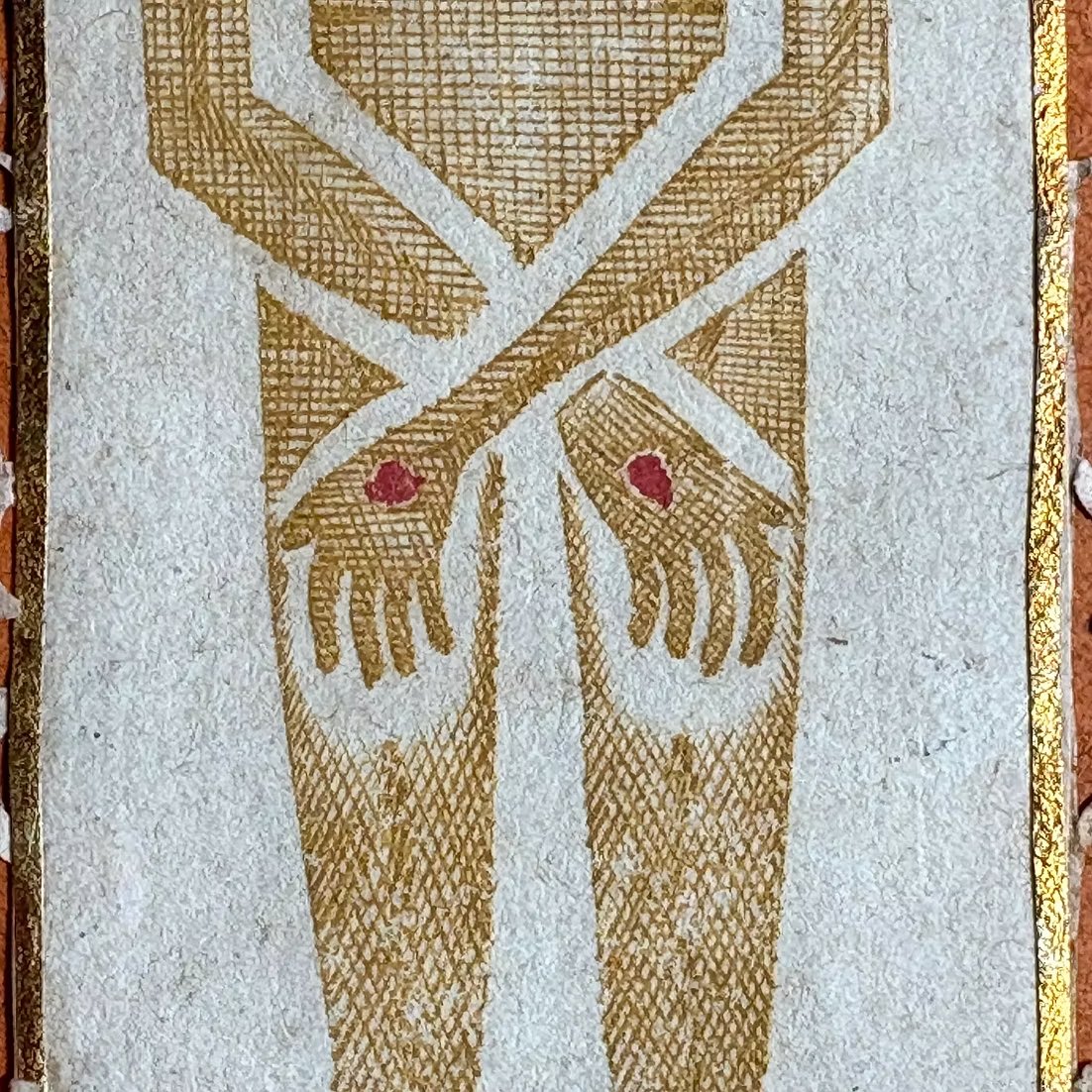
I bought a piece of devotional art at a book fair in New York not too long ago. It was a sanguine engraving of the Holy Shroud of Besançon hand cut into a sheet of white paper, an intricate floral motif by a woman in a convent sometime in the 17th or 18th century, laid over a backing sheet of orange paper.

Christ's body is depicted faintly in delicate gold ink. The wounds were touched by hand in red pigment with the edges gilded. The colorist got the wound on the wrong side because she was painting the depiction of Christ as a conventional portrait, because she did not understand that the shroud was a body imprint and therefore a mirror image. This is a small human error propagated in the work across 300 years.
The Shroud of Besançon was almost certainly a copy of the Shroud of Turin, or at least an artifact prompted by the Turin relic's presence in the region. It was first recorded in 1523 without much esteem at first. A canon refused to move statues to make room for its reliquary, but over the next two centuries it became an object of enormous veneration and drew crowds of nearly 30,000 at Easter and was credited with cures for the eyes and invoked against plague. The nuns that produced these devotional copies, Annociades, Carmelites, Clarissans, committed themselves purely to a contemplative life, framed the image in ornaments of gold and silk and reserved the finest panels for display to the most illustrious pilgrims.

On the 24th of May 1794, the shroud was torn apart and the cloth was used to bandage the wounded of the Revolutionary Army. The relic does not exist anymore, but what remains are the copies, the engravings, the embroideries, and the paper cuts made by cloistered women who in many cases never saw the thing they were reproducing. My paper cut is likely a copy of a copy of a copy of a copy of a relic that in itself is probably a copy depicting a body that is not here on this earth anymore that was made by a woman who understood that the point was not the paper or the cutting or the wound, but that the whole chain existed to transmit something that was not able to be contained in the original.

I look at it every morning during my prayers, the orange paper and the rough cutting, the wound on the wrong side. And every morning I feel the same thing looking at it. The encounter with the divine I feel by looking at it, the embodiment of the virtue of Christ and his suffering during the Passion, is real in the way that I know anything about my faith. The chain works because every link in that chain was pointed towards something that the chain itself could not hold and even if the distance is enormous its value was clarified by the pointing.

The grindslop economy is not pointed towards anything beyond itself. It is pointed simply at the worship of itself. The relic is the exhibit and the exhibit is the relic and the audience gathers to see the reliquary opened and inside is another smaller reliquary and inside that is another and in the center there's nothing. And I don't mean the luminous nothing that the mystics describe when they run out of language for God, I mean actually nothing. The tomb is empty, and not because of the Resurrection. It was just always empty.

I ended up at a dinner a few months back, one of those odd cross-pollinated tables the city still produces, and the woman next to me turned out to be the heiress to a royal line that is old in the way that non-European fortunes are still permitted to be old. Accumulated over generations the wealth had developed schools and hospitals and trusts and even countries and board seats that no one particularly wanted but maintained because the maintenance was the point of the line.

She bemoaned the death of what she called the spirited aristocrat and it took me most of the dinner to understand what she meant. The spirited aristocrat for her was beautiful people inhabiting beautiful lives, consuming beautiful things as a sacred vocation, the performance of aristocratic virtue as a living exhibition of what a human life can be when freed from necessity. Freed from necessity which is different from freed from obligation. The lives of these aristocrats, no matter how gilded, seem incredibly unpleasant. They are buried in unbelievable amounts of obligation.

She was right to mourn it. Her peers, the other contemporary lines of great families, are being rotted away by something much worse in every direction.

The modern rich have split into two populations that look different but share the same vacancy. The first consumes without orientation, the million dollar F1 hospitality packages and the mega yachts that look like parking structures and the undifferentiated graceless bulk acquisition of expensive experience that differs from the inexpensive only in the denomination of the bills required to pay for it. This is not aristocratic consumption. This is conspicuous consumption pointed at nothing, oriented around the act of consumption itself.
The second population, which is subtler, is the one that has produced the hagiography and the tattoos. It has fled so far in the opposite direction that it arrived somewhere that I believe is genuinely perverse. These people are so frightened of being seen to enjoy the surplus that they've organized their entire visible existence around the performance of labor so elaborate and escalating that the performance is indistinguishable from Foxconn conditions it unconsciously imitates. Between the mega yacht and the mattress on the floor of the San Francisco $20,000 a month apartment, there is almost no one doing the thing that every previous civilization with as much surplus understood as a fundamental obligation of having an unequal and rich society.

Almost no one. I have a dear friend, a founder, someone who built and sold a real company, who lives in a beautiful and expensive house with John Muir's rocking chair in his house. A Nakashima dining table from 1976. Thousands of dollars of Navajo Crystal rugs from the 40s. JBL Paragon speakers from the 60s that cost ungodly amounts. He has no shame about any of this, and that is what makes him unusual and important to me. He's not performing austerity. He's not apologizing for his surplus. He lives among old and beautiful objects that are made by people who cared enormously about the making.

And his life is pointed at something through those objects, the way my paper cut is pointed at something through the orange paper and the misplaced wound. He is one of the few people I know in this industry who understands that surplus from wealth is a responsibility requiring the performance of aristocratic virtue as an answer. And that answer is of course to do what Christ calls us to do, charity, good works, the enrichment of those who have much less than us, but also the performance of aristocratic virtue, to live well and visibly and without apology, demonstrating what a life can be when it's freed from necessity and pointed towards beauty.

I think a lot about the European aristocracies because they had an answer to this that we don't have and I'm not sure we're capable of having. You had money because God put you there and in return you owed, specifically, to the estate which was there before you were born and will be there after you die and which you were maintaining not because it was pleasant, I mean maintaining these manor houses sounds genuinely miserable, but because your relationship to the thing was custodial. You owed to the tenants, the church, the regiment, the county, the season, and ultimately to your God, a performance of aristocratic beauty.

The American expression of this, perhaps last seen in the railroad barons of the Gilded Age, was subtly different. Carnegie built his libraries, Rockefeller built colleges, and Frick built a beautiful museum. Surplus passed through you on its way to something that would outlast you even if the state could not provide the mechanism of endowment.

But still these were not meritocratic bounties. The lord does not justify his estate by working harder than the tenants. Carnegie did not sleep on a mattress on the ground. The surplus freed you to meet obligations that people without surplus could not meet and how you met them was the only justification anyone would accept.

This inversion is perhaps where it all went sideways. A society that's come to terms with its aristocrats knew that money came from inheritance and history and God. There was no sense in which an aristocrat earned the money so the money came preloaded with obligation. If you live in a meritocratic society, you have to believe that every dollar is a direct and fair contribution returned to you by the rational market. If you're all squared up and you earned every dollar there's nothing left to give.

And you have to perform that earning continuously to provide proof that you suffered, proof that the return was proportional, proof that you don't owe anything to anyone or that the market was unfair in any way. Look how much I suffer. Look how much I hurt.
“996” is a mass production / central planning approach to creation. it doesn’t work for inventing new things. it only works for cog like scaling of mechanical processes. great work doesn’t happen after 100 hour weeks, it only appears in tiny fleeting random moments, embrace that

You can assemble an iPhone with 996, but you could have never designed one.

Great work has always demanded sacrifice and often brutal hours and I'm not disputing this. What I'm disputing is the direction. These people, many of them friends, have more economic freedom than any class in history and they've chosen, freely, to simulate the conditions of a Chinese assembly line and call it virtue.

In a world in which automation will collapse the cost of everything to basically zero, the only question that matters is what do you actually want. What do you consume. What do you put in your body. What you put in your heart. This is the only constraint left and it's a constraint placed squarely on your character and your own sense of what's beautiful and worthwhile. If we approach this world with a generation whose entire preparation has been sleeping on office floors and giving themselves autoimmune disorders from working too hard, then what's the point.

It’s perhaps an unsavory argument, but:

A natural aristocracy, even a silly one, even an inherited one, pheasants and silly hats and houses that cost more to heat than a person earns in a year, is more honest and more good than what we've built. The aristocrat does not sleep on the floor to prove that his wealth is deserved. He does not brand his skin with the crest of the family. He has money because he has money, and everyone knows that, including him. And the question his culture asks, the only question it considers worth asking, is what he will do with it? What he will build that outlasts him? What he will tend that was not his to begin with?

The hagiographic apparatus can only intensify.

Years from now, a podcaster will walk through an office. The company worked 14 days a week, twenty eight hours a day.

The founder lived and slept, or perhaps even never slept but worked- 24/7 in that office. Every employee had the logo tattooed on their face. The podcaster walks through the building in the same way a pilgrim walks past relics. Slowly. Reverently. With devotion.

Past desks where employees still work. The only difference now is that those employees are dead, they died in service of the work, but their skeletons still linger over the slack channels and the endless ai agent workflows, every one of them, the logo still legible on their skulls, and someone is there in the corner writing a book about the founder who is also a skeleton seated at his desk next to the cafe he built, and the book will be very good, and someone will interview someone about the book, and the interview will be very popular, and the audience will feel the awe and the inadequacy that the hagiographic form has always existed to produce, and no one at any point in this chain will ask what the company did because the company was always beside the point.

With particular thanks to Marshall Kibbey Rare Books, who sold me the beautiful paper cut.

📋 讨论归档

讨论进行中…