返回列表
🧠 阿头学 · 💰投资

Anthropic 的“单人增长团队”:一个人 + Claude 如何跑赢传统营销部门

这是一个“AI 原生工作流”碾压传统团队配置的案例,但信息高度片面,更多是方向信号而不是可盲目复刻的模板。
打开原文 ↗

2026-03-11 原文链接 ↗
阅读简报
双语对照
完整翻译
原文
讨论归档

核心观点

  • 增长团队被重新定义为“一个人 + AI 系统”

Anthropic 的增长营销,在 10 个月里几乎只靠一个非技术背景的人,加上 Claude Code 和自建工具链,完成传统“一个完整增长团队”的工作量,说明在高度结构化、数据驱动的营销场景里,人力结构本身正在被重写。

  • 关键不是“用 AI”,而是“用系统化 AI 工作流”

这个人没有靠单次对话 prompt,而是搭了一整套闭环:数据导出 → LLM 诊断 → 专职子代理生成文案 → Figma 自动批量生成创意 → MCP 联通投放平台 → 记忆系统记录实验结果 → 再迭代。这是“流水线式 AI”,而不是“工具箱式 AI”。

  • 强约束 + 专职子代理,大幅提升输出质量与量级

他把任务拆成标题代理(≤30 字)和描述代理(≤90 字),让每个代理在狭窄边界内反复调优,结果是既能保证适配广告平台规则,又能高效产出“数百条可测变体”,而不是写几条凭感觉的“创意文案”。

  • 自动化创意生产让“测试半径”远超普通团队

通过 Figma 插件 + 模板替换,一次操作可在 0.5 秒内生成 100 个广告变体。结果是:测试的渠道更多、创意更多、实验频率更高——这本身就是胜负分水岭,而不是“谁更有创意”。

  • 数据接口 + 记忆系统让 AI 从“生成玩具”变成“学习引擎”

用 MCP 接入 Meta Ads API,让 Claude 能直接查询实时数据,结合记录每次实验假设与结果的“记忆系统”,形成了一个会“记仇”的系统:哪些创意组合、哪些假设历史上不行,下一轮不会再大规模复读。

跟我们的关联

1. 对 ATou:重新思考“个人生产力的天花板” 这说明一个非技术背景的人,只要能把流程拆解并搭建 AI 流水线,就能完成原本需要多人配合的工作。

  • 下一步可行动:
  • 把自己日常重复性强的工作(例如汇报、调研、版本迭代)画成流程图,拆成“可被 AI 接管”的节点(分析/生成/汇总/记录),先做一条从“输入数据 → AI 分析 → AI 输出 → 记录结果”的最小闭环。

2. 对 Neta:产品与组织层面要支持“AI 原生工作流” 真正的杠杆来自 API、插件、内部数据接口和记忆系统,而不是单体聊天机器人。

  • 下一步可行动:
  • 识别公司内 1–2 条可高度结构化的业务链路(如广告投放、销售线索、客服问答),推动建设“AI + 数据 + 工具”的闭环(比如:CRM/广告平台 → LLM → 内部工具 → 记录结果),而不是零散部署“AI 助手”。

3. 对 Uota:个人职业路径与能力模型需要更新 营销、运营、产品等非技术岗位,如果不会搭“AI + 工具链”,未来可能直接被会搭系统的人拉开 5–10 倍差距。

  • 下一步可行动:
  • 从“用 AI 写内容”升级到“设计 AI 工作流”:学会用简单脚本/插件/自动化平台(Zapier、n8n 等)把 LLM 和常用工具(Figma、广告平台、表格)串起来,哪怕先从最朴素的“表格+AI 批量生成”开始。

4. 对三者共同:把“实验 +记忆”变成显式系统,而不是脑袋里的经验 文章里的记忆系统,其实就是显式化“每次实验假设与结果”,让下一轮能用上历史经验。

  • 下一步可行动:
  • 在自己负责的领域搭建最小实验数据库:每次改动(话术/界面/价格/策略)写清楚假设、变更、结果;然后固定让 AI 在新方案前先 review 这份历史库,逼自己从“凭感觉”转向“基于实验”。

讨论引子

1. 如果我们要在自己的业务里复制一个“一个人 + AI 系统”的胜利场景,最适合切入的第一条流程是哪里?有哪些前提必须具备(数据、权限、接口、工具)? 2. 在现有的团队分工下,谁应该主导这类 AI 工作流设计?是产品、运营、工程,还是需要一个新的“AI 流程架构师”角色? 3. 这类故事在多大程度上是“个案 + 公司体量红利”,在多大程度上可以成为通用范式?我们如何验证它在自己环境中的有效性,而不是照抄概念?

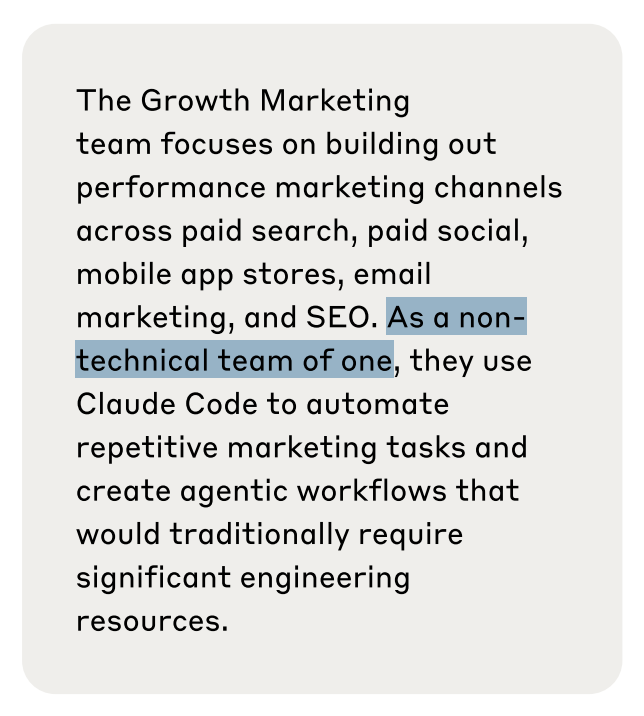
一个非技术背景的人,独自负责付费搜索、付费社媒投放、应用商店、邮件营销以及 SEO——为那家打造 Claude 的 3800 亿美元公司。

下面就是一个人如何把一整个营销团队的活儿干完:

一切从一个 CSV 开始。

  1. 他从各个广告平台导出所有现有广告,以及它们的效果指标(点击率、转化、花费等)

  2. 把整个文件喂给 Claude Code

  3. 然后让它找出哪些表现不佳。

Claude 会分析数据,标记出弱势广告,并当场生成新的文案变体。

高明之处在这里:

他把工作拆给两个专门的子代理:

  1. 一个只写标题(最多 30 个字符)

  2. 另一个只写描述(最多 90 个字符)。

每个代理都针对自己的约束做了专门调校,所以质量远高于把两件事硬塞进一个 prompt 里。

这样,他就有了数百条全新的标题和描述。

但这还只是文字。

他还需要真正的视觉广告创意素材——投放在 Facebook、Google 等平台上的图片和横幅。

于是他做了一个 Figma 插件,用来:

  1. 接收这些新标题和描述
  2. 在他的 Figma 文件里找到广告模板
  3. 并自动把文案替换进每一个模板里。

每批只需半秒,就能生成最多 100 个可直接发布的广告变体。

过去要花好几个小时:复制 Frame,再手动复制粘贴文字。

于是广告就上线了。

接下来要回答的问题是:到底哪些真的有效。

为此,他搭了一个 MCP 服务器(本质上是一种自定义集成,让 Claude 能直接和外部工具对话),并把它接到 Meta Ads API 上。

i can't believe nobody caught this.

Anthropic's entire growth marketing team was just ONE PERSON

(for 10 months, confirmed)

a single non-technical person ran paid search, paid social, app stores, email marketing, and SEO for the $380B company behind claude

here's exactly how one human is doing the job of a full marketing team:

it starts with a CSV.

  1. he exports all his existing ads from his ad platforms along with their performance metrics (click-through rates, conversions, spend, etc)

  2. feeds the whole file into claude code

  3. and tells it to find what's underperforming.

claude analyzes the data, flags the weak ads, and generates new copy variations on the spot

this is where he gets clever:

he then splits the work into 2 specialized sub-agents:

  1. one that only writes headlines (capped at 30 characters)

  2. and one that only writes descriptions (capped at 90 characters).

each agent is tuned to its specific constraint so the quality is way higher than cramming both into a single prompt

so now he's got hundreds of fresh headlines and descriptions.

but that's just the text.

he still needs the actual visual ad creative, the images and banners that go on facebook, google, etc.

so he built a figma plugin that:

  1. takes all those new headlines and descriptions
  2. finds the ad templates in his figma files
  3. and automatically swaps the copy into each one.

up to 100 ready-to-publish ad variations generated at half a second per batch.

what used to take hours of duplicating frames and copy-pasting text by hand

so now the ads are live.

the next question is which ones are actually working.

for that he built an MCP server (basically a custom integration that lets claude talk directly to external tools) connected to the meta ads API.

so he can ask claude things like:

• "which ads had the best conversion rate this week" • or "where am i wasting spend"

and get real answers from live campaign data without ever opening the meta ads dashboard

and the part that ties it all together and closes the loop:

he set up a memory system that logs every hypothesis and experiment result across ad iterations.

so when he goes back to step one and generates the next batch of variations...

claude automatically pulls in what worked and what didn't from all previous rounds.

the system literally gets smarter every cycle.

that kind of systematic experimentation across hundreds of ads would normally need a dedicated analytics person just to track

the numbers from the doc:

ad creation went from 2 hours to 15 minutes. 10x more creative output.

and he's now testing more variations across more channels than most full marketing teams

a $380 billion company.

and their entire growth marketing operation (not GTM) = just one person and claude code lol

truly unbelievable

真不敢相信竟然没人发现这一点。

Anthropic 的整个增长营销团队竟然只有一个人

(持续 10 个月,已确认)

一个非技术背景的人,独自负责付费搜索、付费社媒投放、应用商店、邮件营销以及 SEO——为那家打造 Claude 的 3800 亿美元公司。

下面就是一个人如何把一整个营销团队的活儿干完:

一切从一个 CSV 开始。

  1. 他从各个广告平台导出所有现有广告,以及它们的效果指标(点击率、转化、花费等)

  2. 把整个文件喂给 Claude Code

  3. 然后让它找出哪些表现不佳。

Claude 会分析数据,标记出弱势广告,并当场生成新的文案变体。

高明之处在这里:

他把工作拆给两个专门的子代理:

  1. 一个只写标题(最多 30 个字符)

  2. 另一个只写描述(最多 90 个字符)。

每个代理都针对自己的约束做了专门调校,所以质量远高于把两件事硬塞进一个 prompt 里。

这样,他就有了数百条全新的标题和描述。

但这还只是文字。

他还需要真正的视觉广告创意素材——投放在 Facebook、Google 等平台上的图片和横幅。

于是他做了一个 Figma 插件,用来:

  1. 接收这些新标题和描述
  2. 在他的 Figma 文件里找到广告模板
  3. 并自动把文案替换进每一个模板里。

每批只需半秒,就能生成最多 100 个可直接发布的广告变体。

过去要花好几个小时:复制 Frame,再手动复制粘贴文字。

于是广告就上线了。

接下来要回答的问题是:到底哪些真的有效。

为此,他搭了一个 MCP 服务器(本质上是一种自定义集成,让 Claude 能直接和外部工具对话),并把它接到 Meta Ads API 上。

这样他就可以问 Claude 诸如:

• "这周转化率最高的是哪些广告"
• 或 "我在哪些地方白白烧钱"

并且无需打开 Meta Ads 的后台,就能从实时投放数据里拿到真正的答案。

而把这一切串起来、闭环的关键一环是:

他搭建了一个记忆系统,记录每一次广告迭代中的每个假设与实验结果。

这样,当他回到第一步生成下一批变体时……

Claude 会自动调取此前所有轮次中哪些有效、哪些无效。

这个系统字面意义上每一轮都会变得更聪明。

这种覆盖数百条广告的系统化实验,通常光是追踪就需要一个专职数据分析师。

文档里的数字:

广告制作从 2 小时缩短到 15 分钟。创意产出提升 10 倍。

而现在,他在更多渠道上测试的变体数量,比大多数完整的营销团队还多。

一家 3800 亿美元的公司。

而他们整个增长营销运作(不是 GTM)= 就一个人 + Claude Code lol

简直不可思议

相关笔记

  1. he exports all his existing ads from his ad platforms along with their performance metrics (click-through rates, conversions, spend, etc)

  2. feeds the whole file into claude code

  3. and tells it to find what's underperforming.

claude analyzes the data, flags the weak ads, and generates new copy variations on the spot

this is where he gets clever:

he then splits the work into 2 specialized sub-agents:

  1. one that only writes headlines (capped at 30 characters)

  2. and one that only writes descriptions (capped at 90 characters).

each agent is tuned to its specific constraint so the quality is way higher than cramming both into a single prompt

so now he's got hundreds of fresh headlines and descriptions.

but that's just the text.

he still needs the actual visual ad creative, the images and banners that go on facebook, google, etc.

so he built a figma plugin that:

  1. takes all those new headlines and descriptions
  2. finds the ad templates in his figma files
  3. and automatically swaps the copy into each one.

up to 100 ready-to-publish ad variations generated at half a second per batch.

what used to take hours of duplicating frames and copy-pasting text by hand

so now the ads are live.

the next question is which ones are actually working.

for that he built an MCP server (basically a custom integration that lets claude talk directly to external tools) connected to the meta ads API.

so he can ask claude things like:

• "which ads had the best conversion rate this week" • or "where am i wasting spend"

and get real answers from live campaign data without ever opening the meta ads dashboard

and the part that ties it all together and closes the loop:

he set up a memory system that logs every hypothesis and experiment result across ad iterations.

so when he goes back to step one and generates the next batch of variations...

claude automatically pulls in what worked and what didn't from all previous rounds.

the system literally gets smarter every cycle.

that kind of systematic experimentation across hundreds of ads would normally need a dedicated analytics person just to track

the numbers from the doc:

ad creation went from 2 hours to 15 minutes. 10x more creative output.

and he's now testing more variations across more channels than most full marketing teams

a $380 billion company.

and their entire growth marketing operation (not GTM) = just one person and claude code lol

truly unbelievable
📋 讨论归档

讨论进行中…