
返回列表
🧠 阿头学 · 💬 讨论题

从第一性原理看创新、资本与通缩

这篇文章的判断很鲜明:长期价格下降大体不是经济病,而是创新和资本积累成功的结果,真正危险的是法币信用扩张制造的错配与随后出清,但作者对现实中债务刚性和宏观约束的处理明显偏理想化。
打开原文 ↗

2026-04-19 原文链接 ↗
阅读简报
双语对照
完整翻译
原文
讨论归档

核心观点

  • “好通缩”值得被正名 作者最站得住脚的判断是,生产率提升带来的价格下降和信用崩塌导致的被动降价不是一回事,把两者混为一谈会直接误诊问题;前者是企业家通过技术、管理和资本深化“用更少做更多”的结果,后者则是杠杆过高、资产负债表脆弱后的清算症状。
  • 企业真正追求的是回报,不是静态利润 文章对商业现实的把握是准确的:企业定价、扩产、研发、营销,不是在均衡模型里“算利润最大化”,而是在不确定中追求单位资本、单位时间的回报最大化;这解释了为什么低毛利高周转、降价换份额、持续再投资都可能比“抬价保利润”更优。
  • 价格下降不会自动杀死需求 作者对“节俭悖论”的反击有力:只要商品或资本品本身有真实用途,预期未来更便宜并不会让人无限期停止购买,摩尔定律下计算机持续降价却持续爆发就是强例子;主流叙事若把“会有部分延迟消费”夸大成“经济会停摆”,这个推论就是站不住的。
  • 法币体系会系统性扭曲资本配置 文章的核心政治经济学判断是,通胀性货币不只是让价格上涨,更会通过先后顺序不均的新钱注入扭曲价格信号、奖励靠近货币水龙头者、鼓励金融化而非生产性投资;这个批评并非空洞控诉,在资产价格膨胀、金融业扩张和实体资本错配上确实有现实抓手。
  • 但作者把“价格下降=进步”说得过头了 这是本文最明显的争议点:生产率提升未必必须表现为广泛价格下跌,也可能表现为质量提升、工资改善、品类创新或利润扩张;作者把“有价值创新”和“通缩”几乎说成同义词,这种写法有洞见,但也有偷换概念之嫌。

跟我们的关联

  • 对 ATou 意味着什么:看业务不能只盯利润率和估值叙事,必须追问“是否真的让单位任务成本下降、周转变快、资本回报提升”;下一步可以把现有项目按“提周转 / 提价格 / 降成本”三分法重做一遍审视。
  • 对 Neta 意味着什么:这篇文章提供了一个比“增长就是好”更硬的判断框架——真正的增长应该带来更便宜、更好、更普及的产出;下一步可以把它当作识别伪繁荣的尺子,区分哪些赛道靠创新,哪些赛道靠流动性幻觉。
  • 对 Uota 意味着什么:文章把“货币是否诚实”与“人如何保存劳动成果”直接连起来,这对硬货币、储蓄伦理、长期主义叙事有很强支撑;下一步可以继续追问,什么样的制度能承受价格下降而不引爆债务链条。
  • 对三者共同意味着什么:这篇文章最有用的不是站队比特币,而是提供了一个诊断模型——价格下降到底是能力红利,还是泡沫出清;下一步讨论任何行业下行时,都先做这个机制拆分,而不是先下价值判断。

讨论引子

1. 在高债务、工资黏性强的现实经济里,“好通缩”真的能和“坏通缩”清晰分开吗,还是作者把两者切得太理想化了? 2. 如果一个行业价格持续下降,但头部公司利润和工资都在上升,这算不算比“通缩/通胀”二分更真实的进步图景? 3. 对 AI、软件、消费电子这些赛道来说,什么信号能证明“降价是创新红利”,而不是补贴烧钱或资本泡沫?

从第一性原理看创新、资本与通缩


****作者:Allen Farrington 与 @sacha_meyers *

现代经济神学的核心信条是,通胀太高固然是瘟疫,通胀太低却是灾难,必须动用一切宏观经济干预工具加以防范。至于到底什么算“太高”,什么算“太低”,没人说得清。这仍然是宇宙中的伟大谜团之一。

所谓完美通胀率,并不是从自然界的基本定律推导出来的,也不是这门高度严谨、绝非伪科学的学术领域在前沿研究中用某个精妙微分方程算出来的。它只是被编出来的。正如《财富》杂志的一篇文章所说:

这个数字的来源有些模糊,但一些报道认为,它只是 20 世纪 80 年代末新西兰财政部长在一次电视采访中的随口一说。

Mises.org 带着稍多一点批判意识,引用了这位部长后来的一句话:

这个数字是从空气中摘出来的,用来影响公众预期。

当被追问为什么要害怕一个东西变得更便宜的世界时,法币经济学家会搬出“节俭悖论”。他说,如果一个人预期明年外套会更便宜,他今天就会选择挨冻,而不是花钱。按这个逻辑,储蓄是一种绝症。让公民保持“活跃”的唯一办法,就是通过通胀这场安静的纵火,把他的储蓄点着,逼他在钱化为烟之前赶紧花掉。对法币经济学家而言,通缩是经济杀手,必须不惜一切代价与之斗争。

这篇文章就是要驳倒这个谬误。在一个重视现实而非会计把戏的社会里,数字应该下降。如果你的货币是诚实的,它就会下降。

好的通缩,坏的通缩

“大地的产物需要漫长而艰难的准备,才能适合人的需要。”

A.R.J. 杜尔哥,《关于财富的形成和分配的思考》

我们先来拯救“通胀”这个词。对国家而言,通胀是一种形而上抽象,是某种外生的神意,仿佛只是发生在经济身上的事情。这是一个方便的谎言。我们必须清楚区分原因与症状。货币通胀是国家的行为:有意扩张货币供给。价格通胀是结果:感染之后必然出现的发热。央行把通胀仅仅定义为“价格上涨”,就把责任从印钞机转移到了消费者“预期”、“贪婪”的商人,或“受扰动”的供应链身上。没有对原因的正确理解,就不可能有解决方案。

法币心智还依赖“价格水平”的神话。这是一种统计拼盘,试图把一次理发的价格和一吨钢的价格平均成一个据称有意义的数字。地球的平均温度是多少?一根绳子的平均长度是多少?这足以让人头皮发麻。

不存在什么“总价格”,只有机会成本,以及个人基于自身主观估值,在难以穷尽且持续变化的选项中做出的选择。声称这种总量可以通过中央计划管理,不是严重的物理学嫉妒症,就是专制,或者两者兼有。这等于把一张由自主个体构成的网络,当成密闭容器里的气体粒子。

不是这样。企业家行动靠的是直觉和对未来状况的预判,不是计算机模型里僵硬的“理性”。诺贝尔奖物理学家默里·盖尔曼说过:“想想如果粒子会思考,物理学会有多难。” 的确。再想想如果人不会思考,经济学会有多容易,你就得到了法币经济学的大半内容。

这把我们带到核心主张:长期价格通缩并不是某种来自“情绪氛围”的外生疾病。它是人类进步的内生过程。它发生在企业家,也就是那些自我任命、只对顾客负责的人,冒着资本风险去发现更有效率的资源组织方式之时。当企业家成功创新,她就能在给定投资下提供更好、更便宜,或全新的产品。换句话说,她通过消耗更少来生产更多,从而释放资源。“用更少换更多”是飞轮的核心:经济回报。数字下降远非问题,它正是推动经济进步的力量。它是人类对自然和技艺持续掌握的过程,把奢侈品变成必需品。

法币经济学家永远恐惧“通缩螺旋”。大多数流行讨论把两种截然不同的通缩混为一谈。区分二者,并说明各自机制,是本文论证的关键。

好的通缩,是价格下降,因为企业家找到了用同样投入生产更多或更好产出的办法。坏的通缩,是信用出清期间的价格下降。在这种情况下,违约上升,信用狂欢结束,每个人都争抢流动性。在这种环境中,价格下降是资产负债表压力和更广泛制度失败的症状,而不是“把东西做便宜具有破坏性”的证据。因为坏的通缩发生在信用出清之后,法币经济学家把因果关系弄反了。他们得出结论说,印钱可以避免痛苦,却看不见正是印钱一开始制造了资本错配和资产负债表脆弱性。

好的通缩和坏的通缩有时不容易区分,但它们不是同一种动物。一个是能力的红利,另一个是傲慢的惩罚。因为法币经济学家无法区分二者,他便得出结论:经济进步本身是一种系统性危险。“节俭悖论”于是变成一种恐惧:进步可能会让引擎慢下来。而由于这台引擎早已被法币思维腐蚀,它被想象成永远处在崩溃边缘。于是消费者被胁迫行动,被告知必须现在花钱,因为他的钱是一块正在融化的冰。结果是一种狂躁而空洞的繁荣:需求并非来自真正需要,而是来自对货币贬值的绝望逃亡。

法币式担忧还有两个稍微复杂一点的变体。一个是债务合约以名义金额计价,也就是说,如果价格和工资下降,而债务金额固定,真实债务负担就会上升。结果是在最糟糕的时候,把大量财富转移给债权持有人。另一个常见说法是工资具有黏性。企业不能或不愿足够快地下调名义工资,于是转而裁员。我们同意,这两者听起来都不愉快。但请注意它们真正意味着什么。核心问题并不是价格因为人们能更高效地生产而下降,而是负债和制度僵硬在衰退中很危险。一个社会可以妖魔化价格下降,也可以正确识别出,把整个经济体系建立在脆弱的名义承诺之上才是危险所在。如何选择,留给读者作为练习。

法币经济学家一律选择让印钞机开始 brrrrrrrrrr。当开明精英看着自己的股票组合飞上月球、债务消失时,普通人被要求心怀感激,因为他“差一点点”就要遭遇一种恐怖:生活在一个工资每年能买更多东西、政府尊重私人财产的世界。想象一下,在那样的世界里,政府举债会多困难。它必须证明自己的支出是正当的。那可不行。

一旦我们摆脱法币方法论,就会发现唯一有意义的“刺激”是通过创新释放资本。在健全货币和自由市场下,数字应该下降。

定价、管理与技术的时间逻辑

“所有经济活动都在时间中展开。每一个个体经济过程都占据一定时间,经济过程之间的一切联系也必然涉及长短不一的时间段。”

F.A. 哈耶克,《货币、资本与波动》

法币经济学把时间当成碍事的摩擦。在新古典理论的神圣殿堂中,时间并不存在。只有“均衡”。市场通过瓦尔拉斯拍卖人的 tâtonnement 达成了帕累托最优静止状态,得到一组总超额需求为零的价格向量。每一个原子化的效用最大化者,都让自己的边际替代率与价格比率对齐;企业则抵达利润最大化的顶点,边际成本与边际收益完美一致。完美,正如迈克尔·法斯宾德可能会说的那样。

这是一个美丽但死寂的世界。“看不见的手”停止抽动,所有人都向荣耀的总均衡低头。

但如果均衡是绝对的,为什么还会有任何事情发生?如果所有信息都已经“被价格反映”,为什么还会有人成功投资?答案是,新古典模型描述的是一个理想化、假设性的目的地,却忽略了真实且不确定的旅程。它忽略了企业家,那个并不生活在冻结于时间之外的模型中,而是在每一刻展开的混乱世界中行动的人。主流经济学假定静止,因此遮蔽了企业家的指路明灯:回报。

价格是在时间中设定的,不是在均衡中设定的。现金今天被花出去,是希望不确定的现金流在之后返回企业家及其投资者手中。这是对回报的一个不错的通俗说明,对本文目的已经足够。误解回报会带来严重后果,因为回报正是大多数真实价格最初产生的机制。新古典经济学把时间抽象掉,于是压扁了一个关键维度,也让自己看不见市场核心处的过程。它假设企业在最大化利润,而真正应该观察的是企业家在实验,以赚取有吸引力的回报。

首先,我们必须认识到,价格由生产者设定,由消费者接受或拒绝。那么生产者设定价格时想做什么?答案很简单:最大化长期回报。在现实世界中,价格由企业家在不确定性中发现。每一个值得做的企业家事业,都是对未知且不可知的未来下注。没有瓦尔拉斯拍卖人,只有试错,以及投资盈亏带来的无情反馈。

原因在于,所有生产都有成本,而且几乎在所有情况下,成本都发生在任何收入希望之前。因此,任何生产性企业都需要资本基础,而不可能凭空经营、销售并产生回报。投资总是先于生产,生产总是先于利润。真实资源稀缺,真实资本也稀缺。因此,把流动资本结晶为生产性资产的投机机会,会竞争流动资本的来源,也就是货币。由于货币在这种结晶之前的状态中是同质的,资本提供者并不是在抽象地最大化利润,而是在最大化每单位已承诺流动资本、每单位时间的利润:回报。利润是一个数字。回报是货币与时间之间的关系。企业家不只是想赚钱。她想相对于投入的资本赚钱。

我们建议格外注意回报的维度:一除以时间。利润的维度是美元,利润同比增长是无量纲比率,而回报是真正的增长率。下次法币经济学家告诉你“经济”“增长”了,请记住这一点。

哦,它增长了,是吗?它在再投资资本上产生了正回报?

呃……不是……收入上升了。

那不叫“增长”。

呃……

一如既往,跟你聊天真愉快。

货币是经济的干细胞。它是纯粹、未分化的潜能。它完全流动,完全可替代。当你持有货币时,你持有的可以被理解为对这个货币所使用的经济网络未来产出的索取权。投资是结晶和分化的过程。当企业家从货币网络上“跳下去”时,他们是在把干细胞分化为器官。他们把流动潜能冻结成某种具体、坚实的形态:一座桥、一家工厂,或一项为救命药物进行十年的研发。这个器官越具体,结晶风险越高,所追求的回报也越高。

你们卑微作者花了数月或数年思考的每个想法,似乎最后都会发现托马斯·索维尔早已在《基础经济学》中的两段话里抓住了其精髓。姑且称之为索维尔定律。

资本主义经济中的一家连锁超市,可以通过每一美元销售额只赚大约一美分净利润的价格取得极大成功。因为一家大型超市里,通常有好几台收银机整天同时收钱,这些一美分加起来,就能在超市连锁的投资上形成相当可观的年回报率,同时对顾客支付的价格只增加很少。如果一家店的全部商品大约两周就卖完一次,那么一年下来,当同一美元又回来被重复使用 25 次时,这一美元上的一美分就更像是一美元上的二十五美分。”

后来,他又以一个历史案例写道:

“A & P 食品连锁店在 20 世纪 20 年代崛起并占据主导地位的关键之一,是公司管理层有意识地决定降低销售利润率,以提高投资利润率。通过以较低的单件利润销售而形成新的、更低的价格,A & P 得以吸引数量大幅增加的顾客,并因销售量增加而获得多得多的总利润。每一美元销售额只赚几美分利润,但库存一年周转近 30 次,A & P 的投资利润率便飙升了。”

值得在时间上再停留一下。几乎没有任何生产过程是瞬时完成的。它们都需要时间:把货币结晶为生产性资产需要时间;生产、推向市场、销售并回收货币收益需要时间;最细微但也许最重要的是,收回 100% 已投入资本通常需要很长时间,而且可能永远无法完全发生。一旦结晶为生产性资产,目标通常是运营该资产多年,而不是以某种方式既让它 100% 折旧,又把 100% 收回来。所有这些数字在抽象上都是任意的,在实践中由市场力量设定,但 5% 的名义回报仅仅为了收回初始投资就需要 20 年,更不用说产生经济回报了,前提还是产生该回报的资产能持续那么久。

可以说,随着累积资本环境变得更深、更复杂,竞争门槛也随之提高,企业家如果还想竞争,就只能以回报而非即时利润来思考。正如欧根·冯·庞巴维克著名地说过的那样,他们没有越来越迂回的资本配置就无法竞争;没有长期时间视野,他们也无法为这些配置融资。

一个简单的企业家行动可能是一次快速套利。我们看到苹果在两个市场以不同价格交易。我们低买高卖。我们把钱结晶成苹果,把它们运到另一个市场,再卖回流动货币,赚取利润。在这个过程中我们承担风险,也许价格在我们抵达前就变了,而且这需要时间。但相对于完成交易所需时间,投入苹果中的资本的风险调整回报是值得的。也请注意,这种由回报驱动的行动会影响价格。通过把更便宜的苹果带入昂贵市场,我们缩小了价差。我们应该持续利用这个金钱漏洞,直到考虑运输和其他成本后,两个价格趋于收敛。这就是企业家作为价格信使的实际含义。

但简单套利只能带我们走这么远。随着时间推移,企业家会发现组织上更复杂、直觉上更具投机性的方式来满足人的欲望。这一次,也许我们买下苹果,把它们做成派,几天后再卖掉。这需要更长时间,也需要烤箱这样的资本设备,而烤箱必须有人制造。还得有人建造制造烤箱的工厂。还得有人开矿,生产制造烤箱所需的金属,而烤箱又做出了我们正在出售的派。参与这一切的每个人都必须吃饭。也许吃苹果?

想想这个兔子洞有多深。现代商业社会建立在惊人漫长且迂回的资本投资之上,这些投资可能需要多年才能回本。在这里,“回本”只是指重新回到纯潜能的货币网络。一家制药公司可能花 10 年研发,再花 10 年销售由此产生的产品,才在初始投资上获得令人满意的回报。这意味着,从跳下货币网络到重新回到货币网络,中间隔了 20 年。而这一切只是为了再次跳下去,追寻另一段企业家旅程。荷兰光刻巨头 ASML 的回报迂回程度几乎难以理解。

因此我们看到,“每单位时间”和“每单位已承诺资本”同样重要:每单位已承诺资本重要,是因为货币同质且流动,而生产性资产异质且不流动;每单位时间重要,是因为转化过程不仅需要时间,还把资本提供者锁定在一段长期的异质敞口中。因此再强调一次,生产者关心的是每单位已承诺资本、每单位时间的利润:回报。

于是我们再次发问:生产者为了最大化回报,在价格上要做什么决定?有几个候选答案,而且彼此存在张力。不存在单一“正确”答案。平衡以下因素,就是企业家的本质:凭直觉判断未来消费者行为和未来市场状况。

考虑到生产者几乎总是在某种程度上与销售相似甚至相同商品或服务的人竞争,降低价格、从对手那里抢走顾客永远是一种诱惑。显然,这可能伤害回报,所以价格不能降到零。同样,虽然从纸面上看,提高价格可以把回报推到任意高,但这是假设销量不变。销量不会不变。更高价格意味着更少销售,因为消费者会转向竞争对手。到底少多少,正是企业家判断的核心。与法币经济学家的逻辑相反,世界上并没有一条真实存在的需求曲线摆在那里。只有生产者关于消费者会如何反应的直觉。

某个最佳结果存在这一事实,与任何人都能推导出如何实现它这一主张之间,有细微但关键的区别。阿门·阿尔钦在《不确定性、进化与经济理论》中很好地表达了这一点:“‘最大利润’作为一个已实现结果是有意义的,这与把‘利润最大化’作为在不同行动路线之间选择的标准毫无意义,是完全一致的。

想象一位面包师在决定一款新面包如何定价。她可以定价 3 英镑,每天卖 200 个;也可以定价 4 英镑,每天卖 100 个;也可以定价 2.50 英镑,每天卖 300 个,但让员工累垮。这些路径中的一个,或者某个她还没想到的选择,原则上会给她的资本带来最高回报。这个最优点在原则上存在。但她无法通过计算抵达它,因为结果取决于数百个她从未见过的人的主观偏好,取决于她无法实时观察的竞争对手定价决策,还取决于更多因素。她只能尝试某个做法,观察发生了什么,然后调整。这不是她理性失败了。这就是问题本身的性质。

法币经济学家被利润的可量化性诱惑,把理论最大值的存在误认为寻找它的方法也存在。于是他们建立模型,假设这个方法已经被应用,然后疑惑现实为什么总是不听话。

这里还有时间成分。生产者不能无限期坐在那里等待发现完美价格。即使这可能,而它并不可能,等她找到时,它也已经错了。回到回报的物理动态,如果在情景 A 中,我们以 $x 出售小部件,而在情景 B 中,我们坐在那里高谈阔论“完美价格”,最后只是晚些时候以同样的 $x 出售,那么情景 A 的回报按定义更高。时间有价值,不是作为一个含糊口号,而是在非常真实且根本的意义上如此。

生产过程会逐渐把价值结晶为更确定的形态,最终形成等待出售的库存。因此,生产者会有某个期望销售周期,好让流动资本能够重新投入生产过程。

考虑到这一点,我们可以给出第一个具体答案。相对于期望的时间周期,如果库存卖得太慢,生产者应该降价,加快出清。如果库存卖得太快,生产者应该涨价,以获取更多即时利润。后者是好问题,但从回报没有充分最大化的角度看,它仍然是问题。无论哪种情况,生产者都在回应她认为的市场信号:如果销售太慢,也许竞争对手价格更低,消费者去了那里;如果销售太快,也许市场尚未饱和,更高价格可以提高回报,同时不至于让周转慢到超过生产者期望周期。

请注意,在两种情况下,生产者既在回应市场信号,也在创造市场信号。降价可能降低整个市场的回报,并把边际资本推向其他行业。相反,更高回报会把资本吸引到这里。所有企业家决策归根到底都是资本在寻找回报,即使它以某种相隔数层、更具体的形式出现。

刚才描述的企业家过程有一个幸运的长期结果:创新。短期内,企业家决定如何为已经生产但尚未出售的库存定价。这是消费者直接看到的一切,从企业家视角看,也是这件事的直接目的。但生产性资产存在于一条异质性和流动性的光谱上,在超过理想存货周转窗口的更长时间跨度中,生产者面对的是另一个问题:到底是什么驱动回报?最宽泛地说,答案是用同样投入创造更多产出。只要存在竞争,销售端的竞争压力就会使这件事不可避免。

说得更具体一点,一个希望最大化回报的生产者,无论是在没有竞争时提高回报,还是在竞争中保住回报,只有三类宽泛选择:创造产品并更快周转库存,提高价格,或降低成本。“创造产品并更快周转库存”其实是“卖更多”的另一种说法,只是强调时间而非数量:在更短时间内卖出同样数量,功能上等同于在固定时间内卖出更多。大多数策略都是这三者的组合。

最简单的选项是,如果回报已经足够有吸引力,生产者可以把更多资本配置到同一企业。这不一定需要更快周转、更高价格或更低成本。反事实地说,它可能只是反映出缺少足够压力来迫使这些变化发生。机会似乎存在。竞争对手似乎没有抓住。她不妨自己抓住。

销售和营销可以被理解为让库存更快周转、提高价格,或二者兼有的尝试。营销可能通过让潜在顾客意识到一种原本会被忽略的产品,扩大市场,从而在给定时期内增加销售。它也可能旨在创造质量感知,让生产者能够提高价格,或者反事实地说,在原本不得不降价时不必降价。

研发通常旨在通过发现更便宜的生产性资产运营方式来降低成本,或创造更好甚至全新的产品。这会降低成本、卖出更多产品,或更快周转库存。

本节目前所描述的一切,都可以归入“投资”,或者如果读者喜欢更高雅的说法,归入“资本积累”。通过投资创新来最大化回报,既可以开辟新市场,也可以创造新产品。

还请注意,投资必然是投机性的。通过给同样资产配置更多资本来扩大生产,假设在同样能产生回报的价格上存在更大市场,也假设竞争对手不会猛烈追逐这些回报,把它们压到低于任何被认为有吸引力的水平。销售、营销和品牌建设同样不确定。它们可能有效,也可能无效。你可以有预感,但在尝试之前你无法知道,即便尝试之后,你也未必真的知道。研发更明显是实验性的。谈论“只是发现新的或更好的产品”或“只是把东西做便宜”,仿佛这些结果就摆在货架上等人领取,是没有意义的。你无法知道它们会不会奏效,除非去尝试,但你也不是随机尝试。这种努力来自对技术和管理的有根据直觉。稍微概括一点,长期成本下降几乎总是新技术、新商业管理方法,或二者共同作用的产物。

这种默会知识可以说是企业家精神的整个关键:它无法在抽象上、中央化地、宏观地被知道。它甚至无法被宏观地表述,更不用说被发现了。它也不能通过在概念空间中随机游走来猜中或抵达。也不能通过投资一切来撞上,因为资源稀缺,因此资本也稀缺。企业家为了寻求回报而以智能且亲社会的方式配置资本,驱动着一切生产,也因此驱动着一切财富创造。

这个迭代过程不过是描述价格发现的另一种方式。每天,企业家都在发现可以制造多少商品,它们能卖多少钱,以及这是否足以证明资本支出是合理的。正如弗兰克·奈特在 1921 年的《风险、不确定性与利润》中所定义的,这项活动具有根本不确定性:

“不确定性必须在一种与通常所谓风险根本不同的意义上理解,二者从未被恰当地分开。……可以看出,可度量的不确定性,或严格意义上的‘风险’……与不可度量的不确定性如此不同,以至于它实际上根本不是不确定性。”

当你发明真正新东西时,没有基础率可言。这些是创造行为,正如几乎所有经济行为都是创造行为一样,因为我们永远不会两次踏进同一条河。当然,并非所有价格发现都同样不确定。当你在超市买冰淇淋,因为你觉得这周晚些时候可能想吃时,你是在对未来下一个很小的赌注。你可能改变主意,觉得该节食了,但赌注很低。当埃隆·马斯克冒着破产风险颠覆太空旅行的经济学时,我们见证的是极端形态的极端价格发现,这也是它被如此丰厚回报的原因。

动态资本配置

“把生产理解为时间中的过程……并不特别‘奥地利’。它正是英国古典经济学家工作背后的同一概念,而且实际上更古老,远远早于亚当·斯密。它是典型商人的视角,如今是会计的视角,过去则是商人的视角。”

约翰·希克斯,《资本与时间》

到目前为止,一切都还算合理。企业家在短期价格竞争压力下努力最大化回报,在长期创新竞争压力下也如此。那么,法币经济学家到底应该反对什么?乍看之下:没什么。

但这里出现了第一处分岔。主流经济学家会坚持认为,如果这种由创新驱动的价格下降过程被普遍理解,人们就会等东西变得更好后再消费。总需求会下降,然后据说天就塌了。

抽象地看这个所谓问题。如果你饿了,并且知道苹果明年会便宜 2%,你会等一年吗?当然不会,因为你会死,而你不想死。这没有任何非理性。我们可以把例子放宽,不用这么戏剧化:如果你知道某个东西将来会更便宜,你会曾经推迟购买吗?这里事情变得更有意思。对某些东西,也许你会。我们不必假装没人会推迟可自由支配消费。

或者换一种说法,所谓节俭悖论里有一小片真实:没有人的时间偏好为零。你不能只生产、永远不消费。你需要吃饭、穿衣、住房,并在相对富足允许时沿着马斯洛层级继续向上。

为了说明这一点,让我们想象一下凯恩斯主义的噩梦:一个除了绝对必要消费之外都推迟的社会。这样的社会会有大量资本可供再投资。它不会吃掉劳动的种子,而会把种子种下去。但如果它也不吃下一次收成,为什么还要种?为了再次种下去。只要玩一下复利表,很快就能看到,即使最严苛的延迟满足信徒,最终也会积累如此多资本,以至于他们那奥勒留式的斯多葛克制也会破裂。即便没有破裂,这个社会也会以惊人速度继续复合其技术和生产能力。一旦它停止甚至放慢,现金就会喷涌而出,就像一家几十年来把一切都再投资于增长的公司一样。因此,真正的问题不是“消费还是永不消费”,而是“我们现在消费什么,又投资什么以便以后消费?”

这里存在建立在不确定性和主观估值之上的取舍,无法量化,只能凭直觉判断。所以,是的,企业家在假设未来消费模式并决定如何配置资本时,会对当前消费模式作出反应。但从这个明显观察跳到“投资是当前消费的函数”,则荒唐至极。

我们常听法币经济学家谴责“囤积”,但他们通常指的是人们在储蓄和投资。更多囤积,也许意味着我们会少造汽车,但多造制造汽车的机器。如果人们尤其节俭,经济还会沿着堆栈继续向上,去制造那些制造机器的机器,而那些机器又制造汽车。我们越节俭,生产方法就越迂回,资本基础就越深厚。这样的社会是在为更好的明天而生活。

还有一点也必须说清楚。即使人们真的把钱塞进床垫,这仍然会有益于社会。更长时间持有货币,只是意味着拉长货币的平均持有期。人们把更多劳动储存在货币系统中。这提高了货币相对于商品和服务的价值,因此降低了其他所有人的价格。在一个硬货币系统中,人们因参与系统而获得回报。通过持有货币资本并在该网络上运作,他们给予这个网络深度和流动性,从而赋能同一网络上的企业家去尝试把东西做便宜。一个工人的储蓄停留在这样的系统中,帮助承销创新,然后从由此产生的通缩中受益。她不是因为无所事事而得到这种收益。她的回报来自支持一个促进创新的货币网络。在这些场景中,没有任何资本被“浪费”。然而,最担心延迟消费之恶的人,会告诉你故意摧毁有用资产是一种净善。

在我们骗自己相信通缩会导致更多通缩,直到人人饿死之前,必须认识到法币分析所抹去的一个区别。生产者不断彼此竞争。消费者不是。消费者决定推迟购买,只面对机会成本。他们的消费只满足自己的主观价值。

相比之下,生产者处在完全不同的位置。他们总是在短期中与其他生产者就价格竞争,在长期中就创新竞争。阿尔钦强调,这种竞争是与真实竞争者而非假想竞争者的竞争,它产生真实回报而非假想回报,并依赖默会知识而非“完美”知识。他写道:

实现正利润,而不是最大利润,才是成功和可存续的标志。通过何种推理过程或动机达成这种成功并不重要。完成这一事实本身就足够了。这是经济系统选择幸存者的标准:那些实现正利润的人是幸存者;那些遭受亏损的人消失。相关要求,即通过相对效率获得正利润,比‘最大化利润’更弱,而不幸的是,二者常被混淆。正利润归于那些比实际竞争者更好的人,即便参与者无知、聪明、熟练,等等。关键因素是一个人相对于实际竞争者的总体位置,而不是相对于某些假想完美竞争者的位置。

一旦我们考虑资本品价格下降,分析就会发生相当根本的变化。出于前文已经讨论过的原因,资本品价格下降必然先于消费品价格下降。生产者不能只是坐等未来成本下降,以便晚些时候赚取更高回报,因为资本积累是迭代的,竞争对手总能迭代得更快。如果某种关键资本品价格正在下降,因为其生产者为追求回报成功投资,那么你可以推迟购买,希望以后有更好的入场点。但你很可能更应该现在就买,降低自己的价格,提高自己的回报,让自己基于更强资本基础,在未来有能力再次购买。另一种选择是原地不动,而竞争对手先买入更便宜的资本品,降价,抢走你的顾客,压垮你的回报,让你以后根本没钱买任何东西。

我们再次遇到静态分析的失败。如果你以某种方式知道自己没有竞争,并且负担得起等待未来更低成本,那么是的,你可能会想象用这种方式提高回报。但即便如此,稍加检查也会崩塌。如果你没有竞争者,谁在购买这些资本品?如果没人购买,这些资本品的生产者如何赚取足以资助研发的回报,而研发又正是首先造成通缩的原因?这个圆无法被方化。没有任何圆可以。非零消费创造价格信号,指导资本配置,不仅发生在消费品层面,也发生在任何稍微复杂经济中支撑生产率和财富创造的每一层资本品层面。在需求确实被刺激的范围内,如果这种刺激真实且可持续,它是由通缩刺激的。

竞争还有另一个有益后果:它会抬高劳动和其他投入的价格。企业家当然想少付工资,但在竞争市场中,工人可以让雇主彼此竞争,并要求仍然具有经济意义的最高工资。这个工资与他们的生产率相关,而生产率本身又会因获得更好工具而提高。工人拥有的有形和无形资本越多,议价能力越强,工资越高。因此,企业家不仅让消费者买东西更便宜,也帮助工人赚得更多。再次强调,法币式恐惧把信用紧缩中坏通缩对工资的影响,与生产率上升产生的好通缩的影响混为一谈。一个工人要过得更好,并不需要名义数字上升。他需要的是购买力上升。

现在转向消费者。不可否认,如果他们愿意,他们可以推迟可自由支配购买。但他们必须消费某些东西才能生存,仅这一事实就给企业家一个清晰信号:专注于必需品,并尽可能快、尽可能彻底地降低其成本。在硬货币系统下,企业家被推向让必需品更便宜,而不只是销售奢侈品。这里的“必需”不是由某个委员会定义,而是由人们在其货币没有被开明精英以“刺激”经济之名点燃的世界里,实际选择花钱购买什么来务实定义。

消费者也常常是生产者。以这个身份,他们与其他生产者竞争,必须支出以保持竞争力。一个工人可能购买汽车,因为它让他比坐公交更快或更舒服地到达工作地点。这当然是消费,但也是生产性消费。它把资源引向真正增强经济生产潜力的商品和服务。

法币下的反常现实是,货币通胀杀死了储蓄和再投资的激励。人们被推向把更多钱花在奢侈品上,比如 PlayStation、度假套餐,而更少花在生产性再投资上。在一个没有自上而下注入货币谎言的系统中,人们会消费他们真正想要的东西,把剩余部分投资于改善经济。所以,是的,如果印钞机停止,奢侈品需求可能会下降。很好。其代价是更好替代方案的收益,而这一事实只有在价格被允许清晰传递信息时才可见。企业家会迅速重新配置资本。我们可能会得到更少法拉利,更多救命药。

法币经济学家想鱼与熊掌兼得。他们的静态模型中几乎没有企业家。没人给任何东西定价;东西只是有价格。没人制定计划;东西只是被生产和消费。企业被想象成在“最大化利润”,而如果价格不持续上升,它们的激励据说就会崩坏,机器就会停下来。

查理·芒格有一句有趣的话,证明了这里的动态:

当我们还在纺织业时,有一天,人们来找沃伦说,‘他们发明了一种新织机,我们认为它的工作量能达到旧织机的两倍。’沃伦说,‘天哪,我希望这东西没用,因为如果它有用,我就得关掉工厂。’

他知道,在大宗商品生产中引入更好机器所带来的巨大生产率提升,都会变成纺织品买家的好处。作为所有者,什么也不会留在我们身上。

并不是机器不好。只是节省下来的钱不会归你。成本降低确实发生了。但成本降低的好处不会归买设备的人。这是一个如此简单的想法。如此基础。然而它却经常被遗忘。

巴菲特理解,要继续在一个产品持续变便宜的市场中销售,需要花费多少更多投入。这个计算并没有足够吸引力,所以钱去了别处。同样逻辑适用于拥有资本品或长期无形投资的行业,也就是说,几乎适用于所有严肃行业。但我们可以用一个更容易理解的例子结束本节:摩尔定律。

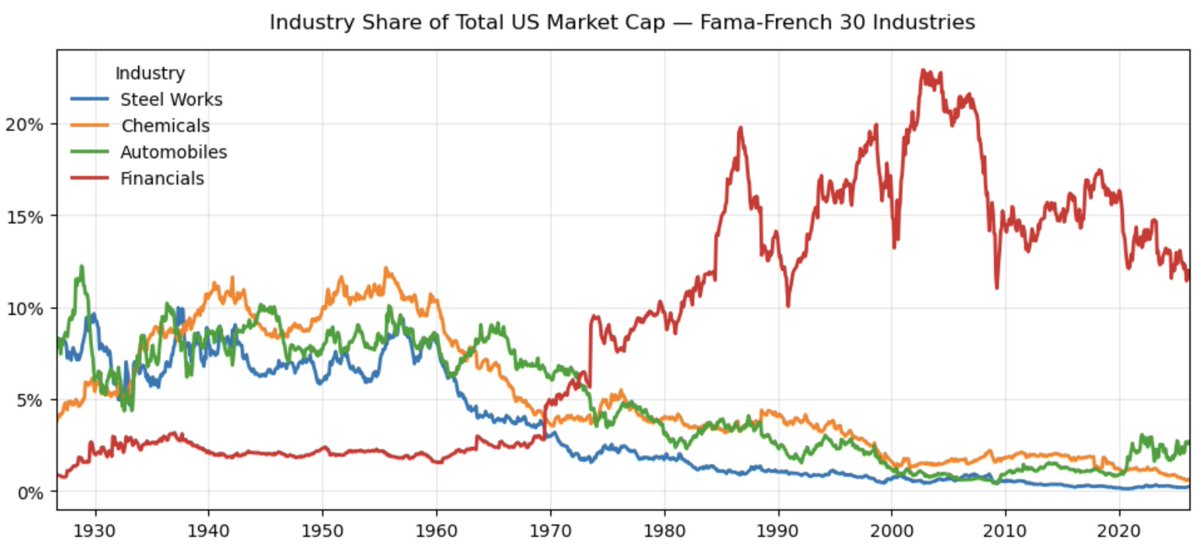
如果读者不知道,摩尔定律并不是真正的定律,只是一个长期以来惊人准确的预测。它认为计算能力的价格大约每 18 到 24 个月减半。更少人知道但对本文更重要的是,摩尔定律其实是赖特定律的一个特例。赖特定律说,在任何生产过程中,随着历史累计产量每增加一次,成本往往会以某个稳定幅度下降。半导体恰好以惊人速度呈现这种动态,而且持续时间如此之久,以至于摩尔定律可以被表达为随时间展开。

重点是:随时间展开。

如果人们只是因为通缩会在以后提供更好入场点就推迟消费,这件事哪怕只有一点点真实,那么摩尔定律就意味着没人买过电脑,也没人投资生产电脑。

如果法币论点正确,1970 年任何想要计算某些东西的人,现在仍然应该在等待这场可怕通缩结束。当然,实际发生的是相反情况。计算机是极其有价值的资本品。它们帮助企业家以更好、更便宜、全新的方式创新,去生产几乎所有其他东西。因此企业家积极购买计算机,用回报来证明购买合理,而这又让计算硬件生产者赚到足够健康的回报并进行再投资。累计产量爆炸,价格崩塌。没人饿死。恰恰相反:无数生命几乎肯定因此得到改善,其中许多还被拯救。

同样值得注意的是,这是我们所知最快且最持久的赖特定律系数。几乎所有其他可投入资本以追求回报的技术,其通缩速度都慢于半导体。因此,想象人们仅仅因为未来价格可能更低就无限期推迟购买,甚至更不合理

所谓节俭悖论的正确解释是,它揭示了法币经济学家生活在何种恐惧之下:人们可能停止消费那些他们本来就真正负担不起的奢侈品,那些他们被通胀谎言诱骗去消费的产品。他们无法容忍一个允许人们自行发现如何最佳配置有限资源的世界。

这种法币式担忧不仅是思维草率;它是否定历史。伟大的资本主义财富几乎总是通过大幅降低消费者价格积累起来的。面对法币的节俭悖论,我们提出经验性的杰文斯悖论。它其实也不是真正的悖论,但这些名字不是我们取的。它指出,当技术或效率降低某种资源的相对成本时,该资源的新用途变得有利可图,总需求上升。资源变便宜了,但花在使用它上的钱更多了,而不是更少。

卡内基通过降低钢铁成本致富。范德比尔特利用越来越便宜的煤、蒸汽机和钢铁修建铁路,降低运输成本并打开市场。洛克菲勒通过创新并把成本节省传递给消费者,持续扩大石油用途。亨利·福特把这个逻辑推向自然结论。他的政策是“降低价格,扩大经营,改进产品”,由此扩大市场,并产生可以立即再投资于让汽车更便宜的利润。正如福特所说:

"从人民困苦中赚取的利润,永远远小于以称职管理所能实现的最低价格,为人民提供最慷慨服务而赚取的利润。"

他行动的经验结果不言自明:

对价格的影响

“过去按杯发放的经济药物,最近改成了按桶倾倒。这些曾经不可想象的剂量,几乎肯定会带来不受欢迎的后遗症。其具体性质无人能知,但一个很可能的后果是通胀来袭。”

沃伦·巴菲特,2011 年致伯克希尔·哈撒韦股东信

到目前为止,我们只考虑了企业家的个体决策。这在方法论上是合理的,因为只有个体会做决策。但在这方面保持谨慎之后,我们仍然可以追问,从这些关于资本配置、定价和创新的个体决策中,应当预期会涌现出什么模式。可以得出几个结论。

在个体生产者层面,总是存在提高回报的压力,否则投资路径就不再吸引资本。短期内,这可能意味着提高价格,也可能意味着降低价格,听起来或许反直觉。哪种反应正确,取决于相对于现有生产性资产存量所能提供的供给,生产者感知到的需求。答案无法推导,原则上也不可知;它只能靠直觉判断。

但从长期看,随着竞争把流动资本引向最有前景的不流动形态,合理预期是回报会趋向均等化。这与说这个过程自动、即时、平滑,或说它会真正结束,是截然不同的。资本配置是不确定的、迭代的、时间性的、直觉性的。这里的“压力”不是像液面趋平或温度梯度消散那样的自然法则。它只是关于有钱且有激励的人类倾向于如何行动的合理预期。经济力量可能朝某个方向推动,但在动态适应系统中,它们永远不会产生真正均衡。至多,均衡是在当前知识和激励下对某种预期倾向的命名。而即便这一点,也只能反事实地理解,不能直接建模。获得相关知识的唯一办法,是运行那个会创造你想知道事实的实验。

提高回报的压力,以及在竞争下保持可接受回报的压力,长期中只能通过投资来满足:通过实验性地发现新知识,使人能够用更少创造更多,用同样创造更好,或创造全新的东西。

因为这个逻辑并不依赖特定资本配置路径,也因为流动资本可以跨行业替代,我们可以在总体上说:只有在投资创造了新的回报支撑位,使生产者能够降价、获取市场份额且仍然提高回报的地方,价格才会下降。当然,理论上生产者总可以降价,但如果没有足够改善的成本基础,他们冒的是降低而非提高回报的风险。一旦投资真正降低了成本结构,降价就更可能提高回报,而不是摧毁回报。因此,价格并不会神秘地“下降”。价格水平不是外生参数。它涌现于不确定性下的个体决策,涌现于最大化资本回报的驱动,涌现于发现更有效生产方法的可能性。

还必须注意,当任何个体生产者以这种方式降低价格时,其他所有人的真实回报也会上升。这种影响会在时间和经济距离上不均匀分布,但涟漪会向外扩散。某人生产的每一单位东西,都会被另一个人消费。这就是交换。因此,当生产者创新并降价以获取市场份额和提高回报时,她也在降低其他人的成本,从而提高他们的真实回报。

法币心智鼓励人们想象,较低价格意味着更少经济活动。这是静态分析带来的荒唐结果。价格下降之所以可能,只是因为同样投入生产出了更多产出,或更少投入生产出了同样产出。这又把我们带回杰文斯。主流解释比本文讨论的框架更简单,但它抓住了一些真实东西:当东西变便宜时,它们会被使用得更多,而不是更少,因为新的应用会变得经济可行。虽然这看似直观,但要充分理解这个现象,需要本文一路建立的机制:为追求回报而创新,生产者通过降价利用改善后的成本结构,其他人则从由此带来的成本下降中享受下游收益。

我们也可以更抽象地表述同一点。这个过程的总体结果,是更多、更好工具的持续积累。这是一个完全体面的资本定义,只要我们把“工具”理解得足够宽,不仅包括铁锹,也包括铁锹的理念和使用它所需的技能。社会拥有的工具越多,每个人的时间就越有价值,因为同样的小时数可以被杠杆化,用来创造更多、更好、更新的产出。创新和资本积累意味着,每个人的时间都在变得更有价值。

这个框架也提醒我们,整个动态取决于消费可持续。没有人的时间偏好为零,而回报需要利润。投资可以由储蓄资助,但储蓄不能永远被消耗。储蓄只存在于正回报没有被完全消费的地方。因此,消费和储蓄之间总是存在平衡。如果我们只消费,就永远不投资,生产性资产会折旧殆尽。如果我们只储蓄而从不消费,连必需品也不消费,那么生产者就没有信号判断应该生产什么,消费者也会饿死。只要没有走到全体自我饿死这一步,再投资引擎就会被启动,并通过通缩改善生活水平。

这些荒诞极端照亮了一个张力,平衡正是在其中被发现的。也正是在这里,利率出现了。任何潜在投资者面对的问题始终是:以什么价格,我愿意在一部分储蓄上放弃消费?这里的“价格”只能意味着每单位已承诺资本、每单位时间的一笔货币金额。这个定义描述了回报,也描述了利息,而利息不过是回报率。对企业家而言,任何给定的利率或回报,只有相对于预期回报率才有正当性。

如果储蓄大量流向当前消费而非投资,那么满足这种消费需求的回报很可能较高,边际消费者会受到诱惑,转而成为投资者。如果储蓄大量流向投资而非消费,那么回报往往较低,边际投资者会受到诱惑,转而消费。这就是平衡过程。

有趣的是,刚才勾勒的通缩机制会以健康方式“刺激消费”,因为即便人们知道某样东西以后会更便宜,也总会有某个价格让他们忍不住现在就买。随着价格下降,需求显现。但它通过真实价格信号发生,而不是通过迫使人们在国家杀死货币价值之前花钱。

虽然这种动态的逻辑可以被理解,但它抗拒量化。它不是“科学的”,因为没有受控实验能把一个变量从所有其他变量中孤立出来。实验在现实中运行之前永远是反事实的,而运行它正是产生所追求知识的过程。总体也不能被当成一个统一体。它只能是涌现的。只要它有意义地存在,它就只作为个体边际决策的产物存在。某个权威能够推导出这种平衡的正确水平,这个想法不只是错误;它是连错都算不上。它在方法论上不连贯。询问“正确利率”是多少,就像询问橙色有多重。

货币

“一辆新车,鱼子酱,四星级白日梦

我想我要给自己买支足球队。”

平克·弗洛伊德

我们故意把货币留到最后。本文首先试图说明,价格通缩,即商品随着时间大体变得更便宜,是自由资本市场以及发现新技术和更好管理方法之可能性的自然结果。甚至可以更进一步说,价格通缩不只是进步的结果,而是进步的定义。不让东西变得更可负担的经济活动,是变化,但不是进步。因此,让我们以一个问题作结:不同货币制度会对这个过程做什么?

一旦货币被明确纳入图景,我们就必须小心区分“价格水平”和“货币供给”。首先要清除的一个混淆是,虽然确实存在供给可以扩张的通胀性货币,但其实并不存在真正意义上的“通缩性货币”。可以想象某种货币,其发行者定期销毁单位或以程序方式减少余额,但我们不知道现实世界中有任何相关例子。

这也许是法币经济学家最混乱的地方。他们往往提出一种部分理论、部分实践的论证,大意如下:在通胀性的法币体系中,几乎所有货币其实都是银行信用;坏贷款损害债权人偿付能力,于是债权人催收其他贷款来补充资本。由于此前的信用泡沫把远超真实储蓄所能支持的债务散布到金融系统中,这个过程会自我强化。每个人都争相用真实资产补充资本。贷款同时变坏并被催收。投资资金枯竭。消费也枯竭,因为每个人都意识到自己真正的储蓄远少于想象。新的信用扩张也枯竭。由于信用扩张被视为等同于货币,这常被表述为货币供给本身收缩。生产者面对收缩的消费,于是大幅降价以清理库存。这就是坏通缩的开始。可以称之为通缩性信用螺旋。关键在于,这与创新驱动的通缩毫无关系。

我们现在谈的是比企业家寻找更便宜方式满足消费者更浑浊的东西。我们谈的是对货币的需求。和创新一样,它是内生的、自下而上的。不同的是,它纯粹是货币性的。而由于“货币需求”是法币经济学中最被滥用的短语之一,我们应该说得非常清楚:不要把它读作“对信用的欲望”,而要按字面理解。

货币需求是一个人主观上希望以流动货币形式持有某一数量财富,并为此承担购买任何其他东西的隐含机会成本。对货币需求高的人,会用商品、服务和投资交换货币,因为他们重视货币的流动性,以及它作为价值储藏和交换媒介的用途。二战期间逃离德国迫害的犹太人,对不流动商品或本地硬资产没有多少用处。他们想要便携、流动的货币,而这常常意味着黄金。相反,一个没有继承人且身患绝症的人,可能对货币需求很低,因为他宁愿在死前把一切花掉。

当货币需求上升,也许因为战争或恐惧,人们会“套现”,于是我们观察到一种纯粹货币性且内生的通缩。另一种说法是,货币相对于其他商品和服务的价格上升了。在原先价格下,对货币的需求超过供给,于是货币价格上升。从使用该货币作为记账单位的人视角看,这就像一般价格下跌。货币网络现在储存了更多价值,而商品和服务存量没有改变。这正是凯恩斯主义者害怕的那种通缩,因为他们的整个世界观都假定,人们应该被诱导尽快摆脱货币。他们的纵火癖旨在降低货币需求,从而制造价格通胀。

为了平衡地看这个问题,货币需求急剧上升往往确实是令人担忧的信号,例如信用紧缩期间,人们不再满足于贷款人或自己部分准备金银行的欠条。他们想要现金。此前在系统中流通、几乎没人长期持有基础货币的索取权,突然受到质疑。这种出清会造成真实痛苦。但正确分析是,痛苦是必要的,因为问题是真实的。信用扩张之所以逆转,只是因为它本来就不稳健。

信用崩塌令人痛苦,但把与之相伴的暂时价格下降识别为根本问题,是荒唐的。这就像说,因为宿醉不舒服,所以清醒必然是原因,解决方案因此必须是继续喝酒。真正的解决方案是一开始就不要喝醉,或者退一步说,清醒过来。法币经济学家习惯于用同一种建议回应每场危机:再喝一杯。凯恩斯主义者不是正视错误投资,并接受人们对货币的需求确实上升,而是拒绝让名义价格下降。既然货币平均持有期被拉长并造成货币性通缩,唯一方案就是扩大货币数量。

在法币信用体系中,货币不只是基础货币。它是在其上层叠起来的高塔般承诺,例如银行存款。在繁荣中,这些索取权成倍增加。在萧条中,它们蒸发。如果想减少这种通缩螺旋,答案不是印更多钱。而是少把文明建立在脆弱、期限错配的名义索取权之上;这些索取权只由其他负债支持,而不是由真实资产支持。然而标准政策反应,是把崩塌视为价格必须永远上涨的证据,并为永久性货币贬值辩护,以防止下一次崩塌,从而为更大的崩塌奠定基础。

经济崩溃甚至可能不是法币管理主义最糟糕的后果。暂且不谈道德,通胀有两个技术效果:它破坏价格信号,并重新分配购买力。价格是人类在不确定性下跨时间、跨空间协调的方式。它们告诉企业家和消费者什么稀缺、什么丰裕、资本在哪里可能赚取有吸引力的回报。在这一价格家族中,存在利率。利率不是 FOMC 在例会上可以转动、用来实现充分就业的旋钮。它是现在相对于未来的价格:储蓄者推迟消费、企业家进行投资的条件。它是时间偏好、风险和机会的显现。它是一种信息信号。

新钱从不同时到达所有地方。它通过特定渠道进入,使离水龙头最近的人受益,以离得最远的人为代价。银行、政府和资产持有人聚集在源头附近。“刺激”变成了金融化、杠杆,以及人才向政治关联活动迁移的同义词。如果你按靠近印钞机的程度给人报酬,就不要惊讶于更少人去建桥。

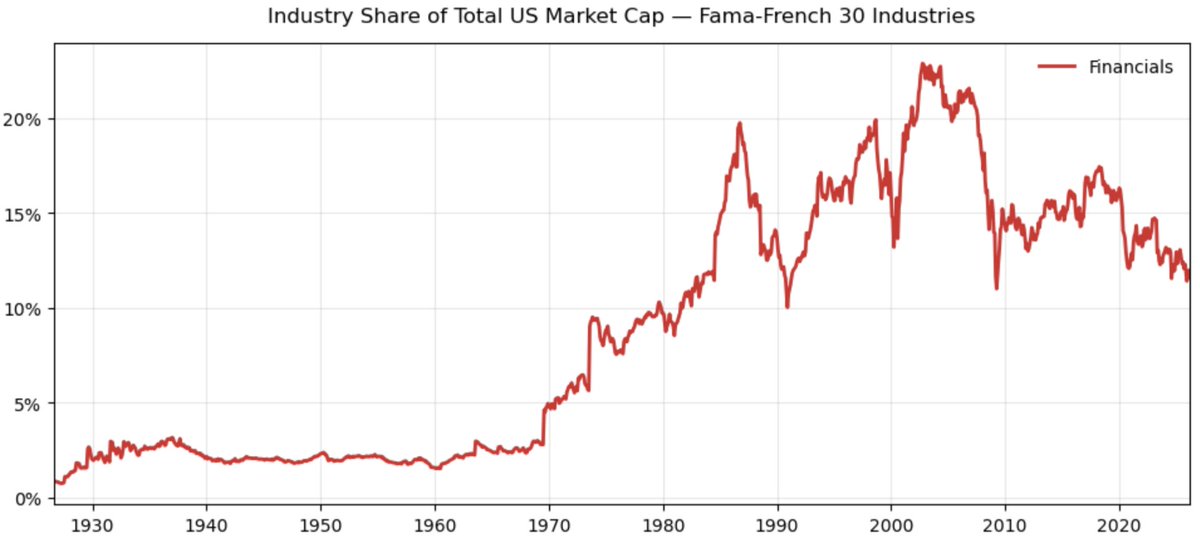
我们可以在股票市场指数构成中,同时看到这种坎蒂隆通胀和技术驱动通缩。选择一段既捕捉技术创新超长期复利效果,又与关键货币转折重叠的时间,我们可以粗略感知什么在变便宜,什么在变昂贵。看看钢铁、化工和汽车这些绝对关键的行业。它们曾经是美国指数的重要组成部分,但我们看到创新和通缩的持续推动,让这些生产者在整体经济产出中的占比越来越小:

https://www.youtube.com/watch?v=DYzT-Pk6Ogw

现在看看金融,尤其关注 1971 年:

https://www.moneyprintergobrrr.com/

我们一次只引入一张图,以免让读者不堪重负,但把它们叠在一起会形成最鲜明的印象:

https://en.wikipedia.org/wiki/Not_even_wrong

1971 年前的货币能工作,所以我们只需要很少且始终很少的金融。但 1971 年后的货币已经彻底坏掉,所以我们需要不断增殖的金融服务,只是为了弥补源头注入的所有胡扯。

这一逻辑的终局,在任何通胀性货币走到末期时都清晰可见。在阿根廷,企业经常囤积实物库存,摩托车零件、原材料、任何有形东西都行,不是因为需求证明它合理,而是因为持有比索等于金融自杀。仓库变成了储蓄账户。本该投资研发或扩大生产的企业家,转而玩起物流游戏,试图在货币蒸发前把它换成任何真实东西。一个工厂主把仓库塞满四倍于所需的库存,不是在进行生产性资本配置。他是在自卫。这就是通胀性货币系统对本文所描述企业家过程造成的影响:它把每个生产者都变成对货币本身投机的人,把精力从让东西更便宜的创新,转向疯狂保存任何还可挽救的价值。

不过,确实存在一种非强制方式可以降低货币需求:企业家精神。当人们把货币换成工厂、机器或研发这样的生产性投资时,他们对货币的需求会自愿下降。如果企业家随后把利润再投资于进一步增长,这种效果会加深。这给了我们一个清晰区别。央行通过烧掉货币价值,强制降低货币需求。企业家通过说服人们投资未来,自愿降低货币需求。前者让一切更贵。后者让一切更可负担。

然而法币经济学家仍然奇怪地看不见这个区别。他们看到信用崩塌,并得出结论说,由于情况看起来还好时价格通常上升,而现在情况看起来糟糕时价格下降,所以价格下降必然是问题。因此央行必须印出巨量货币,给资不抵债的银行补充资本并重启放贷,让货币供给和价格水平都能恢复上升。这不是严肃分析。它把信用病变误认为价格信号。这也是 99% 的职业经济学家和 110% 的央行官员所相信的东西。

现在我们已经建立了足够概念基础,可以驳倒“刺激总需求”和“设定利率”的荒谬。信用泡沫发生,是因为生产者误读市场信号,或对未来作出错误预测。被人为刺激的消费让他们相信需求是可持续的,而事实并非如此。他们观察到有吸引力的纸面回报,并推断值得投资更多同类长期生产性资产。

但表面需求是虚假的。它并不是因为储蓄存量已经充足到让边际投资回报相对于当前消费变得不再有吸引力而出现。它之所以出现,是因为货币说了谎。“刺激经济”其实只是迫使人们基于关于消费和投资真实欲望的虚假信号行动,或迫使他们害怕自己储蓄的价值否则会蒸发。必然结果是一连串投资后来被证明很糟糕,因为据称支撑它们的消费一开始就不可持续。看起来,不仅现在能赚到有吸引力的回报,而且在项目所需的整个时间跨度内都能赚到。然后每个人发现自己的投资一文不值。消费收缩。取决于货币结构退化到何种程度,人们甚至可能发现他们的“储蓄”只是由腐烂资产支持的银行负债。于是泡沫破裂。

创造可持续消费的是相对确定性,而创造相对确定性的是储蓄。储蓄之所以降低货币需求,正是因为它让人对未来购买力更有安全感。人们越安全,他们的当前消费就越能成为企业家可以合理回应的真实信号。认为生产者如果不被货币谎言推动就不会投资,这个观念完全颠倒。推动会产生更绝望、更愚蠢、更缺乏信息的投资;或者只会产生财富在奢侈品上的耗散。Après moi, le déluge.

看一个玩具例子。你生活在一个原始渔业社会。你想用同样时间投入捕到更多鱼,于是决定造一艘渔船。这意味着现在花在捕鱼上的时间会减少,所以你必须先储存鱼,以便在积累那个会让你以后更富有的生产性资产时维持生活。如果船没用,或者你非常不会用它,你会比以前更穷,因为你既停止了捕鱼,又把储备消耗在一次失败实验上。要让这一切有意义,你的储蓄必须是真实的。正如米塞斯在《货币与信用操纵论》中指出:

迂回生产方法只有在维持工人度过整个扩展过程所需的生活资料存在时,才能被采用。

在你不捕鱼的这段时期,你需要真实的鱼才能活下去。认为只有我先偷走你一些鱼,你才会造船,这是荒唐的。如果我偷走你的鱼,你就造不了船。你必须回去捕鱼。然而这正是法币处方。显然,如果没有被剥夺的威胁,你就不会受到足够“刺激”去建造生产性资产。

自食其果

医生,医治你自己吧!

《路加福音》4:23,英王钦定本

在收尾之前,让我们再做最后一次驳斥。纯粹为了论证,假设前文一切都有某种缺陷,而通过烧毁货币来“刺激经济”,而不是通过创新释放真实需求,确实是个好主意。假设我们无限智慧的统治者能通过某种神秘方法知道,只要让他们安静地读内脏占卜,长期总生产能力就会上升;人工信用能促成健全货币自由市场会错过的有价值投资;货币供给增加是正当的,因为否则增长永远不会发生。

我们如何判断他们是否正确?一项好投资的标志是什么?就是投资之后,我们能够用同样投入生产更多。这使追求回报最大化的生产者能够降价并获取市场份额。换句话说,我们会预期通缩。有价值的创新就是通缩性的,而通缩就是有价值创新的证据。如果货币存在的目的就是给东西定价,那么这些只是同一现象的不同视角。

可以想象,这个方案会被这样辩护:是的,货币供给上升了,因此你在总购买力中的份额下降了,但生产能力上升得更多。所以虽然有更多货币,但它追逐的是更多商品。我们知道这是值得的,因为价格下降了。再次强调,“价格下降”和“有价值投资”是同一结果的等价描述。

这必然是正确检验。如果“刺激”之后价格持平,那么投资没有取得任何成果。如果价格上升,那就是净负面。甚至可以把这当成资本错配的诊断测试。即便按照法币理论自己的说法,我们也可以指出需要什么证据才能证明其处方正确。

而一旦这样做,就找不到这样的证据。法币刺激只会把价格推高。它从未有过一次,在有记录的历史中一次也没有,产生过足以证明制造该通胀合理的、可证明的资本配置改善。

法币经济学家如何解释这一点?不是承认问题。他们通过障眼法解释。他们按需要在“通胀”表示货币供给和“通胀”表示价格水平之间来回切换,以维持连贯性的幻觉。这个把戏是这样的:

“我们需要通胀来刺激经济增长。企业家用新钱投资,GDP 上升,这是好事。价格也上升,但没关系,因为我们需要通胀来刺激经济增长。”

亲爱的读者,你看出来了吗?即使为了论证而承认他们所有疯狂前提,这套逻辑仍然在自身条件下失败。他们究竟是犬儒地兜售智识麻醉品,还是仅仅被自己的产品灌醉,这个问题留给读者。

不过,别只听我们说。任何严肃论证都不应基于权威而被接受。不幸的是,中央权威有个坏习惯:阻止货币竞争的真实实验。然而,如果他们如此确信自己的系统,为什么不让人们选择?如果这个永恒贬值的开明制度真的更优越,为什么硬货币替代品必须被腐蚀、取缔,或被强制围堵?

如果生产率倾向于让商品随时间变得更便宜,而货币通胀倾向于通过扭曲信号和重新分配购买力来掩盖这一事实,那么一种抵抗任意扩张的货币系统就做了一件激进的事。它允许进步以记账单位中价格下降的形式显现。这不是字面意义上的“通缩性货币”,因为其供给路径可能仍然缓慢扩张,而不是收缩。但它是一种抵抗人为篡改、从而允许长期价格通缩的货币基础。在这样的制度下,储蓄不会被惩罚,时间偏好得到诚实表达,投资由真实储蓄而非脆弱或虚幻信用融资,生产率收益体现为购买力,而不是被稀释没收。

这一切不会消灭商业周期或错误投资。人类仍会受贪婪支配,并且有时会在根本不确定性下误判。但一种不说谎的货币,能让错误更快暴露。它也允许一个人储存自己劳动的价值,而不是被迫把它赌进资产,或花在琐碎享乐上,只为跑赢开明监管者的贬值制度。

结论

通缩不会阻止投资。因果关系恰好相反。通缩只能发生在投资已经成功的地方,也就是企业家冒着资本风险,发现更有效率的生产方法,并把节省下来的成本传递给消费者和竞争对手。投资需要回报前景,回报需要可持续消费,可持续消费需要真实储蓄的银行。这不是理论。这是在企业家能够诚实配置资本时会发生什么的描述。

通胀性货币打断这条链上的每一个环节。它损害储蓄,腐蚀指导投资的价格信号,并奖励靠近货币水龙头,而不是服务消费者。它越是被激进使用,生产性经济就越被掏空,并重建为一种金融经济,其主要目的就是对冲支撑它自身的贬值。人们仍然在做事,但这些事情越来越不能创造价值。资本仍然在移动,但它是回应虚构而移动,因此抵达没人需要它的地方。

替代方案不是乌托邦。商业周期不会消失。企业家仍会误判,资本仍会在追求后来被证明错误的预感中被毁掉。但错误会迅速浮现,而不是在一堵人工信用墙后面复合几十年。经济生活的长弧会朝一个方向弯曲:走向一个人的诚实劳动逐年能买到更多,而不是更少的世界。

这就是健全货币所呈现的东西。不是字面意义上的通缩性货币,而是一种拒绝说谎的货币,并因此允许人类进步的真相以价格下降表达出来。数字向下。这就是你知道它正在工作的方式。

* 感谢 @bitstein 和 Ross Stevens 的编辑与贡献。*

也感谢 @BitcoinMagazine 原则上同意在 2027 年出版《Bitcoin Is Venice》第二版,我们计划将本文作为其中一个新章节。

**Innovation, Capital, and Deflation from First Principles


****by Allen Farrington and @sacha_meyers *

从第一性原理看创新、资本与通缩


****作者:Allen Farrington 与 @sacha_meyers *

The central tenet of modern economic theology is that while too much inflation is a plague, too little of it is a catastrophe to be guarded against with every lever of macroeconomic intervention. What, exactly, counts as “too much” or “too little,” nobody can say. It remains one of the universe’s great mysteries.

现代经济神学的核心信条是,通胀太高固然是瘟疫,通胀太低却是灾难,必须动用一切宏观经济干预工具加以防范。至于到底什么算“太高”,什么算“太低”,没人说得清。这仍然是宇宙中的伟大谜团之一。

The alleged perfect rate of inflation was not derived from a fundamental law of nature or from some sophisticated differential equation at the cutting edge of this highly rigorous and not at all pseudoscientific academic discipline. It was simply made up. As a Fortune article put it,
所谓完美通胀率,并不是从自然界的基本定律推导出来的,也不是这门高度严谨、绝非伪科学的学术领域在前沿研究中用某个精妙微分方程算出来的。它只是被编出来的。正如《财富》杂志的一篇文章所说:

The figure’s origin is a bit murky, but some reports suggest it simply came from a casual remark made by the New Zealand finance minister back in the late 1980s during a TV interview.

这个数字的来源有些模糊,但一些报道认为,它只是 20 世纪 80 年代末新西兰财政部长在一次电视采访中的随口一说。

With slightly more critical attention, Mises.org quotes the minister in question as later remarking that,

Mises.org 带着稍多一点批判意识,引用了这位部长后来的一句话:

The figure was plucked out the air to influence the public’s expectations.

这个数字是从空气中摘出来的,用来影响公众预期。

When pressed for a reason to fear a world in which things become cheaper, the fiat economist invokes the “Paradox of Thrift.” He argues that if a man expects a coat to be cheaper next year, he will choose to freeze today rather than part with his money. By this logic, saving is a terminal disease. The only way to keep a citizen “active” is to set fire to his savings through the quiet arson of inflation, forcing him to spend before his money goes up in smoke. To the fiat economist, deflation is the economy-killer, to be fought at all costs.

当被追问为什么要害怕一个东西变得更便宜的世界时,法币经济学家会搬出“节俭悖论”。他说,如果一个人预期明年外套会更便宜,他今天就会选择挨冻,而不是花钱。按这个逻辑,储蓄是一种绝症。让公民保持“活跃”的唯一办法,就是通过通胀这场安静的纵火,把他的储蓄点着,逼他在钱化为烟之前赶紧花掉。对法币经济学家而言,通缩是经济杀手,必须不惜一切代价与之斗争。

This essay is written to debunk that fallacy. In a society that values reality over accounting tricks, the number should go down. And if your money is honest, it will.

这篇文章就是要驳倒这个谬误。在一个重视现实而非会计把戏的社会里,数字应该下降。如果你的货币是诚实的,它就会下降。

Good Deflation, Bad Deflation

好的通缩,坏的通缩

“The products of the earth require long and difficult preparations in order to make them suitable for the wants of man.”

“大地的产物需要漫长而艰难的准备,才能适合人的需要。”

A.R.J .Turgot, Reflections on the Formation and Distribution of Wealth

A.R.J. 杜尔哥,《关于财富的形成和分配的思考》

We begin by rescuing the word “inflation.” To the state, inflation is a metaphysical abstraction, an exogenous act of God that simply happens to the economy. This is a convenient lie. We must distinguish sharply between cause and symptom. Monetary inflation is an act of the state: the deliberate expansion of the money supply. Price inflation is the consequence: the inevitable fever that follows the infection. By defining inflation solely as the “rise in prices,” the central banker shifts the blame from the printing press to consumer “expectations,” the “greedy” merchant, or the “disrupted” supply chain. Without a proper understanding of the cause, no solution is possible.

我们先来拯救“通胀”这个词。对国家而言,通胀是一种形而上抽象,是某种外生的神意,仿佛只是发生在经济身上的事情。这是一个方便的谎言。我们必须清楚区分原因与症状。货币通胀是国家的行为:有意扩张货币供给。价格通胀是结果:感染之后必然出现的发热。央行把通胀仅仅定义为“价格上涨”,就把责任从印钞机转移到了消费者“预期”、“贪婪”的商人,或“受扰动”的供应链身上。没有对原因的正确理解,就不可能有解决方案。

The fiat mind also relies on the myth of the “price level,” a statistical concoction that attempts to average the price of a haircut and a ton of steel into a single supposedly meaningful figure. What is the average temperature on Earth? What is the average length of a piece of string? The mind boggles.

法币心智还依赖“价格水平”的神话。这是一种统计拼盘,试图把一次理发的价格和一吨钢的价格平均成一个据称有意义的数字。地球的平均温度是多少?一根绳子的平均长度是多少?这足以让人头皮发麻。

There is no “general price,” only opportunity costs and individuals making choices based on their own subjective valuations across an unfathomable and ever-changing range of options. To claim that this aggregate can be managed through central planning is to suffer from a profound case of physics envy, despotism, or both. It is to treat a network of autonomous individuals as if they were gas particles in a sealed chamber.

不存在什么“总价格”,只有机会成本,以及个人基于自身主观估值,在难以穷尽且持续变化的选项中做出的选择。声称这种总量可以通过中央计划管理,不是严重的物理学嫉妒症,就是专制,或者两者兼有。这等于把一张由自主个体构成的网络,当成密闭容器里的气体粒子。

No. Entrepreneurs act on intuition and anticipation of future conditions, not on the rigid “rationality” of a computer model. As the Nobel Prize-winning physicist Murray Gell-Mann remarked, “Think how hard physics would be if particles could think.” Indeed. Think how easy economics would be if people could not, and you will have the bulk of fiat economics.

不是这样。企业家行动靠的是直觉和对未来状况的预判,不是计算机模型里僵硬的“理性”。诺贝尔奖物理学家默里·盖尔曼说过:“想想如果粒子会思考,物理学会有多难。” 的确。再想想如果人不会思考,经济学会有多容易,你就得到了法币经济学的大半内容。

This brings us to our core contention: long-term price deflation is not an exogenous malady emanating from vibey “sentiments.” It is an endogenous process of human progress. It is what happens when entrepreneurs—self-appointed and answerable only to their customers—risk capital to discover more efficient ways to marshal resources. When an entrepreneur successfully innovates, she offers superior, cheaper, or entirely novel products for a given investment. In other words, she frees up resources by consuming less to make more. “Less for more” is the heart of the flywheel: economic returns. Far from being a problem, this number going down is the force that drives economic progress. It is the steady mastery of nature and technique that converts a luxury into a necessity.

这把我们带到核心主张:长期价格通缩并不是某种来自“情绪氛围”的外生疾病。它是人类进步的内生过程。它发生在企业家,也就是那些自我任命、只对顾客负责的人,冒着资本风险去发现更有效率的资源组织方式之时。当企业家成功创新,她就能在给定投资下提供更好、更便宜,或全新的产品。换句话说,她通过消耗更少来生产更多,从而释放资源。“用更少换更多”是飞轮的核心:经济回报。数字下降远非问题,它正是推动经济进步的力量。它是人类对自然和技艺持续掌握的过程,把奢侈品变成必需品。

The fiat economist lives in perpetual dread of the “deflationary spiral.” Most popular discussions conflate two very different kinds of deflation. That distinction, and an account of the mechanics of each, is central to our argument.

法币经济学家永远恐惧“通缩螺旋”。大多数流行讨论把两种截然不同的通缩混为一谈。区分二者,并说明各自机制,是本文论证的关键。

Good deflation is when prices fall because entrepreneurs find ways to produce more or better output with the same input. Bad deflation is the fall in prices during a credit unwind. In that case, defaults rise, the credit binge ends, and everyone scrambles for liquidity. In such an environment, falling prices are a symptom of balance-sheet stress and broader institutional failure, not evidence that making things cheaper is destructive. Because bad deflation follows a credit unwind, fiat economists get the causality backwards. They conclude that printing money will avert hardship, not seeing that it was money printing that created the capital misallocation and balance-sheet fragility in the first place.

好的通缩,是价格下降,因为企业家找到了用同样投入生产更多或更好产出的办法。坏的通缩,是信用出清期间的价格下降。在这种情况下,违约上升,信用狂欢结束,每个人都争抢流动性。在这种环境中,价格下降是资产负债表压力和更广泛制度失败的症状,而不是“把东西做便宜具有破坏性”的证据。因为坏的通缩发生在信用出清之后,法币经济学家把因果关系弄反了。他们得出结论说,印钱可以避免痛苦,却看不见正是印钱一开始制造了资本错配和资产负债表脆弱性。

Good and bad deflation can be difficult to distinguish, but they are not the same animal. One is the dividend of competence; the other is the penance of hubris. Because the fiat economist cannot distinguish between them, he concludes that economic progress itself is a systemic danger. The “Paradox of Thrift” becomes the fear that progress might slow the engine down. And since that engine has already been corrupted by fiat thinking, it is imagined to be forever on the verge of collapse. So the consumer is coerced into action, told he must spend now because his money is a melting ice cube. The result is a frantic, hollow kind of prosperity: demand born not of genuine need, but of a desperate attempt to outrun the decline of the currency.

好的通缩和坏的通缩有时不容易区分,但它们不是同一种动物。一个是能力的红利,另一个是傲慢的惩罚。因为法币经济学家无法区分二者,他便得出结论:经济进步本身是一种系统性危险。“节俭悖论”于是变成一种恐惧:进步可能会让引擎慢下来。而由于这台引擎早已被法币思维腐蚀,它被想象成永远处在崩溃边缘。于是消费者被胁迫行动,被告知必须现在花钱,因为他的钱是一块正在融化的冰。结果是一种狂躁而空洞的繁荣:需求并非来自真正需要,而是来自对货币贬值的绝望逃亡。

Two marginally more sophisticated variants of the fiat worry exist. One is that debt contracts are nominal, meaning that if prices and wages fall while debts stay fixed, the real debt burden rises. The result is a large wealth transfer to debt holders at the worst possible time. Another common refrain is that wages are sticky. Firms cannot or will not cut nominal wages quickly enough and instead lay people off. We agree that neither sounds especially pleasant. But notice what they imply. The central problem is not that prices fall because people can make things more efficiently, but that indebtedness and institutional rigidities are dangerous in a downturn. A society can vilify falling prices, or it can correctly identify the danger of building its entire economic system on fragile nominal promises. Choosing is left as an exercise for the reader.

法币式担忧还有两个稍微复杂一点的变体。一个是债务合约以名义金额计价,也就是说,如果价格和工资下降,而债务金额固定,真实债务负担就会上升。结果是在最糟糕的时候,把大量财富转移给债权持有人。另一个常见说法是工资具有黏性。企业不能或不愿足够快地下调名义工资,于是转而裁员。我们同意,这两者听起来都不愉快。但请注意它们真正意味着什么。核心问题并不是价格因为人们能更高效地生产而下降,而是负债和制度僵硬在衰退中很危险。一个社会可以妖魔化价格下降,也可以正确识别出,把整个经济体系建立在脆弱的名义承诺之上才是危险所在。如何选择,留给读者作为练习。

The fiat economist universally chooses to set the printing press to brrrrrrrrrr. While the enlightened elite watch their stock portfolios moon and their debts disappear, the common man is told to be thankful that he was “this close” to the horror of living in a world where his wages bought more every year, and his government respected his private property. Imagine how hard it would be for that government to raise debt in such a world. It would have to justify its spending. We cannot have that.

法币经济学家一律选择让印钞机开始 brrrrrrrrrr。当开明精英看着自己的股票组合飞上月球、债务消失时,普通人被要求心怀感激,因为他“差一点点”就要遭遇一种恐怖:生活在一个工资每年能买更多东西、政府尊重私人财产的世界。想象一下,在那样的世界里,政府举债会多困难。它必须证明自己的支出是正当的。那可不行。

Once we free ourselves from fiat methodology, we find that the only meaningful “stimulus” is the liberation of capital through innovation. With sound money and free markets, the number should go down.

一旦我们摆脱法币方法论,就会发现唯一有意义的“刺激”是通过创新释放资本。在健全货币和自由市场下,数字应该下降。

The Temporal Logic of Pricing, Administration, and Technology

定价、管理与技术的时间逻辑

“All economic activity is carried out through time. Every individual economic process occupies a certain time, and all linkages between economic processes necessarily involve longer or shorter periods of time.”

“所有经济活动都在时间中展开。每一个个体经济过程都占据一定时间,经济过程之间的一切联系也必然涉及长短不一的时间段。”

F.A. Hayek, Money, Capital, and Fluctuations

F.A. 哈耶克,《货币、资本与波动》

Fiat economics treats time as inconvenient friction. In the hallowed halls of neoclassical theory, time does not exist. There is only “Equilibrium.” The market has achieved a Pareto-optimal stasis via the Walrasian auctioneer’s tâtonnement, yielding a price vector of zero aggregate excess demand. Every atomistic utility-maximizer has aligned his marginal rate of substitution with the price ratio, while firms reach a profit-maximizing zenith where marginal cost is perfectly aligned with marginal revenue. Perfection, as Michael Fassbender might say.

法币经济学把时间当成碍事的摩擦。在新古典理论的神圣殿堂中,时间并不存在。只有“均衡”。市场通过瓦尔拉斯拍卖人的 tâtonnement 达成了帕累托最优静止状态,得到一组总超额需求为零的价格向量。每一个原子化的效用最大化者,都让自己的边际替代率与价格比率对齐;企业则抵达利润最大化的顶点,边际成本与边际收益完美一致。完美,正如迈克尔·法斯宾德可能会说的那样。

It is a beautiful but dead world. The “invisible hand” has stopped twitching, and all bow to the glorious General Equilibrium.

这是一个美丽但死寂的世界。“看不见的手”停止抽动,所有人都向荣耀的总均衡低头。

But if the equilibrium is absolute, why does anything ever happen? If all information is already “priced in,” how has anybody ever successfully invested? The answer is that the neoclassical model describes an idealized and hypothetical destination while ignoring the real and uncertain journey. It ignores the entrepreneur, the actor who operates not in a frozen, out-of-time model, but in the messy world unfolding at every instant. In assuming stasis, mainstream economics obscures the guiding light of entrepreneurs: returns.

但如果均衡是绝对的,为什么还会有任何事情发生?如果所有信息都已经“被价格反映”,为什么还会有人成功投资?答案是,新古典模型描述的是一个理想化、假设性的目的地,却忽略了真实且不确定的旅程。它忽略了企业家,那个并不生活在冻结于时间之外的模型中,而是在每一刻展开的混乱世界中行动的人。主流经济学假定静止,因此遮蔽了企业家的指路明灯:回报。

Prices are set in time, not in equilibrium. Cash is spent today in the hope that uncertain cash flows will return to the entrepreneur and her investors later. That is a decent layman’s account of returns, and close enough for present purposes. Misunderstanding returns has serious consequences, because returns are the mechanism by which most real prices arise in the first place. By abstracting away time, neoclassical economics collapses a crucial dimension and blinds itself to a process at the heart of markets. It assumes firms maximizing profits when it should be looking at entrepreneurs experimenting to earn attractive returns.

价格是在时间中设定的,不是在均衡中设定的。现金今天被花出去,是希望不确定的现金流在之后返回企业家及其投资者手中。这是对回报的一个不错的通俗说明,对本文目的已经足够。误解回报会带来严重后果,因为回报正是大多数真实价格最初产生的机制。新古典经济学把时间抽象掉,于是压扁了一个关键维度,也让自己看不见市场核心处的过程。它假设企业在最大化利润,而真正应该观察的是企业家在实验,以赚取有吸引力的回报。

To start with, we must recognize that prices are set by producers and accepted or rejected by consumers. So what is a producer trying to do when setting a price? The answer is simple: maximize long-term returns. In the real world, prices are discovered by entrepreneurs under uncertainty. Every worthwhile entrepreneurial venture is a bet on an unknown and unknowable future. There is no Walrasian auctioneer, only trial and error with the unforgiving feedback of profit and loss on investment.

首先,我们必须认识到,价格由生产者设定,由消费者接受或拒绝。那么生产者设定价格时想做什么?答案很简单:最大化长期回报。在现实世界中,价格由企业家在不确定性中发现。每一个值得做的企业家事业,都是对未知且不可知的未来下注。没有瓦尔拉斯拍卖人,只有试错,以及投资盈亏带来的无情反馈。

This is because all production has costs, and in almost all circumstances, those costs come before any hope of revenue. Any productive enterprise therefore requires a base of capital rather than somehow operating, selling, and generating a return ex nihilo. Investment always precedes production, and production always precedes profit. Real resources are scarce, and real capital is scarce too. It follows that speculative opportunities to crystallize liquid capital into productive assets compete for sources of liquid capital—that is, money. Since money is homogeneous in this pre-crystallized state, its providers are not trying to maximize profits in the abstract, but profit per unit of committed liquid capital per unit of time: returns. Profit is a number. Returns are a relationship between money and time. An entrepreneur does not merely want to make money. She wants to make money relative to the capital committed.

原因在于,所有生产都有成本,而且几乎在所有情况下,成本都发生在任何收入希望之前。因此,任何生产性企业都需要资本基础,而不可能凭空经营、销售并产生回报。投资总是先于生产,生产总是先于利润。真实资源稀缺,真实资本也稀缺。因此,把流动资本结晶为生产性资产的投机机会,会竞争流动资本的来源,也就是货币。由于货币在这种结晶之前的状态中是同质的,资本提供者并不是在抽象地最大化利润,而是在最大化每单位已承诺流动资本、每单位时间的利润:回报。利润是一个数字。回报是货币与时间之间的关系。企业家不只是想赚钱。她想相对于投入的资本赚钱。

We would encourage special attention to the dimension of returns: one over time. Whereas the dimension of profits is dollars, and the year-on-year increase in profits is a dimensionless ratio, returns are a true growth rate. Keep that in mind when a fiat economist tells you “the economy” “grew.”

我们建议格外注意回报的维度:一除以时间。利润的维度是美元,利润同比增长是无量纲比率,而回报是真正的增长率。下次法币经济学家告诉你“经济”“增长”了,请记住这一点。

Oh it grew, did it? It generated a positive return on reinvested capital?

哦,它增长了,是吗?它在再投资资本上产生了正回报?

Um … no … revenue went up.

呃……不是……收入上升了。

That’s not “growth”.

那不叫“增长”。

Um …

呃……

Nice chatting with you as always.

一如既往,跟你聊天真愉快。

Money is the economic stem cell. It is pure, undifferentiated potential. It is perfectly liquid and perfectly fungible. When you hold money, you are holding what can be thought of as a claim on the future output of the economic network in which the money is used. Investment is the process of crystallization and differentiation. When an entrepreneur "jumps off" the monetary network, they are differentiating stem cells into organs. They take liquid potential and freeze it into a specific, solid form: a bridge, a factory, or a decade of R&D for a life-saving drug. The more specific the organ, the riskier the crystallization and the higher the sought-after return.

货币是经济的干细胞。它是纯粹、未分化的潜能。它完全流动,完全可替代。当你持有货币时,你持有的可以被理解为对这个货币所使用的经济网络未来产出的索取权。投资是结晶和分化的过程。当企业家从货币网络上“跳下去”时,他们是在把干细胞分化为器官。他们把流动潜能冻结成某种具体、坚实的形态:一座桥、一家工厂,或一项为救命药物进行十年的研发。这个器官越具体,结晶风险越高,所追求的回报也越高。

As with seemingly every idea your humble authors have spent months or years pondering, it turns out Thomas Sowell captured its essence in two paragraphs from Basic Economics. Call it Sowell’s Law.

你们卑微作者花了数月或数年思考的每个想法,似乎最后都会发现托马斯·索维尔早已在《基础经济学》中的两段话里抓住了其精髓。姑且称之为索维尔定律。

A supermarket chain in a capitalist economy can be very successful charging prices that allow about a penny of clear profit on each dollar of sales. Because several cash registers are usually bringing in money simultaneously all day long in a big supermarket, those pennies can add up to a very substantial annual rate of return on the supermarket chain’s investment, while adding very little to what the customer pays. If the entire contents of a store get sold out in about two weeks, then that penny on a dollar becomes more like a quarter on the dollar over the course of a year, when that same dollar comes back to be reused 25 more times.”

资本主义经济中的一家连锁超市,可以通过每一美元销售额只赚大约一美分净利润的价格取得极大成功。因为一家大型超市里,通常有好几台收银机整天同时收钱,这些一美分加起来,就能在超市连锁的投资上形成相当可观的年回报率,同时对顾客支付的价格只增加很少。如果一家店的全部商品大约两周就卖完一次,那么一年下来,当同一美元又回来被重复使用 25 次时,这一美元上的一美分就更像是一美元上的二十五美分。”

And later, as a historical case study,

后来,他又以一个历史案例写道:

“One of the keys to the rise to dominance of the A & P grocery chain in the 1920s was a conscious decision by the company management to cut profit margins on sales, in order to increase the profit rate on investment. With the new and lower prices made possible by selling with lower profits per item, A & P was able to attract greatly increased numbers of customers, making far more total profit because of the increased volume of sales. Making a profit of only a few cents on the dollar on sales, but with the inventory turning over nearly 30 times a year, A & P’s profit rate on investment soared.”

“A & P 食品连锁店在 20 世纪 20 年代崛起并占据主导地位的关键之一,是公司管理层有意识地决定降低销售利润率,以提高投资利润率。通过以较低的单件利润销售而形成新的、更低的价格,A & P 得以吸引数量大幅增加的顾客,并因销售量增加而获得多得多的总利润。每一美元销售额只赚几美分利润,但库存一年周转近 30 次,A & P 的投资利润率便飙升了。”

It is worth lingering on time a little longer. Virtually no productive process is instant. All take time: the process of crystallizing money into productive assets takes time; the process of producing, bringing to market, selling, and recycling monetary gains takes time; and, most subtly but perhaps most importantly, recouping 100 percent of the capital committed usually takes a very long time and may never happen in full. Once crystallized as a productive asset, the goal is typically to operate the asset for years, not somehow both depreciate it 100 percent and return 100 percent. All such numbers are arbitrary in the abstract and set in practice by market forces, but a 5 percent nominal return requires 20 years just to recoup the initial investment, never mind to produce an economic return, assuming the assets generating that return even last that long.

值得在时间上再停留一下。几乎没有任何生产过程是瞬时完成的。它们都需要时间:把货币结晶为生产性资产需要时间;生产、推向市场、销售并回收货币收益需要时间;最细微但也许最重要的是,收回 100% 已投入资本通常需要很长时间,而且可能永远无法完全发生。一旦结晶为生产性资产,目标通常是运营该资产多年,而不是以某种方式既让它 100% 折旧,又把 100% 收回来。所有这些数字在抽象上都是任意的,在实践中由市场力量设定,但 5% 的名义回报仅仅为了收回初始投资就需要 20 年,更不用说产生经济回报了,前提还是产生该回报的资产能持续那么久。

One could argue that as the environment of accumulated capital grows deeper and more complex, the bar for competition rises with it, and entrepreneurs can only think in terms of returns rather than immediate profits if they hope to compete at all. They cannot compete without increasingly roundabout capital allocations, as Eugen von Böhm-Bawerk famously put it, and they cannot finance those allocations without long time horizons.

可以说,随着累积资本环境变得更深、更复杂,竞争门槛也随之提高,企业家如果还想竞争,就只能以回报而非即时利润来思考。正如欧根·冯·庞巴维克著名地说过的那样,他们没有越来越迂回的资本配置就无法竞争;没有长期时间视野,他们也无法为这些配置融资。

A simple entrepreneurial action might be a quick arbitrage. We see apples trading at different prices in two markets. We buy low and sell high. We crystallize our money into apples, walk them over to the next market, and sell them back into liquid money for a profit. We incur risk in the process—perhaps the price changes before we arrive—and it takes time. But the risk-adjusted return on the capital invested in apples, over the time required to complete the transaction, is worth it. Notice, too, that this action, driven by returns, affects prices. By moving cheaper apples into the expensive market, we narrow the spread. We should keep exploiting this money glitch until the two prices converge, once transportation and other costs are taken into account. That is the practical sense in which entrepreneurs are price messengers.

一个简单的企业家行动可能是一次快速套利。我们看到苹果在两个市场以不同价格交易。我们低买高卖。我们把钱结晶成苹果,把它们运到另一个市场,再卖回流动货币,赚取利润。在这个过程中我们承担风险,也许价格在我们抵达前就变了,而且这需要时间。但相对于完成交易所需时间,投入苹果中的资本的风险调整回报是值得的。也请注意,这种由回报驱动的行动会影响价格。通过把更便宜的苹果带入昂贵市场,我们缩小了价差。我们应该持续利用这个金钱漏洞,直到考虑运输和其他成本后,两个价格趋于收敛。这就是企业家作为价格信使的实际含义。

But simple arbitrage can only take us so far. Over time, entrepreneurs discover more organizationally complex and more intuitively speculative ways of satisfying people’s wants. This time, perhaps, we buy apples, turn them into pies, and sell those pies a few days later. That takes longer and requires capital equipment like an oven, which someone had to make. And someone had to build the factory that made the oven. And someone had to open the mine that produced the metal that made the oven that made the pie we are now selling. And everybody involved in all of this had to eat. Perhaps apples?

但简单套利只能带我们走这么远。随着时间推移,企业家会发现组织上更复杂、直觉上更具投机性的方式来满足人的欲望。这一次,也许我们买下苹果,把它们做成派,几天后再卖掉。这需要更长时间,也需要烤箱这样的资本设备,而烤箱必须有人制造。还得有人建造制造烤箱的工厂。还得有人开矿,生产制造烤箱所需的金属,而烤箱又做出了我们正在出售的派。参与这一切的每个人都必须吃饭。也许吃苹果?

Think how deep the rabbit hole goes. Modern commercial society is built on astonishingly long and roundabout capital investments that can take years to pay off. And here, “paying off” simply means getting back on the money network of pure potential. A pharmaceutical company might spend 10 years on R&D and another 10 years selling the resulting product before it earns a satisfactory return on the initial investment. That is 20 years between jumping off the money network and getting back on. All this only to jump right off again in pursuit of another entrepreneurial journey. The roundaboutness of Dutch lithography giant ASML’s returns is barely comprehensible.

想想这个兔子洞有多深。现代商业社会建立在惊人漫长且迂回的资本投资之上,这些投资可能需要多年才能回本。在这里,“回本”只是指重新回到纯潜能的货币网络。一家制药公司可能花 10 年研发,再花 10 年销售由此产生的产品,才在初始投资上获得令人满意的回报。这意味着,从跳下货币网络到重新回到货币网络,中间隔了 20 年。而这一切只是为了再次跳下去,追寻另一段企业家旅程。荷兰光刻巨头 ASML 的回报迂回程度几乎难以理解。

And so we see that “per unit of time” is just as important as “per unit of committed capital”: per unit of committed capital because money is homogeneous and liquid, whereas productive assets are heterogeneous and illiquid; per unit of time because the process of transformation not only takes time but commits the capital provider to an extended period of heterogeneous exposure. To reiterate, then, producers care about profit per unit of committed capital per unit of time: returns.

因此我们看到,“每单位时间”和“每单位已承诺资本”同样重要:每单位已承诺资本重要,是因为货币同质且流动,而生产性资产异质且不流动;每单位时间重要,是因为转化过程不仅需要时间,还把资本提供者锁定在一段长期的异质敞口中。因此再强调一次,生产者关心的是每单位已承诺资本、每单位时间的利润:回报。

So we ask once again: what does a producer decide with respect to prices in order to maximize returns? There are several candidate answers, all in tension. There is no single “correct” answer. Balancing what follows is the essence of entrepreneurship: intuiting future consumer behavior and future market conditions.

于是我们再次发问:生产者为了最大化回报,在价格上要做什么决定?有几个候选答案,而且彼此存在张力。不存在单一“正确”答案。平衡以下因素,就是企业家的本质:凭直觉判断未来消费者行为和未来市场状况。

Keeping in mind that producers are almost always in some degree of competition with others selling similar, if not identical, goods or services, there is always a temptation to lower prices and draw customers away from rivals. Obviously, this can harm returns, so prices cannot be lowered to zero. But equally, while returns can on paper be pushed arbitrarily high by raising prices, that assumes the same quantity of sales. It will not be. Higher prices mean fewer sales as consumers go to competitors instead. Exactly how many fewer is the essence of entrepreneurial judgment. Contrary to fiat economist logic, there is no such actual thing as a demand curve sitting out there in the world. There is only the producer’s intuition about how consumers will respond.

考虑到生产者几乎总是在某种程度上与销售相似甚至相同商品或服务的人竞争,降低价格、从对手那里抢走顾客永远是一种诱惑。显然,这可能伤害回报,所以价格不能降到零。同样,虽然从纸面上看,提高价格可以把回报推到任意高,但这是假设销量不变。销量不会不变。更高价格意味着更少销售,因为消费者会转向竞争对手。到底少多少,正是企业家判断的核心。与法币经济学家的逻辑相反,世界上并没有一条真实存在的需求曲线摆在那里。只有生产者关于消费者会如何反应的直觉。

There is a subtle but critical distinction between the fact that some best possible outcome exists and the claim that anyone can deduce how to achieve it. Armen Alchian put the point well in Uncertainty, Evolution, and Economic Theory: “the meaningfulness of "maximum profits" as a realized outcome is "perfectly consistent with the meaninglessness of 'profit maximization' as a criterion for selecting among alternative lines of action."

某个最佳结果存在这一事实,与任何人都能推导出如何实现它这一主张之间,有细微但关键的区别。阿门·阿尔钦在《不确定性、进化与经济理论》中很好地表达了这一点:“‘最大利润’作为一个已实现结果是有意义的,这与把‘利润最大化’作为在不同行动路线之间选择的标准毫无意义,是完全一致的。

Consider a baker deciding how to price a new loaf. She could charge £3 and sell 200 a day, or £4 and sell 100, or £2.50 and sell 300, but exhaust her staff. One of these paths, or perhaps some option she hasn't considered, would yield the highest return on her capital. That optimum exists in principle. But she cannot calculate her way to it because the outcome depends on the subjective preferences of hundreds of people she has never met, the pricing decisions of competitors she cannot observe in real time, and much more besides. She can only try something, watch what happens, and adjust. This is not a failure of her rationality. It is the nature of the problem.

想象一位面包师在决定一款新面包如何定价。她可以定价 3 英镑,每天卖 200 个;也可以定价 4 英镑,每天卖 100 个;也可以定价 2.50 英镑,每天卖 300 个,但让员工累垮。这些路径中的一个,或者某个她还没想到的选择,原则上会给她的资本带来最高回报。这个最优点在原则上存在。但她无法通过计算抵达它,因为结果取决于数百个她从未见过的人的主观偏好,取决于她无法实时观察的竞争对手定价决策,还取决于更多因素。她只能尝试某个做法,观察发生了什么,然后调整。这不是她理性失败了。这就是问题本身的性质。

Fiat economists, seduced by the quantifiability of profit, mistake the existence of a theoretical maximum for the existence of a method to find it. They then build models that assume the method has already been applied and wonder why reality keeps misbehaving.

法币经济学家被利润的可量化性诱惑,把理论最大值的存在误认为寻找它的方法也存在。于是他们建立模型,假设这个方法已经被应用,然后疑惑现实为什么总是不听话。

There is also, once again, the component of time. The producer cannot sit around indefinitely waiting to discover the perfect price. Even if that were possible—which it is not—by the time she found it, it would already be wrong. To return to the physical dynamics of returns, if in Scenario A we sell our widget for $x, and in Scenario B we sit around pontificating about the “perfect price” only to sell it later for the same $x, our returns in Scenario A are by definition higher. Time is valuable, not as a hand-wavy slogan, but in a very real and fundamental sense.

这里还有时间成分。生产者不能无限期坐在那里等待发现完美价格。即使这可能,而它并不可能,等她找到时,它也已经错了。回到回报的物理动态,如果在情景 A 中,我们以 $x 出售小部件,而在情景 B 中,我们坐在那里高谈阔论“完美价格”,最后只是晚些时候以同样的 $x 出售,那么情景 A 的回报按定义更高。时间有价值,不是作为一个含糊口号,而是在非常真实且根本的意义上如此。

The production process increasingly crystallizes value into more definite forms, culminating in inventory waiting to be sold. The producer, therefore, has some desired period over which sales should occur so that liquid capital can be recycled into the production process.

生产过程会逐渐把价值结晶为更确定的形态,最终形成等待出售的库存。因此,生产者会有某个期望销售周期,好让流动资本能够重新投入生产过程。

With that in mind, we can give our first concrete answer. Relative to whatever time period is desired, if inventory is selling too slowly, the producer should lower prices to move it faster. If inventory is selling too quickly, the producer should raise prices to capture more immediate profit. The latter is a good problem to have, but it is still a problem from the standpoint of inadequately maximized returns. In either case, the producer is responding to what she believes are market signals: if sales are too slow, perhaps a competitor has a lower price and consumers are going there; if sales are too fast, perhaps the market is not yet saturated and higher prices will improve returns without slowing throughput beyond the producer’s desired cycle.

考虑到这一点,我们可以给出第一个具体答案。相对于期望的时间周期,如果库存卖得太慢,生产者应该降价,加快出清。如果库存卖得太快,生产者应该涨价,以获取更多即时利润。后者是好问题,但从回报没有充分最大化的角度看,它仍然是问题。无论哪种情况,生产者都在回应她认为的市场信号:如果销售太慢,也许竞争对手价格更低,消费者去了那里;如果销售太快,也许市场尚未饱和,更高价格可以提高回报,同时不至于让周转慢到超过生产者期望周期。

Note that, in either case, the producer is both responding to market signals and creating them. Lower prices may reduce returns across the market and push marginal capital into other industries. Higher returns, conversely, attract capital here. All entrepreneurial decision-making is, in the end, capital seeking returns, even when it presents itself in some more concrete form several degrees removed.

请注意,在两种情况下,生产者既在回应市场信号,也在创造市场信号。降价可能降低整个市场的回报,并把边际资本推向其他行业。相反,更高回报会把资本吸引到这里。所有企业家决策归根到底都是资本在寻找回报,即使它以某种相隔数层、更具体的形式出现。

The entrepreneurial process just described has a fortunate long-term consequence: innovation. In the short term, entrepreneurs decide how to price inventory that has already been produced but not yet sold. That is all the consumer directly sees, and from the entrepreneur’s perspective, it is the immediate point of the exercise. But productive assets exist on a spectrum of heterogeneity and liquidity, and over horizons longer than the ideal stock-turn window, the producer faces a different question: what actually drives returns? In the broadest terms, the answer is creating more output with the same inputs. Competitive pressure at the point of sale makes that unavoidable wherever competition exists at all.

刚才描述的企业家过程有一个幸运的长期结果:创新。短期内,企业家决定如何为已经生产但尚未出售的库存定价。这是消费者直接看到的一切,从企业家视角看,也是这件事的直接目的。但生产性资产存在于一条异质性和流动性的光谱上,在超过理想存货周转窗口的更长时间跨度中,生产者面对的是另一个问题:到底是什么驱动回报?最宽泛地说,答案是用同样投入创造更多产出。只要存在竞争,销售端的竞争压力就会使这件事不可避免。

To make that more concrete, a producer hoping to maximize returns—whether by increasing them in the absence of competition or preserving them under competition—has only three broad options: create products and cycle inventory faster, raise prices, or lower costs. “Create products and cycle inventory faster” is really another way of saying “sell more,” but with the emphasis on time rather than quantity: selling the same amount in a shorter period is functionally equivalent to selling more in a fixed period. Most strategies are combinations of these three.

说得更具体一点,一个希望最大化回报的生产者,无论是在没有竞争时提高回报,还是在竞争中保住回报,只有三类宽泛选择:创造产品并更快周转库存,提高价格,或降低成本。“创造产品并更快周转库存”其实是“卖更多”的另一种说法,只是强调时间而非数量:在更短时间内卖出同样数量,功能上等同于在固定时间内卖出更多。大多数策略都是这三者的组合。

The simplest option is that if returns are already attractive enough, the producer can allocate more capital to the same enterprise. This need not require faster turnover, higher prices, or lower costs. It may counterfactually simply reflect the absence of enough pressure to force any of those changes. The opportunity appears to be there. Competitors do not seem to be taking it. She may as well take it herself.

最简单的选项是,如果回报已经足够有吸引力,生产者可以把更多资本配置到同一企业。这不一定需要更快周转、更高价格或更低成本。反事实地说,它可能只是反映出缺少足够压力来迫使这些变化发生。机会似乎存在。竞争对手似乎没有抓住。她不妨自己抓住。

Sales and marketing can be understood as attempts to cycle inventory faster, raise prices, or both. Marketing may broaden the market by making potential customers aware of a product they would otherwise have ignored, thereby increasing sales over a given period. Or it may aim to create a perception of quality that allows the producer to raise prices—or, counterfactually, not to cut them when otherwise she would have had to.

销售和营销可以被理解为让库存更快周转、提高价格,或二者兼有的尝试。营销可能通过让潜在顾客意识到一种原本会被忽略的产品,扩大市场,从而在给定时期内增加销售。它也可能旨在创造质量感知,让生产者能够提高价格,或者反事实地说,在原本不得不降价时不必降价。

R&D is typically aimed either at lowering costs by discovering cheaper ways to operate productive assets or at creating better or entirely new products. That serves to lower costs, sell more product, or cycle inventory faster.

研发通常旨在通过发现更便宜的生产性资产运营方式来降低成本,或创造更好甚至全新的产品。这会降低成本、卖出更多产品,或更快周转库存。

Everything described so far in this section can be subsumed under “investment” or, if the reader prefers a more elevated phrase, “capital accumulation.” Returns are maximized by investing in innovation, either by opening new markets or creating new products.

本节目前所描述的一切,都可以归入“投资”,或者如果读者喜欢更高雅的说法,归入“资本积累”。通过投资创新来最大化回报,既可以开辟新市场,也可以创造新产品。

Note, too, that investing is necessarily speculative. Expanding production by allocating more capital to the same assets assumes that a larger market exists at the same return-generating prices and that competitors will not chase those returns hard enough to drive them below whatever rate is deemed attractive. Sales, marketing, and brand-building are likewise uncertain. They may work; they may not. You can have a hunch, but you cannot know until you try—and even then, you may not really know. R&D is even more obviously experimental. It makes no sense to speak of “just discovering new or better products” or “just making things cheaper” as though these outcomes were sitting on a shelf waiting to be collected. You cannot know they will work until you try, but neither do you try at random. The effort follows from an informed hunch about technology and administration. With only slight overgeneralization, long-run cost declines are almost always the product of new technology or new methods of business administration, or both.

还请注意,投资必然是投机性的。通过给同样资产配置更多资本来扩大生产,假设在同样能产生回报的价格上存在更大市场,也假设竞争对手不会猛烈追逐这些回报,把它们压到低于任何被认为有吸引力的水平。销售、营销和品牌建设同样不确定。它们可能有效,也可能无效。你可以有预感,但在尝试之前你无法知道,即便尝试之后,你也未必真的知道。研发更明显是实验性的。谈论“只是发现新的或更好的产品”或“只是把东西做便宜”,仿佛这些结果就摆在货架上等人领取,是没有意义的。你无法知道它们会不会奏效,除非去尝试,但你也不是随机尝试。这种努力来自对技术和管理的有根据直觉。稍微概括一点,长期成本下降几乎总是新技术、新商业管理方法,或二者共同作用的产物。

This tacit knowledge is arguably the entire crux of entrepreneurship: it cannot be known in the abstract, or centrally, or macroscopically. It cannot even be articulated macroscopically, never mind discovered. Nor can it be guessed or arrived at by a random walk through concept space. Nor can it be hit upon by investing in absolutely everything because resources and hence capital are scarce. Entrepreneurs intelligently and pro-socially allocating capital in search of returns drive all production and hence all wealth creation.

这种默会知识可以说是企业家精神的整个关键:它无法在抽象上、中央化地、宏观地被知道。它甚至无法被宏观地表述,更不用说被发现了。它也不能通过在概念空间中随机游走来猜中或抵达。也不能通过投资一切来撞上,因为资源稀缺,因此资本也稀缺。企业家为了寻求回报而以智能且亲社会的方式配置资本,驱动着一切生产,也因此驱动着一切财富创造。

This iterative process is little more than another way of describing price discovery. Every day, entrepreneurs discover how many goods can be made, what they can be sold for, and whether that justifies the capital outlay. This activity is radically uncertain, as Frank Knight defined it in his 1921 book Risk, Uncertainty, and Profit:

这个迭代过程不过是描述价格发现的另一种方式。每天,企业家都在发现可以制造多少商品,它们能卖多少钱,以及这是否足以证明资本支出是合理的。正如弗兰克·奈特在 1921 年的《风险、不确定性与利润》中所定义的,这项活动具有根本不确定性:

“Uncertainty must be taken in a sense radically distinct from the familiar notion of Risk, from which it has never been properly separated. [...] It will appear that a measurable uncertainty, or "risk" proper [...] is so far different from an unmeasurable one that it is not in effect an uncertainty at all.”

“不确定性必须在一种与通常所谓风险根本不同的意义上理解,二者从未被恰当地分开。……可以看出,可度量的不确定性,或严格意义上的‘风险’……与不可度量的不确定性如此不同,以至于它实际上根本不是不确定性。”

There is no base rate when inventing something genuinely new. These are acts of creation, just as almost every economic action is, since we never step into the same river twice. Of course, not all price discovery is equally uncertain. When you buy ice cream at the supermarket because you think you might enjoy it later that week, you are taking a tiny bet about the future. You may change your mind and decide it is time for a diet, but the stakes are low. When Elon Musk risks bankruptcy to disrupt the economics of space travel, we witness extreme price discovery in extreme form, which is why it is rewarded so extravagantly.

当你发明真正新东西时,没有基础率可言。这些是创造行为,正如几乎所有经济行为都是创造行为一样,因为我们永远不会两次踏进同一条河。当然,并非所有价格发现都同样不确定。当你在超市买冰淇淋,因为你觉得这周晚些时候可能想吃时,你是在对未来下一个很小的赌注。你可能改变主意,觉得该节食了,但赌注很低。当埃隆·马斯克冒着破产风险颠覆太空旅行的经济学时,我们见证的是极端形态的极端价格发现,这也是它被如此丰厚回报的原因。

Dynamic Capital Allocation

动态资本配置

“The concept of production as a process in time … is not specifically “Austrian.” It is just the same concept as underlies the work of the British classical economists, and it is indeed older still – older by far than Adam Smith. It is the typical businessman’s viewpoint, nowadays the accountant’s viewpoint, in the old days the merchant’s viewpoint.”

“把生产理解为时间中的过程……并不特别‘奥地利’。它正是英国古典经济学家工作背后的同一概念,而且实际上更古老,远远早于亚当·斯密。它是典型商人的视角,如今是会计的视角,过去则是商人的视角。”

John Hicks, Capital and Time

约翰·希克斯,《资本与时间》

So far, so sensible. Entrepreneurs try to maximize returns under competitive pressure on prices in the short term and under competitive pressure to innovate in the long term. So what, exactly, are the fiat economists supposed to object to? At first glance: not much.

到目前为止,一切都还算合理。企业家在短期价格竞争压力下努力最大化回报,在长期创新竞争压力下也如此。那么,法币经济学家到底应该反对什么?乍看之下:没什么。

But this is where we hit the first fork in the road. The mainstream economist will insist that if this process of innovation-driven price declines becomes generally understood, people will simply wait for things to get better before they consume. Aggregate demand will fall, and all hell will supposedly break loose.

但这里出现了第一处分岔。主流经济学家会坚持认为,如果这种由创新驱动的价格下降过程被普遍理解,人们就会等东西变得更好后再消费。总需求会下降,然后据说天就塌了。

Consider the supposed problem in the abstract. If you are hungry, and you know apples will be 2 percent cheaper next year, will you wait a year? Of course not, because you would die, and you would prefer not to die. There is nothing irrational about that. We can broaden beyond such a dramatic example: would you ever delay a purchase because you knew it was going to be cheaper? Here, the matter becomes more interesting. For some things, perhaps you would. We need not pretend nobody ever delays discretionary consumption.

抽象地看这个所谓问题。如果你饿了,并且知道苹果明年会便宜 2%,你会等一年吗?当然不会,因为你会死,而你不想死。这没有任何非理性。我们可以把例子放宽,不用这么戏剧化:如果你知道某个东西将来会更便宜,你会曾经推迟购买吗?这里事情变得更有意思。对某些东西,也许你会。我们不必假装没人会推迟可自由支配消费。

Or, put differently, there is a sliver of truth in the so-called Paradox of Thrift: nobody’s time preference is zero. You cannot only produce and never consume. You need to eat, to be clothed, to have shelter, and so on up Maslow’s hierarchy as relative abundance allows.

或者换一种说法,所谓节俭悖论里有一小片真实:没有人的时间偏好为零。你不能只生产、永远不消费。你需要吃饭、穿衣、住房,并在相对富足允许时沿着马斯洛层级继续向上。

To illustrate this, let us entertain the Keynesian nightmare of a society that delays all but absolutely essential consumption. Such a society would have plenty of capital for reinvestment. Instead of eating the seed of its labor, it would plant the seed. But why, if it will not eat the next harvest either? To plant it again. And it does not take long, once one plays with a compounding table, to see that even the sternest apostles of delayed gratification will eventually accumulate so much capital that their Aurelian stoicism will crack. And if it did not, the society would continue compounding its technology and productive capacity at an astonishing rate. Were it ever to stop or even slow down, cash would come gushing out, much as it would from a company that had spent decades reinvesting everything into growth. The real question, then, is not “consume or never consume,” but “what do we consume now, and what do we invest so as to consume later?”

为了说明这一点,让我们想象一下凯恩斯主义的噩梦:一个除了绝对必要消费之外都推迟的社会。这样的社会会有大量资本可供再投资。它不会吃掉劳动的种子,而会把种子种下去。但如果它也不吃下一次收成,为什么还要种?为了再次种下去。只要玩一下复利表,很快就能看到,即使最严苛的延迟满足信徒,最终也会积累如此多资本,以至于他们那奥勒留式的斯多葛克制也会破裂。即便没有破裂,这个社会也会以惊人速度继续复合其技术和生产能力。一旦它停止甚至放慢,现金就会喷涌而出,就像一家几十年来把一切都再投资于增长的公司一样。因此,真正的问题不是“消费还是永不消费”,而是“我们现在消费什么,又投资什么以便以后消费?”

There are trade-offs here grounded in uncertainty and subjective valuation that cannot be quantified, only intuited. So yes, entrepreneurs react to present consumption patterns when hypothesizing future consumption patterns and deciding how to allocate capital. But to jump from that obvious observation to the claim that “investment is a function of current consumption” is ridiculous.

这里存在建立在不确定性和主观估值之上的取舍,无法量化,只能凭直觉判断。所以,是的,企业家在假设未来消费模式并决定如何配置资本时,会对当前消费模式作出反应。但从这个明显观察跳到“投资是当前消费的函数”,则荒唐至极。

We often hear fiat economists decry “hoarding,” but what they usually mean is that people are saving and investing. With more hoarding, perhaps we would build fewer automobiles, but more machines that build automobiles. And if people became especially thrifty, the economy would climb higher up the stack still to build the machines that build the machines that build automobiles. The thriftier we are, the more roundabout our production methods become and the deeper our capital base grows. Such a society would be living for a better tomorrow.

我们常听法币经济学家谴责“囤积”,但他们通常指的是人们在储蓄和投资。更多囤积,也许意味着我们会少造汽车,但多造制造汽车的机器。如果人们尤其节俭,经济还会沿着堆栈继续向上,去制造那些制造机器的机器,而那些机器又制造汽车。我们越节俭,生产方法就越迂回,资本基础就越深厚。这样的社会是在为更好的明天而生活。

Let us also get one thing clear. Even if people quite literally stuffed money under the mattress, that would still benefit society. Holding money for longer simply means elongating the average holding period of money. People are storing more of their labor in the monetary system. That raises the value of money relative to goods and services and therefore lowers prices for everyone else. Under a hard monetary system, people are rewarded for participating in the system. By holding monetary capital and operating on that network, they give it depth and liquidity, thereby empowering entrepreneurs on that same network to try to make things cheaper. A worker whose savings sit on such a system helps underwrite innovation and then benefits from the resulting deflation. She did not receive that benefit for doing nothing. Her reward came from backing a monetary network that fosters innovation. In none of these scenarios is capital “wasted.” Yet the people most worried about the evils of delayed consumption will tell you that deliberately destroying useful assets is a net good.

还有一点也必须说清楚。即使人们真的把钱塞进床垫,这仍然会有益于社会。更长时间持有货币,只是意味着拉长货币的平均持有期。人们把更多劳动储存在货币系统中。这提高了货币相对于商品和服务的价值,因此降低了其他所有人的价格。在一个硬货币系统中,人们因参与系统而获得回报。通过持有货币资本并在该网络上运作,他们给予这个网络深度和流动性,从而赋能同一网络上的企业家去尝试把东西做便宜。一个工人的储蓄停留在这样的系统中,帮助承销创新,然后从由此产生的通缩中受益。她不是因为无所事事而得到这种收益。她的回报来自支持一个促进创新的货币网络。在这些场景中,没有任何资本被“浪费”。然而,最担心延迟消费之恶的人,会告诉你故意摧毁有用资产是一种净善。

Before we trick ourselves into thinking deflation will cause more deflation until everybody starves, we must recognize a distinction the fiat analysis elides. Producers are in constant competition with one another. Consumers are not. Consumers deciding to delay a purchase face only opportunity costs. Their consumption satisfies only their own subjective values.

在我们骗自己相信通缩会导致更多通缩,直到人人饿死之前,必须认识到法币分析所抹去的一个区别。生产者不断彼此竞争。消费者不是。消费者决定推迟购买,只面对机会成本。他们的消费只满足自己的主观价值。

Producers, by contrast, are in a different position altogether. They are always competing against other producers on price in the short term and on innovation in the long term. Emphasizing that competition is against real rather than hypothetical competitors, that it generates real rather than hypothetical returns, and that it relies on tacit rather than “perfect” knowledge, Alchian writes,

相比之下,生产者处在完全不同的位置。他们总是在短期中与其他生产者就价格竞争,在长期中就创新竞争。阿尔钦强调,这种竞争是与真实竞争者而非假想竞争者的竞争,它产生真实回报而非假想回报,并依赖默会知识而非“完美”知识。他写道:

Realized positive profits, not maximum profits, are the mark of success and viability. It does not matter through what process of reasoning or motivation such success was achieved. The fact of its accomplishment is sufficient. This is the criterion by which the economic system selects survivors: those who realize positive profits are the survivors; those who suffer losses disappear. The pertinent requirement – positive profits through relative efficiency – is weaker than “maximized profits,” with which, unfortunately, it has been confused. Positive profits accrue to those who are better than their actual competitors, even if the participants are ignorant, intelligent, skillful, etc. the crucial element is one’s aggregate position relative to actual competitors, not some hypothetically perfect competitors.

实现正利润,而不是最大利润,才是成功和可存续的标志。通过何种推理过程或动机达成这种成功并不重要。完成这一事实本身就足够了。这是经济系统选择幸存者的标准:那些实现正利润的人是幸存者;那些遭受亏损的人消失。相关要求,即通过相对效率获得正利润,比‘最大化利润’更弱,而不幸的是,二者常被混淆。正利润归于那些比实际竞争者更好的人,即便参与者无知、聪明、熟练,等等。关键因素是一个人相对于实际竞争者的总体位置,而不是相对于某些假想完美竞争者的位置。

The analysis changes quite fundamentally once we consider price declines in capital goods, which necessarily precede price declines in consumer goods for the reasons already discussed. A producer cannot simply wait around to earn a higher return later by allowing her own costs to fall in the meantime, because capital accumulation is iterative and competitors can always iterate faster. If the price of some key capital good is falling because its producers have invested successfully in pursuit of returns, you could postpone buying it in hopes of an even better entry point later. But you are probably better off buying it now, lowering your own prices, increasing your own returns, and putting yourself in a stronger position to buy again later from a better-capitalized base. The alternative is to sit still while your competitor buys the cheaper capital good first, cuts prices, takes your customers, crushes your returns, and leaves you without the money to buy anything later at all.

一旦我们考虑资本品价格下降,分析就会发生相当根本的变化。出于前文已经讨论过的原因,资本品价格下降必然先于消费品价格下降。生产者不能只是坐等未来成本下降,以便晚些时候赚取更高回报,因为资本积累是迭代的,竞争对手总能迭代得更快。如果某种关键资本品价格正在下降,因为其生产者为追求回报成功投资,那么你可以推迟购买,希望以后有更好的入场点。但你很可能更应该现在就买,降低自己的价格,提高自己的回报,让自己基于更强资本基础,在未来有能力再次购买。另一种选择是原地不动,而竞争对手先买入更便宜的资本品,降价,抢走你的顾客,压垮你的回报,让你以后根本没钱买任何东西。

Once again we encounter the failure of static analysis. If you somehow knew you had no competition and could afford to wait for lower costs in the future, then yes, you might imagine boosting returns this way. But even that collapses on inspection. If you have no competitors, who is buying the capital goods in question? If nobody is, how is the producer of those capital goods earning the returns required to fund the R&D that is causing the deflation in the first place? The circle cannot be squared. No circle can. Non-zero consumption creates the price signals that direct capital allocation, not merely at the level of consumer goods, but at every level of capital goods that underlies productivity and wealth creation in any remotely complex economy. To the extent demand is ever truly stimulated, if it is real and sustainable, it is stimulated by deflation.

我们再次遇到静态分析的失败。如果你以某种方式知道自己没有竞争,并且负担得起等待未来更低成本,那么是的,你可能会想象用这种方式提高回报。但即便如此,稍加检查也会崩塌。如果你没有竞争者,谁在购买这些资本品?如果没人购买,这些资本品的生产者如何赚取足以资助研发的回报,而研发又正是首先造成通缩的原因?这个圆无法被方化。没有任何圆可以。非零消费创造价格信号,指导资本配置,不仅发生在消费品层面,也发生在任何稍微复杂经济中支撑生产率和财富创造的每一层资本品层面。在需求确实被刺激的范围内,如果这种刺激真实且可持续,它是由通缩刺激的。

Competition has another helpful consequence: it bids up the price of labor and other inputs. Entrepreneurs would certainly like to pay workers less, but in a competitive market, workers can play employers against one another and demand the highest wage that still makes economic sense. That wage is linked to their productivity, which is itself increased by access to better tools. The more tangible and intangible capital workers have available to them, the greater their bargaining power and the higher their wages. So not only do entrepreneurs make things cheaper for consumers, they also help workers earn more. Once again, the fiat fear confuses the effects of bad deflation on wages during a credit crunch with the effects of good deflation produced by rising productivity. A worker does not need nominal numbers to rise to be better off. He needs purchasing power to rise.

竞争还有另一个有益后果:它会抬高劳动和其他投入的价格。企业家当然想少付工资,但在竞争市场中,工人可以让雇主彼此竞争,并要求仍然具有经济意义的最高工资。这个工资与他们的生产率相关,而生产率本身又会因获得更好工具而提高。工人拥有的有形和无形资本越多,议价能力越强,工资越高。因此,企业家不仅让消费者买东西更便宜,也帮助工人赚得更多。再次强调,法币式恐惧把信用紧缩中坏通缩对工资的影响,与生产率上升产生的好通缩的影响混为一谈。一个工人要过得更好,并不需要名义数字上升。他需要的是购买力上升。

Switching now to consumers, it is undeniable that they can delay discretionary purchases if they wish. But they must consume something to survive, and that fact alone gives entrepreneurs a clear signal to focus on necessities and bring their costs down as far and as fast as possible. Under a hard monetary system, entrepreneurs are pushed toward making essentials cheaper, not merely toward selling luxuries. And “essential” here is not defined by some committee, but pragmatically by what people actually choose to spend on in a world where their money is not being set afire by enlightened elites “stimulating” the economy.

现在转向消费者。不可否认,如果他们愿意,他们可以推迟可自由支配购买。但他们必须消费某些东西才能生存,仅这一事实就给企业家一个清晰信号:专注于必需品,并尽可能快、尽可能彻底地降低其成本。在硬货币系统下,企业家被推向让必需品更便宜,而不只是销售奢侈品。这里的“必需”不是由某个委员会定义,而是由人们在其货币没有被开明精英以“刺激”经济之名点燃的世界里,实际选择花钱购买什么来务实定义。

Consumers are also often producers. In that capacity, they compete with other producers and must spend to remain competitive. A worker may buy an automobile because it gets him to work faster or more comfortably than the bus. That is consumption, certainly, but it is also productive consumption. It channels resources toward goods and services that genuinely augment the economy’s productive potential.

消费者也常常是生产者。以这个身份,他们与其他生产者竞争,必须支出以保持竞争力。一个工人可能购买汽车,因为它让他比坐公交更快或更舒服地到达工作地点。这当然是消费,但也是生产性消费。它把资源引向真正增强经济生产潜力的商品和服务。

The perverse reality under fiat is that monetary inflation kills the incentive to save and reinvest. People are nudged toward spending more on luxuries—a PlayStation, a package holiday—and less on productive reinvestment. In a system free of monetary lies injected from above, people would consume what they truly wanted and invest the rest into improving the economy. So yes, luxuries would probably see lower demand if the printer stopped. Good. That would come at the gain of better alternatives, a fact that only becomes visible when prices are allowed to transmit information clearly. Entrepreneurs would quickly reallocate capital. We would probably get fewer Ferraris and more life-saving drugs.

法币下的反常现实是,货币通胀杀死了储蓄和再投资的激励。人们被推向把更多钱花在奢侈品上,比如 PlayStation、度假套餐,而更少花在生产性再投资上。在一个没有自上而下注入货币谎言的系统中,人们会消费他们真正想要的东西,把剩余部分投资于改善经济。所以,是的,如果印钞机停止,奢侈品需求可能会下降。很好。其代价是更好替代方案的收益,而这一事实只有在价格被允许清晰传递信息时才可见。企业家会迅速重新配置资本。我们可能会得到更少法拉利,更多救命药。

The fiat economists want to have their cake and eat it too. There are essentially no entrepreneurs in their static models. Nobody prices anything; things simply have prices. Nobody makes plans; things are merely produced and consumed. Firms are imagined to “maximize profits,” and if prices do not keep rising their incentives supposedly break and the machine stops.

法币经济学家想鱼与熊掌兼得。他们的静态模型中几乎没有企业家。没人给任何东西定价;东西只是有价格。没人制定计划;东西只是被生产和消费。企业被想象成在“最大化利润”,而如果价格不持续上升,它们的激励据说就会崩坏,机器就会停下来。

Charlie Munger had an amusing quip attesting to the dynamics at play here:

查理·芒格有一句有趣的话,证明了这里的动态:

When we were in the textile business, one day, the people came to Warren and said, “They’ve invented a new loom that we think will do twice as much work as our old ones.” And Warren said, “Gee, I hope this doesn’t work because if it does, I’m going to close the mill.”

当我们还在纺织业时,有一天,人们来找沃伦说,‘他们发明了一种新织机,我们认为它的工作量能达到旧织机的两倍。’沃伦说,‘天哪,我希望这东西没用,因为如果它有用,我就得关掉工厂。’

He knew that the huge productivity increases that would come from a better machine introduced into the production of a commodity product would all go to the benefit of the buyers of the textiles. Nothing was going to stick to our ribs as owners.

他知道,在大宗商品生产中引入更好机器所带来的巨大生产率提升,都会变成纺织品买家的好处。作为所有者,什么也不会留在我们身上。

And it isn’t that the machines weren’t better. It’s just that the savings didn’t go to you. The cost reductions came through all right. But the benefit of the cost reductions didn’t go to the guy who bought the equipment. It’s such a simple idea. It’s so basic. And yet it’s so often forgotten.”

并不是机器不好。只是节省下来的钱不会归你。成本降低确实发生了。但成本降低的好处不会归买设备的人。这是一个如此简单的想法。如此基础。然而它却经常被遗忘。

Buffett understood how much more would have to be spent to keep selling into a market where the product was relentlessly becoming cheaper. That calculation simply was not attractive enough, so the money went elsewhere. The same logic holds across industries with capital goods or long-duration intangible investment—which is to say, across almost every serious industry. But we can end the section with a more accessible example: Moore’s Law.

巴菲特理解,要继续在一个产品持续变便宜的市场中销售,需要花费多少更多投入。这个计算并没有足够吸引力,所以钱去了别处。同样逻辑适用于拥有资本品或长期无形投资的行业,也就是说,几乎适用于所有严肃行业。但我们可以用一个更容易理解的例子结束本节:摩尔定律。

In case the reader is unaware, Moore’s Law—not a real law, merely an impressively accurate long-standing prediction—holds that the price of computing power roughly halves every 18 to 24 months. Much less well known, but more important here, is that Moore’s Law is really a special case of Wright’s Law, which says that in any production process, costs tend to fall by some stable amount for each increase in cumulative historic production. Semiconductors simply happen to exhibit this dynamic at extraordinary speed, and have done so for so long that Moore’s Law can be expressed as unfolding over time.

如果读者不知道,摩尔定律并不是真正的定律,只是一个长期以来惊人准确的预测。它认为计算能力的价格大约每 18 到 24 个月减半。更少人知道但对本文更重要的是,摩尔定律其实是赖特定律的一个特例。赖特定律说,在任何生产过程中,随着历史累计产量每增加一次,成本往往会以某个稳定幅度下降。半导体恰好以惊人速度呈现这种动态,而且持续时间如此之久,以至于摩尔定律可以被表达为随时间展开。

Emphasis on: unfolding over time.

重点是:随时间展开。

If it were even remotely true that people defer consumption merely because deflation offers a better entry point later, then Moore’s Law would imply that nobody has ever bought a computer or invested in producing one.
如果人们只是因为通缩会在以后提供更好入场点就推迟消费,这件事哪怕只有一点点真实,那么摩尔定律就意味着没人买过电脑,也没人投资生产电脑。

Were the fiat thesis correct, anyone who wanted to compute something in 1970 would still be waiting for this terrible deflation to stop. Of course, the opposite is what actually happened. Computers are extraordinarily valuable capital goods. They help entrepreneurs innovate better, cheaper, and entirely new ways of producing almost everything else. So entrepreneurs have aggressively bought them, justifying the purchases on the back of returns, which in turn allowed the producers of computing hardware to earn healthy enough returns to reinvest. Cumulative production exploded, and prices collapsed. Nobody starved. Quite the opposite: countless lives were almost certainly improved, and many saved, as a downstream consequence.

如果法币论点正确,1970 年任何想要计算某些东西的人,现在仍然应该在等待这场可怕通缩结束。当然,实际发生的是相反情况。计算机是极其有价值的资本品。它们帮助企业家以更好、更便宜、全新的方式创新,去生产几乎所有其他东西。因此企业家积极购买计算机,用回报来证明购买合理,而这又让计算硬件生产者赚到足够健康的回报并进行再投资。累计产量爆炸,价格崩塌。没人饿死。恰恰相反:无数生命几乎肯定因此得到改善,其中许多还被拯救。

It is also worth noting that this is the fastest and most durable Wright’s Law coefficient of which we are aware. Virtually every other technology in which capital can be invested in pursuit of returns deflates more slowly than semiconductors do. It is therefore even less sensible to imagine people deferring purchases indefinitely merely because prices are likely to be lower later.

同样值得注意的是,这是我们所知最快且最持久的赖特定律系数。几乎所有其他可投入资本以追求回报的技术,其通缩速度都慢于半导体。因此,想象人们仅仅因为未来价格可能更低就无限期推迟购买,甚至更不合理

The proper interpretation of the so-called Paradox of Thrift is that it reveals the fear that fiat economists live under: that people may stop consuming luxury products they could never really afford, products they were tricked into consuming by inflationary lies. They cannot tolerate a world in which people are allowed to discover for themselves how best to allocate their finite resources.

所谓节俭悖论的正确解释是,它揭示了法币经济学家生活在何种恐惧之下:人们可能停止消费那些他们本来就真正负担不起的奢侈品,那些他们被通胀谎言诱骗去消费的产品。他们无法容忍一个允许人们自行发现如何最佳配置有限资源的世界。

This fiat worry is not merely sloppy thinking; it is a negation of history. Great capitalist fortunes are almost always amassed by drastically lowering prices for consumers. To the fiat Paradox of Thrift, we oppose the empirical Jevons' Paradox—also not really a paradox, but we do not name these things—which states that as technology or efficiency lowers the relative cost of a resource, new uses of that resource become profitable, and total demand rises. The resource becomes cheaper, yet more is spent using it, not less.

这种法币式担忧不仅是思维草率;它是否定历史。伟大的资本主义财富几乎总是通过大幅降低消费者价格积累起来的。面对法币的节俭悖论,我们提出经验性的杰文斯悖论。它其实也不是真正的悖论,但这些名字不是我们取的。它指出,当技术或效率降低某种资源的相对成本时,该资源的新用途变得有利可图,总需求上升。资源变便宜了,但花在使用它上的钱更多了,而不是更少。

Carnegie made his fortune by lowering the cost of steel. Vanderbilt used increasingly affordable coal, steam engines, and steel to build railways that lowered transportation costs and opened up markets. Rockefeller relentlessly expanded the use of oil by innovating and passing cost savings through to consumers. Henry Ford pushed the logic to its natural conclusion. His policy was “to reduce the price, extend the operations, and improve the article,” thereby enlarging the market and generating profits that could immediately be reinvested in making the automobile cheaper still. As Ford said,

卡内基通过降低钢铁成本致富。范德比尔特利用越来越便宜的煤、蒸汽机和钢铁修建铁路,降低运输成本并打开市场。洛克菲勒通过创新并把成本节省传递给消费者,持续扩大石油用途。亨利·福特把这个逻辑推向自然结论。他的政策是“降低价格,扩大经营,改进产品”,由此扩大市场,并产生可以立即再投资于让汽车更便宜的利润。正如福特所说:

"Profits made out of the distress of the people are always much smaller than profits made out of the most lavish service of the people at the lowest prices that competent management can make possible."

"从人民困苦中赚取的利润,永远远小于以称职管理所能实现的最低价格,为人民提供最慷慨服务而赚取的利润。"

The empirical result of his actions speaks for itself:

他行动的经验结果不言自明:

The Effect on Prices

对价格的影响

“Economic medicine that was previously meted out by the cupful has recently been dispensed by the barrel. These once unthinkable dosages will almost certainly bring on unwelcome after-effects. Their precise nature is anyone's guess, though one likely consequence is an onslaught of inflation.”

“过去按杯发放的经济药物,最近改成了按桶倾倒。这些曾经不可想象的剂量,几乎肯定会带来不受欢迎的后遗症。其具体性质无人能知,但一个很可能的后果是通胀来袭。”

Warren Buffett, 2011 Letter to Berkshire Hathaway Shareholders

沃伦·巴菲特,2011 年致伯克希尔·哈撒韦股东信

So far, we have considered only individual decision-making by entrepreneurs. That is methodologically sound, since only individuals make decisions. But having been careful on that front, we can still ask what emergent patterns we should expect from these individual decisions about capital allocation, pricing, and innovation. Several conclusions follow.

到目前为止,我们只考虑了企业家的个体决策。这在方法论上是合理的,因为只有个体会做决策。但在这方面保持谨慎之后,我们仍然可以追问,从这些关于资本配置、定价和创新的个体决策中,应当预期会涌现出什么模式。可以得出几个结论。

At the level of the individual producer, there is always pressure to increase returns lest the avenue of investment cease to attract capital. In the short term, this may mean raising prices or lowering them, perhaps counterintuitively. Which response is right depends on the demand perceived relative to the supply made possible by the existing stock of productive assets. The answer cannot be derived and is, in principle, unknowable; it can only be intuited.

在个体生产者层面,总是存在提高回报的压力,否则投资路径就不再吸引资本。短期内,这可能意味着提高价格,也可能意味着降低价格,听起来或许反直觉。哪种反应正确,取决于相对于现有生产性资产存量所能提供的供给,生产者感知到的需求。答案无法推导,原则上也不可知;它只能靠直觉判断。

In the long run, however, it is reasonable to expect returns to tend toward equalization as competition directs liquid capital toward its most promising illiquid forms. That is very different from saying the process is automatic, immediate, and smooth or that it ever concludes. Capital allocation is uncertain, iterative, temporal, and intuitive. The “pressure” here is not a natural law like fluid levels equalizing or temperature gradients dissipating. It is only a reasonable expectation about what human beings with money and incentives will tend to do. Economic forces may push in a given direction, but in a dynamic adaptive system, they never produce a true equilibrium. At most, equilibrium names an expected tendency given current knowledge and incentives. And even that can be understood only counterfactually, not modeled directly. The only way to acquire the knowledge in question is to run the experiment that creates the facts one wants to know.

但从长期看,随着竞争把流动资本引向最有前景的不流动形态,合理预期是回报会趋向均等化。这与说这个过程自动、即时、平滑,或说它会真正结束,是截然不同的。资本配置是不确定的、迭代的、时间性的、直觉性的。这里的“压力”不是像液面趋平或温度梯度消散那样的自然法则。它只是关于有钱且有激励的人类倾向于如何行动的合理预期。经济力量可能朝某个方向推动,但在动态适应系统中,它们永远不会产生真正均衡。至多,均衡是在当前知识和激励下对某种预期倾向的命名。而即便这一点,也只能反事实地理解,不能直接建模。获得相关知识的唯一办法,是运行那个会创造你想知道事实的实验。

The pressure to increase returns—and, under competition, to preserve an acceptable return—can only be satisfied in the long run by investment: by experimentally discovering new knowledge that makes it possible to create more with less, better with the same, or something entirely new.

提高回报的压力,以及在竞争下保持可接受回报的压力,长期中只能通过投资来满足:通过实验性地发现新知识,使人能够用更少创造更多,用同样创造更好,或创造全新的东西。

Because this logic is agnostic as to the specific avenue of capital allocation, and because liquid capital is fungible across industries, we can say in the aggregate: prices go down only where investment has created a new support level for returns such that producers can lower prices, take market share, and still increase returns. Producers can always cut prices in theory, of course, but without a sufficiently improved cost base, they risk lowering returns rather than raising them. Once investment has genuinely lowered the cost structure, however, price cuts become far more likely to increase returns than to destroy them. Prices, therefore, do not mysteriously “go down.” The price level is not an exogenous parameter. It emerges from individual decision-making under uncertainty, from the drive to maximize returns on capital, and from the possibility of discovering more efficient methods of production.

因为这个逻辑并不依赖特定资本配置路径,也因为流动资本可以跨行业替代,我们可以在总体上说:只有在投资创造了新的回报支撑位,使生产者能够降价、获取市场份额且仍然提高回报的地方,价格才会下降。当然,理论上生产者总可以降价,但如果没有足够改善的成本基础,他们冒的是降低而非提高回报的风险。一旦投资真正降低了成本结构,降价就更可能提高回报,而不是摧毁回报。因此,价格并不会神秘地“下降”。价格水平不是外生参数。它涌现于不确定性下的个体决策,涌现于最大化资本回报的驱动,涌现于发现更有效生产方法的可能性。

It is also important to note that when any individual producer lowers prices in this way, everyone else’s real returns rise as well. The effect will be unevenly distributed across time and economic distance, but the ripples spread outward. Every unit produced by somebody is consumed by somebody else. That is what exchange is. So when a producer innovates and lowers prices to take market share and increase returns, she is also lowering other people’s costs and thereby increasing their real returns.

还必须注意,当任何个体生产者以这种方式降低价格时,其他所有人的真实回报也会上升。这种影响会在时间和经济距离上不均匀分布,但涟漪会向外扩散。某人生产的每一单位东西,都会被另一个人消费。这就是交换。因此,当生产者创新并降价以获取市场份额和提高回报时,她也在降低其他人的成本,从而提高他们的真实回报。

The fiat mindset encourages people to imagine that lower prices mean less economic activity. This is a silly result of static analysis. Lower prices are only possible because either more output is being produced with the same inputs or the same output is being produced with fewer inputs. This takes us back to Jevons. The mainstream explanation is simpler than the framework discussed in this essay, but it captures something real: when things become cheaper, they are used more, not less, because new applications become economically viable. Although it may seem intuitive, to fully understand the phenomenon, we need the machinery developed throughout this essay: innovation in pursuit of returns, producers lowering prices to capitalize on improved cost structures, and the downstream gains others enjoy from the resulting reduction in costs.

法币心智鼓励人们想象,较低价格意味着更少经济活动。这是静态分析带来的荒唐结果。价格下降之所以可能,只是因为同样投入生产出了更多产出,或更少投入生产出了同样产出。这又把我们带回杰文斯。主流解释比本文讨论的框架更简单,但它抓住了一些真实东西:当东西变便宜时,它们会被使用得更多,而不是更少,因为新的应用会变得经济可行。虽然这看似直观,但要充分理解这个现象,需要本文一路建立的机制:为追求回报而创新,生产者通过降价利用改善后的成本结构,其他人则从由此带来的成本下降中享受下游收益。

We can state the same point more abstractly. The aggregate result of this process is the continuous accumulation of more and better tools—a perfectly respectable definition of capital, provided we understand “tool” broadly enough to include not only the spade but the idea of the spade and the skill required to use it. The more tools society has, the more valuable everyone’s time becomes, because it can be leveraged to create more, better, and newer outputs with the same raw input of hours. Innovation and capital accumulation mean that everyone’s time is becoming more valuable.

我们也可以更抽象地表述同一点。这个过程的总体结果,是更多、更好工具的持续积累。这是一个完全体面的资本定义,只要我们把“工具”理解得足够宽,不仅包括铁锹,也包括铁锹的理念和使用它所需的技能。社会拥有的工具越多,每个人的时间就越有价值,因为同样的小时数可以被杠杆化,用来创造更多、更好、更新的产出。创新和资本积累意味着,每个人的时间都在变得更有价值。

This framing also reminds us that the whole dynamic depends on consumption being sustainable. Nobody’s time preference is zero, and returns require profit. Investment can be funded by savings, but savings cannot be drawn down forever. Savings exist only where positive returns are not wholly consumed. So there is always a balance between what is consumed and what is saved. If we only consume, we never invest, and productive assets depreciate away. If we only save and never consume—not even necessities—then producers have no signal as to what should be produced and consumers starve. Anything short of universal self-starvation kicks the reinvestment engine into motion and improves living standards through deflation.

这个框架也提醒我们,整个动态取决于消费可持续。没有人的时间偏好为零,而回报需要利润。投资可以由储蓄资助,但储蓄不能永远被消耗。储蓄只存在于正回报没有被完全消费的地方。因此,消费和储蓄之间总是存在平衡。如果我们只消费,就永远不投资,生产性资产会折旧殆尽。如果我们只储蓄而从不消费,连必需品也不消费,那么生产者就没有信号判断应该生产什么,消费者也会饿死。只要没有走到全体自我饿死这一步,再投资引擎就会被启动,并通过通缩改善生活水平。

These absurd extremes illuminate the tension within which a balance is discovered. And it is here that interest rates emerge. The question faced by any would-be investor is always: at what price am I satisfied abstaining from consumption with some portion of my savings? The “price” in question can only mean an amount of money per unit of committed capital per unit of time. That definition describes both returns but also interest, which is merely rate of return. To the entrepreneur, any given interest rate or return is justified only relative to an expected rate of return.

这些荒诞极端照亮了一个张力,平衡正是在其中被发现的。也正是在这里,利率出现了。任何潜在投资者面对的问题始终是:以什么价格,我愿意在一部分储蓄上放弃消费?这里的“价格”只能意味着每单位已承诺资本、每单位时间的一笔货币金额。这个定义描述了回报,也描述了利息,而利息不过是回报率。对企业家而言,任何给定的利率或回报,只有相对于预期回报率才有正当性。

If savings are flowing heavily into present consumption rather than investment, then returns on satisfying that consumptive demand are likely high, and marginal consumers will be tempted to become investors instead. If savings are flowing heavily into investment rather than consumption, then returns will tend to be lower, and marginal investors will be tempted to consume instead. That is the balancing process.

如果储蓄大量流向当前消费而非投资,那么满足这种消费需求的回报很可能较高,边际消费者会受到诱惑,转而成为投资者。如果储蓄大量流向投资而非消费,那么回报往往较低,边际投资者会受到诱惑,转而消费。这就是平衡过程。

It is also amusing to note that the deflationary mechanism just outlined “stimulates consumption” in a healthy way, because even when people know something will be cheaper later, there is always some price at which they crack and buy it now. As prices fall, demand materializes. But it does so through real price signals rather than by forcing people to spend before the state kills the value of their money.

有趣的是,刚才勾勒的通缩机制会以健康方式“刺激消费”,因为即便人们知道某样东西以后会更便宜,也总会有某个价格让他们忍不住现在就买。随着价格下降,需求显现。但它通过真实价格信号发生,而不是通过迫使人们在国家杀死货币价值之前花钱。

While the logic of this dynamic can be understood, it resists quantification. It is not “scientific” because no controlled experiment can isolate one variable from all the others. The experiment is always counterfactual until it is run in reality, and running it is precisely what generates the knowledge sought. Nor can the aggregate be treated as unitary. It is and can only be emergent. To the extent it meaningfully exists, it exists only as the product of individual, marginal decisions. The idea that some authority can deduce the correct level of this balance is not merely wrong; it is not even wrong. It is methodologically incoherent. Asking for the “correct interest rate” is like asking how much the color orange weighs.

虽然这种动态的逻辑可以被理解,但它抗拒量化。它不是“科学的”,因为没有受控实验能把一个变量从所有其他变量中孤立出来。实验在现实中运行之前永远是反事实的,而运行它正是产生所追求知识的过程。总体也不能被当成一个统一体。它只能是涌现的。只要它有意义地存在,它就只作为个体边际决策的产物存在。某个权威能够推导出这种平衡的正确水平,这个想法不只是错误;它是连错都算不上。它在方法论上不连贯。询问“正确利率”是多少,就像询问橙色有多重。

** Money**

货币

“A new car, caviar, four-star daydream

“一辆新车,鱼子酱,四星级白日梦

Think I'll buy me a football team.”

我想我要给自己买支足球队。”

Pink Floyd

平克·弗洛伊德

We deliberately left money to the very end. The essay has first tried to show that price deflation, understood as a broad tendency for goods to become cheaper over time, is a natural consequence of free capital markets and the possibility of discovering new technologies and better methods of administration. One might go further and say that price deflation is not merely a consequence of progress but a definition of it. Economic activity that does not make things more affordable is change, but not progress. So let us conclude by asking what different monetary regimes do to this process.

我们故意把货币留到最后。本文首先试图说明,价格通缩,即商品随着时间大体变得更便宜,是自由资本市场以及发现新技术和更好管理方法之可能性的自然结果。甚至可以更进一步说,价格通缩不只是进步的结果,而是进步的定义。不让东西变得更可负担的经济活动,是变化,但不是进步。因此,让我们以一个问题作结:不同货币制度会对这个过程做什么?

Once money enters the picture explicitly, we must be careful to distinguish between the “price level” and the “money supply.” A first confusion to clear away is that while there is such a thing as inflationary money, whose supply can be expanded, there is not really such a thing as “deflationary money”. One could imagine a money whose issuer periodically destroyed units or reduced balances programmatically, but we know of no relevant real-world example.

一旦货币被明确纳入图景,我们就必须小心区分“价格水平”和“货币供给”。首先要清除的一个混淆是,虽然确实存在供给可以扩张的通胀性货币,但其实并不存在真正意义上的“通缩性货币”。可以想象某种货币,其发行者定期销毁单位或以程序方式减少余额,但我们不知道现实世界中有任何相关例子。

This is perhaps the point of maximum confusion for fiat economists, who tend to make a partly theoretical and partly practical argument along the following lines: in an inflationary fiat system, where almost all money is really bank credit, bad loans impair creditors’ solvency, so creditors call in other loans to recapitalize. Because a prior credit bubble has spread far more debt through the financial system than real savings ever justified, the process becomes self-reinforcing. Everyone scrambles to recapitalize with real assets. Loans go bad and are called in at the same time. Investment funding dries up. Consumption dries up too, because everyone realizes they have far less genuine savings than they thought. New credit extension dries up as well. Since credit extension is treated as synonymous with money, this is often framed as the money supply itself contracting. Producers, faced with retrenching consumption, then slash prices to clear inventory. That is the beginning of bad deflation. One might call it a deflationary credit spiral. What matters is that this has nothing whatsoever to do with innovation-driven deflation.

这也许是法币经济学家最混乱的地方。他们往往提出一种部分理论、部分实践的论证,大意如下:在通胀性的法币体系中,几乎所有货币其实都是银行信用;坏贷款损害债权人偿付能力,于是债权人催收其他贷款来补充资本。由于此前的信用泡沫把远超真实储蓄所能支持的债务散布到金融系统中,这个过程会自我强化。每个人都争相用真实资产补充资本。贷款同时变坏并被催收。投资资金枯竭。消费也枯竭,因为每个人都意识到自己真正的储蓄远少于想象。新的信用扩张也枯竭。由于信用扩张被视为等同于货币,这常被表述为货币供给本身收缩。生产者面对收缩的消费,于是大幅降价以清理库存。这就是坏通缩的开始。可以称之为通缩性信用螺旋。关键在于,这与创新驱动的通缩毫无关系。

We are now talking about something much murkier than entrepreneurs finding cheaper ways to satisfy consumers. We are talking about the demand for money. Like innovation, it is endogenous and bottom-up. Unlike innovation, it is purely monetary. And because “demand for money” is among the most abused phrases in fiat economics, we should be very clear: read it not as “desire for credit,” but literally.

我们现在谈的是比企业家寻找更便宜方式满足消费者更浑浊的东西。我们谈的是对货币的需求。和创新一样,它是内生的、自下而上的。不同的是,它纯粹是货币性的。而由于“货币需求”是法币经济学中最被滥用的短语之一,我们应该说得非常清楚:不要把它读作“对信用的欲望”,而要按字面理解。

Demand for money is a person’s subjective desire to hold a given amount of wealth in liquid monetary form at the implicit opportunity cost of buying anything else. People with a high demand for money will exchange goods, services, and investments for money because they value its liquidity and its usefulness as a store of value and medium of exchange. Jews fleeing German persecution during the Second World War had little use for illiquid goods or local hard assets. They wanted portable, liquid money, which often meant gold. Conversely, someone with no heir and terminal cancer may have little demand for money, because he would rather spend everything before he dies.

货币需求是一个人主观上希望以流动货币形式持有某一数量财富,并为此承担购买任何其他东西的隐含机会成本。对货币需求高的人,会用商品、服务和投资交换货币,因为他们重视货币的流动性,以及它作为价值储藏和交换媒介的用途。二战期间逃离德国迫害的犹太人,对不流动商品或本地硬资产没有多少用处。他们想要便携、流动的货币,而这常常意味着黄金。相反,一个没有继承人且身患绝症的人,可能对货币需求很低,因为他宁愿在死前把一切花掉。

When demand for money rises, perhaps because of war or fear, people “cash out” and we observe a purely monetary and endogenous form of deflation. Another way of saying the same thing is that the price of money has risen relative to other goods and services. Demand for money at the previous price exceeded supply, so the price of money rose. From the perspective of someone using the currency as a unit of account, that looks like a general fall in prices. The monetary network is now storing more value while the stock of goods and services has not changed. This is precisely the kind of deflation Keynesians fear, because their entire worldview assumes people should be induced to get rid of money as quickly as possible. Their pyromania aims to lower the demand for money and thereby create price inflation.

当货币需求上升,也许因为战争或恐惧,人们会“套现”,于是我们观察到一种纯粹货币性且内生的通缩。另一种说法是,货币相对于其他商品和服务的价格上升了。在原先价格下,对货币的需求超过供给,于是货币价格上升。从使用该货币作为记账单位的人视角看,这就像一般价格下跌。货币网络现在储存了更多价值,而商品和服务存量没有改变。这正是凯恩斯主义者害怕的那种通缩,因为他们的整个世界观都假定,人们应该被诱导尽快摆脱货币。他们的纵火癖旨在降低货币需求,从而制造价格通胀。

To bring some balance to the matter, it is true that a sharp increase in the demand for money is often a worrying sign, such as during a credit crunch, when people are no longer satisfied with IOUs from lenders or from their own fractional-reserve bank. They want cash instead. Claims that had previously circulated through the system with almost no one holding base money for long are suddenly called into question. That unwinding causes real pain. But the correct analysis is that the pain is necessary because the problem is real. The credit expansion reverses only because it was unsound.

为了平衡地看这个问题,货币需求急剧上升往往确实是令人担忧的信号,例如信用紧缩期间,人们不再满足于贷款人或自己部分准备金银行的欠条。他们想要现金。此前在系统中流通、几乎没人长期持有基础货币的索取权,突然受到质疑。这种出清会造成真实痛苦。但正确分析是,痛苦是必要的,因为问题是真实的。信用扩张之所以逆转,只是因为它本来就不稳健。

Credit collapses are painful, but to identify the temporary price declines associated with them as the root problem is absurd. That is like saying that because hangovers are unpleasant, sobriety must be the cause, and the solution must therefore be to keep drinking. The actual solution is not to get drunk in the first place, or, failing that, to sober up. Fiat economists have a habit of responding to every crisis with the same recommendation: just one more drink. Instead of reckoning with malinvestments and accepting that people’s demand for money has genuinely increased, Keynesians refuse to let nominal prices drop. Since the average holding period of money has elongated and caused monetary deflation, the only solution is to expand the quantity of money.

信用崩塌令人痛苦,但把与之相伴的暂时价格下降识别为根本问题,是荒唐的。这就像说,因为宿醉不舒服,所以清醒必然是原因,解决方案因此必须是继续喝酒。真正的解决方案是一开始就不要喝醉,或者退一步说,清醒过来。法币经济学家习惯于用同一种建议回应每场危机:再喝一杯。凯恩斯主义者不是正视错误投资,并接受人们对货币的需求确实上升,而是拒绝让名义价格下降。既然货币平均持有期被拉长并造成货币性通缩,唯一方案就是扩大货币数量。

In a fiat-credit system, money is not merely the base currency. It is a towering structure of promises layered on top of it, such as bank deposits. In the boom, those claims multiply. In the bust, they evaporate. If one wants fewer deflationary spirals of this kind, the answer is not to print more. It is to build less of civilization on fragile, maturity-mismatched nominal claims backed only by other liabilities rather than by real assets. Yet the standard policy response is to treat the collapse as proof that prices must always rise, and to justify permanent monetary debasement in order to prevent the next collapse, thereby laying the groundwork for a still larger one.

在法币信用体系中,货币不只是基础货币。它是在其上层叠起来的高塔般承诺,例如银行存款。在繁荣中,这些索取权成倍增加。在萧条中,它们蒸发。如果想减少这种通缩螺旋,答案不是印更多钱。而是少把文明建立在脆弱、期限错配的名义索取权之上;这些索取权只由其他负债支持,而不是由真实资产支持。然而标准政策反应,是把崩塌视为价格必须永远上涨的证据,并为永久性货币贬值辩护,以防止下一次崩塌,从而为更大的崩塌奠定基础。

Economic collapse may not even be the worst consequence of fiat managerialism. Setting morality aside, inflation has two technical effects: it breaks price signals, and it redistributes purchasing power. Prices are how human beings coordinate across time and space under uncertainty. They tell entrepreneurs and consumers what is scarce, what is abundant, and where capital may earn an attractive return. Within this family of prices sits the interest rate, which is not a dial the FOMC can turn at its regular meetings to achieve full employment. It is the price of the present against the future: the terms on which savers defer consumption and entrepreneurs invest. It is the manifestation of time preference, risk, and opportunity. It is an information signal.

经济崩溃甚至可能不是法币管理主义最糟糕的后果。暂且不谈道德,通胀有两个技术效果:它破坏价格信号,并重新分配购买力。价格是人类在不确定性下跨时间、跨空间协调的方式。它们告诉企业家和消费者什么稀缺、什么丰裕、资本在哪里可能赚取有吸引力的回报。在这一价格家族中,存在利率。利率不是 FOMC 在例会上可以转动、用来实现充分就业的旋钮。它是现在相对于未来的价格:储蓄者推迟消费、企业家进行投资的条件。它是时间偏好、风险和机会的显现。它是一种信息信号。

New money never arrives everywhere at once. It enters through particular channels and benefits those closest to the spigot at the expense of those furthest away. Banks, governments, and asset holders cluster near the source. “Stimulus” becomes synonymous with financialization, leverage, and the migration of talent toward politically connected activities. If you pay people for proximity to the printer, do not act surprised when fewer of them build bridges.

新钱从不同时到达所有地方。它通过特定渠道进入,使离水龙头最近的人受益,以离得最远的人为代价。银行、政府和资产持有人聚集在源头附近。“刺激”变成了金融化、杠杆,以及人才向政治关联活动迁移的同义词。如果你按靠近印钞机的程度给人报酬,就不要惊讶于更少人去建桥。

We can visualize both this Cantillon inflation and technologically driven deflation at the same time in the composition of stock market indices. By considering a period of time that captures both the ultra long term compounding effect of technological innovation and which overlaps with critical monetary shifts, we get a crude sense of what is getting cheaper and what is getting more expensive. Consider the absolutely critical industries of steel, chemicals, and automobiles. Once major components of the US index, we see the relentless drive of innovation and deflation leading to these producers becoming a smaller and smaller share of overall economic output:

我们可以在股票市场指数构成中,同时看到这种坎蒂隆通胀和技术驱动通缩。选择一段既捕捉技术创新超长期复利效果,又与关键货币转折重叠的时间,我们可以粗略感知什么在变便宜,什么在变昂贵。看看钢铁、化工和汽车这些绝对关键的行业。它们曾经是美国指数的重要组成部分,但我们看到创新和通缩的持续推动,让这些生产者在整体经济产出中的占比越来越小:

Now look at finance, and focus in particular on 1971:

现在看看金融,尤其关注 1971 年:

We introduce these charts one at a time so as not to overwhelm the reader, but superimposing them gives the starkest impression:

我们一次只引入一张图,以免让读者不堪重负,但把它们叠在一起会形成最鲜明的印象:

Pre-1971 money worked, so we needed very little and consistently little finance. But post-1971 money has been completely broken, and so we need ever-proliferating financial services just to make up for all the bullshit injected at the source.

1971 年前的货币能工作,所以我们只需要很少且始终很少的金融。但 1971 年后的货币已经彻底坏掉,所以我们需要不断增殖的金融服务,只是为了弥补源头注入的所有胡扯。

The endgame of this logic is visible whenever an inflationary currency reaches its terminal phase. In Argentina, businesses routinely stockpiled physical inventory—motorcycle parts, raw materials, anything tangible—not because demand justified it but because holding pesos was financial suicide. Warehouses became savings accounts. Entrepreneurs who should have been investing in R&D or expanding production were instead playing a logistics game, trying to convert currency into anything real before it evaporated. A factory owner filling his warehouse with four times the inventory he needs is not engaged in productive capital allocation. He is engaged in self-defense. This is what an inflationary monetary system does to the entrepreneurial process described in this essay: it turns every producer into a speculator on the currency itself, diverting energy away from the innovation that makes things cheaper and toward the frantic preservation of whatever value can be salvaged.

这一逻辑的终局,在任何通胀性货币走到末期时都清晰可见。在阿根廷,企业经常囤积实物库存,摩托车零件、原材料、任何有形东西都行,不是因为需求证明它合理,而是因为持有比索等于金融自杀。仓库变成了储蓄账户。本该投资研发或扩大生产的企业家,转而玩起物流游戏,试图在货币蒸发前把它换成任何真实东西。一个工厂主把仓库塞满四倍于所需的库存,不是在进行生产性资本配置。他是在自卫。这就是通胀性货币系统对本文所描述企业家过程造成的影响:它把每个生产者都变成对货币本身投机的人,把精力从让东西更便宜的创新,转向疯狂保存任何还可挽救的价值。

There is, however, a non-coercive way of lowering the demand for money: entrepreneurship. When people exchange money for productive investments like factories, machinery, or R&D, their demand for money falls voluntarily. If entrepreneurs then reinvest profits into further growth, that effect deepens. This gives us a clear distinction. Central bankers try to lower the demand for money coercively by torching its value. Entrepreneurs lower it voluntarily by persuading people to invest in the future. The former makes everything more expensive. The latter makes everything more affordable.

不过,确实存在一种非强制方式可以降低货币需求:企业家精神。当人们把货币换成工厂、机器或研发这样的生产性投资时,他们对货币的需求会自愿下降。如果企业家随后把利润再投资于进一步增长,这种效果会加深。这给了我们一个清晰区别。央行通过烧掉货币价值,强制降低货币需求。企业家通过说服人们投资未来,自愿降低货币需求。前者让一切更贵。后者让一切更可负担。

And yet fiat economists remain oddly blind to the distinction. They see a credit collapse and conclude that because prices usually rise when things look fine, and now prices are falling while things look dreadful, falling prices must therefore be the problem. So the central bank must print huge amounts of money to recapitalize insolvent banks and restart lending, such that both the money supply and the price level can resume their ascent. This is not a serious analysis. It mistakes a credit pathology for a price signal. It is also what 99% of professional economists and 110% of central bankers believe.

然而法币经济学家仍然奇怪地看不见这个区别。他们看到信用崩塌,并得出结论说,由于情况看起来还好时价格通常上升,而现在情况看起来糟糕时价格下降,所以价格下降必然是问题。因此央行必须印出巨量货币,给资不抵债的银行补充资本并重启放贷,让货币供给和价格水平都能恢复上升。这不是严肃分析。它把信用病变误认为价格信号。这也是 99% 的职业经济学家和 110% 的央行官员所相信的东西。

We have now built enough conceptual groundwork to debunk the absurdity of “stimulating aggregate demand” and “setting the interest rate.” Credit bubbles happen because producers misread market signals or make erroneous forecasts of the future. Artificially stimulated consumption makes them believe demand is sustainable when it is not. They observe attractive paper returns and infer that it is worth investing in more long-duration productive assets of the same sort.

现在我们已经建立了足够概念基础,可以驳倒“刺激总需求”和“设定利率”的荒谬。信用泡沫发生,是因为生产者误读市场信号,或对未来作出错误预测。被人为刺激的消费让他们相信需求是可持续的,而事实并非如此。他们观察到有吸引力的纸面回报,并推断值得投资更多同类长期生产性资产。

But the apparent demand is fictitious. It does not arise because the stock of savings is already abundant enough that marginal returns on investment have become less attractive relative to present consumption. It arises because money has lied. “Stimulating the economy” is really just forcing people to act on false signals about how much consumption and investment anybody really wants—or forcing them to fear that the value of their savings will otherwise evaporate. The inevitable consequence is a string of investments that later prove terrible because the consumption supposedly supporting them was never sustainable in the first place. It looked as though attractive returns could be earned not merely now but over the whole time horizon required by the project. Then everybody discovers their investments are worthless. Consumption retrenches. Depending on how degenerate the monetary structure is, people may even discover that their “savings” are merely bank liabilities backed by rotten assets. And so the bubble pops.

但表面需求是虚假的。它并不是因为储蓄存量已经充足到让边际投资回报相对于当前消费变得不再有吸引力而出现。它之所以出现,是因为货币说了谎。“刺激经济”其实只是迫使人们基于关于消费和投资真实欲望的虚假信号行动,或迫使他们害怕自己储蓄的价值否则会蒸发。必然结果是一连串投资后来被证明很糟糕,因为据称支撑它们的消费一开始就不可持续。看起来,不仅现在能赚到有吸引力的回报,而且在项目所需的整个时间跨度内都能赚到。然后每个人发现自己的投资一文不值。消费收缩。取决于货币结构退化到何种程度,人们甚至可能发现他们的“储蓄”只是由腐烂资产支持的银行负债。于是泡沫破裂。

What creates sustainable consumption is relative certainty, and what creates relative certainty is savings. Savings lower the demand for money precisely because they make one more secure about future purchasing power. The more secure people are, the more their present consumption becomes a genuine signal to which entrepreneurs can sensibly respond. The notion that producers will not invest unless they are nudged by monetary lies is precisely backwards. The nudge produces investment that is more desperate, more foolish, and less informed; or else it produces mere dissipation of wealth on luxuries. Après moi, le déluge.

创造可持续消费的是相对确定性,而创造相对确定性的是储蓄。储蓄之所以降低货币需求,正是因为它让人对未来购买力更有安全感。人们越安全,他们的当前消费就越能成为企业家可以合理回应的真实信号。认为生产者如果不被货币谎言推动就不会投资,这个观念完全颠倒。推动会产生更绝望、更愚蠢、更缺乏信息的投资;或者只会产生财富在奢侈品上的耗散。Après moi, le déluge.

Consider a toy example. You live in a primitive fishing society. You want more fish for the same input of time, so you decide to build a fishing boat. That means less time spent fishing now, so you must first save fish to sustain yourself while you accumulate the productive asset that will make you richer later. If the boat does not work, or you are terrible at using it, you end up poorer than before, because you both stopped fishing and exhausted your stockpile on a failed experiment. For any of this to make sense, your savings must be real. As Mises notes in On the Manipulation of Money and Credit,

看一个玩具例子。你生活在一个原始渔业社会。你想用同样时间投入捕到更多鱼,于是决定造一艘渔船。这意味着现在花在捕鱼上的时间会减少,所以你必须先储存鱼,以便在积累那个会让你以后更富有的生产性资产时维持生活。如果船没用,或者你非常不会用它,你会比以前更穷,因为你既停止了捕鱼,又把储备消耗在一次失败实验上。要让这一切有意义,你的储蓄必须是真实的。正如米塞斯在《货币与信用操纵论》中指出:

Roundabout methods of production can be adopted only so far as the means for subsistence exist to maintain the workers during the entire period of the expanded process.

迂回生产方法只有在维持工人度过整个扩展过程所需的生活资料存在时,才能被采用。

You need actual fish to survive the period during which you are not fishing. The idea that you would only build the boat if I first stole some of your fish is ridiculous. If I steal your fish, you cannot build the boat. You must go back to fishing. And yet this is the fiat prescription. Apparently, you would not be sufficiently “stimulated” to build a productive asset without the threat of expropriation.

在你不捕鱼的这段时期,你需要真实的鱼才能活下去。认为只有我先偷走你一些鱼,你才会造船,这是荒唐的。如果我偷走你的鱼,你就造不了船。你必须回去捕鱼。然而这正是法币处方。显然,如果没有被剥夺的威胁,你就不会受到足够“刺激”去建造生产性资产。

** Hoisted By Their Own Petard**

自食其果

Physician, heal thyself!

医生,医治你自己吧!

Luke 4:23, King James Bible

《路加福音》4:23,英王钦定本

Let us entertain one final debunking before wrapping up. Suppose, purely for argument’s sake, that there is some flaw in everything said so far, and that it really is a good idea to “stimulate the economy” by torching money rather than by unlocking real demand through innovation. Suppose that our infinitely wise overlords can know, by whatever mysterious method, that total productive capacity will rise in the long run if they are left to read the entrails in peace; that artificial credit enables worthwhile investments that free capital markets in sound money would miss; and that the increase in the money supply is justified because otherwise the growth would never have happened.

在收尾之前,让我们再做最后一次驳斥。纯粹为了论证,假设前文一切都有某种缺陷,而通过烧毁货币来“刺激经济”,而不是通过创新释放真实需求,确实是个好主意。假设我们无限智慧的统治者能通过某种神秘方法知道,只要让他们安静地读内脏占卜,长期总生产能力就会上升;人工信用能促成健全货币自由市场会错过的有价值投资;货币供给增加是正当的,因为否则增长永远不会发生。

How would we judge whether they were right? What are the hallmarks of a good investment? That after the investment, we are able to produce more with the same inputs. This enables return-maximizing producers to lower prices and take market share. In other words, we would expect deflation. Worthwhile innovation is deflationary, and deflation is evidence of worthwhile innovation. If money exists to price things at all, those are simply different perspectives on the same phenomenon.

我们如何判断他们是否正确?一项好投资的标志是什么?就是投资之后,我们能够用同样投入生产更多。这使追求回报最大化的生产者能够降价并获取市场份额。换句话说,我们会预期通缩。有价值的创新就是通缩性的,而通缩就是有价值创新的证据。如果货币存在的目的就是给东西定价,那么这些只是同一现象的不同视角。

One could imagine the scheme being justified as follows: yes, the money supply rose and therefore your share of total purchasing power fell, but productive capacity rose by even more. So although there is more money, it is chasing still more goods. We know it was worth it because prices fell. Again, “falling prices” and “worthwhile investment” are equivalent descriptions of the same outcome.

可以想象,这个方案会被这样辩护:是的,货币供给上升了,因此你在总购买力中的份额下降了,但生产能力上升得更多。所以虽然有更多货币,但它追逐的是更多商品。我们知道这是值得的,因为价格下降了。再次强调,“价格下降”和“有价值投资”是同一结果的等价描述。

This cannot fail to be the correct test. If prices are flat after the “stimulus,” the investment achieved nothing. If prices rise, it was a net negative. One could even treat this as a diagnostic test for capital misallocation. Even on the fiat theory’s own terms, we can specify what evidence would be needed to vindicate its prescriptions.

这必然是正确检验。如果“刺激”之后价格持平,那么投资没有取得任何成果。如果价格上升,那就是净负面。甚至可以把这当成资本错配的诊断测试。即便按照法币理论自己的说法,我们也可以指出需要什么证据才能证明其处方正确。

And when one does so, one finds no such evidence. Fiat stimulus has only ever pushed prices higher. It has never, not once in recorded history, produced a provable improvement in capital allocation sufficient to justify the inflation required to produce it.

而一旦这样做,就找不到这样的证据。法币刺激只会把价格推高。它从未有过一次,在有记录的历史中一次也没有,产生过足以证明制造该通胀合理的、可证明的资本配置改善。

How do fiat economists explain this? Not by conceding the point. They explain it through a sleight of hand. They switch back and forth between “inflation” meaning the money supply and “inflation” meaning the price level as needed to preserve the illusion of coherence. The trick goes like this:

法币经济学家如何解释这一点?不是承认问题。他们通过障眼法解释。他们按需要在“通胀”表示货币供给和“通胀”表示价格水平之间来回切换,以维持连贯性的幻觉。这个把戏是这样的:

“We need inflation to stimulate economic growth. Entrepreneurs invest with the new money and GDP goes up, which is good. Prices also go up, but that’s okay because we need inflation to stimulate economic growth.”

“我们需要通胀来刺激经济增长。企业家用新钱投资,GDP 上升,这是好事。价格也上升,但没关系,因为我们需要通胀来刺激经济增长。”

Did you catch it, dear reader? Even if one grants all of their insane premises for the sake of argument, the logic still fails on its own terms. Whether they are cynical peddlers of intellectual narcotics or merely intoxicated by their own product is a question for the reader.

亲爱的读者,你看出来了吗?即使为了论证而承认他们所有疯狂前提,这套逻辑仍然在自身条件下失败。他们究竟是犬儒地兜售智识麻醉品,还是仅仅被自己的产品灌醉,这个问题留给读者。

Still, do not take our word for it. No serious argument should be accepted on authority. Unfortunately, central authorities have a nasty habit of preventing real experiments in monetary competition. Yet if they are so certain of their system, why not let people choose? Why must hard-money alternatives be corrupted, outlawed, or hemmed in by coercion if the enlightened regime of perpetual debasement is truly superior?

不过,别只听我们说。任何严肃论证都不应基于权威而被接受。不幸的是,中央权威有个坏习惯:阻止货币竞争的真实实验。然而,如果他们如此确信自己的系统,为什么不让人们选择?如果这个永恒贬值的开明制度真的更优越,为什么硬货币替代品必须被腐蚀、取缔,或被强制围堵?

If productivity tends to make goods cheaper over time, and if monetary inflation tends to mask that fact by distorting signals and redistributing purchasing power, then a monetary system that resists arbitrary expansion does something radical. It allows progress to appear as falling prices in the unit of account. This is not “deflationary money” in the literal sense, since the supply schedule may still expand slowly rather than shrink. But it is a monetary base that permits long-term price deflation by resisting human tampering. Under such a regime, saving is not punished, time preference is expressed honestly, investment is financed by real savings rather than fragile or illusory credit, and productivity gains show up as purchasing power rather than being confiscated by dilution.

如果生产率倾向于让商品随时间变得更便宜,而货币通胀倾向于通过扭曲信号和重新分配购买力来掩盖这一事实,那么一种抵抗任意扩张的货币系统就做了一件激进的事。它允许进步以记账单位中价格下降的形式显现。这不是字面意义上的“通缩性货币”,因为其供给路径可能仍然缓慢扩张,而不是收缩。但它是一种抵抗人为篡改、从而允许长期价格通缩的货币基础。在这样的制度下,储蓄不会被惩罚,时间偏好得到诚实表达,投资由真实储蓄而非脆弱或虚幻信用融资,生产率收益体现为购买力,而不是被稀释没收。

None of this eliminates business cycles or bad investments. Human beings remain subject to greed and will, at times, miscalculate under conditions of radical uncertainty. But a money that does not lie allows errors to be revealed more quickly. And it allows a person to store the value of his work without being forced to gamble it away in assets or spend it on frivolities simply to outrun the debasement regime of enlightened overseers.

这一切不会消灭商业周期或错误投资。人类仍会受贪婪支配,并且有时会在根本不确定性下误判。但一种不说谎的货币,能让错误更快暴露。它也允许一个人储存自己劳动的价值,而不是被迫把它赌进资产,或花在琐碎享乐上,只为跑赢开明监管者的贬值制度。

Conclusion

结论

Deflation does not prevent investment. The causality runs the other way. Deflation can occur only where investment has already succeeded—where an entrepreneur risked capital, discovered a more efficient method of production, and passed the savings on to consumers and competitors alike. Investment requires the prospect of returns, returns require sustainable consumption, and sustainable consumption requires a bank of real savings. This is not a theory. It is a description of what happens when entrepreneurs are free to allocate capital honestly.

通缩不会阻止投资。因果关系恰好相反。通缩只能发生在投资已经成功的地方,也就是企业家冒着资本风险,发现更有效率的生产方法,并把节省下来的成本传递给消费者和竞争对手。投资需要回报前景,回报需要可持续消费,可持续消费需要真实储蓄的银行。这不是理论。这是在企业家能够诚实配置资本时会发生什么的描述。

Inflationary money interrupts every link in this chain. It degrades savings, corrupts the price signals that guide investment, and rewards proximity to the monetary spigot over service to the consumer. The more aggressively it is applied, the more the productive economy is hollowed out and rebuilt as a financial economy whose primary purpose is to hedge against the debasement that sustains it. People still do things, but those things increasingly fail to create value. Capital moves, but it moves in response to fictions, and so it arrives where nobody needs it.

通胀性货币打断这条链上的每一个环节。它损害储蓄,腐蚀指导投资的价格信号,并奖励靠近货币水龙头,而不是服务消费者。它越是被激进使用,生产性经济就越被掏空,并重建为一种金融经济,其主要目的就是对冲支撑它自身的贬值。人们仍然在做事,但这些事情越来越不能创造价值。资本仍然在移动,但它是回应虚构而移动,因此抵达没人需要它的地方。

The alternative is not utopia. Business cycles would not vanish. Entrepreneurs would still miscalculate, and capital would still sometimes be destroyed in pursuit of hunches that turn out to be wrong. But errors would surface quickly rather than compounding for decades behind a wall of artificial credit. And the long arc of economic life would bend in one direction: toward a world in which the honest labor of a person’s hands buys more with each passing year, not less.

替代方案不是乌托邦。商业周期不会消失。企业家仍会误判,资本仍会在追求后来被证明错误的预感中被毁掉。但错误会迅速浮现,而不是在一堵人工信用墙后面复合几十年。经济生活的长弧会朝一个方向弯曲:走向一个人的诚实劳动逐年能买到更多,而不是更少的世界。

That is what sound money makes visible. Not a deflationary money in the literal sense, but a money that refuses to lie — and thereby allows the truth of human progress to express itself as falling prices. The number goes down. That is how you know it is working.

这就是健全货币所呈现的东西。不是字面意义上的通缩性货币,而是一种拒绝说谎的货币,并因此允许人类进步的真相以价格下降表达出来。数字向下。这就是你知道它正在工作的方式。

* thanks to @bitstein and Ross Stevens for edits and contributions.*

* 感谢 @bitstein 和 Ross Stevens 的编辑与贡献。*

thanks also to @BitcoinMagazine for the agreement in principle to publish a second edition of Bitcoin Is Venice in 2027, in which we intend the present essay to be a novel chapter.

也感谢 @BitcoinMagazine 原则上同意在 2027 年出版《Bitcoin Is Venice》第二版,我们计划将本文作为其中一个新章节。

**Innovation, Capital, and Deflation from First Principles


****by Allen Farrington and @sacha_meyers *

The central tenet of modern economic theology is that while too much inflation is a plague, too little of it is a catastrophe to be guarded against with every lever of macroeconomic intervention. What, exactly, counts as “too much” or “too little,” nobody can say. It remains one of the universe’s great mysteries.

The alleged perfect rate of inflation was not derived from a fundamental law of nature or from some sophisticated differential equation at the cutting edge of this highly rigorous and not at all pseudoscientific academic discipline. It was simply made up. As a Fortune article put it,

The figure’s origin is a bit murky, but some reports suggest it simply came from a casual remark made by the New Zealand finance minister back in the late 1980s during a TV interview.

With slightly more critical attention, Mises.org quotes the minister in question as later remarking that,

The figure was plucked out the air to influence the public’s expectations.

When pressed for a reason to fear a world in which things become cheaper, the fiat economist invokes the “Paradox of Thrift.” He argues that if a man expects a coat to be cheaper next year, he will choose to freeze today rather than part with his money. By this logic, saving is a terminal disease. The only way to keep a citizen “active” is to set fire to his savings through the quiet arson of inflation, forcing him to spend before his money goes up in smoke. To the fiat economist, deflation is the economy-killer, to be fought at all costs.

This essay is written to debunk that fallacy. In a society that values reality over accounting tricks, the number should go down. And if your money is honest, it will.

Good Deflation, Bad Deflation

“The products of the earth require long and difficult preparations in order to make them suitable for the wants of man.”

A.R.J .Turgot, Reflections on the Formation and Distribution of Wealth

We begin by rescuing the word “inflation.” To the state, inflation is a metaphysical abstraction, an exogenous act of God that simply happens to the economy. This is a convenient lie. We must distinguish sharply between cause and symptom. Monetary inflation is an act of the state: the deliberate expansion of the money supply. Price inflation is the consequence: the inevitable fever that follows the infection. By defining inflation solely as the “rise in prices,” the central banker shifts the blame from the printing press to consumer “expectations,” the “greedy” merchant, or the “disrupted” supply chain. Without a proper understanding of the cause, no solution is possible.

The fiat mind also relies on the myth of the “price level,” a statistical concoction that attempts to average the price of a haircut and a ton of steel into a single supposedly meaningful figure. What is the average temperature on Earth? What is the average length of a piece of string? The mind boggles.

There is no “general price,” only opportunity costs and individuals making choices based on their own subjective valuations across an unfathomable and ever-changing range of options. To claim that this aggregate can be managed through central planning is to suffer from a profound case of physics envy, despotism, or both. It is to treat a network of autonomous individuals as if they were gas particles in a sealed chamber.

No. Entrepreneurs act on intuition and anticipation of future conditions, not on the rigid “rationality” of a computer model. As the Nobel Prize-winning physicist Murray Gell-Mann remarked, “Think how hard physics would be if particles could think.” Indeed. Think how easy economics would be if people could not, and you will have the bulk of fiat economics.

This brings us to our core contention: long-term price deflation is not an exogenous malady emanating from vibey “sentiments.” It is an endogenous process of human progress. It is what happens when entrepreneurs—self-appointed and answerable only to their customers—risk capital to discover more efficient ways to marshal resources. When an entrepreneur successfully innovates, she offers superior, cheaper, or entirely novel products for a given investment. In other words, she frees up resources by consuming less to make more. “Less for more” is the heart of the flywheel: economic returns. Far from being a problem, this number going down is the force that drives economic progress. It is the steady mastery of nature and technique that converts a luxury into a necessity.

The fiat economist lives in perpetual dread of the “deflationary spiral.” Most popular discussions conflate two very different kinds of deflation. That distinction, and an account of the mechanics of each, is central to our argument.

Good deflation is when prices fall because entrepreneurs find ways to produce more or better output with the same input. Bad deflation is the fall in prices during a credit unwind. In that case, defaults rise, the credit binge ends, and everyone scrambles for liquidity. In such an environment, falling prices are a symptom of balance-sheet stress and broader institutional failure, not evidence that making things cheaper is destructive. Because bad deflation follows a credit unwind, fiat economists get the causality backwards. They conclude that printing money will avert hardship, not seeing that it was money printing that created the capital misallocation and balance-sheet fragility in the first place.

Good and bad deflation can be difficult to distinguish, but they are not the same animal. One is the dividend of competence; the other is the penance of hubris. Because the fiat economist cannot distinguish between them, he concludes that economic progress itself is a systemic danger. The “Paradox of Thrift” becomes the fear that progress might slow the engine down. And since that engine has already been corrupted by fiat thinking, it is imagined to be forever on the verge of collapse. So the consumer is coerced into action, told he must spend now because his money is a melting ice cube. The result is a frantic, hollow kind of prosperity: demand born not of genuine need, but of a desperate attempt to outrun the decline of the currency.

Two marginally more sophisticated variants of the fiat worry exist. One is that debt contracts are nominal, meaning that if prices and wages fall while debts stay fixed, the real debt burden rises. The result is a large wealth transfer to debt holders at the worst possible time. Another common refrain is that wages are sticky. Firms cannot or will not cut nominal wages quickly enough and instead lay people off. We agree that neither sounds especially pleasant. But notice what they imply. The central problem is not that prices fall because people can make things more efficiently, but that indebtedness and institutional rigidities are dangerous in a downturn. A society can vilify falling prices, or it can correctly identify the danger of building its entire economic system on fragile nominal promises. Choosing is left as an exercise for the reader.

The fiat economist universally chooses to set the printing press to brrrrrrrrrr. While the enlightened elite watch their stock portfolios moon and their debts disappear, the common man is told to be thankful that he was “this close” to the horror of living in a world where his wages bought more every year, and his government respected his private property. Imagine how hard it would be for that government to raise debt in such a world. It would have to justify its spending. We cannot have that.

Once we free ourselves from fiat methodology, we find that the only meaningful “stimulus” is the liberation of capital through innovation. With sound money and free markets, the number should go down.

The Temporal Logic of Pricing, Administration, and Technology

“All economic activity is carried out through time. Every individual economic process occupies a certain time, and all linkages between economic processes necessarily involve longer or shorter periods of time.”

F.A. Hayek, Money, Capital, and Fluctuations

Fiat economics treats time as inconvenient friction. In the hallowed halls of neoclassical theory, time does not exist. There is only “Equilibrium.” The market has achieved a Pareto-optimal stasis via the Walrasian auctioneer’s tâtonnement, yielding a price vector of zero aggregate excess demand. Every atomistic utility-maximizer has aligned his marginal rate of substitution with the price ratio, while firms reach a profit-maximizing zenith where marginal cost is perfectly aligned with marginal revenue. Perfection, as Michael Fassbender might say.

It is a beautiful but dead world. The “invisible hand” has stopped twitching, and all bow to the glorious General Equilibrium.

But if the equilibrium is absolute, why does anything ever happen? If all information is already “priced in,” how has anybody ever successfully invested? The answer is that the neoclassical model describes an idealized and hypothetical destination while ignoring the real and uncertain journey. It ignores the entrepreneur, the actor who operates not in a frozen, out-of-time model, but in the messy world unfolding at every instant. In assuming stasis, mainstream economics obscures the guiding light of entrepreneurs: returns.

Prices are set in time, not in equilibrium. Cash is spent today in the hope that uncertain cash flows will return to the entrepreneur and her investors later. That is a decent layman’s account of returns, and close enough for present purposes. Misunderstanding returns has serious consequences, because returns are the mechanism by which most real prices arise in the first place. By abstracting away time, neoclassical economics collapses a crucial dimension and blinds itself to a process at the heart of markets. It assumes firms maximizing profits when it should be looking at entrepreneurs experimenting to earn attractive returns.

To start with, we must recognize that prices are set by producers and accepted or rejected by consumers. So what is a producer trying to do when setting a price? The answer is simple: maximize long-term returns. In the real world, prices are discovered by entrepreneurs under uncertainty. Every worthwhile entrepreneurial venture is a bet on an unknown and unknowable future. There is no Walrasian auctioneer, only trial and error with the unforgiving feedback of profit and loss on investment.

This is because all production has costs, and in almost all circumstances, those costs come before any hope of revenue. Any productive enterprise therefore requires a base of capital rather than somehow operating, selling, and generating a return ex nihilo. Investment always precedes production, and production always precedes profit. Real resources are scarce, and real capital is scarce too. It follows that speculative opportunities to crystallize liquid capital into productive assets compete for sources of liquid capital—that is, money. Since money is homogeneous in this pre-crystallized state, its providers are not trying to maximize profits in the abstract, but profit per unit of committed liquid capital per unit of time: returns. Profit is a number. Returns are a relationship between money and time. An entrepreneur does not merely want to make money. She wants to make money relative to the capital committed.

We would encourage special attention to the dimension of returns: one over time. Whereas the dimension of profits is dollars, and the year-on-year increase in profits is a dimensionless ratio, returns are a true growth rate. Keep that in mind when a fiat economist tells you “the economy” “grew.”

Oh it grew, did it? It generated a positive return on reinvested capital?

Um … no … revenue went up.

That’s not “growth”.

Um …

Nice chatting with you as always.

Money is the economic stem cell. It is pure, undifferentiated potential. It is perfectly liquid and perfectly fungible. When you hold money, you are holding what can be thought of as a claim on the future output of the economic network in which the money is used. Investment is the process of crystallization and differentiation. When an entrepreneur "jumps off" the monetary network, they are differentiating stem cells into organs. They take liquid potential and freeze it into a specific, solid form: a bridge, a factory, or a decade of R&D for a life-saving drug. The more specific the organ, the riskier the crystallization and the higher the sought-after return.

As with seemingly every idea your humble authors have spent months or years pondering, it turns out Thomas Sowell captured its essence in two paragraphs from Basic Economics. Call it Sowell’s Law.

A supermarket chain in a capitalist economy can be very successful charging prices that allow about a penny of clear profit on each dollar of sales. Because several cash registers are usually bringing in money simultaneously all day long in a big supermarket, those pennies can add up to a very substantial annual rate of return on the supermarket chain’s investment, while adding very little to what the customer pays. If the entire contents of a store get sold out in about two weeks, then that penny on a dollar becomes more like a quarter on the dollar over the course of a year, when that same dollar comes back to be reused 25 more times.”

And later, as a historical case study,

“One of the keys to the rise to dominance of the A & P grocery chain in the 1920s was a conscious decision by the company management to cut profit margins on sales, in order to increase the profit rate on investment. With the new and lower prices made possible by selling with lower profits per item, A & P was able to attract greatly increased numbers of customers, making far more total profit because of the increased volume of sales. Making a profit of only a few cents on the dollar on sales, but with the inventory turning over nearly 30 times a year, A & P’s profit rate on investment soared.”

It is worth lingering on time a little longer. Virtually no productive process is instant. All take time: the process of crystallizing money into productive assets takes time; the process of producing, bringing to market, selling, and recycling monetary gains takes time; and, most subtly but perhaps most importantly, recouping 100 percent of the capital committed usually takes a very long time and may never happen in full. Once crystallized as a productive asset, the goal is typically to operate the asset for years, not somehow both depreciate it 100 percent and return 100 percent. All such numbers are arbitrary in the abstract and set in practice by market forces, but a 5 percent nominal return requires 20 years just to recoup the initial investment, never mind to produce an economic return, assuming the assets generating that return even last that long.

One could argue that as the environment of accumulated capital grows deeper and more complex, the bar for competition rises with it, and entrepreneurs can only think in terms of returns rather than immediate profits if they hope to compete at all. They cannot compete without increasingly roundabout capital allocations, as Eugen von Böhm-Bawerk famously put it, and they cannot finance those allocations without long time horizons.

A simple entrepreneurial action might be a quick arbitrage. We see apples trading at different prices in two markets. We buy low and sell high. We crystallize our money into apples, walk them over to the next market, and sell them back into liquid money for a profit. We incur risk in the process—perhaps the price changes before we arrive—and it takes time. But the risk-adjusted return on the capital invested in apples, over the time required to complete the transaction, is worth it. Notice, too, that this action, driven by returns, affects prices. By moving cheaper apples into the expensive market, we narrow the spread. We should keep exploiting this money glitch until the two prices converge, once transportation and other costs are taken into account. That is the practical sense in which entrepreneurs are price messengers.

But simple arbitrage can only take us so far. Over time, entrepreneurs discover more organizationally complex and more intuitively speculative ways of satisfying people’s wants. This time, perhaps, we buy apples, turn them into pies, and sell those pies a few days later. That takes longer and requires capital equipment like an oven, which someone had to make. And someone had to build the factory that made the oven. And someone had to open the mine that produced the metal that made the oven that made the pie we are now selling. And everybody involved in all of this had to eat. Perhaps apples?

Think how deep the rabbit hole goes. Modern commercial society is built on astonishingly long and roundabout capital investments that can take years to pay off. And here, “paying off” simply means getting back on the money network of pure potential. A pharmaceutical company might spend 10 years on R&D and another 10 years selling the resulting product before it earns a satisfactory return on the initial investment. That is 20 years between jumping off the money network and getting back on. All this only to jump right off again in pursuit of another entrepreneurial journey. The roundaboutness of Dutch lithography giant ASML’s returns is barely comprehensible.

And so we see that “per unit of time” is just as important as “per unit of committed capital”: per unit of committed capital because money is homogeneous and liquid, whereas productive assets are heterogeneous and illiquid; per unit of time because the process of transformation not only takes time but commits the capital provider to an extended period of heterogeneous exposure. To reiterate, then, producers care about profit per unit of committed capital per unit of time: returns.

So we ask once again: what does a producer decide with respect to prices in order to maximize returns? There are several candidate answers, all in tension. There is no single “correct” answer. Balancing what follows is the essence of entrepreneurship: intuiting future consumer behavior and future market conditions.

Keeping in mind that producers are almost always in some degree of competition with others selling similar, if not identical, goods or services, there is always a temptation to lower prices and draw customers away from rivals. Obviously, this can harm returns, so prices cannot be lowered to zero. But equally, while returns can on paper be pushed arbitrarily high by raising prices, that assumes the same quantity of sales. It will not be. Higher prices mean fewer sales as consumers go to competitors instead. Exactly how many fewer is the essence of entrepreneurial judgment. Contrary to fiat economist logic, there is no such actual thing as a demand curve sitting out there in the world. There is only the producer’s intuition about how consumers will respond.

There is a subtle but critical distinction between the fact that some best possible outcome exists and the claim that anyone can deduce how to achieve it. Armen Alchian put the point well in Uncertainty, Evolution, and Economic Theory: “the meaningfulness of "maximum profits" as a realized outcome is "perfectly consistent with the meaninglessness of 'profit maximization' as a criterion for selecting among alternative lines of action."

Consider a baker deciding how to price a new loaf. She could charge £3 and sell 200 a day, or £4 and sell 100, or £2.50 and sell 300, but exhaust her staff. One of these paths, or perhaps some option she hasn't considered, would yield the highest return on her capital. That optimum exists in principle. But she cannot calculate her way to it because the outcome depends on the subjective preferences of hundreds of people she has never met, the pricing decisions of competitors she cannot observe in real time, and much more besides. She can only try something, watch what happens, and adjust. This is not a failure of her rationality. It is the nature of the problem.

Fiat economists, seduced by the quantifiability of profit, mistake the existence of a theoretical maximum for the existence of a method to find it. They then build models that assume the method has already been applied and wonder why reality keeps misbehaving.

There is also, once again, the component of time. The producer cannot sit around indefinitely waiting to discover the perfect price. Even if that were possible—which it is not—by the time she found it, it would already be wrong. To return to the physical dynamics of returns, if in Scenario A we sell our widget for $x, and in Scenario B we sit around pontificating about the “perfect price” only to sell it later for the same $x, our returns in Scenario A are by definition higher. Time is valuable, not as a hand-wavy slogan, but in a very real and fundamental sense.

The production process increasingly crystallizes value into more definite forms, culminating in inventory waiting to be sold. The producer, therefore, has some desired period over which sales should occur so that liquid capital can be recycled into the production process.

With that in mind, we can give our first concrete answer. Relative to whatever time period is desired, if inventory is selling too slowly, the producer should lower prices to move it faster. If inventory is selling too quickly, the producer should raise prices to capture more immediate profit. The latter is a good problem to have, but it is still a problem from the standpoint of inadequately maximized returns. In either case, the producer is responding to what she believes are market signals: if sales are too slow, perhaps a competitor has a lower price and consumers are going there; if sales are too fast, perhaps the market is not yet saturated and higher prices will improve returns without slowing throughput beyond the producer’s desired cycle.

Note that, in either case, the producer is both responding to market signals and creating them. Lower prices may reduce returns across the market and push marginal capital into other industries. Higher returns, conversely, attract capital here. All entrepreneurial decision-making is, in the end, capital seeking returns, even when it presents itself in some more concrete form several degrees removed.

The entrepreneurial process just described has a fortunate long-term consequence: innovation. In the short term, entrepreneurs decide how to price inventory that has already been produced but not yet sold. That is all the consumer directly sees, and from the entrepreneur’s perspective, it is the immediate point of the exercise. But productive assets exist on a spectrum of heterogeneity and liquidity, and over horizons longer than the ideal stock-turn window, the producer faces a different question: what actually drives returns? In the broadest terms, the answer is creating more output with the same inputs. Competitive pressure at the point of sale makes that unavoidable wherever competition exists at all.

To make that more concrete, a producer hoping to maximize returns—whether by increasing them in the absence of competition or preserving them under competition—has only three broad options: create products and cycle inventory faster, raise prices, or lower costs. “Create products and cycle inventory faster” is really another way of saying “sell more,” but with the emphasis on time rather than quantity: selling the same amount in a shorter period is functionally equivalent to selling more in a fixed period. Most strategies are combinations of these three.

The simplest option is that if returns are already attractive enough, the producer can allocate more capital to the same enterprise. This need not require faster turnover, higher prices, or lower costs. It may counterfactually simply reflect the absence of enough pressure to force any of those changes. The opportunity appears to be there. Competitors do not seem to be taking it. She may as well take it herself.

Sales and marketing can be understood as attempts to cycle inventory faster, raise prices, or both. Marketing may broaden the market by making potential customers aware of a product they would otherwise have ignored, thereby increasing sales over a given period. Or it may aim to create a perception of quality that allows the producer to raise prices—or, counterfactually, not to cut them when otherwise she would have had to.

R&D is typically aimed either at lowering costs by discovering cheaper ways to operate productive assets or at creating better or entirely new products. That serves to lower costs, sell more product, or cycle inventory faster.

Everything described so far in this section can be subsumed under “investment” or, if the reader prefers a more elevated phrase, “capital accumulation.” Returns are maximized by investing in innovation, either by opening new markets or creating new products.

Note, too, that investing is necessarily speculative. Expanding production by allocating more capital to the same assets assumes that a larger market exists at the same return-generating prices and that competitors will not chase those returns hard enough to drive them below whatever rate is deemed attractive. Sales, marketing, and brand-building are likewise uncertain. They may work; they may not. You can have a hunch, but you cannot know until you try—and even then, you may not really know. R&D is even more obviously experimental. It makes no sense to speak of “just discovering new or better products” or “just making things cheaper” as though these outcomes were sitting on a shelf waiting to be collected. You cannot know they will work until you try, but neither do you try at random. The effort follows from an informed hunch about technology and administration. With only slight overgeneralization, long-run cost declines are almost always the product of new technology or new methods of business administration, or both.

This tacit knowledge is arguably the entire crux of entrepreneurship: it cannot be known in the abstract, or centrally, or macroscopically. It cannot even be articulated macroscopically, never mind discovered. Nor can it be guessed or arrived at by a random walk through concept space. Nor can it be hit upon by investing in absolutely everything because resources and hence capital are scarce. Entrepreneurs intelligently and pro-socially allocating capital in search of returns drive all production and hence all wealth creation.

This iterative process is little more than another way of describing price discovery. Every day, entrepreneurs discover how many goods can be made, what they can be sold for, and whether that justifies the capital outlay. This activity is radically uncertain, as Frank Knight defined it in his 1921 book Risk, Uncertainty, and Profit:

“Uncertainty must be taken in a sense radically distinct from the familiar notion of Risk, from which it has never been properly separated. [...] It will appear that a measurable uncertainty, or "risk" proper [...] is so far different from an unmeasurable one that it is not in effect an uncertainty at all.”

There is no base rate when inventing something genuinely new. These are acts of creation, just as almost every economic action is, since we never step into the same river twice. Of course, not all price discovery is equally uncertain. When you buy ice cream at the supermarket because you think you might enjoy it later that week, you are taking a tiny bet about the future. You may change your mind and decide it is time for a diet, but the stakes are low. When Elon Musk risks bankruptcy to disrupt the economics of space travel, we witness extreme price discovery in extreme form, which is why it is rewarded so extravagantly.

Dynamic Capital Allocation

“The concept of production as a process in time … is not specifically “Austrian.” It is just the same concept as underlies the work of the British classical economists, and it is indeed older still – older by far than Adam Smith. It is the typical businessman’s viewpoint, nowadays the accountant’s viewpoint, in the old days the merchant’s viewpoint.”

John Hicks, Capital and Time

So far, so sensible. Entrepreneurs try to maximize returns under competitive pressure on prices in the short term and under competitive pressure to innovate in the long term. So what, exactly, are the fiat economists supposed to object to? At first glance: not much.

But this is where we hit the first fork in the road. The mainstream economist will insist that if this process of innovation-driven price declines becomes generally understood, people will simply wait for things to get better before they consume. Aggregate demand will fall, and all hell will supposedly break loose.

Consider the supposed problem in the abstract. If you are hungry, and you know apples will be 2 percent cheaper next year, will you wait a year? Of course not, because you would die, and you would prefer not to die. There is nothing irrational about that. We can broaden beyond such a dramatic example: would you ever delay a purchase because you knew it was going to be cheaper? Here, the matter becomes more interesting. For some things, perhaps you would. We need not pretend nobody ever delays discretionary consumption.

Or, put differently, there is a sliver of truth in the so-called Paradox of Thrift: nobody’s time preference is zero. You cannot only produce and never consume. You need to eat, to be clothed, to have shelter, and so on up Maslow’s hierarchy as relative abundance allows.

To illustrate this, let us entertain the Keynesian nightmare of a society that delays all but absolutely essential consumption. Such a society would have plenty of capital for reinvestment. Instead of eating the seed of its labor, it would plant the seed. But why, if it will not eat the next harvest either? To plant it again. And it does not take long, once one plays with a compounding table, to see that even the sternest apostles of delayed gratification will eventually accumulate so much capital that their Aurelian stoicism will crack. And if it did not, the society would continue compounding its technology and productive capacity at an astonishing rate. Were it ever to stop or even slow down, cash would come gushing out, much as it would from a company that had spent decades reinvesting everything into growth. The real question, then, is not “consume or never consume,” but “what do we consume now, and what do we invest so as to consume later?”

There are trade-offs here grounded in uncertainty and subjective valuation that cannot be quantified, only intuited. So yes, entrepreneurs react to present consumption patterns when hypothesizing future consumption patterns and deciding how to allocate capital. But to jump from that obvious observation to the claim that “investment is a function of current consumption” is ridiculous.

We often hear fiat economists decry “hoarding,” but what they usually mean is that people are saving and investing. With more hoarding, perhaps we would build fewer automobiles, but more machines that build automobiles. And if people became especially thrifty, the economy would climb higher up the stack still to build the machines that build the machines that build automobiles. The thriftier we are, the more roundabout our production methods become and the deeper our capital base grows. Such a society would be living for a better tomorrow.

Let us also get one thing clear. Even if people quite literally stuffed money under the mattress, that would still benefit society. Holding money for longer simply means elongating the average holding period of money. People are storing more of their labor in the monetary system. That raises the value of money relative to goods and services and therefore lowers prices for everyone else. Under a hard monetary system, people are rewarded for participating in the system. By holding monetary capital and operating on that network, they give it depth and liquidity, thereby empowering entrepreneurs on that same network to try to make things cheaper. A worker whose savings sit on such a system helps underwrite innovation and then benefits from the resulting deflation. She did not receive that benefit for doing nothing. Her reward came from backing a monetary network that fosters innovation. In none of these scenarios is capital “wasted.” Yet the people most worried about the evils of delayed consumption will tell you that deliberately destroying useful assets is a net good.

Before we trick ourselves into thinking deflation will cause more deflation until everybody starves, we must recognize a distinction the fiat analysis elides. Producers are in constant competition with one another. Consumers are not. Consumers deciding to delay a purchase face only opportunity costs. Their consumption satisfies only their own subjective values.

Producers, by contrast, are in a different position altogether. They are always competing against other producers on price in the short term and on innovation in the long term. Emphasizing that competition is against real rather than hypothetical competitors, that it generates real rather than hypothetical returns, and that it relies on tacit rather than “perfect” knowledge, Alchian writes,

Realized positive profits, not maximum profits, are the mark of success and viability. It does not matter through what process of reasoning or motivation such success was achieved. The fact of its accomplishment is sufficient. This is the criterion by which the economic system selects survivors: those who realize positive profits are the survivors; those who suffer losses disappear. The pertinent requirement – positive profits through relative efficiency – is weaker than “maximized profits,” with which, unfortunately, it has been confused. Positive profits accrue to those who are better than their actual competitors, even if the participants are ignorant, intelligent, skillful, etc. the crucial element is one’s aggregate position relative to actual competitors, not some hypothetically perfect competitors.

The analysis changes quite fundamentally once we consider price declines in capital goods, which necessarily precede price declines in consumer goods for the reasons already discussed. A producer cannot simply wait around to earn a higher return later by allowing her own costs to fall in the meantime, because capital accumulation is iterative and competitors can always iterate faster. If the price of some key capital good is falling because its producers have invested successfully in pursuit of returns, you could postpone buying it in hopes of an even better entry point later. But you are probably better off buying it now, lowering your own prices, increasing your own returns, and putting yourself in a stronger position to buy again later from a better-capitalized base. The alternative is to sit still while your competitor buys the cheaper capital good first, cuts prices, takes your customers, crushes your returns, and leaves you without the money to buy anything later at all.

Once again we encounter the failure of static analysis. If you somehow knew you had no competition and could afford to wait for lower costs in the future, then yes, you might imagine boosting returns this way. But even that collapses on inspection. If you have no competitors, who is buying the capital goods in question? If nobody is, how is the producer of those capital goods earning the returns required to fund the R&D that is causing the deflation in the first place? The circle cannot be squared. No circle can. Non-zero consumption creates the price signals that direct capital allocation, not merely at the level of consumer goods, but at every level of capital goods that underlies productivity and wealth creation in any remotely complex economy. To the extent demand is ever truly stimulated, if it is real and sustainable, it is stimulated by deflation.

Competition has another helpful consequence: it bids up the price of labor and other inputs. Entrepreneurs would certainly like to pay workers less, but in a competitive market, workers can play employers against one another and demand the highest wage that still makes economic sense. That wage is linked to their productivity, which is itself increased by access to better tools. The more tangible and intangible capital workers have available to them, the greater their bargaining power and the higher their wages. So not only do entrepreneurs make things cheaper for consumers, they also help workers earn more. Once again, the fiat fear confuses the effects of bad deflation on wages during a credit crunch with the effects of good deflation produced by rising productivity. A worker does not need nominal numbers to rise to be better off. He needs purchasing power to rise.

Switching now to consumers, it is undeniable that they can delay discretionary purchases if they wish. But they must consume something to survive, and that fact alone gives entrepreneurs a clear signal to focus on necessities and bring their costs down as far and as fast as possible. Under a hard monetary system, entrepreneurs are pushed toward making essentials cheaper, not merely toward selling luxuries. And “essential” here is not defined by some committee, but pragmatically by what people actually choose to spend on in a world where their money is not being set afire by enlightened elites “stimulating” the economy.

Consumers are also often producers. In that capacity, they compete with other producers and must spend to remain competitive. A worker may buy an automobile because it gets him to work faster or more comfortably than the bus. That is consumption, certainly, but it is also productive consumption. It channels resources toward goods and services that genuinely augment the economy’s productive potential.

The perverse reality under fiat is that monetary inflation kills the incentive to save and reinvest. People are nudged toward spending more on luxuries—a PlayStation, a package holiday—and less on productive reinvestment. In a system free of monetary lies injected from above, people would consume what they truly wanted and invest the rest into improving the economy. So yes, luxuries would probably see lower demand if the printer stopped. Good. That would come at the gain of better alternatives, a fact that only becomes visible when prices are allowed to transmit information clearly. Entrepreneurs would quickly reallocate capital. We would probably get fewer Ferraris and more life-saving drugs.

The fiat economists want to have their cake and eat it too. There are essentially no entrepreneurs in their static models. Nobody prices anything; things simply have prices. Nobody makes plans; things are merely produced and consumed. Firms are imagined to “maximize profits,” and if prices do not keep rising their incentives supposedly break and the machine stops.

Charlie Munger had an amusing quip attesting to the dynamics at play here:

When we were in the textile business, one day, the people came to Warren and said, “They’ve invented a new loom that we think will do twice as much work as our old ones.” And Warren said, “Gee, I hope this doesn’t work because if it does, I’m going to close the mill.”

He knew that the huge productivity increases that would come from a better machine introduced into the production of a commodity product would all go to the benefit of the buyers of the textiles. Nothing was going to stick to our ribs as owners.

And it isn’t that the machines weren’t better. It’s just that the savings didn’t go to you. The cost reductions came through all right. But the benefit of the cost reductions didn’t go to the guy who bought the equipment. It’s such a simple idea. It’s so basic. And yet it’s so often forgotten.”

Buffett understood how much more would have to be spent to keep selling into a market where the product was relentlessly becoming cheaper. That calculation simply was not attractive enough, so the money went elsewhere. The same logic holds across industries with capital goods or long-duration intangible investment—which is to say, across almost every serious industry. But we can end the section with a more accessible example: Moore’s Law.

In case the reader is unaware, Moore’s Law—not a real law, merely an impressively accurate long-standing prediction—holds that the price of computing power roughly halves every 18 to 24 months. Much less well known, but more important here, is that Moore’s Law is really a special case of Wright’s Law, which says that in any production process, costs tend to fall by some stable amount for each increase in cumulative historic production. Semiconductors simply happen to exhibit this dynamic at extraordinary speed, and have done so for so long that Moore’s Law can be expressed as unfolding over time.

Emphasis on: unfolding over time.

If it were even remotely true that people defer consumption merely because deflation offers a better entry point later, then Moore’s Law would imply that nobody has ever bought a computer or invested in producing one.

Were the fiat thesis correct, anyone who wanted to compute something in 1970 would still be waiting for this terrible deflation to stop. Of course, the opposite is what actually happened. Computers are extraordinarily valuable capital goods. They help entrepreneurs innovate better, cheaper, and entirely new ways of producing almost everything else. So entrepreneurs have aggressively bought them, justifying the purchases on the back of returns, which in turn allowed the producers of computing hardware to earn healthy enough returns to reinvest. Cumulative production exploded, and prices collapsed. Nobody starved. Quite the opposite: countless lives were almost certainly improved, and many saved, as a downstream consequence.

It is also worth noting that this is the fastest and most durable Wright’s Law coefficient of which we are aware. Virtually every other technology in which capital can be invested in pursuit of returns deflates more slowly than semiconductors do. It is therefore even less sensible to imagine people deferring purchases indefinitely merely because prices are likely to be lower later.

The proper interpretation of the so-called Paradox of Thrift is that it reveals the fear that fiat economists live under: that people may stop consuming luxury products they could never really afford, products they were tricked into consuming by inflationary lies. They cannot tolerate a world in which people are allowed to discover for themselves how best to allocate their finite resources.

This fiat worry is not merely sloppy thinking; it is a negation of history. Great capitalist fortunes are almost always amassed by drastically lowering prices for consumers. To the fiat Paradox of Thrift, we oppose the empirical Jevons' Paradox—also not really a paradox, but we do not name these things—which states that as technology or efficiency lowers the relative cost of a resource, new uses of that resource become profitable, and total demand rises. The resource becomes cheaper, yet more is spent using it, not less.

Carnegie made his fortune by lowering the cost of steel. Vanderbilt used increasingly affordable coal, steam engines, and steel to build railways that lowered transportation costs and opened up markets. Rockefeller relentlessly expanded the use of oil by innovating and passing cost savings through to consumers. Henry Ford pushed the logic to its natural conclusion. His policy was “to reduce the price, extend the operations, and improve the article,” thereby enlarging the market and generating profits that could immediately be reinvested in making the automobile cheaper still. As Ford said,

"Profits made out of the distress of the people are always much smaller than profits made out of the most lavish service of the people at the lowest prices that competent management can make possible."

The empirical result of his actions speaks for itself:
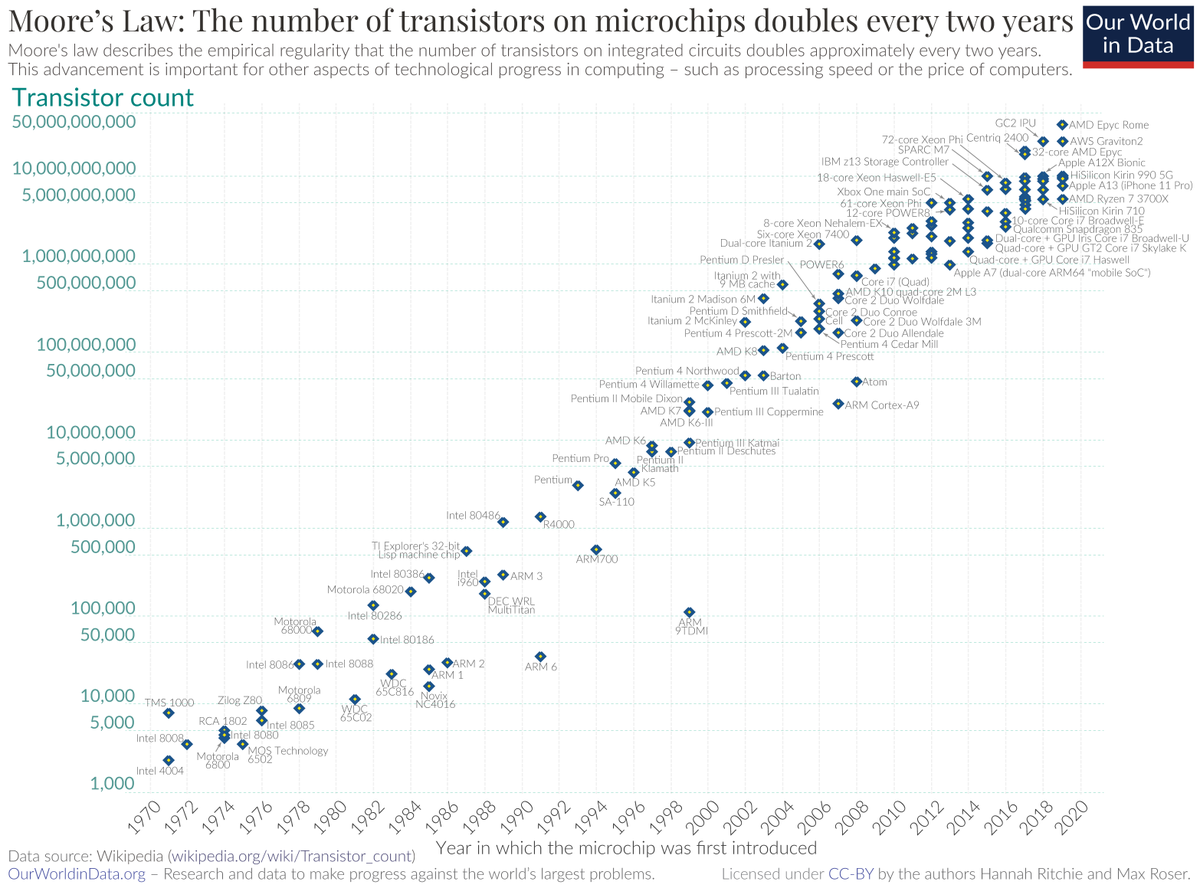
The Effect on Prices

“Economic medicine that was previously meted out by the cupful has recently been dispensed by the barrel. These once unthinkable dosages will almost certainly bring on unwelcome after-effects. Their precise nature is anyone's guess, though one likely consequence is an onslaught of inflation.”

Warren Buffett, 2011 Letter to Berkshire Hathaway Shareholders

So far, we have considered only individual decision-making by entrepreneurs. That is methodologically sound, since only individuals make decisions. But having been careful on that front, we can still ask what emergent patterns we should expect from these individual decisions about capital allocation, pricing, and innovation. Several conclusions follow.

At the level of the individual producer, there is always pressure to increase returns lest the avenue of investment cease to attract capital. In the short term, this may mean raising prices or lowering them, perhaps counterintuitively. Which response is right depends on the demand perceived relative to the supply made possible by the existing stock of productive assets. The answer cannot be derived and is, in principle, unknowable; it can only be intuited.

In the long run, however, it is reasonable to expect returns to tend toward equalization as competition directs liquid capital toward its most promising illiquid forms. That is very different from saying the process is automatic, immediate, and smooth or that it ever concludes. Capital allocation is uncertain, iterative, temporal, and intuitive. The “pressure” here is not a natural law like fluid levels equalizing or temperature gradients dissipating. It is only a reasonable expectation about what human beings with money and incentives will tend to do. Economic forces may push in a given direction, but in a dynamic adaptive system, they never produce a true equilibrium. At most, equilibrium names an expected tendency given current knowledge and incentives. And even that can be understood only counterfactually, not modeled directly. The only way to acquire the knowledge in question is to run the experiment that creates the facts one wants to know.

The pressure to increase returns—and, under competition, to preserve an acceptable return—can only be satisfied in the long run by investment: by experimentally discovering new knowledge that makes it possible to create more with less, better with the same, or something entirely new.

Because this logic is agnostic as to the specific avenue of capital allocation, and because liquid capital is fungible across industries, we can say in the aggregate: prices go down only where investment has created a new support level for returns such that producers can lower prices, take market share, and still increase returns. Producers can always cut prices in theory, of course, but without a sufficiently improved cost base, they risk lowering returns rather than raising them. Once investment has genuinely lowered the cost structure, however, price cuts become far more likely to increase returns than to destroy them. Prices, therefore, do not mysteriously “go down.” The price level is not an exogenous parameter. It emerges from individual decision-making under uncertainty, from the drive to maximize returns on capital, and from the possibility of discovering more efficient methods of production.

It is also important to note that when any individual producer lowers prices in this way, everyone else’s real returns rise as well. The effect will be unevenly distributed across time and economic distance, but the ripples spread outward. Every unit produced by somebody is consumed by somebody else. That is what exchange is. So when a producer innovates and lowers prices to take market share and increase returns, she is also lowering other people’s costs and thereby increasing their real returns.

The fiat mindset encourages people to imagine that lower prices mean less economic activity. This is a silly result of static analysis. Lower prices are only possible because either more output is being produced with the same inputs or the same output is being produced with fewer inputs. This takes us back to Jevons. The mainstream explanation is simpler than the framework discussed in this essay, but it captures something real: when things become cheaper, they are used more, not less, because new applications become economically viable. Although it may seem intuitive, to fully understand the phenomenon, we need the machinery developed throughout this essay: innovation in pursuit of returns, producers lowering prices to capitalize on improved cost structures, and the downstream gains others enjoy from the resulting reduction in costs.

We can state the same point more abstractly. The aggregate result of this process is the continuous accumulation of more and better tools—a perfectly respectable definition of capital, provided we understand “tool” broadly enough to include not only the spade but the idea of the spade and the skill required to use it. The more tools society has, the more valuable everyone’s time becomes, because it can be leveraged to create more, better, and newer outputs with the same raw input of hours. Innovation and capital accumulation mean that everyone’s time is becoming more valuable.

This framing also reminds us that the whole dynamic depends on consumption being sustainable. Nobody’s time preference is zero, and returns require profit. Investment can be funded by savings, but savings cannot be drawn down forever. Savings exist only where positive returns are not wholly consumed. So there is always a balance between what is consumed and what is saved. If we only consume, we never invest, and productive assets depreciate away. If we only save and never consume—not even necessities—then producers have no signal as to what should be produced and consumers starve. Anything short of universal self-starvation kicks the reinvestment engine into motion and improves living standards through deflation.

These absurd extremes illuminate the tension within which a balance is discovered. And it is here that interest rates emerge. The question faced by any would-be investor is always: at what price am I satisfied abstaining from consumption with some portion of my savings? The “price” in question can only mean an amount of money per unit of committed capital per unit of time. That definition describes both returns but also interest, which is merely rate of return. To the entrepreneur, any given interest rate or return is justified only relative to an expected rate of return.

If savings are flowing heavily into present consumption rather than investment, then returns on satisfying that consumptive demand are likely high, and marginal consumers will be tempted to become investors instead. If savings are flowing heavily into investment rather than consumption, then returns will tend to be lower, and marginal investors will be tempted to consume instead. That is the balancing process.

It is also amusing to note that the deflationary mechanism just outlined “stimulates consumption” in a healthy way, because even when people know something will be cheaper later, there is always some price at which they crack and buy it now. As prices fall, demand materializes. But it does so through real price signals rather than by forcing people to spend before the state kills the value of their money.

While the logic of this dynamic can be understood, it resists quantification. It is not “scientific” because no controlled experiment can isolate one variable from all the others. The experiment is always counterfactual until it is run in reality, and running it is precisely what generates the knowledge sought. Nor can the aggregate be treated as unitary. It is and can only be emergent. To the extent it meaningfully exists, it exists only as the product of individual, marginal decisions. The idea that some authority can deduce the correct level of this balance is not merely wrong; it is not even wrong. It is methodologically incoherent. Asking for the “correct interest rate” is like asking how much the color orange weighs.
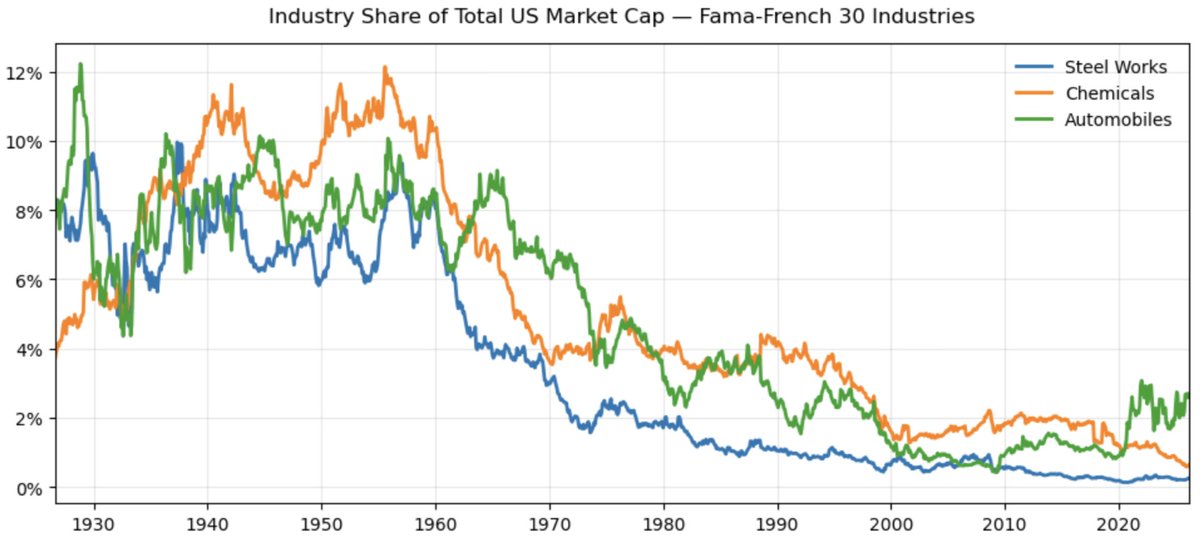
** Money**

“A new car, caviar, four-star daydream
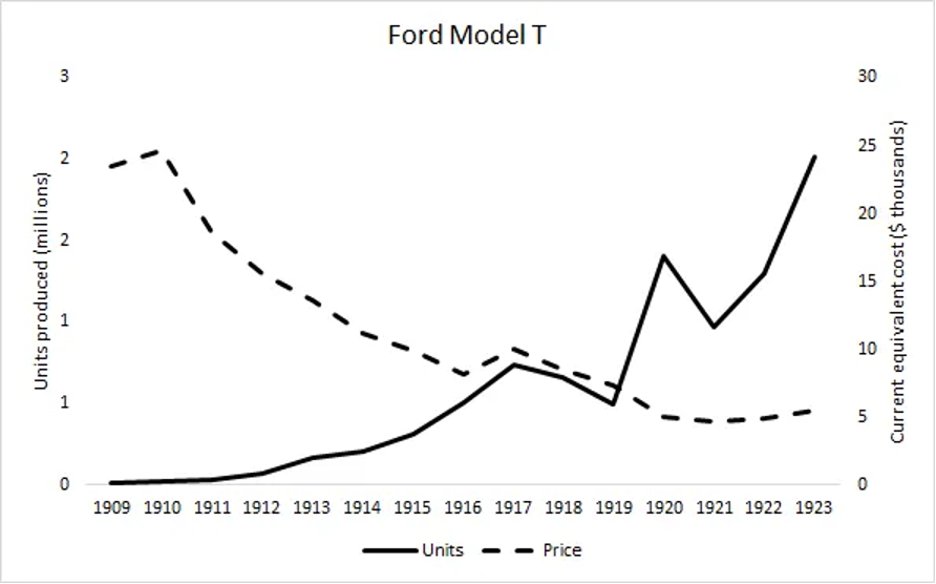
Think I'll buy me a football team.”

Pink Floyd

We deliberately left money to the very end. The essay has first tried to show that price deflation, understood as a broad tendency for goods to become cheaper over time, is a natural consequence of free capital markets and the possibility of discovering new technologies and better methods of administration. One might go further and say that price deflation is not merely a consequence of progress but a definition of it. Economic activity that does not make things more affordable is change, but not progress. So let us conclude by asking what different monetary regimes do to this process.

Once money enters the picture explicitly, we must be careful to distinguish between the “price level” and the “money supply.” A first confusion to clear away is that while there is such a thing as inflationary money, whose supply can be expanded, there is not really such a thing as “deflationary money”. One could imagine a money whose issuer periodically destroyed units or reduced balances programmatically, but we know of no relevant real-world example.

This is perhaps the point of maximum confusion for fiat economists, who tend to make a partly theoretical and partly practical argument along the following lines: in an inflationary fiat system, where almost all money is really bank credit, bad loans impair creditors’ solvency, so creditors call in other loans to recapitalize. Because a prior credit bubble has spread far more debt through the financial system than real savings ever justified, the process becomes self-reinforcing. Everyone scrambles to recapitalize with real assets. Loans go bad and are called in at the same time. Investment funding dries up. Consumption dries up too, because everyone realizes they have far less genuine savings than they thought. New credit extension dries up as well. Since credit extension is treated as synonymous with money, this is often framed as the money supply itself contracting. Producers, faced with retrenching consumption, then slash prices to clear inventory. That is the beginning of bad deflation. One might call it a deflationary credit spiral. What matters is that this has nothing whatsoever to do with innovation-driven deflation.

We are now talking about something much murkier than entrepreneurs finding cheaper ways to satisfy consumers. We are talking about the demand for money. Like innovation, it is endogenous and bottom-up. Unlike innovation, it is purely monetary. And because “demand for money” is among the most abused phrases in fiat economics, we should be very clear: read it not as “desire for credit,” but literally.

Demand for money is a person’s subjective desire to hold a given amount of wealth in liquid monetary form at the implicit opportunity cost of buying anything else. People with a high demand for money will exchange goods, services, and investments for money because they value its liquidity and its usefulness as a store of value and medium of exchange. Jews fleeing German persecution during the Second World War had little use for illiquid goods or local hard assets. They wanted portable, liquid money, which often meant gold. Conversely, someone with no heir and terminal cancer may have little demand for money, because he would rather spend everything before he dies.

When demand for money rises, perhaps because of war or fear, people “cash out” and we observe a purely monetary and endogenous form of deflation. Another way of saying the same thing is that the price of money has risen relative to other goods and services. Demand for money at the previous price exceeded supply, so the price of money rose. From the perspective of someone using the currency as a unit of account, that looks like a general fall in prices. The monetary network is now storing more value while the stock of goods and services has not changed. This is precisely the kind of deflation Keynesians fear, because their entire worldview assumes people should be induced to get rid of money as quickly as possible. Their pyromania aims to lower the demand for money and thereby create price inflation.

To bring some balance to the matter, it is true that a sharp increase in the demand for money is often a worrying sign, such as during a credit crunch, when people are no longer satisfied with IOUs from lenders or from their own fractional-reserve bank. They want cash instead. Claims that had previously circulated through the system with almost no one holding base money for long are suddenly called into question. That unwinding causes real pain. But the correct analysis is that the pain is necessary because the problem is real. The credit expansion reverses only because it was unsound.

Credit collapses are painful, but to identify the temporary price declines associated with them as the root problem is absurd. That is like saying that because hangovers are unpleasant, sobriety must be the cause, and the solution must therefore be to keep drinking. The actual solution is not to get drunk in the first place, or, failing that, to sober up. Fiat economists have a habit of responding to every crisis with the same recommendation: just one more drink. Instead of reckoning with malinvestments and accepting that people’s demand for money has genuinely increased, Keynesians refuse to let nominal prices drop. Since the average holding period of money has elongated and caused monetary deflation, the only solution is to expand the quantity of money.

In a fiat-credit system, money is not merely the base currency. It is a towering structure of promises layered on top of it, such as bank deposits. In the boom, those claims multiply. In the bust, they evaporate. If one wants fewer deflationary spirals of this kind, the answer is not to print more. It is to build less of civilization on fragile, maturity-mismatched nominal claims backed only by other liabilities rather than by real assets. Yet the standard policy response is to treat the collapse as proof that prices must always rise, and to justify permanent monetary debasement in order to prevent the next collapse, thereby laying the groundwork for a still larger one.

Economic collapse may not even be the worst consequence of fiat managerialism. Setting morality aside, inflation has two technical effects: it breaks price signals, and it redistributes purchasing power. Prices are how human beings coordinate across time and space under uncertainty. They tell entrepreneurs and consumers what is scarce, what is abundant, and where capital may earn an attractive return. Within this family of prices sits the interest rate, which is not a dial the FOMC can turn at its regular meetings to achieve full employment. It is the price of the present against the future: the terms on which savers defer consumption and entrepreneurs invest. It is the manifestation of time preference, risk, and opportunity. It is an information signal.

New money never arrives everywhere at once. It enters through particular channels and benefits those closest to the spigot at the expense of those furthest away. Banks, governments, and asset holders cluster near the source. “Stimulus” becomes synonymous with financialization, leverage, and the migration of talent toward politically connected activities. If you pay people for proximity to the printer, do not act surprised when fewer of them build bridges.

We can visualize both this Cantillon inflation and technologically driven deflation at the same time in the composition of stock market indices. By considering a period of time that captures both the ultra long term compounding effect of technological innovation and which overlaps with critical monetary shifts, we get a crude sense of what is getting cheaper and what is getting more expensive. Consider the absolutely critical industries of steel, chemicals, and automobiles. Once major components of the US index, we see the relentless drive of innovation and deflation leading to these producers becoming a smaller and smaller share of overall economic output:

https://www.youtube.com/watch?v=DYzT-Pk6Ogw

Now look at finance, and focus in particular on 1971:

https://www.moneyprintergobrrr.com/

We introduce these charts one at a time so as not to overwhelm the reader, but superimposing them gives the starkest impression:

https://en.wikipedia.org/wiki/Not_even_wrong

Pre-1971 money worked, so we needed very little and consistently little finance. But post-1971 money has been completely broken, and so we need ever-proliferating financial services just to make up for all the bullshit injected at the source.

The endgame of this logic is visible whenever an inflationary currency reaches its terminal phase. In Argentina, businesses routinely stockpiled physical inventory—motorcycle parts, raw materials, anything tangible—not because demand justified it but because holding pesos was financial suicide. Warehouses became savings accounts. Entrepreneurs who should have been investing in R&D or expanding production were instead playing a logistics game, trying to convert currency into anything real before it evaporated. A factory owner filling his warehouse with four times the inventory he needs is not engaged in productive capital allocation. He is engaged in self-defense. This is what an inflationary monetary system does to the entrepreneurial process described in this essay: it turns every producer into a speculator on the currency itself, diverting energy away from the innovation that makes things cheaper and toward the frantic preservation of whatever value can be salvaged.

There is, however, a non-coercive way of lowering the demand for money: entrepreneurship. When people exchange money for productive investments like factories, machinery, or R&D, their demand for money falls voluntarily. If entrepreneurs then reinvest profits into further growth, that effect deepens. This gives us a clear distinction. Central bankers try to lower the demand for money coercively by torching its value. Entrepreneurs lower it voluntarily by persuading people to invest in the future. The former makes everything more expensive. The latter makes everything more affordable.

And yet fiat economists remain oddly blind to the distinction. They see a credit collapse and conclude that because prices usually rise when things look fine, and now prices are falling while things look dreadful, falling prices must therefore be the problem. So the central bank must print huge amounts of money to recapitalize insolvent banks and restart lending, such that both the money supply and the price level can resume their ascent. This is not a serious analysis. It mistakes a credit pathology for a price signal. It is also what 99% of professional economists and 110% of central bankers believe.

We have now built enough conceptual groundwork to debunk the absurdity of “stimulating aggregate demand” and “setting the interest rate.” Credit bubbles happen because producers misread market signals or make erroneous forecasts of the future. Artificially stimulated consumption makes them believe demand is sustainable when it is not. They observe attractive paper returns and infer that it is worth investing in more long-duration productive assets of the same sort.

But the apparent demand is fictitious. It does not arise because the stock of savings is already abundant enough that marginal returns on investment have become less attractive relative to present consumption. It arises because money has lied. “Stimulating the economy” is really just forcing people to act on false signals about how much consumption and investment anybody really wants—or forcing them to fear that the value of their savings will otherwise evaporate. The inevitable consequence is a string of investments that later prove terrible because the consumption supposedly supporting them was never sustainable in the first place. It looked as though attractive returns could be earned not merely now but over the whole time horizon required by the project. Then everybody discovers their investments are worthless. Consumption retrenches. Depending on how degenerate the monetary structure is, people may even discover that their “savings” are merely bank liabilities backed by rotten assets. And so the bubble pops.

What creates sustainable consumption is relative certainty, and what creates relative certainty is savings. Savings lower the demand for money precisely because they make one more secure about future purchasing power. The more secure people are, the more their present consumption becomes a genuine signal to which entrepreneurs can sensibly respond. The notion that producers will not invest unless they are nudged by monetary lies is precisely backwards. The nudge produces investment that is more desperate, more foolish, and less informed; or else it produces mere dissipation of wealth on luxuries. Après moi, le déluge.

Consider a toy example. You live in a primitive fishing society. You want more fish for the same input of time, so you decide to build a fishing boat. That means less time spent fishing now, so you must first save fish to sustain yourself while you accumulate the productive asset that will make you richer later. If the boat does not work, or you are terrible at using it, you end up poorer than before, because you both stopped fishing and exhausted your stockpile on a failed experiment. For any of this to make sense, your savings must be real. As Mises notes in On the Manipulation of Money and Credit,

Roundabout methods of production can be adopted only so far as the means for subsistence exist to maintain the workers during the entire period of the expanded process.

You need actual fish to survive the period during which you are not fishing. The idea that you would only build the boat if I first stole some of your fish is ridiculous. If I steal your fish, you cannot build the boat. You must go back to fishing. And yet this is the fiat prescription. Apparently, you would not be sufficiently “stimulated” to build a productive asset without the threat of expropriation.

** Hoisted By Their Own Petard**

Physician, heal thyself!

Luke 4:23, King James Bible

Let us entertain one final debunking before wrapping up. Suppose, purely for argument’s sake, that there is some flaw in everything said so far, and that it really is a good idea to “stimulate the economy” by torching money rather than by unlocking real demand through innovation. Suppose that our infinitely wise overlords can know, by whatever mysterious method, that total productive capacity will rise in the long run if they are left to read the entrails in peace; that artificial credit enables worthwhile investments that free capital markets in sound money would miss; and that the increase in the money supply is justified because otherwise the growth would never have happened.

How would we judge whether they were right? What are the hallmarks of a good investment? That after the investment, we are able to produce more with the same inputs. This enables return-maximizing producers to lower prices and take market share. In other words, we would expect deflation. Worthwhile innovation is deflationary, and deflation is evidence of worthwhile innovation. If money exists to price things at all, those are simply different perspectives on the same phenomenon.

One could imagine the scheme being justified as follows: yes, the money supply rose and therefore your share of total purchasing power fell, but productive capacity rose by even more. So although there is more money, it is chasing still more goods. We know it was worth it because prices fell. Again, “falling prices” and “worthwhile investment” are equivalent descriptions of the same outcome.

This cannot fail to be the correct test. If prices are flat after the “stimulus,” the investment achieved nothing. If prices rise, it was a net negative. One could even treat this as a diagnostic test for capital misallocation. Even on the fiat theory’s own terms, we can specify what evidence would be needed to vindicate its prescriptions.

And when one does so, one finds no such evidence. Fiat stimulus has only ever pushed prices higher. It has never, not once in recorded history, produced a provable improvement in capital allocation sufficient to justify the inflation required to produce it.

How do fiat economists explain this? Not by conceding the point. They explain it through a sleight of hand. They switch back and forth between “inflation” meaning the money supply and “inflation” meaning the price level as needed to preserve the illusion of coherence. The trick goes like this:

“We need inflation to stimulate economic growth. Entrepreneurs invest with the new money and GDP goes up, which is good. Prices also go up, but that’s okay because we need inflation to stimulate economic growth.”

Did you catch it, dear reader? Even if one grants all of their insane premises for the sake of argument, the logic still fails on its own terms. Whether they are cynical peddlers of intellectual narcotics or merely intoxicated by their own product is a question for the reader.

Still, do not take our word for it. No serious argument should be accepted on authority. Unfortunately, central authorities have a nasty habit of preventing real experiments in monetary competition. Yet if they are so certain of their system, why not let people choose? Why must hard-money alternatives be corrupted, outlawed, or hemmed in by coercion if the enlightened regime of perpetual debasement is truly superior?

If productivity tends to make goods cheaper over time, and if monetary inflation tends to mask that fact by distorting signals and redistributing purchasing power, then a monetary system that resists arbitrary expansion does something radical. It allows progress to appear as falling prices in the unit of account. This is not “deflationary money” in the literal sense, since the supply schedule may still expand slowly rather than shrink. But it is a monetary base that permits long-term price deflation by resisting human tampering. Under such a regime, saving is not punished, time preference is expressed honestly, investment is financed by real savings rather than fragile or illusory credit, and productivity gains show up as purchasing power rather than being confiscated by dilution.

None of this eliminates business cycles or bad investments. Human beings remain subject to greed and will, at times, miscalculate under conditions of radical uncertainty. But a money that does not lie allows errors to be revealed more quickly. And it allows a person to store the value of his work without being forced to gamble it away in assets or spend it on frivolities simply to outrun the debasement regime of enlightened overseers.

Conclusion

Deflation does not prevent investment. The causality runs the other way. Deflation can occur only where investment has already succeeded—where an entrepreneur risked capital, discovered a more efficient method of production, and passed the savings on to consumers and competitors alike. Investment requires the prospect of returns, returns require sustainable consumption, and sustainable consumption requires a bank of real savings. This is not a theory. It is a description of what happens when entrepreneurs are free to allocate capital honestly.

Inflationary money interrupts every link in this chain. It degrades savings, corrupts the price signals that guide investment, and rewards proximity to the monetary spigot over service to the consumer. The more aggressively it is applied, the more the productive economy is hollowed out and rebuilt as a financial economy whose primary purpose is to hedge against the debasement that sustains it. People still do things, but those things increasingly fail to create value. Capital moves, but it moves in response to fictions, and so it arrives where nobody needs it.

The alternative is not utopia. Business cycles would not vanish. Entrepreneurs would still miscalculate, and capital would still sometimes be destroyed in pursuit of hunches that turn out to be wrong. But errors would surface quickly rather than compounding for decades behind a wall of artificial credit. And the long arc of economic life would bend in one direction: toward a world in which the honest labor of a person’s hands buys more with each passing year, not less.

That is what sound money makes visible. Not a deflationary money in the literal sense, but a money that refuses to lie — and thereby allows the truth of human progress to express itself as falling prices. The number goes down. That is how you know it is working.

* thanks to @bitstein and Ross Stevens for edits and contributions.*

thanks also to @BitcoinMagazine for the agreement in principle to publish a second edition of Bitcoin Is Venice in 2027, in which we intend the present essay to be a novel chapter.

📋 讨论归档

讨论进行中…