返回列表
🧠 阿头学 · 💬 讨论题

AI设计工具Impeccable融资发布:手艺放大器的叙事包装与真实能力之间的断裂

Renaissance Geek创始人借a16z融资与GitHub合作之机,成功包装了一个"放大人类手艺"的宏大叙事,但其产品Impeccable本质上仍在解决设计基础卫生问题(下限),而非真正实现其所宣称的"分布外"品味跃升(上限)。
打开原文 ↗

2026-07-08 原文链接 ↗
阅读简报
双语对照
完整翻译
原文
讨论归档

核心观点

  • AI抬高了创作下限,但宣称"上限只能由人类完成"是仓促概括 作者以"至今未见AI版宫崎骏"作为证据,刻意忽略了生成式AI主流化仅两三年、大师级成就通常需要数十年沉淀的时间维度;这一叙事服务于"人类必须留在回路中"的产品定位,而非已被验证的长期规律。
  • "反Slop"解药必然沦为新Slop,品味无法被算法封装 作者精准诊断了生成模型的结构性缺陷——2022年的紫色渐变被修正后,2026年的暖米色斜体已沦为新的平庸;但他未解释Impeccable如何逃脱此宿命,若其设计语言成为GitHub Copilot标配,它同样会迅速被统计平均化捕获为下一代无灵魂的标准化设计。
  • 设计向生产环境迁移的趋势判断成立,但Handoff并未全面死亡 作者指出在AI高频迭代时代,冻结的Mockup跟不上代码变化,设计工作直接在浏览器/代码库中迭代是真实趋势;但将这一观察外推为"Handoff模式已死"忽视了Figma在复杂业务对齐、多方利益相关者博弈和低成本试错中的不可替代性。
  • Impeccable实质是"基础卫生检查器",却被包装成"品味放大器" 产品功能集中于共享设计语言、对比度检查和间距规则等可规则化的工程校验(解决下限),但作者将其直接等同于"最后20%的手艺注入"和"分布外跃迁"(触及上限),存在核心主张与产品能力的严重论证断裂。
  • "文艺极客"叙事是对T型通才崛起的浪漫化预测 作者认为高品味、高意图的跨学科个体将取代流水线分工,这确实捕捉到了AI赋能小团队的能力边界扩张;但假设工程师和PM会主动追求"最后10%的细节"是一种违背人性的理想化,现实中多数人使用AI正是为了逃避精细的视觉折磨。

跟我们的关联

  • 对ATou:文章提出的"文艺极客"概念直接指向T型通才的崛起,这意味着ATou需要刻意培养跨学科移动能力(如设计师懂代码、创作者懂产品),但不应迷信"最后10%细节"的浪漫叙事,而应警惕将自己变成AI Slop的审核员而非创作者。
  • 对Neta:"Lower the floor, raise the ceiling"框架可作为评估AI工具价值的核心标尺,下一步应将其用于筛选和构建工作流:凡只能降低门槛的工具会快速commoditize,必须寻找或构建能让人类在Agent Loop最后一公里介入的产品。
  • 对Uota:设计向生产环境迁移的趋势判断是可信的,Uota需要尽快将工作流从"设计稿→代码"的Handoff模式,转向直接在浏览器/真实代码库中进行视觉迭代的能力,但不必全盘放弃Figma在探索阶段的思考价值。
  • 对ATou/Neta/Uota通用:作者关于"反Slop解药会成为新Slop"的洞察是极强的警示,下一步在内容创作、产品设计和视觉输出中,应建立"用'是什么'而非'不是什么'来定义品质"的审查机制,避免陷入算法平均值的追赶游戏。

讨论引子

1. 如果Impeccable的设计语言规则真的被数百万Copilot用户采用,它是否必然会成为2027年版的设计Slop?一个工具如何避免"普及即平庸"的宿命? 2. 当AI能在几秒钟生成十种界面状态时,"冻结设计稿再移交开发"的协作范式是否真的在所有团队规模下都失效了?Figma会退化为纯粹的画布,还是在复杂业务对齐中进化出新的不可替代性? 3. 文章将"品味"定义为不可量产的个人化能力,但产品功能却只解决可规则化的基础卫生问题——在AI工具的实际开发中,"放大人类意图"是否只是一个无法被工程化兑现的营销概念?

今天,我正式推出 Renaissance Geek 这家公司,也就是 Impeccable 背后的团队。我们获得了由 @illscience 领投的 a16z 支持,并与 @github 达成了新的合作。下面说说我押注的方向。

现在是一个很奇怪的时刻,想要做出出色的数字作品,反而变难了。

如今,几乎任何东西的初稿都突然变得容易产出得多了。代码、界面、文案、图像、内部工具、原型、演示文稿、产品想法。空白页没那么空了。过去要花几天的工作,现在几分钟就能完成。

毫无疑问,AI 抬高了下限。

但问题也来了。

为什么现在反而会觉得,做出真正优秀的东西更难了?

现在大家都在告诉我们,应该让 AI 替我们执行,把原本耗时耗力、需要手工完成的创意劳动,换成一句提示词输入。要彻底投入 loopmaxxing。也许得牺牲一点精度,但至少上线更快,对吧?可这其实是个伪命题。

这就是为什么,直到今天,我们还没看到 AI 视频里的宫崎骏,AI 音乐里的 Paul McCartney,AI 写作里的村上春树,或者 AI 设计里的 Tobias van Schneider。

前阵子,@johnmaeda 跟我提起一句话,Lower the floor, raise the ceiling。它可以追溯到 MIT 计算机早期时代。降低门槛,让更多人能创造东西。抬高上限,让专家能走得更远。John 用这句话来形容当下这个时刻,他也很慷慨地点名说,Impeccable 正是在帮助降低门槛的工具之一。

他说得对。我也会继续把这个门槛往下压,直到达到一个扎实的基础水准几乎不费力气。其实,我成年后的大部分时间,都在投入一件我称之为 anti-gatekeeping 的事情。jQuery UI 让一代网页设计师第一次能做出丰富的 Web UI。Chrome DevTools 成了网页设计师可靠的工具,可以预览网站在移动端会是什么样子。没错,@impeccable_ai 也是一样,它把合格的设计带给每一个需要它的人。

优秀的作品从来不是一键生成的。它来自清晰的意图、持续不断的迭代、判断力和手艺。现在,做出一个东西已经很容易了。可要做出真正伟大的东西,甚至定义一个品类,依旧非常难。

不动脑子地更快发布更多东西,不是战略。很快会有很多公司用昂贵的代价学到这一点。我们打造的创意型 AI 工具,不能只顾着降低入门门槛、抬高输出下限,也必须让创作者能把自己插回 agentic loop 的最后一公里。就是最后那 20%,把作品从分布内推到分布外,从平庸里拉出来,越过平均值。

这就是我所说的 amplified craft,也是我最兴奋的一类工作。

今天,我正式宣布 Renaissance Geek,也就是 Impeccable 背后的公司,获得了由 Anish Acharya(@illscience)领投的 @a16z 支持。

Impeccable 一开始只是一个开源设计技能,面向 AI 编码代理。它给构建者和代理提供了一套共享的设计语言、持续存在的项目上下文、可确定执行的质量检查,以及一个用于视觉迭代的实时浏览器循环。它运行在真实代码库里,也就是作品最终真正发布的地方。

它传播得比我能准确衡量的速度还快。仅通过 skills.sh,它就已经拿到了超过 40,000 个 GitHub stars 和 160,000 次安装,而这还只反映了真实数字的一小部分。很多人其实是通过 npx impeccable install 或 Claude 的原生 marketplace 来安装 Impeccable 的。

但 Impeccable 也是一个更大押注的第一次表达。AI 只有在人类积极参与回路时,才能做出最好的创意工作。

品味可以被放大,但不能被培养皿制造出来

现在有个很诱人的想法正在流行。也许,我们可以把品味这个问题解决掉。

训练更好的模型。建立更好的品味基准。捕捉那些模式。让模型默认产出有品味的作品。

这套想法的吸引力我完全理解。但我也觉得,它抓错了重点。

我最近一个很喜欢的新消遣,就是给 design-slop 分类并识别它。Impeccable 现在已经成了最流行的去除这类明显 slop 的方式之一。但没有 slop,并不等于有品味。

而且后来发现,slop 本身也是个不断变化的目标。

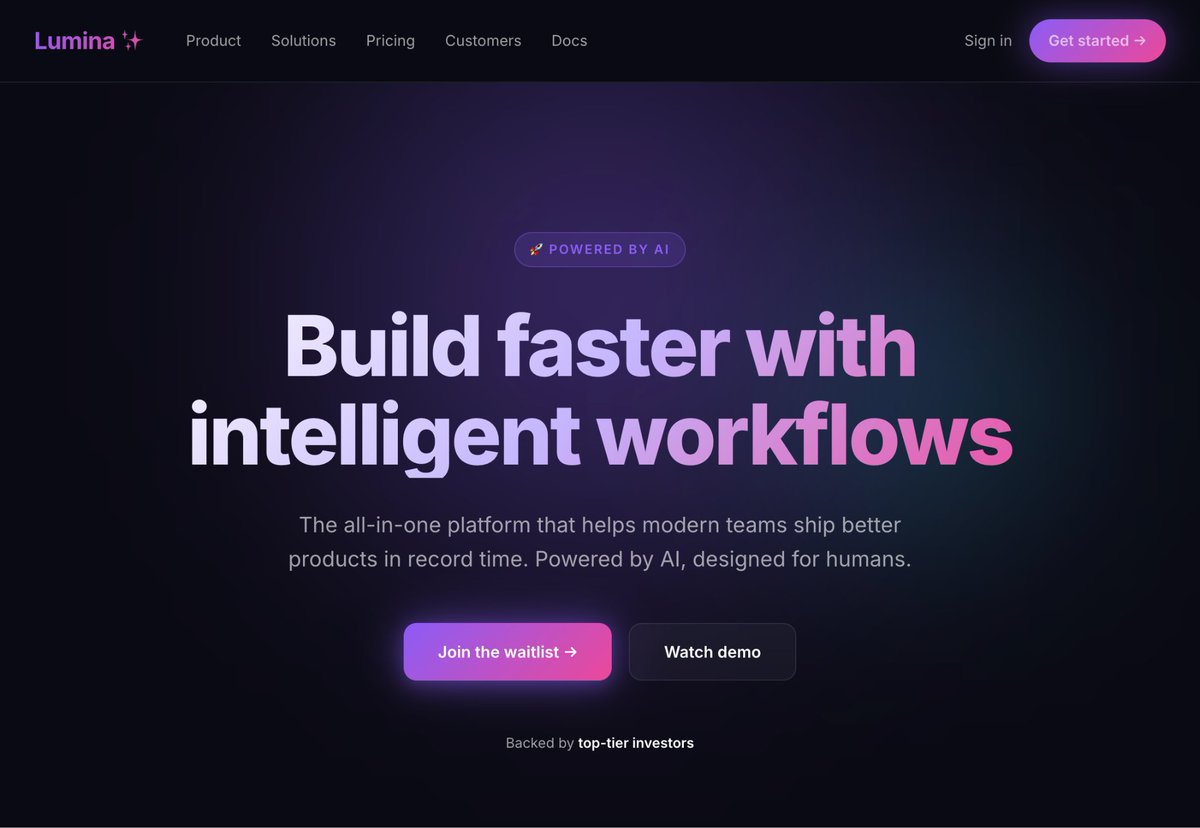
2022 年它长这样。

https://www.linkedin.com/feed/update/urn:li:activity:7467982018027589632/

我们试着修正它。我们告诉模型,避开紫色渐变、发光按钮这类模式,再把它们往潜在空间的另一块区域推。

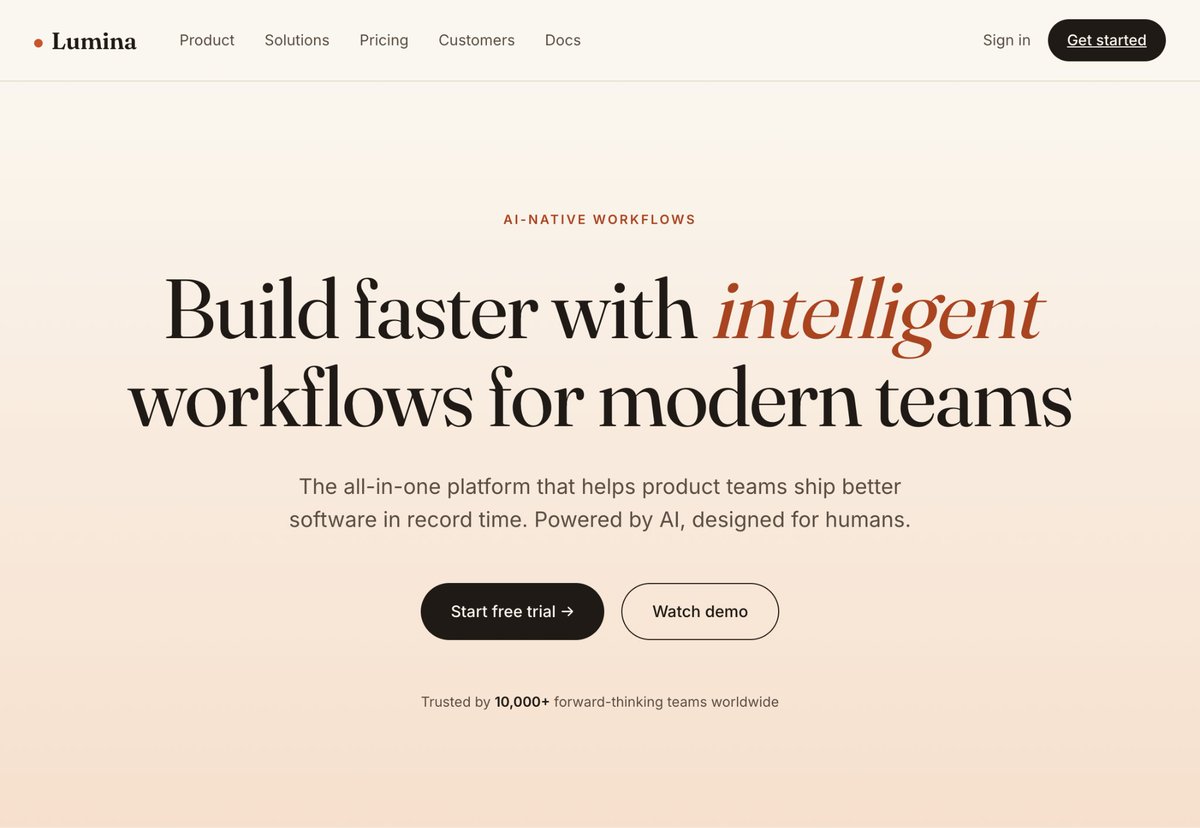
结果就变成了这样。2026 年版的 slop。

暖米色背景上的 Instrument Serif 斜体标题,并不算糟糕设计。用得好,完全可以成立。但当这个模式到处都是时,它就不再传递品味,开始传递一种没有做出判断的状态。更糟的是,它的表现会变差,因为它根本不显眼。今天用来对抗 slop 的解药,明天一旦人人都伸手去拿,它自己就会变成新的 slop。

所以,不能把品味装进瓶子里。它是个人的,依赖语境的,而且一直在变化。想把它量产,最后得到的只会是算法版 Uniqlo。真正能做的,是抓出那些和品味无关的破绽,而 Impeccable 正是在做这件事。薄弱的层级,偷懒的间距,失效的对比度,还有那些在没人掌舵时每个模型都会自动生成的构图。

不过,去掉 slop 只是支线任务。主线任务是放大人的意图。最好的创意工具会把更锋利的器具交到你手里,至于看见什么,还是由你来决定。相机不会告诉你该拍什么,它只是让更多拍摄成为可能。

设计正在进入生产环境

设计和工程之间的 handoff 正在失效。它原本假设,设计会先冻结,然后交给工程师翻译成代码。可这个世界现在几乎已经不存在了。如今代码每天都在变,一个代理午饭前就能生成十种新的界面状态。面对一个根本停不下来的产品,冻结的 mockup 根本跟不上。

这一整年,我都在创业公司和财富 500 强里看着这件事发生。PM 在发布真实代码。设计师在变成 design engineers。工作正在迁移到产品真正存在的地方。

而在这个过程中,工程师几乎每周都能拿到一个新工具。设计师大多被落在后面。真正给他们出现的工具,要么是为 PM 和工程师造的,要么是既有玩家围绕原有设计画布做出的更丰富连接器。

先说清楚,Figma 依然很重要。它依然是一个很棒的探索和思考场所。这一切也不意味着设计师必须去学写代码。虽然我一直坚信,真正懂 CSS 和 HTML,会让你成为更好的网页设计师。变化其实没有那么复杂。现在越来越多真实的设计工作,都是直接围绕在线产品展开的,在浏览器里完成,也在那里发布。原因也很简单。它能让迭代更快,没有流程摩擦,而别人还在等 handoff。

这个缺口,就是我做 Impeccable 的原因。它教会代理用设计的方式说话,于是设计师、工程师或者创始人都能用自然语言去掌舵。批评这个布局,修一下字,换个配色,然后看它在浏览器里实时变化。而且,任何用 Impeccable 做出来的东西,都是真实的生产代码,可以直接发布。

界面依然很原始

人和代理之间的界面,依然处在很早期的阶段。

现在,和代理协作的主流方式还是聊天。聊天当然很强大。我自己一直在用。但聊天也很被动。它给你一个空白框,然后要求你在脑子里想象一切。

优秀的创意软件根本不是这么工作的。视频编辑器会给你时间线,设计工具会给你带图层和参考线的画布,音乐软件会给你能看见也能拖动试听的轨道。它们都不只是听命令,它们会把作品展示给你,让你在推动它时,真切感受到它在变化。

现在大多数 AI 工具,还是像一个坐在帘子后面的天才实习生。你几乎什么都可以让它做,但它的界面很少真正帮助你发现,到底该问什么。

这必须改变。如果代理要和我们一起做创意工作,它们就需要更丰富的循环。需要能实时批评、比较、记忆和调整的方式。

Impeccable 的共享设计语言和 Live Mode,就是在尝试一种更主动的人机界面。你可以指着作品本身去推动它,比较不同版本,再把修改接回源码。还有非常多值得探索的地方,而 Renaissance Geek 会在那些能放大创意工作的界面和工作流上持续深投。

Impeccable 是我们为这个新时代打造的第一个工具,但它绝不会是唯一一个。

文艺极客的时代

很长一段时间里,做一个通才常常被视为负担。选一条赛道。专精下去。成为设计师、工程师、PM、营销人,或者运营者。团队是围绕不同角色之间的 handoff 建立起来的,彼此边界分明。

AI 正在让这种模式不再显得那么不可避免。

现在最有威胁感的一群人,是那些 T 型通才。他们有高品味,高意图,高主动性,还有强烈的好奇心。他们可能起点是设计师、工程师、创始人、写作者、研究者或者运营者。但他们越来越靠近代码,因为代码就是想法变成现实的地方。

这就是 Renaissance Geek。现代版的 renaissance man。AI 给了他们跨学科移动的伸展能力,而他们对艺术、文化、社会与技术发自内心的兴趣,塑造出不断演化的品味,也给他们提供方向。

这是我最在乎的一群人。不是只想把事情做得更快的人,而是想把作品做得更好的人。是那些依然愿意为最后 10% 出汗,也能感觉出一个产品根本没有立场的人。

AI 会让这些人变得强大得多。

我们正在打造什么

Impeccable 是 Renaissance Geek 第一个用于放大手艺的产品。我们的重点,是把它做成一套每天都会用、值得信赖的工具包,不管是单干创业者,还是大型企业,都能依赖它。

为了让更多构建者用上 Impeccable,今天我也很高兴宣布,Renaissance Geek 正在与 @github 合作。

GitHub 团队在意的东西和我们一样。抬高质量和设计的上限。这就是为什么,Impeccable 会预装进新的 GitHub Copilot app 里。它是全球使用最广泛的 agent harness 之一。每个打开这个 app 的构建者,从一开始就能获得一层设计与质量能力。

在由 @illscience 领投的 @a16z 融资支持下,Renaissance Geek 会继续打造最后一公里的工具。那些帮助人类把 AI 引向值得发布的作品的工具。Anish 和我都看到了同一个缺口。今天的模型和编码 harness,在创意工作上依然经常让人失望。他也写了一篇文章,解释为什么 a16z 会投资这家公司。能有他一路同行,我真的很幸运。

还记得 Renaissance Geek 吗。我现在正想招几位。首先是一位 chief of staff,把这股势头真正变成稳定的运营节奏。还需要 design advocates 和 design engineers,那种对最后 10% 的在意程度已经有点不太健康的人。如果你正是这样的人,开放岗位在这里。

下一波 AI 不该是把人进一步推出回路之外。那个故事既无聊,又反乌托邦。更有意思的未来,应该是奇妙又令人兴奋的。小团队却拥有惊人的能力边界。设计师直接在代码里工作。工程师突然开始研究 vertical rhythm。PM 开始原型化真实产品。代理变成主动协作者。手艺人借助机器,做出原本单靠自己根本不可能完成的作品。

AI 抬高了下限。

现在,该抬高上限了。

Today I'm launching Renaissance Geek – the company behind Impeccable – with backing from a16z led by @illscience, and a new partnership with @github. Here's the bet I'm making.
It's a weird time to try to create excellent digital work.

It is suddenly much easier to produce a first draft of almost anything: code, interfaces, copy, images, internal tools, prototypes, decks, product ideas. The blank page is less blank. Work that used to take days now takes minutes.

AI has unquestionably raised the floor.

And yet.

Why does it feel like producing something excellent is getting harder?

We’re being told to let AI execute on our behalf, by trading the time-intensive, manual creative labor for a prompt input. To go all in on loopmaxxing. We might have to sacrifice precision, but hey, at least we’re shipping faster, right? Well, that’s a false dichotomy.

There's a reason we haven't yet seen AI video's Hayao Miyazaki, AI music's Paul McCartney, AI writing's Haruki Murakami, or AI design's Tobias van Schneider.

"Lower the floor, raise the ceiling." @johnmaeda reminded me of that phrase recently, and it goes back to the early days of computing at MIT. Lower the barrier so more people can make things; raise the ceiling so experts can go further. John used the phrase for this exact moment, and he generously named Impeccable as one of the tools doing the lowering.

He's right, and I’ll keep pushing that barrier down, until reaching a solid baseline takes no effort at all. In fact, I’ve invested most of my adult life in pursuit of what I call anti-gatekeeping: jQuery UI allowed a generation of web designers to ship rich web UIs for the first time. Chrome DevTools became a web designer’s trusted tool to preview what their sites would look like on mobile. And yes, @impeccable_ai brings competent design to everyone who wants it.

But excellent work is not one-shotted. It comes from clear intent, relentless iteration, judgment, and craft. It is now very easy to make something. It is still very hard to make something truly great, let alone genre-defining.

Mindlessly shipping more stuff faster is not a strategy, and plenty of companies are about to learn this the expensive way. The creative AI tools we build can’t just focus on lowering the barrier of entry and raising the output floor, they must also enable creatives to insert themselves into the agentic loop for the last mile. That last 20% that pushes the work out-of-distribution, out of mediocrity, beyond the average.

It’s what I call amplified craft, and that’s the work I’m most excited about.

Today I'm announcing Renaissance Geek, the company behind Impeccable, with backing from @a16z, led by Anish Acharya (@illscience).

Impeccable started as an open-source design skill for AI coding agents. It gives builders and agents a shared design vocabulary, persistent project context, deterministic quality checks, and a live browser loop for visual iteration. It runs in the real codebase, where the work will actually ship.

It spread faster than I can cleanly measure. It’s reached over 40,000 GitHub stars and 160,000 installs through skills.sh alone, which reflects only a fraction of the real numbers (Impeccable is commonly installed via npx impeccable install or Claude’s native marketplace).

But Impeccable is also the first expression of a broader bet: AI does its best creative work when a human is actively part of the loop.

今天,我正式推出 Renaissance Geek 这家公司,也就是 Impeccable 背后的团队。我们获得了由 @illscience 领投的 a16z 支持,并与 @github 达成了新的合作。下面说说我押注的方向。

现在是一个很奇怪的时刻,想要做出出色的数字作品,反而变难了。

如今,几乎任何东西的初稿都突然变得容易产出得多了。代码、界面、文案、图像、内部工具、原型、演示文稿、产品想法。空白页没那么空了。过去要花几天的工作,现在几分钟就能完成。

毫无疑问,AI 抬高了下限。

但问题也来了。

为什么现在反而会觉得,做出真正优秀的东西更难了?

现在大家都在告诉我们,应该让 AI 替我们执行,把原本耗时耗力、需要手工完成的创意劳动,换成一句提示词输入。要彻底投入 loopmaxxing。也许得牺牲一点精度,但至少上线更快,对吧?可这其实是个伪命题。

这就是为什么,直到今天,我们还没看到 AI 视频里的宫崎骏,AI 音乐里的 Paul McCartney,AI 写作里的村上春树,或者 AI 设计里的 Tobias van Schneider。

前阵子,@johnmaeda 跟我提起一句话,Lower the floor, raise the ceiling。它可以追溯到 MIT 计算机早期时代。降低门槛,让更多人能创造东西。抬高上限,让专家能走得更远。John 用这句话来形容当下这个时刻,他也很慷慨地点名说,Impeccable 正是在帮助降低门槛的工具之一。

他说得对。我也会继续把这个门槛往下压,直到达到一个扎实的基础水准几乎不费力气。其实,我成年后的大部分时间,都在投入一件我称之为 anti-gatekeeping 的事情。jQuery UI 让一代网页设计师第一次能做出丰富的 Web UI。Chrome DevTools 成了网页设计师可靠的工具,可以预览网站在移动端会是什么样子。没错,@impeccable_ai 也是一样,它把合格的设计带给每一个需要它的人。

优秀的作品从来不是一键生成的。它来自清晰的意图、持续不断的迭代、判断力和手艺。现在,做出一个东西已经很容易了。可要做出真正伟大的东西,甚至定义一个品类,依旧非常难。

不动脑子地更快发布更多东西,不是战略。很快会有很多公司用昂贵的代价学到这一点。我们打造的创意型 AI 工具,不能只顾着降低入门门槛、抬高输出下限,也必须让创作者能把自己插回 agentic loop 的最后一公里。就是最后那 20%,把作品从分布内推到分布外,从平庸里拉出来,越过平均值。

这就是我所说的 amplified craft,也是我最兴奋的一类工作。

今天,我正式宣布 Renaissance Geek,也就是 Impeccable 背后的公司,获得了由 Anish Acharya(@illscience)领投的 @a16z 支持。

Impeccable 一开始只是一个开源设计技能,面向 AI 编码代理。它给构建者和代理提供了一套共享的设计语言、持续存在的项目上下文、可确定执行的质量检查,以及一个用于视觉迭代的实时浏览器循环。它运行在真实代码库里,也就是作品最终真正发布的地方。

它传播得比我能准确衡量的速度还快。仅通过 skills.sh,它就已经拿到了超过 40,000 个 GitHub stars 和 160,000 次安装,而这还只反映了真实数字的一小部分。很多人其实是通过 npx impeccable install 或 Claude 的原生 marketplace 来安装 Impeccable 的。

但 Impeccable 也是一个更大押注的第一次表达。AI 只有在人类积极参与回路时,才能做出最好的创意工作。

Taste Can Be Amplified, but Not Lab-Grown

There is a tempting idea floating around right now: maybe we can solve taste.

Train better models. Build better taste benchmarks. Capture the patterns. Make the model produce tasteful work by default.

I understand the appeal. I also think it misses the point.

One of my favorite new pastimes is categorizing and detecting design-slop. Impeccable is one of the most popular ways to get rid of obvious slop in this category. But the absence of slop doesn’t result in taste.

Slop is also, as it turns out, a moving target.

Here is what it looked like in 2022:

https://www.linkedin.com/feed/update/urn:li:activity:7467982018027589632/

We tried to fix it: We told the models to avoid patterns like purple gradients and glowing buttons, then pushed them into a different part of their latent space.

Which gave us this: 2026 slop.

Instrument Serif italic headlines on warm beige are not bad design. In the right hands they can work. But once the pattern is everywhere, it stops signaling taste, starts signaling the absence of a decision, and worse: it simply doesn’t perform well because it doesn’t stick out. Today's antidote to slop becomes tomorrow's slop the moment everyone reaches for it.

So no, you can't bottle taste. It's personal, contextual, and always moving; try to mass-produce it and you get algorithmic Uniqlo. What you can do is catch the tells that have nothing to do with taste, and Impeccable does: weak hierarchy, lazy spacing, broken contrast, the compositions every model reaches for when no one is steering.

Stripping slop, though, is the side quest. The main quest is amplifying human intent. The best creative tools hand you sharper instruments and leave the seeing to you; a camera doesn't tell you what to shoot, it just makes more shots possible.

品味可以被放大,但不能被培养皿制造出来

现在有个很诱人的想法正在流行。也许,我们可以把品味这个问题解决掉。

训练更好的模型。建立更好的品味基准。捕捉那些模式。让模型默认产出有品味的作品。

这套想法的吸引力我完全理解。但我也觉得,它抓错了重点。

我最近一个很喜欢的新消遣,就是给 design-slop 分类并识别它。Impeccable 现在已经成了最流行的去除这类明显 slop 的方式之一。但没有 slop,并不等于有品味。

而且后来发现,slop 本身也是个不断变化的目标。

2022 年它长这样。

https://www.linkedin.com/feed/update/urn:li:activity:7467982018027589632/

我们试着修正它。我们告诉模型,避开紫色渐变、发光按钮这类模式,再把它们往潜在空间的另一块区域推。

结果就变成了这样。2026 年版的 slop。

暖米色背景上的 Instrument Serif 斜体标题,并不算糟糕设计。用得好,完全可以成立。但当这个模式到处都是时,它就不再传递品味,开始传递一种没有做出判断的状态。更糟的是,它的表现会变差,因为它根本不显眼。今天用来对抗 slop 的解药,明天一旦人人都伸手去拿,它自己就会变成新的 slop。

所以,不能把品味装进瓶子里。它是个人的,依赖语境的,而且一直在变化。想把它量产,最后得到的只会是算法版 Uniqlo。真正能做的,是抓出那些和品味无关的破绽,而 Impeccable 正是在做这件事。薄弱的层级,偷懒的间距,失效的对比度,还有那些在没人掌舵时每个模型都会自动生成的构图。

不过,去掉 slop 只是支线任务。主线任务是放大人的意图。最好的创意工具会把更锋利的器具交到你手里,至于看见什么,还是由你来决定。相机不会告诉你该拍什么,它只是让更多拍摄成为可能。

Design Is Moving Into Production

The design/engineering handoff is breaking. The world it assumed, where a design freezes and then engineers translate it into code, barely exists anymore. Code changes every day now, and an agent can spin up ten new interface states before lunch. A frozen mockup can't keep up with a product that won't hold still.

I've watched this happen all year, in startups and Fortune 500s alike. PMs are shipping real code. Designers are becoming design engineers. The work is migrating to where the product actually lives.

Through all of it, engineers got a new tool every week. Designers mostly got left out. What did show up for them was built for PMs and engineers, or it was incumbents building richer connectors to an existing design canvas.

Figma still matters, to be clear; it's a wonderful place to explore and think, and none of this means designers have to learn to code (though I firmly believe knowing CSS and HTML well makes you a better web designer). The shift is simpler than that. More of the real design work now happens against the live product, in the browser, where it ships. And for good reason: it leads to faster iteration without process friction, while others are still waiting for handoffs.

That gap is why I built Impeccable. It teaches agents to speak design, so a designer, engineer, or founder can steer in plain language: critique this layout, fix the type, recolor it, watch it change live in the browser. And whatever you create with Impeccable is real production code, ready to ship.

设计正在进入生产环境

设计和工程之间的 handoff 正在失效。它原本假设,设计会先冻结,然后交给工程师翻译成代码。可这个世界现在几乎已经不存在了。如今代码每天都在变,一个代理午饭前就能生成十种新的界面状态。面对一个根本停不下来的产品,冻结的 mockup 根本跟不上。

这一整年,我都在创业公司和财富 500 强里看着这件事发生。PM 在发布真实代码。设计师在变成 design engineers。工作正在迁移到产品真正存在的地方。

而在这个过程中,工程师几乎每周都能拿到一个新工具。设计师大多被落在后面。真正给他们出现的工具,要么是为 PM 和工程师造的,要么是既有玩家围绕原有设计画布做出的更丰富连接器。

先说清楚,Figma 依然很重要。它依然是一个很棒的探索和思考场所。这一切也不意味着设计师必须去学写代码。虽然我一直坚信,真正懂 CSS 和 HTML,会让你成为更好的网页设计师。变化其实没有那么复杂。现在越来越多真实的设计工作,都是直接围绕在线产品展开的,在浏览器里完成,也在那里发布。原因也很简单。它能让迭代更快,没有流程摩擦,而别人还在等 handoff。

这个缺口,就是我做 Impeccable 的原因。它教会代理用设计的方式说话,于是设计师、工程师或者创始人都能用自然语言去掌舵。批评这个布局,修一下字,换个配色,然后看它在浏览器里实时变化。而且,任何用 Impeccable 做出来的东西,都是真实的生产代码,可以直接发布。

The Interface Is Still Primitive

The human-agent interface is still early.

Right now, the dominant way to work with agents is chat. Chat is powerful. I use it constantly. But chat is also passive. It gives you a blank box and asks you to imagine everything.

Great creative software works nothing like that: A video editor gives you a timeline, a design tool gives you a canvas with layers and guides, and music software gives you tracks you can see and scrub. None of these just take orders; they show you the work and let you feel it change as you push on it.

Most AI tools still behave like a brilliant intern sitting behind a curtain. You can ask for almost anything, but the interface rarely helps you discover what to ask.

That has to change. If agents are going to do creative work with us, they need richer loops: ways to critique, compare, remember, and adjust in real time.

Impeccable's shared design vocabulary and Live Mode are early experiments in a more active human-agent interface. You can point at the work, steer it, compare variants, and accept changes back into source. There is much more to explore, and Renaissance Geek will invest deeply in the interfaces and workflows that amplify creative work.

Impeccable is our first tool for this new age, but it decidedly won’t be the only one.

界面依然很原始

人和代理之间的界面,依然处在很早期的阶段。

现在,和代理协作的主流方式还是聊天。聊天当然很强大。我自己一直在用。但聊天也很被动。它给你一个空白框,然后要求你在脑子里想象一切。

优秀的创意软件根本不是这么工作的。视频编辑器会给你时间线,设计工具会给你带图层和参考线的画布,音乐软件会给你能看见也能拖动试听的轨道。它们都不只是听命令,它们会把作品展示给你,让你在推动它时,真切感受到它在变化。

现在大多数 AI 工具,还是像一个坐在帘子后面的天才实习生。你几乎什么都可以让它做,但它的界面很少真正帮助你发现,到底该问什么。

这必须改变。如果代理要和我们一起做创意工作,它们就需要更丰富的循环。需要能实时批评、比较、记忆和调整的方式。

Impeccable 的共享设计语言和 Live Mode,就是在尝试一种更主动的人机界面。你可以指着作品本身去推动它,比较不同版本,再把修改接回源码。还有非常多值得探索的地方,而 Renaissance Geek 会在那些能放大创意工作的界面和工作流上持续深投。

Impeccable 是我们为这个新时代打造的第一个工具,但它绝不会是唯一一个。

The Era Of The Renaissance Geek

For a long time, being a generalist was treated as a liability. Pick a lane. Specialize. Become the designer, the engineer, the PM, the marketer, the operator. Teams were built around handoffs between people with cleanly separated roles.

AI is making that model feel less inevitable.

The people who seem most dangerous right now are T-shaped generalists with high taste, high intent, high agency, and deep curiosity. They may start as designers, engineers, founders, writers, researchers, or operators. But they are increasingly living closer to code, because code is where ideas become real.

That is the Renaissance Geek: A modern-day ‘renaissance man’ who can move between disciplines because AI gives them reach, and whose ever-evolving taste driven by their genuine interest in art, culture, society and technology gives them direction.

These are the people I care the most about: the ones who want the work better, not just faster, who still sweat the last 10 percent and can feel when a product has no point of view.

AI will make those people much more powerful.

文艺极客的时代

很长一段时间里,做一个通才常常被视为负担。选一条赛道。专精下去。成为设计师、工程师、PM、营销人,或者运营者。团队是围绕不同角色之间的 handoff 建立起来的,彼此边界分明。

AI 正在让这种模式不再显得那么不可避免。

现在最有威胁感的一群人,是那些 T 型通才。他们有高品味,高意图,高主动性,还有强烈的好奇心。他们可能起点是设计师、工程师、创始人、写作者、研究者或者运营者。但他们越来越靠近代码,因为代码就是想法变成现实的地方。

这就是 Renaissance Geek。现代版的 renaissance man。AI 给了他们跨学科移动的伸展能力,而他们对艺术、文化、社会与技术发自内心的兴趣,塑造出不断演化的品味,也给他们提供方向。

这是我最在乎的一群人。不是只想把事情做得更快的人,而是想把作品做得更好的人。是那些依然愿意为最后 10% 出汗,也能感觉出一个产品根本没有立场的人。

AI 会让这些人变得强大得多。

What We Are Building

Impeccable is Renaissance Geek’s first product that amplifies craft, and we’re focused on making it a daily, trusted toolkit for solopreneurs and large enterprises alike.

To get Impeccable into the hands of even more builders, I'm also excited to share today that Renaissance Geek is partnering with @github.

The team at GitHub cares about the same things we do: raising the ceiling on quality and design. That's why Impeccable comes pre-bundled with the new GitHub Copilot app, one of the most widely used agent harnesses in the world. Every builder who opens the app gets a design and quality layer from the start.
Backed by @a16z in a round led by @illscience , Renaissance Geek will keep building the tools for that last mile: the ones that help humans steer AI toward work worth shipping. Anish and I see the same gap in how today’s models and coding harnesses still fail us on creative work, and he’s written up why a16z backed the company. I’m incredibly lucky to have him along for the ride.

Remember the Renaissance Geek? I'm trying to hire a few. First, a chief of staff to turn this momentum into a real operating cadence, plus design advocates and design engineers who care about the last 10 percent more than is strictly healthy. If that's you, the open roles are here.

The next wave of AI should not be about pushing humans further out of the loop. That story is boring and dystopian. The more interesting future is delightfully strange and exciting: tiny teams with enormous range, designers moving in code, engineers suddenly learning about vertical rhythm, PMs prototyping real products, agents that become active collaborators, and craftspeople using machines to make work that would have been impossible alone.

AI raised the floor.

Time to raise the ceiling.

我们正在打造什么

Impeccable 是 Renaissance Geek 第一个用于放大手艺的产品。我们的重点,是把它做成一套每天都会用、值得信赖的工具包,不管是单干创业者,还是大型企业,都能依赖它。

为了让更多构建者用上 Impeccable,今天我也很高兴宣布,Renaissance Geek 正在与 @github 合作。

GitHub 团队在意的东西和我们一样。抬高质量和设计的上限。这就是为什么,Impeccable 会预装进新的 GitHub Copilot app 里。它是全球使用最广泛的 agent harness 之一。每个打开这个 app 的构建者,从一开始就能获得一层设计与质量能力。

在由 @illscience 领投的 @a16z 融资支持下,Renaissance Geek 会继续打造最后一公里的工具。那些帮助人类把 AI 引向值得发布的作品的工具。Anish 和我都看到了同一个缺口。今天的模型和编码 harness,在创意工作上依然经常让人失望。他也写了一篇文章,解释为什么 a16z 会投资这家公司。能有他一路同行,我真的很幸运。

还记得 Renaissance Geek 吗。我现在正想招几位。首先是一位 chief of staff,把这股势头真正变成稳定的运营节奏。还需要 design advocates 和 design engineers,那种对最后 10% 的在意程度已经有点不太健康的人。如果你正是这样的人,开放岗位在这里。

下一波 AI 不该是把人进一步推出回路之外。那个故事既无聊,又反乌托邦。更有意思的未来,应该是奇妙又令人兴奋的。小团队却拥有惊人的能力边界。设计师直接在代码里工作。工程师突然开始研究 vertical rhythm。PM 开始原型化真实产品。代理变成主动协作者。手艺人借助机器,做出原本单靠自己根本不可能完成的作品。

AI 抬高了下限。

现在,该抬高上限了。

Today I'm launching Renaissance Geek – the company behind Impeccable – with backing from a16z led by @illscience, and a new partnership with @github. Here's the bet I'm making.

It's a weird time to try to create excellent digital work.

It is suddenly much easier to produce a first draft of almost anything: code, interfaces, copy, images, internal tools, prototypes, decks, product ideas. The blank page is less blank. Work that used to take days now takes minutes.

AI has unquestionably raised the floor.

And yet.

Why does it feel like producing something excellent is getting harder?

We’re being told to let AI execute on our behalf, by trading the time-intensive, manual creative labor for a prompt input. To go all in on loopmaxxing. We might have to sacrifice precision, but hey, at least we’re shipping faster, right? Well, that’s a false dichotomy.

There's a reason we haven't yet seen AI video's Hayao Miyazaki, AI music's Paul McCartney, AI writing's Haruki Murakami, or AI design's Tobias van Schneider.

"Lower the floor, raise the ceiling." @johnmaeda reminded me of that phrase recently, and it goes back to the early days of computing at MIT. Lower the barrier so more people can make things; raise the ceiling so experts can go further. John used the phrase for this exact moment, and he generously named Impeccable as one of the tools doing the lowering.

He's right, and I’ll keep pushing that barrier down, until reaching a solid baseline takes no effort at all. In fact, I’ve invested most of my adult life in pursuit of what I call anti-gatekeeping: jQuery UI allowed a generation of web designers to ship rich web UIs for the first time. Chrome DevTools became a web designer’s trusted tool to preview what their sites would look like on mobile. And yes, @impeccable_ai brings competent design to everyone who wants it.

But excellent work is not one-shotted. It comes from clear intent, relentless iteration, judgment, and craft. It is now very easy to make something. It is still very hard to make something truly great, let alone genre-defining.

Mindlessly shipping more stuff faster is not a strategy, and plenty of companies are about to learn this the expensive way. The creative AI tools we build can’t just focus on lowering the barrier of entry and raising the output floor, they must also enable creatives to insert themselves into the agentic loop for the last mile. That last 20% that pushes the work out-of-distribution, out of mediocrity, beyond the average.

It’s what I call amplified craft, and that’s the work I’m most excited about.

Today I'm announcing Renaissance Geek, the company behind Impeccable, with backing from @a16z, led by Anish Acharya (@illscience).

Impeccable started as an open-source design skill for AI coding agents. It gives builders and agents a shared design vocabulary, persistent project context, deterministic quality checks, and a live browser loop for visual iteration. It runs in the real codebase, where the work will actually ship.

It spread faster than I can cleanly measure. It’s reached over 40,000 GitHub stars and 160,000 installs through skills.sh alone, which reflects only a fraction of the real numbers (Impeccable is commonly installed via npx impeccable install or Claude’s native marketplace).

But Impeccable is also the first expression of a broader bet: AI does its best creative work when a human is actively part of the loop.

Taste Can Be Amplified, but Not Lab-Grown

There is a tempting idea floating around right now: maybe we can solve taste.

Train better models. Build better taste benchmarks. Capture the patterns. Make the model produce tasteful work by default.

I understand the appeal. I also think it misses the point.

One of my favorite new pastimes is categorizing and detecting design-slop. Impeccable is one of the most popular ways to get rid of obvious slop in this category. But the absence of slop doesn’t result in taste.

Slop is also, as it turns out, a moving target.

Here is what it looked like in 2022:

https://www.linkedin.com/feed/update/urn:li:activity:7467982018027589632/

We tried to fix it: We told the models to avoid patterns like purple gradients and glowing buttons, then pushed them into a different part of their latent space.

Which gave us this: 2026 slop.

Instrument Serif italic headlines on warm beige are not bad design. In the right hands they can work. But once the pattern is everywhere, it stops signaling taste, starts signaling the absence of a decision, and worse: it simply doesn’t perform well because it doesn’t stick out. Today's antidote to slop becomes tomorrow's slop the moment everyone reaches for it.

So no, you can't bottle taste. It's personal, contextual, and always moving; try to mass-produce it and you get algorithmic Uniqlo. What you can do is catch the tells that have nothing to do with taste, and Impeccable does: weak hierarchy, lazy spacing, broken contrast, the compositions every model reaches for when no one is steering.

Stripping slop, though, is the side quest. The main quest is amplifying human intent. The best creative tools hand you sharper instruments and leave the seeing to you; a camera doesn't tell you what to shoot, it just makes more shots possible.

Design Is Moving Into Production

The design/engineering handoff is breaking. The world it assumed, where a design freezes and then engineers translate it into code, barely exists anymore. Code changes every day now, and an agent can spin up ten new interface states before lunch. A frozen mockup can't keep up with a product that won't hold still.

I've watched this happen all year, in startups and Fortune 500s alike. PMs are shipping real code. Designers are becoming design engineers. The work is migrating to where the product actually lives.

Through all of it, engineers got a new tool every week. Designers mostly got left out. What did show up for them was built for PMs and engineers, or it was incumbents building richer connectors to an existing design canvas.

Figma still matters, to be clear; it's a wonderful place to explore and think, and none of this means designers have to learn to code (though I firmly believe knowing CSS and HTML well makes you a better web designer). The shift is simpler than that. More of the real design work now happens against the live product, in the browser, where it ships. And for good reason: it leads to faster iteration without process friction, while others are still waiting for handoffs.

That gap is why I built Impeccable. It teaches agents to speak design, so a designer, engineer, or founder can steer in plain language: critique this layout, fix the type, recolor it, watch it change live in the browser. And whatever you create with Impeccable is real production code, ready to ship.

The Interface Is Still Primitive

The human-agent interface is still early.

Right now, the dominant way to work with agents is chat. Chat is powerful. I use it constantly. But chat is also passive. It gives you a blank box and asks you to imagine everything.

Great creative software works nothing like that: A video editor gives you a timeline, a design tool gives you a canvas with layers and guides, and music software gives you tracks you can see and scrub. None of these just take orders; they show you the work and let you feel it change as you push on it.

Most AI tools still behave like a brilliant intern sitting behind a curtain. You can ask for almost anything, but the interface rarely helps you discover what to ask.

That has to change. If agents are going to do creative work with us, they need richer loops: ways to critique, compare, remember, and adjust in real time.

Impeccable's shared design vocabulary and Live Mode are early experiments in a more active human-agent interface. You can point at the work, steer it, compare variants, and accept changes back into source. There is much more to explore, and Renaissance Geek will invest deeply in the interfaces and workflows that amplify creative work.

Impeccable is our first tool for this new age, but it decidedly won’t be the only one.

The Era Of The Renaissance Geek

For a long time, being a generalist was treated as a liability. Pick a lane. Specialize. Become the designer, the engineer, the PM, the marketer, the operator. Teams were built around handoffs between people with cleanly separated roles.

AI is making that model feel less inevitable.

The people who seem most dangerous right now are T-shaped generalists with high taste, high intent, high agency, and deep curiosity. They may start as designers, engineers, founders, writers, researchers, or operators. But they are increasingly living closer to code, because code is where ideas become real.

That is the Renaissance Geek: A modern-day ‘renaissance man’ who can move between disciplines because AI gives them reach, and whose ever-evolving taste driven by their genuine interest in art, culture, society and technology gives them direction.

These are the people I care the most about: the ones who want the work better, not just faster, who still sweat the last 10 percent and can feel when a product has no point of view.

AI will make those people much more powerful.

What We Are Building

Impeccable is Renaissance Geek’s first product that amplifies craft, and we’re focused on making it a daily, trusted toolkit for solopreneurs and large enterprises alike.

To get Impeccable into the hands of even more builders, I'm also excited to share today that Renaissance Geek is partnering with @github.

The team at GitHub cares about the same things we do: raising the ceiling on quality and design. That's why Impeccable comes pre-bundled with the new GitHub Copilot app, one of the most widely used agent harnesses in the world. Every builder who opens the app gets a design and quality layer from the start.

Backed by @a16z in a round led by @illscience , Renaissance Geek will keep building the tools for that last mile: the ones that help humans steer AI toward work worth shipping. Anish and I see the same gap in how today’s models and coding harnesses still fail us on creative work, and he’s written up why a16z backed the company. I’m incredibly lucky to have him along for the ride.

Remember the Renaissance Geek? I'm trying to hire a few. First, a chief of staff to turn this momentum into a real operating cadence, plus design advocates and design engineers who care about the last 10 percent more than is strictly healthy. If that's you, the open roles are here.

The next wave of AI should not be about pushing humans further out of the loop. That story is boring and dystopian. The more interesting future is delightfully strange and exciting: tiny teams with enormous range, designers moving in code, engineers suddenly learning about vertical rhythm, PMs prototyping real products, agents that become active collaborators, and craftspeople using machines to make work that would have been impossible alone.

AI raised the floor.

Time to raise the ceiling.

📋 讨论归档

讨论进行中…