返回列表
💬 讨论题

X 产品发布不是内容战,而是算法与关系编排战

这篇文章最有价值的判断是“发布效果主要由叙事、时机和首小时动员决定”,但它同时也是一篇明显的营销案例,夸大了操盘作用,回避了成本、转化质量和平台风险。
打开原文 ↗

2026-05-05 原文链接 ↗
阅读简报
双语对照
完整翻译
原文
讨论归档

核心观点

  • 发布的主战场不是视频本身 作者明确主张成片最多只占发布结果的 30%,其余 70% 取决于钩子、文案、发布时间、关系网络和影响者放大,这个判断在社媒冷启动里基本站得住,因为平台先奖励早期信号密度,不奖励你“认真做内容”。
  • 产品框架命名会直接影响后续 12 个月销售阻力 把“AI CMO”改成“自主 AI 营销员”,本质上是在避免吓到真正的买方,这个判断非常强,因为 B2B 购买者通常排斥“替代我”的叙事,接受“帮我执行”的叙事。
  • 错峰发布比挤进共识黄金时段更有胜率 文章反对周二早上 7-9 点的默认窗口,改到周一早上 7 点,核心逻辑不是“周一更好”,而是“竞争密度更低时更容易拿到算法份额”;这个思路有启发,但目前证据仍然只是单案例,不能包装成普适定律。
  • 前 60 分钟靠强关系,不靠大 V 救场 投资人、朋友、关键相关方先做高质量互动,影响者后进场放大,这个判断比“大号一转就爆”更接近现实,因为算法更看重初期互动速度与深度,而不是单点曝光。
  • 争议是增长杠杆,但也是品牌风险源 他们有意引导影响者拿 Helena 对比竞品,目的是制造讨论、延长帖文寿命,这在 X 上确实有效,但它本质是“可控碰瓷”,能带来浏览,也可能带来低质量受众和品牌副作用,不能只看热度不看后果。

跟我们的关联

  • 对 ATou 意味着什么、下一步怎么用 ATou 如果要做个人品牌或产品首发,不能再把重点只放在“内容做得好不好”,而要先设计首小时动员表;下一步可以直接做一个“T+0/T+5/T+15/T+30/T+60”的发布 SOP。
  • 对 Neta 意味着什么、下一步怎么用 Neta 做 AI 产品定位时,必须优先检查命名是否触发买方防御心理;下一步可以把所有“替代型”表述改写成“执行型/增强型”表述,再测试官网、帖子和销售话术的一致性。
  • 对 Uota 意味着什么、下一步怎么用 Uota 如果关心社区传播和讨论势能,这篇文章说明“可争论性”比“绝对正确性”更能驱动扩散;下一步可以为每次内容发布预设一个明确对比对象或争议问题,但要设好边界,避免滑向低质引战。
  • 对投资判断意味着什么、下一步怎么用 投资人不能把高浏览直接等同于 PMF,这类案例更像 GTM 操盘能力展示;下一步应追问真实漏斗:9000 次演示怎么定义、有效线索占比多少、销售周期是否缩短、CAC 是否合理。

讨论引子

1. 对 AI agent 产品来说,命名成“替代者”到底是在制造想象力,还是在主动提高销售难度? 2. 组织化放大和“协同虚假互动”的边界在哪里,什么程度还算正常发布,什么程度已经算平台作弊? 3. 如果一场发布主要靠争议和流量编排成功,我们该把它视为优秀 GTM,还是短期 PR 幻觉?

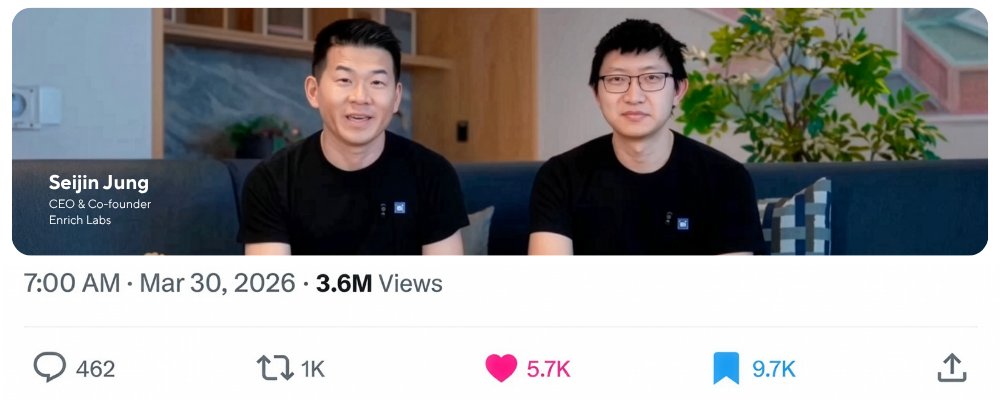
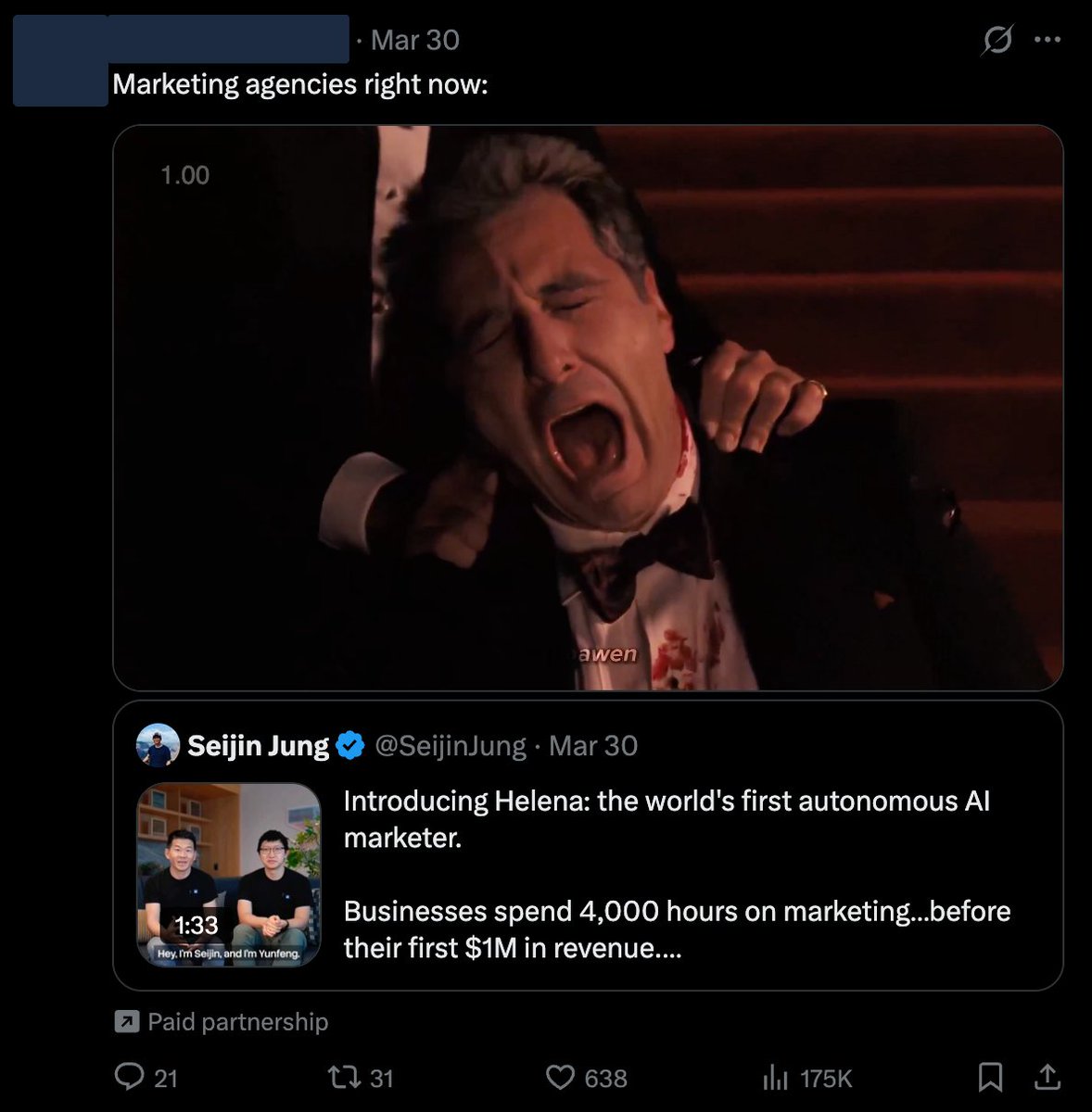
几周前,我们发布了 Helena(@SeijinJung 在 @enrich_labs 打造的自主 AI 营销员)。

最终结果是:

  • 360 万浏览
  • 网站流量增长 10 倍
  • 拿下了当周创业公司中规模最大的发布

而 Seijin 在这一周开始时只有 147 个关注者,结束时已经超过 3000 个。

下面是我们如何把这件事组织起来的。

T-14 - 第一次通话

Seijin 是通过我之前写的一篇关于 X 上发布视频与转化的文章找到我们的。

来参加通话时,他已经有一支正在制作中的视频脚本,也初步定好了发布时间,是太平洋时间周二早上 7 点。

但一支做完的视频,顶多只占一次发布的 30%。另外 70% 是围绕它展开的一切。也就是钩子、帖文文案、发布时间、影响者放大、创始人关系网络激活等等。我们在第一次通话里就对这次发布的好几个方面提出了反对意见,因为照当时那个方向走下去,结果不会对。

T-10 - 打磨脚本与构思方向

像 Helena 这样的产品,默认的品类标签通常是 AI CMO。

我们把这个角度砍掉了。

AI CMO 这个说法读起来像是替代威胁,会直接刺激到真正的 CMO,也就是买方。那样的话,我们还没发布,就已经被放进了错误的认知框架里。

我们把 Helena 锚定为第一个自主 AI 营销员,把叙事从替代转向执行层。

到发布当天结束时,自主 AI 营销员已经成了评论区里的简写说法。

你的发布落进什么框架里,接下来 12 个月你就得活在那个框架里。这件事值得反复琢磨。

T-7 - 周一那通电话

X 上默认的发布时间窗口是太平洋时间周二早上 7 点到 9 点。所有人都知道这一点。

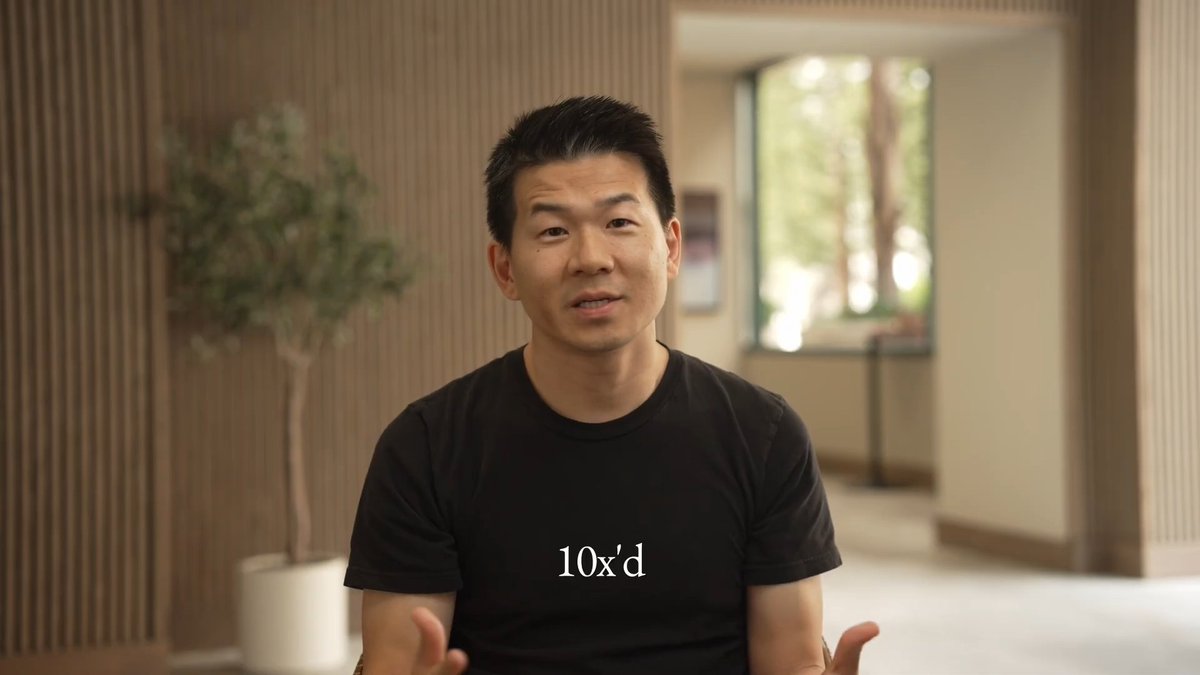
我们梳理了那一周的发布时间表。因为我们和很多不同公司合作,知道谁会在什么时候发。我们还运营着全球最大的发布目录之一,也就是 launchvideo.com/directory,所以我们掌握了别人没有的视角。

我们把 Helena 的发布时间提前到了周一早上 7 点。

与其挤进高峰时段却无法脱颖而出,不如去一个没那么拥挤的信息流。如果周二有 5 个发布都在争抢同一块算法注意力空间,那每个人的上限都会变低。

那周里,这些发布没有一个突破 300 万浏览。

Helena 则冲过了 360 万。

T-5:影响者分层

我们把大约 300 个高互动账号分成了三层。

大约 30 个账号是顶层的行业声音,他们会独立发引用转推和长线程。这些账号是 Marc Andreessen、Elad Gill 和 Keith Rabois 会关注的那类账号。当买家是通过他们信任的人看到你的发布时,往往会多停留一秒钟。

大约 90 个账号作为传播层。他们是和 ICP 相邻的中腰部声音,会发引用转推和有内容的评论。

大约 180 个账号作为动量层。他们覆盖更广的网络,通过点赞和转发把速度维持一整天。每个账号都核验过,确认有显著的美国受众。

T-3:对比打法

这是我们第一次这么做。

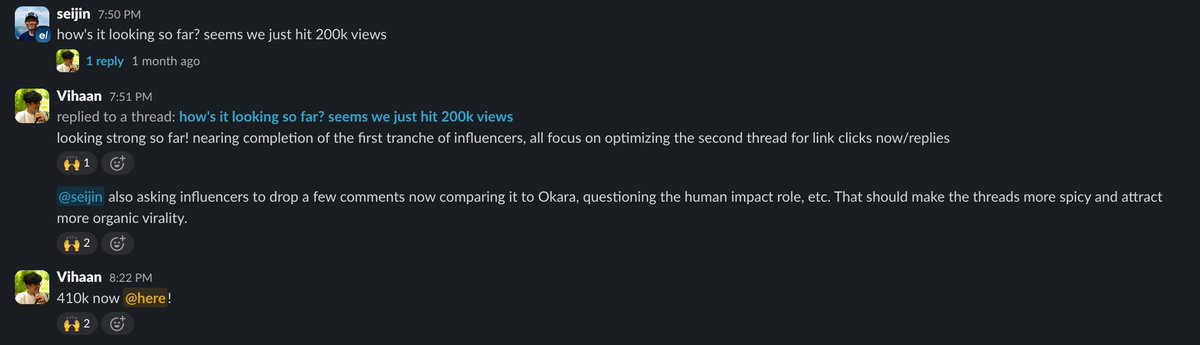
我们向少数几个影响者做了简报,让他们直接把 Helena 和这个季度里几个有代表性的发布进行对比,比如 Okara。

大多数供应商不会这么打。这有风险。它会引来争论。它会让你的产品在别人还没准备好做比较之前,就先和那些最 obvious 的对照项摆在一起。

而这正是它有效的原因。

对比内容会给评论区一个可以争论的东西。X 是一个对话平台。这个帖子在算法里多活了好几个小时,远远超过通常的衰减曲线。

公开挑对一场仗,算法就会奖励你。

你时间线上随机跳出来一个黑子发疯的情况,你见过多少次了。核心就是争论。

T-1:最初一小时

任何一次发布,最重要的窗口就是前 60 分钟。

X 的算法会在这个窗口里,按照互动速度给帖子归类。如果比例够高,帖子就会被推给更大得多的受众。如果不够,帖子就死了。后面再怎么放大,都救不回来。

所以我们给 Seijin 的投资人、创始人朋友和关键相关方都拉了一个 Google Calendar 邀请,用来协调前 60 到 90 分钟的互动。

排布是这样的:

  • +00m - 创始人发帖

  • +05m - 投资人圈子发引用转推

  • +15m - 创始人朋友发有内容的评论

  • +30m - 第一层影响者发独立 QTs

  • +60m - 第二层和第三层开始补充传播和转发

等到影响者层开始动作时,算法已经把这个帖子视为高信号了。这也是大多数人对影响者放大的理解里最容易出错的地方。第一小时根本不是影响者层的战场,而是真正认识创始人的那批人先动起来。影响者是在后面进场的。

T-0:作战室

我们一直维护着一个专门的 Slack 频道。发布前一晚开了 90 分钟电话会。

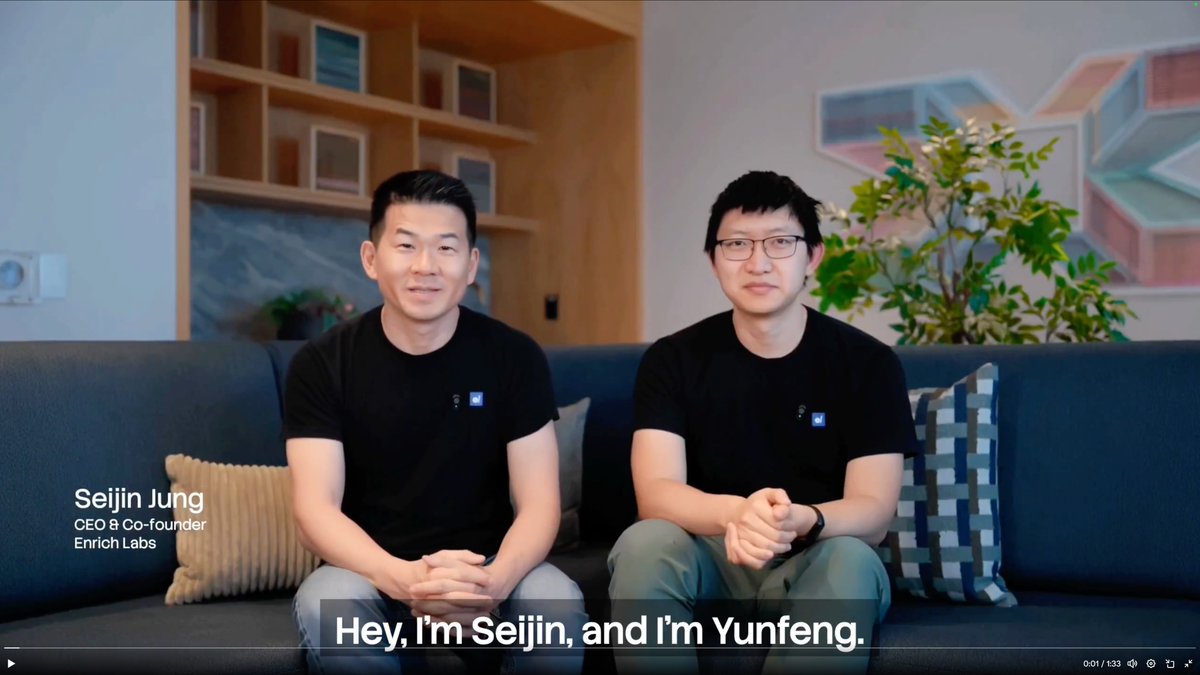
发布前一晚,Seijin 有过一阵怀疑(看下面完整视频,你会听到他自己怎么说)。X 上每天都有无数产品发布。他不确定这次能不能打中。

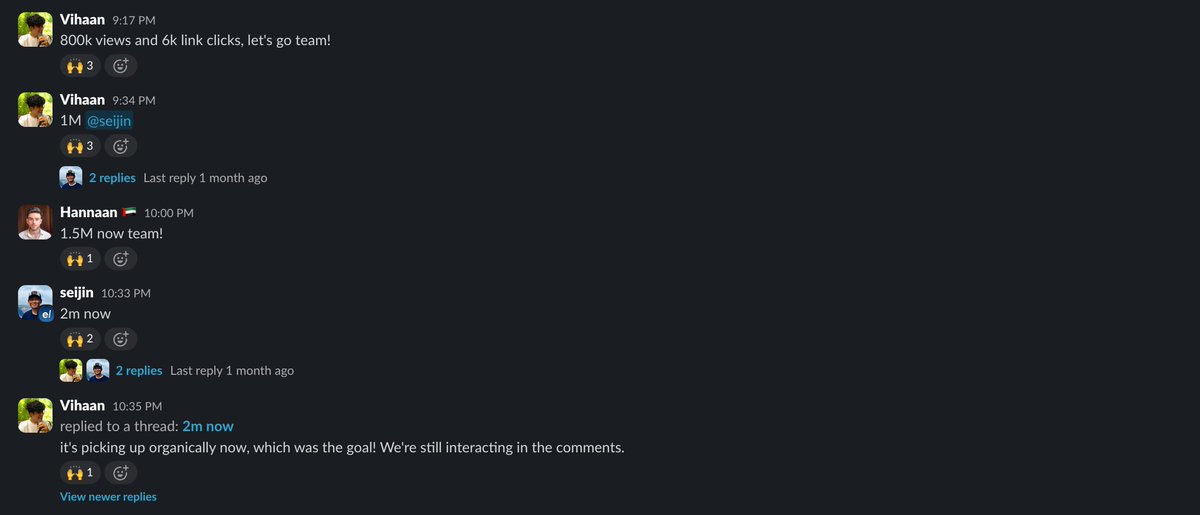
到了周一上午 10 点,这条帖子已经破了 100 万。到下午 2 点,到了 200 万。到当天结束时,已经在朝 360 万推进,而且衰减曲线几乎走平。

结果

360 万以上浏览。首页流量增长 10 倍,而且整个发布周都维持住了。正向情绪占比超过 70%。

注册用户、付费客户,以及来自美国、欧洲和亚太地区的主动咨询都来了。这是当周最大的发布。

Seijin 在镜头里这样评价结果(https://youtu.be/va-qIcsYQ3Q):“流量涨了 10 倍。收入也跟上来了。”

这就是我们在 launchvideo.com 所做的事。

A few weeks ago, we launched Helena (@SeijinJung's autonomous AI marketer at @enrich_labs).

We ended up with: - 3.6M views - 10x website traffic - Claimed the largest launch of the week for startups
For Seijin, who started the week with 147 followers, and ended with 3,000+

Here’s how we orchestrated it.

T-14 - The First Call

Seijin found us through another article I wrote about launch videos & conversion on X.

He came to our call with a script in production, and a launch date in mind for Tuesday at 7am PT.

But, a finished video is maybe 30% of a launch. The other 70% is everything around it. Namely, the hook, post copy, timing, influencer amplification, founder network activation, & more. We needed to push back on several aspects of the launch on our very first call as we didn’t see it going the right way.

T-10 - Scripting & Ideating

The default category label for products like Helena was "AI CMO."

We killed that angle.

"AI CMO" reads as ‘replacement’ threat and triggers actual CMOs (the buyer). We’d have ended up positioned in the wrong frame before we launched.

We anchored Helena as the first autonomous AI marketer and pulled the narrative away from "replacement" toward "execution layer."

By the end of launch day, "autonomous AI marketer" was the shorthand in the comment thread.

The frame your launch lands in is the one you live with for the next 12 months. Worth thinking about a lot.

T-7 - The Monday Call

Default X launch window is Tuesday 7-9am PT. Everyone knows it.

We mapped the week's launch calendar as we work with various different companies and know who is launching when. We also run the largest global directory of launches (launchvideo.com/directory), so we had insight no one else did.
We pulled the Helena launch to Monday 7am.

A less crowded feed beats a peak feed you can't stand out in. If 5 launches are fighting for the same algorithmic real estate on Tuesday, the ceiling is low for everyone.

None of those launches cleared 3M views that week.

Helena went past 3.6M.

T-5: The Influencer Tiers

We split ~300 engaging accounts across three layers.

~30 accounts as top-tier industry voices doing independent quote-tweets and threads. The accounts that Marc Andreessen, Elad Gill, and Keith Rabois follow. When buyers see your launch through someone they trust, they tend to pay an extra second of attention.

~90 accounts as the reach layer. ICP-adjacent mid-tier voices doing quote-tweets and substantive comments.

~180 accounts as the momentum layer. Wider-network accounts on likes and reposts to keep velocity through the day. Every account verified for significant US audiences.
T-3: The Comparison Play

This was a first for us.

We briefed a handful of influencers to directly compare Helena against the notable launches of the quarter, like Okara.
Most vendors wouldn't run this play. It's risky. It invites argument. It puts your product up against the obvious comparisons before anyone else is ready to make them.

And that’s why it works.

Comparison content gives the comment thread something to debate. X is a conversation platform. The post stayed alive on the algorithm for hours past the typical decay curve.

Pick the right fight, publicly, and the algorithm rewards you.

How many times do you see a random hater posting some shit on your timeline? It’s all about debate.

T-1: The First Hour

The first 60 minutes of any launch are the most important window you'll get.

X's algorithm classifies the post in that window based on engagement velocity. If the ratio is high enough, the post gets pushed to a much larger audience. If it's not, the post dies. No amount of later amplification can save it.

So we set up a Google Calendar invite with Seijin's investors, founder friends, and key stakeholders to coordinate engagement in the first 60-90 minutes.

The choreography:

  • +00m - Founder posts

  • +05m - Investor circle quote-tweets

  • +15m - Founder friends drop substantive comments

  • +30m - Tier 1 influencers post independent QTs

  • +60m - Tier 2 + Tier 3 layer in reach and reposts

By the time the influencer layer activated, the algorithm was already treating the post as high-signal. This is what most people get wrong about influencer amplification. The first hour isn't the influencer layer at all. It's the people who actually know the founder. Influencers come in afterward.

T-0: The War Room

We maintain a dedicated Slack channel. 90-minute call the night before launch.

Seijin had a moment of doubt the night before (watch full video below to hear it in his own words). X is full of product launches every single day. He wasn't sure this one would land.

By 10am Monday, the post had crossed 1M. By 2pm, 2M. By end of day, on track for 3.6M with the decay curve flat.
The result

3.6M+ views. 10x homepage traffic, sustained through launch week. 70%+ positive sentiment.

Signups, paying customers, and inbound from the US, Europe, and APAC. Biggest launch of the week.

Seijin on the result, on camera (https://youtu.be/va-qIcsYQ3Q): "Traffic 10x'd. Revenue followed."
This is what we do at launchvideo.com

几周前,我们发布了 Helena(@SeijinJung 在 @enrich_labs 打造的自主 AI 营销员)。

最终结果是:

  • 360 万浏览
  • 网站流量增长 10 倍
  • 拿下了当周创业公司中规模最大的发布

而 Seijin 在这一周开始时只有 147 个关注者,结束时已经超过 3000 个。

下面是我们如何把这件事组织起来的。

T-14 - 第一次通话

Seijin 是通过我之前写的一篇关于 X 上发布视频与转化的文章找到我们的。

来参加通话时,他已经有一支正在制作中的视频脚本,也初步定好了发布时间,是太平洋时间周二早上 7 点。

但一支做完的视频,顶多只占一次发布的 30%。另外 70% 是围绕它展开的一切。也就是钩子、帖文文案、发布时间、影响者放大、创始人关系网络激活等等。我们在第一次通话里就对这次发布的好几个方面提出了反对意见,因为照当时那个方向走下去,结果不会对。

T-10 - 打磨脚本与构思方向

像 Helena 这样的产品,默认的品类标签通常是 AI CMO。

我们把这个角度砍掉了。

AI CMO 这个说法读起来像是替代威胁,会直接刺激到真正的 CMO,也就是买方。那样的话,我们还没发布,就已经被放进了错误的认知框架里。

我们把 Helena 锚定为第一个自主 AI 营销员,把叙事从替代转向执行层。

到发布当天结束时,自主 AI 营销员已经成了评论区里的简写说法。

你的发布落进什么框架里,接下来 12 个月你就得活在那个框架里。这件事值得反复琢磨。

T-7 - 周一那通电话

X 上默认的发布时间窗口是太平洋时间周二早上 7 点到 9 点。所有人都知道这一点。

我们梳理了那一周的发布时间表。因为我们和很多不同公司合作,知道谁会在什么时候发。我们还运营着全球最大的发布目录之一,也就是 launchvideo.com/directory,所以我们掌握了别人没有的视角。

我们把 Helena 的发布时间提前到了周一早上 7 点。

与其挤进高峰时段却无法脱颖而出,不如去一个没那么拥挤的信息流。如果周二有 5 个发布都在争抢同一块算法注意力空间,那每个人的上限都会变低。

那周里,这些发布没有一个突破 300 万浏览。

Helena 则冲过了 360 万。

T-5:影响者分层

我们把大约 300 个高互动账号分成了三层。

大约 30 个账号是顶层的行业声音,他们会独立发引用转推和长线程。这些账号是 Marc Andreessen、Elad Gill 和 Keith Rabois 会关注的那类账号。当买家是通过他们信任的人看到你的发布时,往往会多停留一秒钟。

大约 90 个账号作为传播层。他们是和 ICP 相邻的中腰部声音,会发引用转推和有内容的评论。

大约 180 个账号作为动量层。他们覆盖更广的网络,通过点赞和转发把速度维持一整天。每个账号都核验过,确认有显著的美国受众。

T-3:对比打法

这是我们第一次这么做。

我们向少数几个影响者做了简报,让他们直接把 Helena 和这个季度里几个有代表性的发布进行对比,比如 Okara。

大多数供应商不会这么打。这有风险。它会引来争论。它会让你的产品在别人还没准备好做比较之前,就先和那些最 obvious 的对照项摆在一起。

而这正是它有效的原因。

对比内容会给评论区一个可以争论的东西。X 是一个对话平台。这个帖子在算法里多活了好几个小时,远远超过通常的衰减曲线。

公开挑对一场仗,算法就会奖励你。

你时间线上随机跳出来一个黑子发疯的情况,你见过多少次了。核心就是争论。

T-1:最初一小时

任何一次发布,最重要的窗口就是前 60 分钟。

X 的算法会在这个窗口里,按照互动速度给帖子归类。如果比例够高,帖子就会被推给更大得多的受众。如果不够,帖子就死了。后面再怎么放大,都救不回来。

所以我们给 Seijin 的投资人、创始人朋友和关键相关方都拉了一个 Google Calendar 邀请,用来协调前 60 到 90 分钟的互动。

排布是这样的:

  • +00m - 创始人发帖

  • +05m - 投资人圈子发引用转推

  • +15m - 创始人朋友发有内容的评论

  • +30m - 第一层影响者发独立 QTs

  • +60m - 第二层和第三层开始补充传播和转发

等到影响者层开始动作时,算法已经把这个帖子视为高信号了。这也是大多数人对影响者放大的理解里最容易出错的地方。第一小时根本不是影响者层的战场,而是真正认识创始人的那批人先动起来。影响者是在后面进场的。

T-0:作战室

我们一直维护着一个专门的 Slack 频道。发布前一晚开了 90 分钟电话会。

发布前一晚,Seijin 有过一阵怀疑(看下面完整视频,你会听到他自己怎么说)。X 上每天都有无数产品发布。他不确定这次能不能打中。

到了周一上午 10 点,这条帖子已经破了 100 万。到下午 2 点,到了 200 万。到当天结束时,已经在朝 360 万推进,而且衰减曲线几乎走平。

结果

360 万以上浏览。首页流量增长 10 倍,而且整个发布周都维持住了。正向情绪占比超过 70%。

注册用户、付费客户,以及来自美国、欧洲和亚太地区的主动咨询都来了。这是当周最大的发布。

Seijin 在镜头里这样评价结果(https://youtu.be/va-qIcsYQ3Q):“流量涨了 10 倍。收入也跟上来了。”

这就是我们在 launchvideo.com 所做的事。

A few weeks ago, we launched Helena (@SeijinJung's autonomous AI marketer at @enrich_labs).

We ended up with: - 3.6M views - 10x website traffic - Claimed the largest launch of the week for startups

For Seijin, who started the week with 147 followers, and ended with 3,000+

Here’s how we orchestrated it.

T-14 - The First Call

Seijin found us through another article I wrote about launch videos & conversion on X.

He came to our call with a script in production, and a launch date in mind for Tuesday at 7am PT.

But, a finished video is maybe 30% of a launch. The other 70% is everything around it. Namely, the hook, post copy, timing, influencer amplification, founder network activation, & more. We needed to push back on several aspects of the launch on our very first call as we didn’t see it going the right way.

T-10 - Scripting & Ideating

The default category label for products like Helena was "AI CMO."

We killed that angle.

"AI CMO" reads as ‘replacement’ threat and triggers actual CMOs (the buyer). We’d have ended up positioned in the wrong frame before we launched.

We anchored Helena as the first autonomous AI marketer and pulled the narrative away from "replacement" toward "execution layer."

By the end of launch day, "autonomous AI marketer" was the shorthand in the comment thread.

The frame your launch lands in is the one you live with for the next 12 months. Worth thinking about a lot.

T-7 - The Monday Call

Default X launch window is Tuesday 7-9am PT. Everyone knows it.

We mapped the week's launch calendar as we work with various different companies and know who is launching when. We also run the largest global directory of launches (launchvideo.com/directory), so we had insight no one else did.

We pulled the Helena launch to Monday 7am.

A less crowded feed beats a peak feed you can't stand out in. If 5 launches are fighting for the same algorithmic real estate on Tuesday, the ceiling is low for everyone.

None of those launches cleared 3M views that week.

Helena went past 3.6M.

T-5: The Influencer Tiers

We split ~300 engaging accounts across three layers.

~30 accounts as top-tier industry voices doing independent quote-tweets and threads. The accounts that Marc Andreessen, Elad Gill, and Keith Rabois follow. When buyers see your launch through someone they trust, they tend to pay an extra second of attention.

~90 accounts as the reach layer. ICP-adjacent mid-tier voices doing quote-tweets and substantive comments.

~180 accounts as the momentum layer. Wider-network accounts on likes and reposts to keep velocity through the day. Every account verified for significant US audiences.

T-3: The Comparison Play

This was a first for us.

We briefed a handful of influencers to directly compare Helena against the notable launches of the quarter, like Okara.

Most vendors wouldn't run this play. It's risky. It invites argument. It puts your product up against the obvious comparisons before anyone else is ready to make them.

And that’s why it works.

Comparison content gives the comment thread something to debate. X is a conversation platform. The post stayed alive on the algorithm for hours past the typical decay curve.

Pick the right fight, publicly, and the algorithm rewards you.

How many times do you see a random hater posting some shit on your timeline? It’s all about debate.

T-1: The First Hour

The first 60 minutes of any launch are the most important window you'll get.

X's algorithm classifies the post in that window based on engagement velocity. If the ratio is high enough, the post gets pushed to a much larger audience. If it's not, the post dies. No amount of later amplification can save it.

So we set up a Google Calendar invite with Seijin's investors, founder friends, and key stakeholders to coordinate engagement in the first 60-90 minutes.

The choreography:

  • +00m - Founder posts

  • +05m - Investor circle quote-tweets

  • +15m - Founder friends drop substantive comments

  • +30m - Tier 1 influencers post independent QTs

  • +60m - Tier 2 + Tier 3 layer in reach and reposts

By the time the influencer layer activated, the algorithm was already treating the post as high-signal. This is what most people get wrong about influencer amplification. The first hour isn't the influencer layer at all. It's the people who actually know the founder. Influencers come in afterward.

T-0: The War Room

We maintain a dedicated Slack channel. 90-minute call the night before launch.

Seijin had a moment of doubt the night before (watch full video below to hear it in his own words). X is full of product launches every single day. He wasn't sure this one would land.

By 10am Monday, the post had crossed 1M. By 2pm, 2M. By end of day, on track for 3.6M with the decay curve flat.

The result

3.6M+ views. 10x homepage traffic, sustained through launch week. 70%+ positive sentiment.

Signups, paying customers, and inbound from the US, Europe, and APAC. Biggest launch of the week.

Seijin on the result, on camera (https://youtu.be/va-qIcsYQ3Q): "Traffic 10x'd. Revenue followed."

This is what we do at launchvideo.com

📋 讨论归档

讨论进行中…