返回列表
💬 讨论题

创作者商业化指南:打破“饥饿艺术家”神话与数字产品变现漏斗

创作者必须摒弃耻于谈钱的道德包袱,将营销重构为价值传递工具,并通过结构化漏斗实现数字产品变现,但本文策略高度依赖既有受众且存在明显的SaaS营销包装。
打开原文 ↗

2026-10-20 原文链接 ↗
阅读简报
双语对照
完整翻译
原文
讨论归档

核心观点

  • “饥饿艺术家”是匮乏陷阱而非道德徽章 拒绝商业化会直接滋生生存焦虑与同行怨恨,最终必然反噬创作质量,将作品变现是维持创作自由与真实性的唯一可持续路径。
  • 营销本质是认知阶梯的系统搭建 销售失败的根本原因在于内容强行跳过受众当前认知水位,必须严格按五阶段递进匹配信息,任何脱离认知对齐的推销都会导致转化崩盘。
  • 发布节奏决定转化效率与产品迭代 采用期次制发布能人为切断购买通道以制造稀缺性,利用错失恐惧拉升短期转化,同时强制闭门收集反馈完成MVP迭代,避免常青产品引发的报价疲劳。
  • 引流诱饵与自动化培育是低CAC杠杆 免费资源配合长邮件序列能在不依赖冷触达的情况下完成信任培育,但该模型极度依赖高留存率与精准流量,盲目套用将导致严重的线索流失。

跟我们的关联

  • 对 👤ATou 意味着需彻底剥离“清高不卖钱”的心理防御,下一步应直接套用“开放-关闭-优化”模型,将现有知识资产打包为期次制数字产品进行首轮MVP测试。
  • 对 🧠Neta 意味着内容生产必须从“灵感驱动”转向“认知阶梯驱动”,下一步需建立严格的内容排期矩阵,按五阶段漏斗分配痛点科普、框架拆解与逼单话术的固定比例。
  • 对 🪞Uota 意味着需警惕自动化营销带来的信任透支,下一步应在邮件序列中强制植入真实交付数据与透明定价机制,用长期口碑对冲短期转化焦虑。

讨论引子

  • 当“制造稀缺性”与“报价疲劳”成为必然矛盾时,创作者应如何设定发布周期的安全阈值以避免透支核心受众信任?
  • 在算法打压外链与邮件打开率持续走低的当下,依赖“免费引流品+长邮件序列”的漏斗模型是否已失效,应如何重构低成本的冷启动路径?

大多数创作者永远无法以此为生。 你可能在某件事上是世界上最优秀的,但如果没人知道你是谁、你在做什么,或者你带来了什么价值,就没人会了解你,你最终只会成为一个忍饥挨饿的艺术家(starving artist)。

大多数创作者都是忍饥挨饿的艺术家。

忍饥挨饿的艺术家擅长自己所做的事,但从未学过营销(marketing)、销售(sales)和说服(persuasion),从而无法将他们的知识、兴趣和技能转化为谋生手段。

他们将自己无法赚钱的行为当作美德信号(virtue signaling)。

“看看我。看看我的作品有多么纯粹!看看真正的艺术是什么样子!”

你会看到他们在社交媒体上抱怨自己的作品是发自内心的。

但是,谁说从你的作品中赚钱就意味着它的价值降低了呢?

让我们把一件事弄清楚:

做一个忍饥挨饿的艺术家并没有什么高尚的。

这并不会让你的作品更真实。

如果非要说有什么影响的话,它只会让你的作品变得不那么真实,因为你现在是在匮乏感中创作。你拒绝学习如何将其转化为利润,这种态度会渗透到你的作品中。你会对那些将其作为全职工作、做自己热爱的事情的人产生更多的怨恨,而这一切都会改变你的性格,以及你行动、创造、思考和行事的方式。

我曾经把忍饥挨饿的艺术家当作荣誉徽章。在 2024 年,我不想通过在我的品牌下销售来“玷污”我的作品。但最终的结果是,我仍然需要钱来生存。所以我成了一名代笔人(ghostwriter),写一条推文收费 250 美元。只不过这一次,我卖的不是我的作品,而是别人的作品。

直到我去度假时,我才意识到自己给自己制造了什么问题。我住在最好的酒店,在最繁华的地区,旁边是最好的商店,但我把整个假期都花在酒店里为客户研究、学习和撰写关于童年创伤的内容。我对写童年创伤毫无兴趣。

这让我开始讨厌写作。

因此,对我来说,靠做自己热爱的事情谋生、并获得意义和成就感的唯一方法,就是销售我自己的产品,因为我真心相信它们,且它们与我正在努力构建的事业相一致。

如果你不在销售自己的产品,你就是在销售别人的。

做你热爱的工作来谋生的唯一真实的方式,就是销售你真正相信的工作。

“营销是为了让人们变得更好,创造你能引以为傲的作品。它意味着成为市场的驱动者,而不仅仅是被市场驱动。”

  • Seth Godin

这封信是关于如何营销你的作品,并以此获得有意义的收入。

如果你认为营销和销售是邪恶的,认为它们只属于那些为了利润而暗中企图毁灭世界的贪婪公司,那就帮自己一个忙,别读下去了。

但如果你是少数想要将内容创作作为全职工作的人之一。想要靠做自己热爱的事情谋生,想要完全掌控自己的时间、收入和自由,请继续阅读。

这正是为你准备的。

在这封信中,我将向你展示 3 种策略,帮助你从初级到高级地销售更多产品。

我们开始吧。

你已经是一名营销人员了。只是你还没意识到

“营销你的作品是在通往更好境界的路上的一种抱怨。”

  • Seth Godin

营销并不邪恶。

它不是邪恶公司用来剥削人类的工具。

营销有着不好的污名,因为我们都被廉价的营销噱头伤害过。

真正的营销关乎改变。它关乎帮助他人,给他们提供解决问题的机会。

营销是你如何为你的作品吸引支持者。营销是你如何向世界传达你带来的价值。

营销是你如何促成改变。

它是你如何向人们展示有更好的做事方式。展示有一条不同的路径可以走,从而过上更好的生活。你做事的方式就叫做营销,而你可以做到。

营销给了人们改变和改善生活的机会。

你在日常生活中使用营销。

当你向朋友推荐一本书时,你是在营销。

当你在计划晚上的外出并推荐一家餐厅时,你是在营销。

当你组织一次家庭旅行时,你是在营销。

当你向老板要求加薪时,你是在营销。

当你请求陌生人向慈善机构捐款时,你是在营销。

当你写下一个想法时,你需要使用营销来让其他人对它产生兴趣,看到它带来的价值,并将其应用到他们的生活中。

对你来说,那感觉不像营销。但这只是因为你这么做是因为你真心相信你所说的话。

II - 3 种让你在销售上变得极其厉害的方法(且不显得推销感太重)

“营销是帮助他人解决问题的一种慷慨行为。”

  • Seth Godin

在我向你展示如何销售更多数字产品之前。我需要做几个假设。

你已经在创作基于价值的内容,并且拥有受众(不需要是庞大的受众,但你得有)。

你已经有一个要销售的产品。没有可销售的产品,你就赚不到钱。金钱是价值交换的副产品。你帮助人们解决问题,作为回报,他们付给你钱。

你不想建立自由职业生意。你想销售自己的产品,拥有自己的时间,并且

你不想进行销售电话或冷启动触达(cold outreach)。你想制作能为你产品引流的内容,并完全自然地完成销售。

如果你还没有受众,或者你不在创作内容,我创建了一个免费课程来帮助你入门。

一旦你搞定了这些,再回到这封信。

话虽如此,这里有 3 种方法可以帮你销售更多产品:

1) 开放、关闭、优化、发布(初级)

人类太害怕失去机会了。

这就是为什么 Adam 偷吃了禁树上的苹果,或者为什么人们会在黑色星期五买一台新电视(尽管他们去年刚买了一台),或者为什么即使你知道自己不会享受其中,还是会外出。

人类想要体验一切。我们忍不住。这就是为什么生产力色情(productivity porn)也开始成为一种现象。你想变得更有生产力,这样你就能同时做所有事情。

通过营销,你可以利用这一特征来帮助你的受众解决他们的问题。

因为要让人们购买能帮助他们解决问题的产品,你需要施加压力。

增加压力的 2 种方式:

  • 紧迫感(Urgency)——让人们现在就行动的理由。折扣、限时优惠等。
  • 稀缺性(Scarcity)——数量有限。库存有限,仅剩几个名额等。

这个方法背后的理念很简单。

你将产品开放几天(5-7 天),人们可以在这段时间内购买,然后你将其关闭 2-3 个月。

一旦大门关闭,你的目标就是与客户密切合作以改进你的产品,落实他们的反馈,对产品进行迭代,然后再次开放。你可以再次以相同的价格发布,或者提高价格。

一旦第二次发布结束,你就面临一个决定:

要么将你的产品转变为常青产品(evergreen product,人们随时可以购买),要么再次关闭并重复相同的过程。

你可以在以下场景使用此方法:

  • 数字产品——你无法让数字产品变得稀缺(它们是数字化的),但你可以通过不总是使其可用来增加紧迫感。
  • 研讨会(Workshops)——你可以在研讨会中引导人们了解你的流程,在研讨会结束后,你可以收集反馈。
  • 期次制课程(Cohorts)——期次制课程有明确的开始和结束日期。一旦课程开始,中途加入对人们来说就没有意义了。
  • 社区(Communities)——你可以停止接受新成员,以专注于你已有的成员,优化内部的材料,为已在其中的人提供超额价值,收集社会证明(social proof),然后以相同或更高的价格再次发布。

我在 90% 的情况下都使用这种方法,原因很简单:

这是我第一次构建该产品。

当你第一次销售你的产品时,最好让你的产品经历几轮迭代。优化你的流程,这样你的结果才会更加一致。

这也让你能够收集更多的客户评价,这有助于改进你的产品和提升转化率。

2) 诱导线方法(中级)

并非每个人都会在你的发布期购买。

有些人更加持怀疑态度。这是合情合理的。社交媒体是一个鱼龙混杂的地方。怀疑情绪处于历史最高点,而信任度处于历史最低点。

以内容、引流诱饵(lead magnets)或免费培训的形式给予人们无条件的价值,有助于建立你与受众之间的信任。

这表明你是做这件事的合适人选,而且你是认真的。

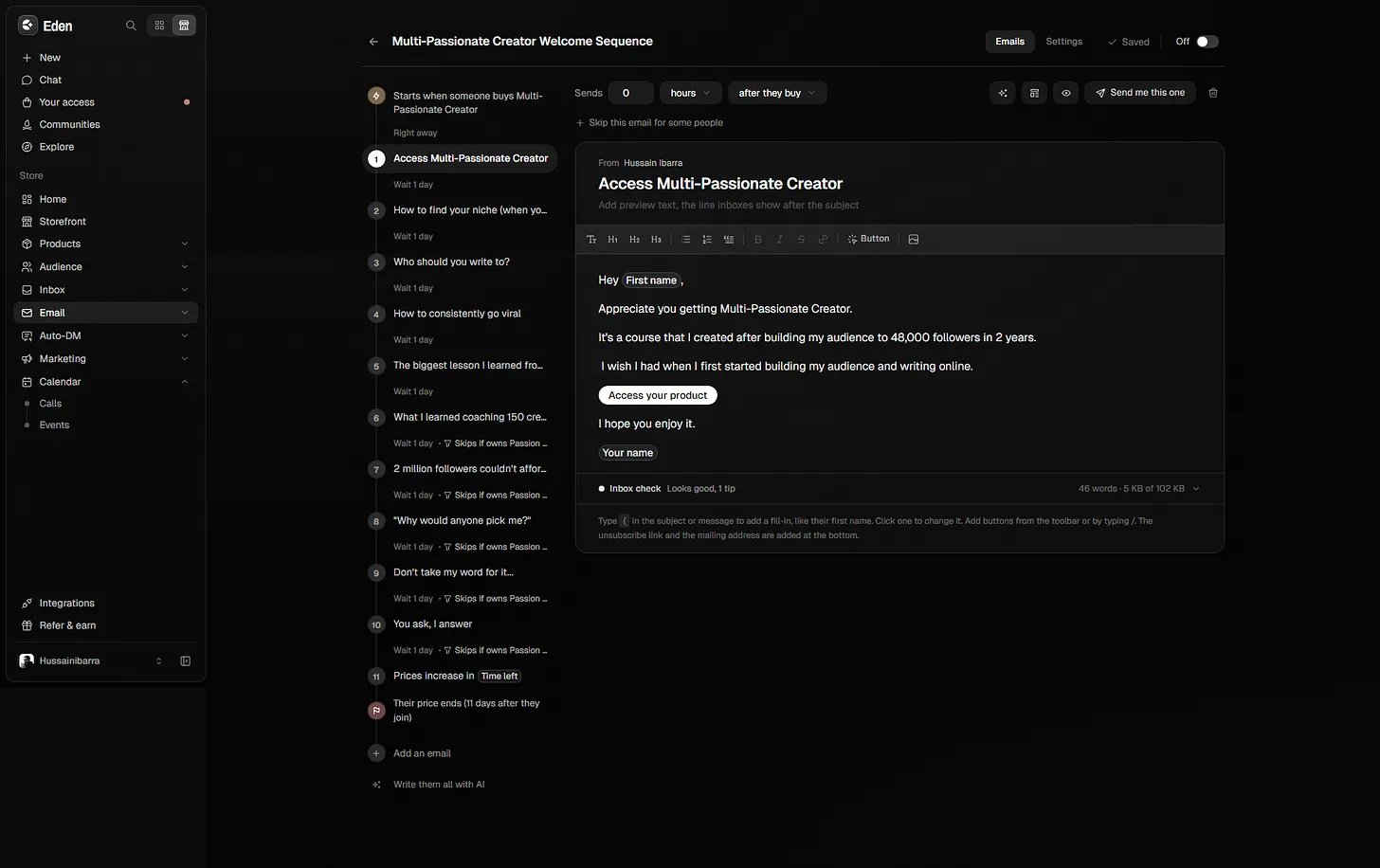
它还有一个好处,因为你可以收集人们的电子邮件地址(这有助于建立你的邮件列表)。

一个诱导线报价(tripwire offer)需要 3 样东西:

  • 免费资源——这是能“钩住”你的受众的东西。它可以是一个引流诱饵或免费的公开课(masterclass)。
  • 邮件序列(email sequence)——这可以是一个 10、20 或 30 天的邮件序列。
  • 常青产品——不言自明。要让这个方法奏效,你需要人们购买产品。如果该产品不是一直可用的,那么你的诱导线就不会起作用。

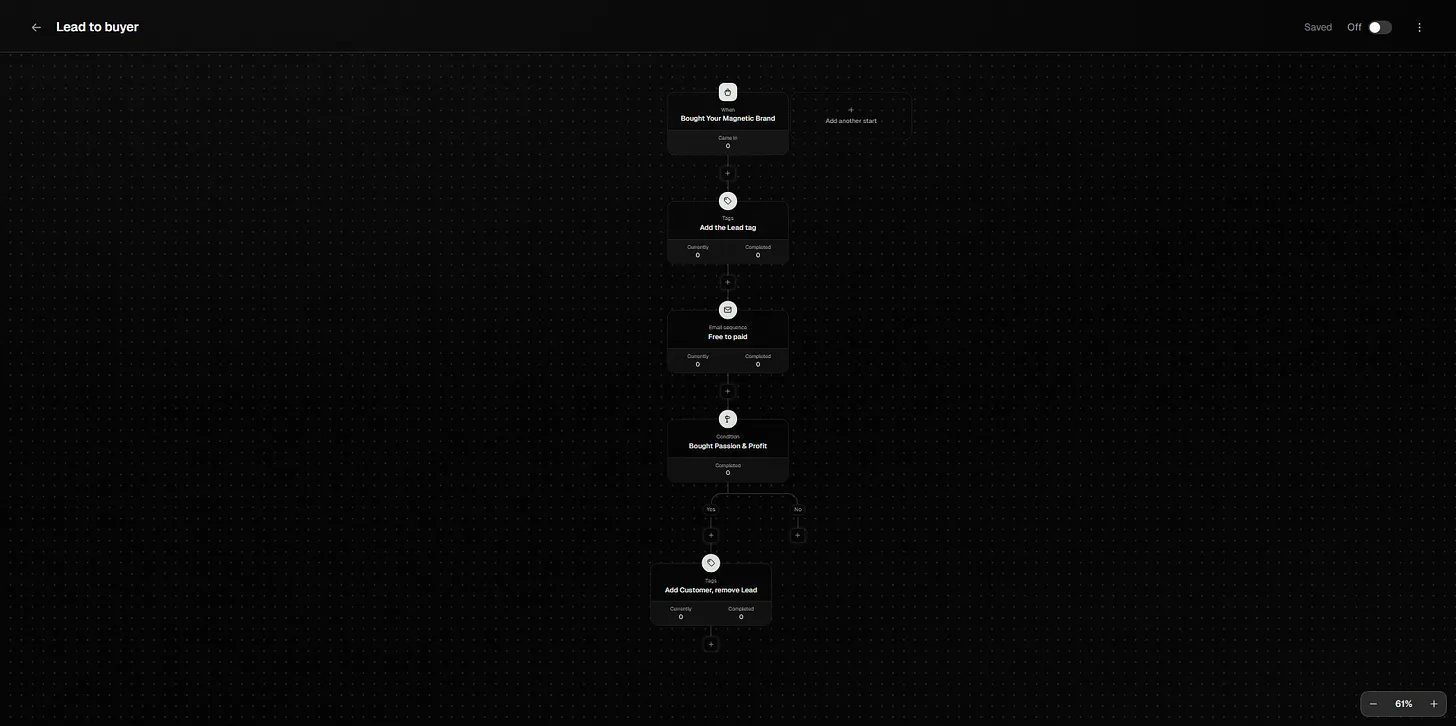
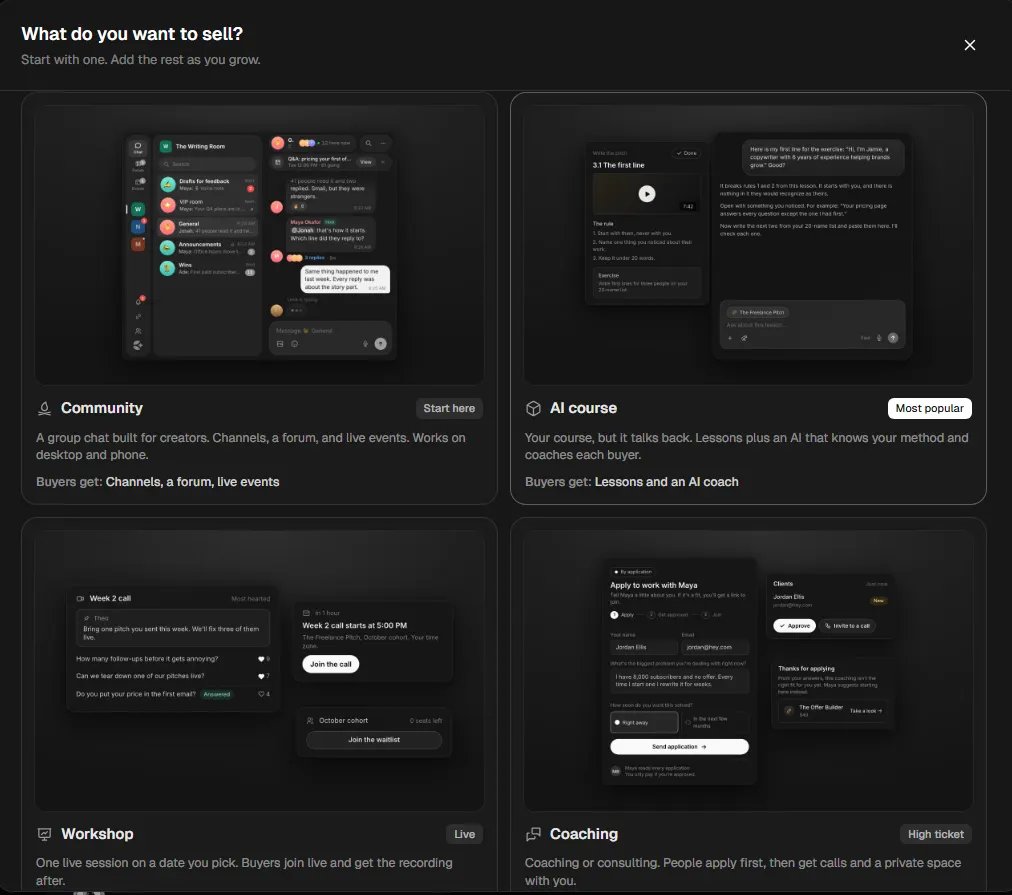
使用 Eden,你可以创建并托管你的产品(带有 AI 的课程、公开课或免费社区)。

你可以将它们添加到一个自动化流程中,该流程在他们加入后立即启动。

魔力并不在于引流诱饵或公开课本身的价值。

而是在他们获得你的引流诱饵之后的 5-10 封邮件中。你有了更多销售产品的机会,如果他们没有获得你的引流诱饵,你是不会有这些机会的。

你不需要在所有的邮件中都进行“销售”。你可以有 5-10 天纯粹基于价值的邮件,而在最后 3 天,你再进入销售环节。

如果你想更进一步,你可以为任何获取你引流诱饵的人启动一个自动化的独家报价,从而在你的推销中增加紧迫感。

例如,对于我的引流诱饵,任何获取它的人都会自动获得一个为期 11 天的独家报价。

11 天后,独家报价消失。

这样,你就不必依赖廉价的营销策略来达成销售。你在营销中是诚实的。

一旦一切准备就绪,你就需要不断地推广你的引流诱饵。

到处推广你的引流诱饵。

在你的快拍(stories)中

在你的帖子下

在你的时事通讯(newsletters)中

推广。推广。推广。推广。推广。

你需要不断地为你的引流诱饵引流,因为这是它唯一奏效的方式。人们不会奇迹般地发现它。你需要不断地把它放在尽可能多的人面前。

这对你意味着什么:

  • 核心报价(Core offer):300 美元
  • 流量:2,000 封邮件/月
  • 流失(Churn):500 封邮件掉队
  • 新读者:1,500
  • 转化率(Conversion rate):5%
  • 产生收入:22,500 美元

你仅仅通过推广一个免费产品就赚到了 22,500 美元/月,仅此而已。

免责声明:

如果你刚刚起步,或者还没有经过验证的核心报价,你不需要有诱导线报价或引流诱饵。

我经营我的生意已经快 3 年了,我从来没有一个一直在运行的引流诱饵。

我主要只使用第一种方法,而今年仅靠这种方法我就赚到了 6 位数。

3) 4 周发布计划(高级)

把发布想象成一根橡皮筋。

你拉得越长、越用力,反弹就越大。

一个 4 周的发布计划给了你更多可以运用的营销火力。

在 4 周发布期间你可以做什么:

  • 发起抽奖活动——抽奖能为你带来大量的潜在客户涌入(根据我的经验,我每次都能获得 100-200 个潜在客户)。
  • 手动触达——你可以联系以前的客户、潜在客户以及受众中感兴趣的人,与他们进行对话,并在电话或私信(DMs)中完成成交。
  • 逐步涨价——以 40% 的折扣开始发布,然后每周价格增加 10%,直到达到全价。

如果你进行逐步涨价,你不需要在 4 周内每天发送邮件,因为你会遇到一种叫做报价疲劳(Offer Fatigue)的情况。

报价疲劳意味着你的受众对你的报价感到厌倦,而且你的报价转化率不如以前高。

最好的方法是每周发 2-3 封邮件(1 封时事通讯,1 封结尾带有行动呼吁(CTA)的故事邮件,以及 1 封提醒明天涨价的邮件),直到达到全价。

这就是我在年初所做的,我从我的期次制课程中赚了 7,000 美元(这是我当时规模最大的一次发布)。

这个策略中最被低估的部分是你可以创造客户。

怎么做?

通过你的时事通讯,向他们普及关于他们的问题、你的愿景和你的叙事的知识。

用你的长篇时事通讯提高他们的认知水平,当你这样做时,你的读者会逐渐想要你的产品。

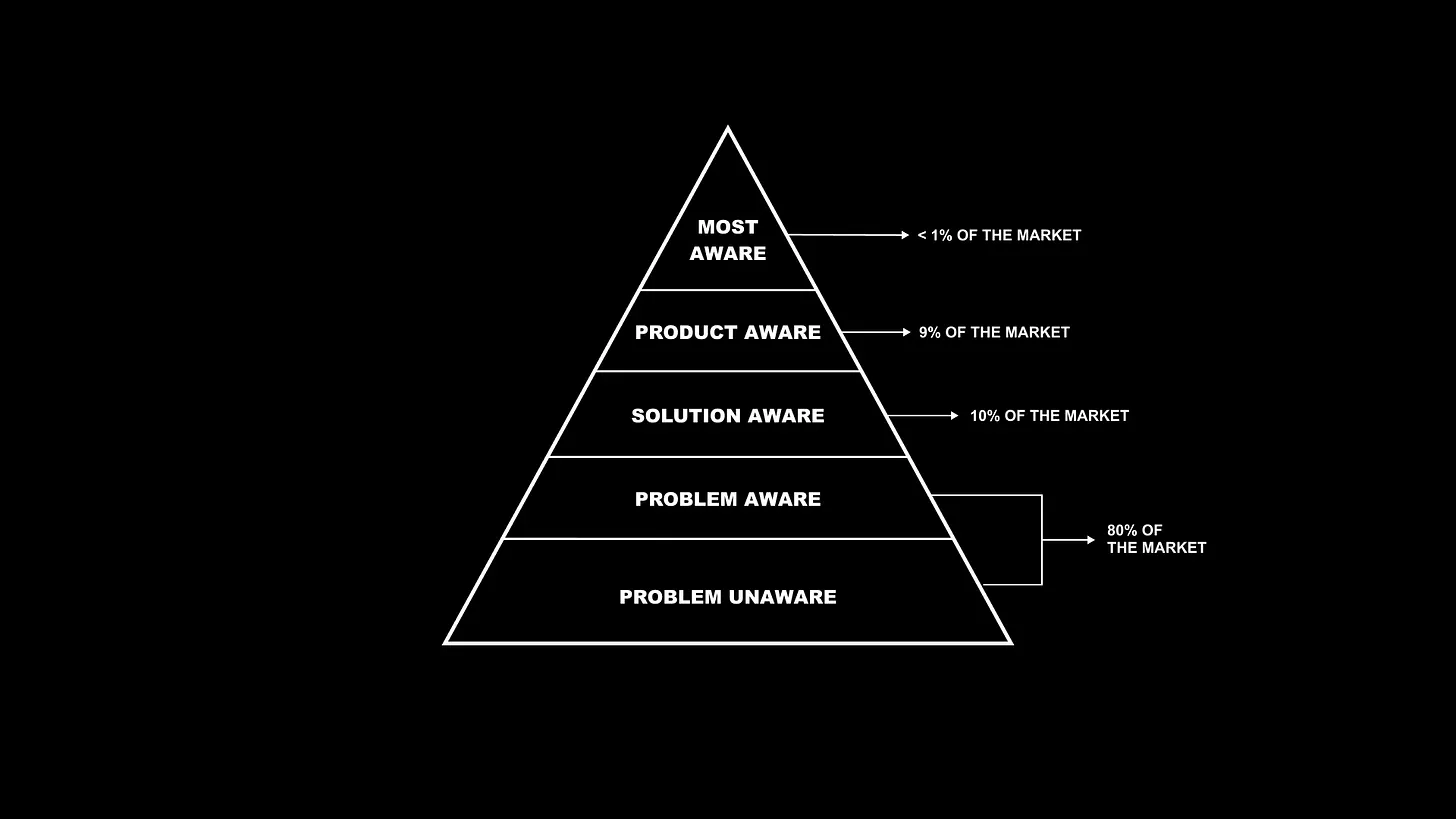
一般来说,有 5 个认知阶段(awareness stages):

  • 无问题认知(Problem unaware)——未意识到他们的问题以及它如何影响他们的日常生活(关注痛点)。
  • 有问题认知(Problem aware)——意识到他们的问题但不知道如何解决(关注痛点的影响和你的独特观点)。
  • 有方案认知(Solution aware)——意识到他们的问题并知道解决方案是存在的,只是没有一个精简的解决方案(关注可操作的建议)。
  • 有产品认知(Product aware)——意识到他们的问题,知道存在一条精简的路径、系统或解决方案(关注你的独特机制)。
  • 高度认知(Most aware)——他们已经准备好改变,他们只是需要一个现在就行动的理由(关注异议处理并增加紧迫感和稀缺性等压力)。

你在发布周之前的目标是教育你的受众了解他们的问题,并向他们展示你的产品就是解决方案。

4 周计划(每周做什么):

第 1 周: 你 99% 的受众都是初学者。

这一周,你的时事通讯将以初学者为中心,并且在涉及你的主题时更加通用。

你可以使用文案框架(copywriting frameworks),如 PAS、PAS(O) 或 AIDA 来构建你的时事通讯结构。

在撰写时事通讯时,软性推销你的产品。你可以把它写在中间和/或结尾。

你可以这样写:

“快速通知:

如果你想要 [HEAVEN],我的产品 NAME 目前正享受 40% 的折扣,直到周日,之后价格将会上涨。

你可以在这里获取:LINK。”

在社交媒体方面,找到你当天表现最好的帖子,并在其下方附上那周的时事通讯链接。

在周日,向你的列表发送另一封邮件,提醒他们 24 小时后价格将上涨 10%。不需要太长。越短、越直奔主题越好。

第 2 周: 与第 1 周非常相似。这里不会有太多变化。

第 3 周: 你将开启营销引擎。

你仍然会做你在第 1 周和第 2 周所做的事情。但这周,你将发布一个引流诱饵。

这个引流诱饵的目标是向人们提供你产品的总体框架。

你实际上不会给他们一个关于如何实施你产品的分步计划。

你要做的是从宏观视角(POV)谈论整体框架。

给他们“是什么”和“为什么”,但保留“怎么做”。

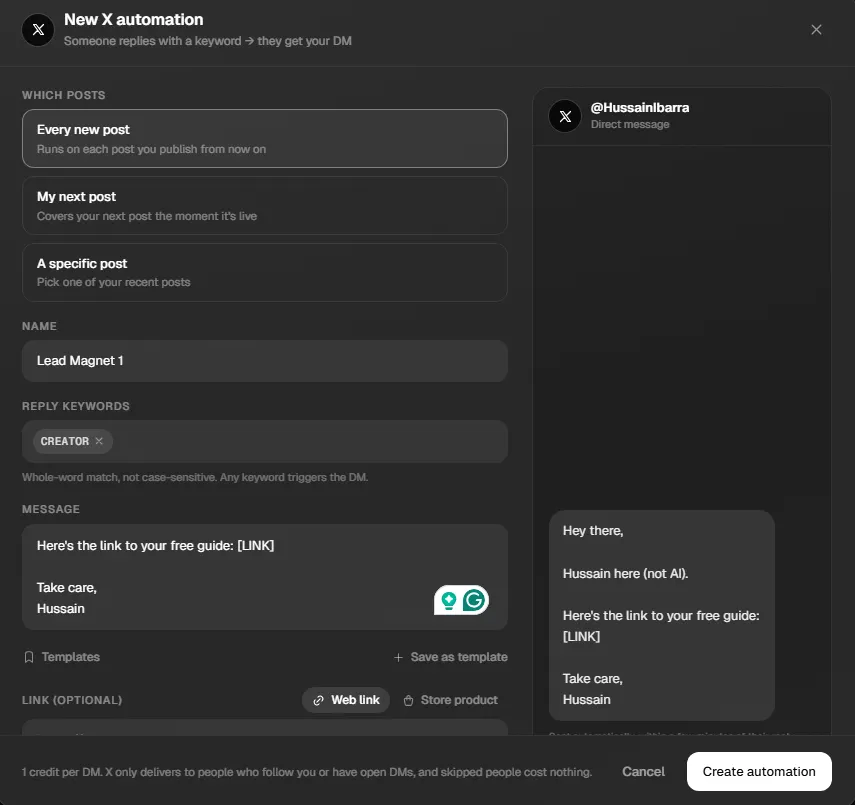
一旦引流诱饵完成,发一个“抽奖”帖子。让人们回复你的帖子,你就会把它发给他们。

当你把引流诱饵发送给他们时,写一条简短的信息,告诉他们关于你的产品,如果他们想了解更多,需要回复一个关键词。

你可以使用 Eden 来自动化和定制你的私信,这样你就不必花一整天时间向人们发送你的引流诱饵。

这将为你带来 100-200 个可以交谈的新潜在客户。

如果你擅长销售,你可以成交 5-10 个人(这是一个保守的估计)。

第 4 周: 这一周,你将质疑现实。

根据我的经验,发布周是大部分销售发生的地方。

你看,发布就像一列火车。一开始,你不确定你听到的是不是一列火车。但随着它越来越近,火车的声音越来越大,人们也就确切地知道什么要来了。

在发布周,你的目标是制造尽可能大的声量(在邮件和社交媒体上)。

开始发送简短的每日邮件,告诉人们购买,并说明大门将在某个日期关闭。在社交媒体上,每天写一篇帖子告诉人们购买你的产品。

你的受众应该感受到稀缺性,并感觉到这周正在发生一件大事。

“但是 Hussain,我不想惹恼我的受众。”

你真心相信你正在销售的产品吗?

如果是,那么推广它并让尽可能多的人购买它就是一种服务行为。如果你关心帮助他人和让世界变得更美好,你需要学习如何营销、销售和说服人们购买你的产品。

在最后一天,你会达成让你难以置信的销量(我通常在最后一天能达成 30-50 笔销售)。

经验法则:你在最后一天发送的邮件越多,你达成的销售就越多。

就我个人而言,我喜欢发 3 封提醒邮件(剩 24 小时,剩 12 小时,剩 3 小时)。

一旦大门关闭,下架产品并专注于交付。

就是这样。

这就是你如何销售更多数字产品的方法。

如果今天我向你展示的内容听起来工作量太大,让我对你说句掏心窝子的话。

你到底在这里干什么?

说真的。

你真的认真考虑过把这当成你的全职工作吗?

还是你只是想以某种神奇的方式在银行账户里拥有 1 亿美元,然后再也不用工作?

你是真的想靠销售你相信的产品赚钱,建立你热爱的事业,在世界上留下印记,并从中获得成就感吗?

还是你只喜欢在精神上自慰,沉迷于有一天能发大财的幻想中?

你以为这会很容易吗?

因为如果真的很容易,很多人早就去做了并且生意会取得成功,但他们没有,因为他们骨子里没有坚持到底和度过难关的韧性。

拜托,认真对待这件事。

它不容易。但它很简单。

今天就到这里。

祝你度过愉快的一天。

Hussain

附言(P.S.)

我向你展示的工具叫做 Eden。

这是我一直用于我所有写作、内容创作、邮件营销、托管社区、数字产品和辅导的软件。

如果你认真考虑开始并建立一个一人企业,你需要 Eden。

今天就开始免费使用 Eden 吧。

Most creators will never make a full-time living from it.

You can be the best in the world at something, but if nobody knows who you are, what you do, or what value you bring, nobody will know about it, and you’ll end up being a starving artist.

Most creators are starving artists.

A starving artist is someone who is great at what they do but never learned marketing, sales, and persuasion to turn their knowledge, interests, and skills into a living.

They use their inability to make money as virtue signaling.

“Look at me. Look at how pure my work is! Look at what true art looks like!”

You’ll see them complain on social media that their work comes from the heart.

But who said that making money from your work means it’s any less valuable?

Let’s get one thing clear:

There’s nothing noble about being a starving artist.

It doesn’t make your work more authentic.

If anything, it makes your work less authentic because you are now creating from a place of scarcity. And your refusal to learn how to turn it into a profit leaks into your work. You become more resentful of those who are making it their full-time job, doing what they love for work, and this all changes your personality, the way you act, create, think, and behave.

I used to wear the starving artist as a badge of honor. In 2024, I didn’t want to “taint” my work by selling under my brand. But what ended up happening was that I still needed money to survive. So I became a ghostwriter, writing tweets for $250 a pop. But only this time I wasn’t selling my work, but I was selling other people’s work.

It was only when I was on vacation that I realized the problem I created for myself. I was in the best hotels, in the nicest area, with the best shops, but I spent all of my vacation in my hotel researching, learning, and writing about childhood trauma for a client. I didn’t have any interest in writing about childhood trauma.

This made me hate writing.

So the only way for me to make a living doing something I love, brings me meaning and fulfillment, was to sell my own products because I genuinely believe in them and they are aligned with what I’m trying to build.

If you’re not selling your own products, you’re selling someone else’s.

The only authentic way to do work you love for a living is to sell the work you actually believe in.

“Marketing is about changing people for the better, creating work you can be proud of. And it’s about being a driver of the market, not simply being market-driven.”

  • Seth Godin

This letter is about how to market your work and to make a meaningful living doing so.

If you think that marketing and selling is evil and that it’s only for greedy corporations that want to secretly destroy the world for the sake of profit, do yourself a favor and stop reading.

But if you’re one of the few who want to make content creation their full-time job. To make a living doing something you love, to have complete control over your time, income, and freedom, keep reading.

This is for you.

In this letter, I’ll show you 3 strategies to help you sell more of your products from beginner to advanced.

Let’s begin.

You’re already a marketer. You just don’t know it yet

“Marketing your work is a complain on the way to better.”

  • Seth Godin

Marketing isn’t evil.

It’s not a tool that evil corporations use to exploit humanity.

Marketing has a bad stigma because we were all burned by cheap marketing gimmicks.

Real marketing is about change. It’s about helping others, giving them the opportunity to solve their problems.

Marketing is how you attract supporters to your work. Marketing is how you communicate the value you bring to the world.

Marketing is how you make change happen.

It’s how you show people there’s a better way to do things. That there’s a different path to take, to live a better life. Your way of doing things is called marketing, and you can do it.

Marketing gives people the opportunity to change their lives and improve their lives.

You use marketing in your daily life.

When you recommend a book to your friend, you’re marketing.

When you’re planning a night out and suggest a restaurant, you’re marketing.

When you’re organizing a trip with family, you’re marketing.

When you ask your boss for a raise, you’re marketing.

When you ask strangers to donate to charity, you’re marketing.

When you write about an idea, you need to use marketing to make other people interested in it, see the value it brings, and adopt it in their lives.

To you, that doesn’t feel like marketing. But that’s only because you’re doing it because you genuinely believe in what you’re saying.

II - 3 methods to become dangerously good at selling (without being salesy)

“Marketing is the generous act of helping someone solve their problem.”

  • Seth Godin

Before I show you how to sell more digital products. I need to make a few assumptions.

You are already creating value-based content and you have an audience (it doesn’t need to be a massive audience, but you have one).

You already have a product to sell. Without a product to sell, you can’t make money. Money is a byproduct of value exchange. You help people solve their problems and in return, they pay you money.

You don’t want to build a freelance business. You want to sell your own products, own your time, and

You don’t want to do sales calls or cold outreach. You want to make content that drives traffic to your product and sell all organically.

If you don’t already have an audience, or you’re not creating content, I created a free course to help you get started.

Once you have that nailed down, come back to this letter.

With that said, here are 3 ways to sell more of your products:

1) Open, Close, Refine, Launch (Beginner)

Humans are too scared to lose out on opportunities.

It’s the reason why Adam ate the apple from the forbidden tree, or why people buy a new TV during Black Friday (even though they bought one last year), or why you go out even when you know you won’t enjoy it.

Humans want to experience everything. We can’t help it. This is why productivity porn is also becoming a thing. You want to be more productive so you can do everything at once.

With marketing, you can leverage this trait to help your audience to solve their problems.

Because to get people to buy your products that help them solve their problems, you need pressure.

2 ways to add pressure:

Urgency — a reason for people to move now. Discounts, limited-time offers, etc.

Scarcity — limited quantity. Limited stock, only a few spots, etc.

The idea behind this method is pretty simple.

You open your product for a few days (5-7), people can buy during that time, then you close it for 2-3 months.

Once the doors are closed, your goal is to work closely with your customers to improve your product, implement their feedback, iterate on your product, then open it again. You can either launch it at the same price again, or increase it.

And once the second launch is over, you have a decision to make:

Either turn your product into an evergreen product (people can always buy it), or close it again and repeat the same process.

Where you can use this method:

Digital Products - you can’t make digital products scarce (they’re digital), but you can add urgency by not making it available all the time.

Workshops - you can run people through your process in the workshop, and post-workshop, you can collect feedback.

Cohorts - cohorts have clear start and end dates. Once the cohort starts, it doesn’t make sense for someone to join in the middle.

Communities - you can stop accepting new members to focus on the members you already have, refine the material that’s inside, overdeliver to those who are already inside, collect social proof, and launch it again either at the same price or a higher price.

I use this method 90% of the time and the reason is simple:

It’s my first time building that product.

When it’s your first time selling your product, it’s best to let your product go through a few rounds of iteration. Refine your process so your results are more consistent.

This also allows you to collect more testimonials which help improve your product and conversions.

2) Tripwire Method (Intermediate)

Not everyone will buy from your launch.

Some people are more skeptical. And it’s fair. Social media is a sketchy place. Skepticism is at an all-time high, and trust is at an all-time low.

Giving people unconditional value in the form of content, lead magnets, or free training helps build the trust between you and your audience.

It shows that you’re the man for the job and you mean serious business.

It also has a nice benefit because you get to collect people’s email addresses (which helps build your email list).

A tripwire offer needs 3 things:

A free resource - this is the thing that will “hook” your audience in. It can be a lead magnet or a free masterclass.

An email sequence - this can be a 10, 20, or 30-day email sequence.

An evergreen product - pretty self-explanatory. To make this work, you need people to buy a product. If that product isn’t always available, then your tripwire won’t work.

With Eden, you can create and host your products (a course with AI, a masterclass, or a free community).

You can add them to an automation that immediately starts as soon as they join.

The magic isn’t in the value of the lead magnet or masterclass itself.

It’s in the 5-10 emails after they get your lead magnet. You have more opportunity to sell your products that you wouldn’t have had if you they didn’t get your lead magnet.

You don’t need to “sell” in all of the emails. You can have 5-10 days of emails that are purely value-based, and in the last 3 days, you go into the sale.

And if you want to go the extra step, you can add urgency to your pitch by starting an automated exclusive offer for anyone who gets your lead magnet.

For example, with my lead magnet, anyone who gets it automatically gets an exclusive offer for 11 days.

After 11 days, the exclusive offer disappears.

This way, you’re not relying on cheap marketing tactics to make a sale. You’re being honest with your marketing

Once you have everything in place, you need to be constantly promoting your lead magnet.

Promote your lead magnet everywhere.

In your stories

Under your posts

In your newsletters

Promote. Promote. Promote. Promote. Promote.

You need to be constantly driving traffic to your lead magnet because this is the only way it works. People won’t magically find it. You need to constantly be putting it in front of as many eyes as you possibly can.

What this means to you:

Core offer: $300

Traffic: 2,000 emails/month

Churn: 500 email drop-off

New readers: 1,500

Conversion rate: 5%

Revenue generated: $22,500

You made $22,500/month by simply promoting a free product and that’s it.

Disclaimer:

If you’re just starting out, or don’t have a proven core offer, you don’t need to have a tripwire offer or a lead magnet.

I’ve been running my business for close to 3 years and I have never had a lead magnet that’s always running.

I mostly just use the first method and I made 6 figures this year using that method alone

3) 4-Week Launch (Advanced)

Think of a launch like an elastic band.

The longer and harder you pull, the bigger the snap.

A 4-week launch plan gives you more marketing firepower to play with.

What you can do during the 4-week launch:

Launch a giveaway - giveaways get you a huge influx of leads (from my experience, I got 100-200 leads each time).

Manual outreach - you can reach out to previous customers, leads, and interested people in your audience and have conversations and close them on a call or in the DMs.

Gradual price increase - start the launch with a 40% discount, and each week, the prices increase by 10% until you reach full price.

If you’re doing the gradual price increase, you don’t need to be sending daily emails for 4 weeks, because you’re going to have something called Offer Fatigue.

Offer fatigue means your audience got sick of your offer and your offer isn’t converting as much as it used to.

The best approach is to do 2-3 emails per week (1 newsletter, 1 storytelling email + CTA at the end, and 1 reminder that prices increase tomorrow) leading up to full price.

That’s what I did at the beginning of the year and I made $7,000 from my cohort (it was my biggest launch at the time).

The most underrated part about this strategy is that you can create customers.

How?

By educating them through your newsletters about their problems, your vision, and your narrative.

Raise their awareness levels with your long-form newsletters and when you do so, your readers will grow to want your product.

In general, there are 5 awareness stages:

Problem unaware - unaware of their problems and how it’s impacting their day-to-day life (focus on pain points).

Problem aware - aware of their problems but don’t know how to solve them (focus on the impacts of the pain points and your unique point of view).

Solution aware - aware of their problems and know that solutions exist, just not a streamlined solution (focus on actionable advice).

Product aware - aware of their problems, know that there is a streamlined path, system, or solution that exists (focus on your unique mechanism).

Most aware - they are ready for change, they just need a reason to act now (focus on objections and adding pressure like urgency and scarcity).

Your goal leading up to launch week is to educate your audience on their problems and show them that your product is the solution.

The 4-week plan (what to do in each week):

Week 1:

99% of your audience are beginners.

This week, your newsletters will be beginner-focused and more general when it comes to your topic.

You can use copywriting frameworks like PAS, PAS(O), or AIDA to structure your newsletter.

As you’re writing your newsletter, soft-promote your product. You can write it in the middle and/or at the end.

You can write something like this:

“Quick announcement:

If you want to [HEAVEN], my product, NAME, is currently on a 40% discount until Sunday, then prices increase.

You can get it here: LINK.”

When it comes to social media, go to your high-performing post of the day, and link that week’s newsletter under it.

On Sunday, send another email to your list reminding them that in 24 hours prices increase by 10%. It doesn’t need to be too long. The shorter and more straight to the point, the better.

Week 2:

Very similar to Week 1. Not much will change here.

Week 3:

You will turn the marketing engine on.

You will still do what you did in Weeks 1 and 2. But this week, you’ll launch a lead magnet.

The goal of this lead magnet is to give people the general framework of your product.

You will not actually give them a step-by-step plan on how to implement your product.

What you will do is talk about the overall framework from a big-picture POV.

Give them the what and why, but keep the how.

Once the lead magnet is done, do a “giveaway” post. Ask people to reply to your post and you’ll send it to them.

When you’re sending them the lead magnet, write a short message telling them about your product and if they want to learn more about it, they need to reply with a keyword.

You can use Eden to automate and customize your DMs so you don’t have to spend all day sending people your lead magnet.

This will help give you 100-200 new leads that you can speak to.

And if you’re decent at selling, you can close 5-10 people (this is a conservative estimate).

Week 4:

In this week, you will question reality.

From my experience, launch week is where the majority of the sales happen.

You see, a launch is like a train. In the beginning, you’re not sure if what you heard was a train or not. But as it gets closer, the train gets louder, and the people know for sure what’s coming.

During launch week, your goal is to be make as much noise as possible (on email and social media).

Start sending short, daily emails telling people to buy and that doors close on a certain date. On social media, write a daily post telling people to buy your product.

Your audience should feel the scarcity and that something big is happening this week.

“But Hussain, I don’t want to annoy my audience.”

Do you genuinely believe in the product you’re selling?

If so, then promoting it and getting as many people to buy it is an act of service. If you care about helping people and making the world a better place, you need to learn how to market, sell, and persuade people to buy your products.

On the last day, you will make so many sales, you wouldn’t believe it (I usually make 30-50 sales on the last day).

Rule of Thumb: The more emails you send on the last day, the more sales you’ll make.

Personally, I like to do 3 reminder emails (24 hours left, 12 hours left, 3 hours left).

Once doors close, take the product down and focus on delivery.

That’s it.

That’s how you sell more digital products.

And if what I showed you today sounds like too much work, let me be real with you for a second.

What the f*ck are you doing here?

Seriously.

Are you actually serious about making this your full-time job?

Or do you just want to somehow magically have $100M in your bank account and never have to work again?

Do you actually want to make money selling a product you believe in, building a business you love, making a dent in the world, and gaining fulfillment from it?

Or do you just like to mentally masturbate and get off on the idea of making it big one day?

Did you expect this to be easy?

Because if it was, many people would have gone ahead and succeeded with their business but they didn’t because they didn’t have it in them to stick it out and weather the storm.

Please, take this seriously.

It’s not easy. But it is simple.

That’s all for today.

Enjoy the rest of your day.

Hussain

P.S.

The tool I was showing you is called Eden.

It’s the software I’ve been using for all of my writing, content creation, email marketing, hosting communities, digital products, and coaching.

If you’re serious about starting and building a one-person business, you need to get Eden.

Get started with Eden today for free.

大多数创作者永远无法以此为生。

你可能在某件事上是世界上最优秀的,但如果没人知道你是谁、你在做什么,或者你带来了什么价值,就没人会了解你,你最终只会成为一个忍饥挨饿的艺术家(starving artist)。

大多数创作者都是忍饥挨饿的艺术家。

忍饥挨饿的艺术家擅长自己所做的事,但从未学过营销(marketing)、销售(sales)和说服(persuasion),从而无法将他们的知识、兴趣和技能转化为谋生手段。

他们将自己无法赚钱的行为当作美德信号(virtue signaling)。

“看看我。看看我的作品有多么纯粹!看看真正的艺术是什么样子!”

你会看到他们在社交媒体上抱怨自己的作品是发自内心的。

但是,谁说从你的作品中赚钱就意味着它的价值降低了呢?

让我们把一件事弄清楚:

做一个忍饥挨饿的艺术家并没有什么高尚的。

这并不会让你的作品更真实。

如果非要说有什么影响的话,它只会让你的作品变得不那么真实,因为你现在是在匮乏感中创作。你拒绝学习如何将其转化为利润,这种态度会渗透到你的作品中。你会对那些将其作为全职工作、做自己热爱的事情的人产生更多的怨恨,而这一切都会改变你的性格,以及你行动、创造、思考和行事的方式。

我曾经把忍饥挨饿的艺术家当作荣誉徽章。在 2024 年,我不想通过在我的品牌下销售来“玷污”我的作品。但最终的结果是,我仍然需要钱来生存。所以我成了一名代笔人(ghostwriter),写一条推文收费 250 美元。只不过这一次,我卖的不是我的作品,而是别人的作品。

直到我去度假时,我才意识到自己给自己制造了什么问题。我住在最好的酒店,在最繁华的地区,旁边是最好的商店,但我把整个假期都花在酒店里为客户研究、学习和撰写关于童年创伤的内容。我对写童年创伤毫无兴趣。

这让我开始讨厌写作。

因此,对我来说,靠做自己热爱的事情谋生、并获得意义和成就感的唯一方法,就是销售我自己的产品,因为我真心相信它们,且它们与我正在努力构建的事业相一致。

如果你不在销售自己的产品,你就是在销售别人的。

做你热爱的工作来谋生的唯一真实的方式,就是销售你真正相信的工作。

“营销是为了让人们变得更好,创造你能引以为傲的作品。它意味着成为市场的驱动者,而不仅仅是被市场驱动。”

  • Seth Godin

这封信是关于如何营销你的作品,并以此获得有意义的收入。

如果你认为营销和销售是邪恶的,认为它们只属于那些为了利润而暗中企图毁灭世界的贪婪公司,那就帮自己一个忙,别读下去了。

但如果你是少数想要将内容创作作为全职工作的人之一。想要靠做自己热爱的事情谋生,想要完全掌控自己的时间、收入和自由,请继续阅读。

这正是为你准备的。

在这封信中,我将向你展示 3 种策略,帮助你从初级到高级地销售更多产品。

我们开始吧。

你已经是一名营销人员了。只是你还没意识到

“营销你的作品是在通往更好境界的路上的一种抱怨。”

  • Seth Godin

营销并不邪恶。

它不是邪恶公司用来剥削人类的工具。

营销有着不好的污名,因为我们都被廉价的营销噱头伤害过。

真正的营销关乎改变。它关乎帮助他人,给他们提供解决问题的机会。

营销是你如何为你的作品吸引支持者。营销是你如何向世界传达你带来的价值。

营销是你如何促成改变。

它是你如何向人们展示有更好的做事方式。展示有一条不同的路径可以走,从而过上更好的生活。你做事的方式就叫做营销,而你可以做到。

营销给了人们改变和改善生活的机会。

你在日常生活中使用营销。

当你向朋友推荐一本书时,你是在营销。

当你在计划晚上的外出并推荐一家餐厅时,你是在营销。

当你组织一次家庭旅行时,你是在营销。

当你向老板要求加薪时,你是在营销。

当你请求陌生人向慈善机构捐款时,你是在营销。

当你写下一个想法时,你需要使用营销来让其他人对它产生兴趣,看到它带来的价值,并将其应用到他们的生活中。

对你来说,那感觉不像营销。但这只是因为你这么做是因为你真心相信你所说的话。

II - 3 种让你在销售上变得极其厉害的方法(且不显得推销感太重)

“营销是帮助他人解决问题的一种慷慨行为。”

  • Seth Godin

在我向你展示如何销售更多数字产品之前。我需要做几个假设。

你已经在创作基于价值的内容,并且拥有受众(不需要是庞大的受众,但你得有)。

你已经有一个要销售的产品。没有可销售的产品,你就赚不到钱。金钱是价值交换的副产品。你帮助人们解决问题,作为回报,他们付给你钱。

你不想建立自由职业生意。你想销售自己的产品,拥有自己的时间,并且

你不想进行销售电话或冷启动触达(cold outreach)。你想制作能为你产品引流的内容,并完全自然地完成销售。

如果你还没有受众,或者你不在创作内容,我创建了一个免费课程来帮助你入门。

一旦你搞定了这些,再回到这封信。

话虽如此,这里有 3 种方法可以帮你销售更多产品:

1) 开放、关闭、优化、发布(初级)

人类太害怕失去机会了。

这就是为什么 Adam 偷吃了禁树上的苹果,或者为什么人们会在黑色星期五买一台新电视(尽管他们去年刚买了一台),或者为什么即使你知道自己不会享受其中,还是会外出。

人类想要体验一切。我们忍不住。这就是为什么生产力色情(productivity porn)也开始成为一种现象。你想变得更有生产力,这样你就能同时做所有事情。

通过营销,你可以利用这一特征来帮助你的受众解决他们的问题。

因为要让人们购买能帮助他们解决问题的产品,你需要施加压力。

增加压力的 2 种方式:

  • 紧迫感(Urgency)——让人们现在就行动的理由。折扣、限时优惠等。

  • 稀缺性(Scarcity)——数量有限。库存有限,仅剩几个名额等。

这个方法背后的理念很简单。

你将产品开放几天(5-7 天),人们可以在这段时间内购买,然后你将其关闭 2-3 个月。

一旦大门关闭,你的目标就是与客户密切合作以改进你的产品,落实他们的反馈,对产品进行迭代,然后再次开放。你可以再次以相同的价格发布,或者提高价格。

一旦第二次发布结束,你就面临一个决定:

要么将你的产品转变为常青产品(evergreen product,人们随时可以购买),要么再次关闭并重复相同的过程。

你可以在以下场景使用此方法:

  • 数字产品——你无法让数字产品变得稀缺(它们是数字化的),但你可以通过不总是使其可用来增加紧迫感。

  • 研讨会(Workshops)——你可以在研讨会中引导人们了解你的流程,在研讨会结束后,你可以收集反馈。

  • 期次制课程(Cohorts)——期次制课程有明确的开始和结束日期。一旦课程开始,中途加入对人们来说就没有意义了。

  • 社区(Communities)——你可以停止接受新成员,以专注于你已有的成员,优化内部的材料,为已在其中的人提供超额价值,收集社会证明(social proof),然后以相同或更高的价格再次发布。

我在 90% 的情况下都使用这种方法,原因很简单:

这是我第一次构建该产品。

当你第一次销售你的产品时,最好让你的产品经历几轮迭代。优化你的流程,这样你的结果才会更加一致。

这也让你能够收集更多的客户评价,这有助于改进你的产品和提升转化率。

2) 诱导线方法(中级)

并非每个人都会在你的发布期购买。

有些人更加持怀疑态度。这是合情合理的。社交媒体是一个鱼龙混杂的地方。怀疑情绪处于历史最高点,而信任度处于历史最低点。

以内容、引流诱饵(lead magnets)或免费培训的形式给予人们无条件的价值,有助于建立你与受众之间的信任。

这表明你是做这件事的合适人选,而且你是认真的。

它还有一个好处,因为你可以收集人们的电子邮件地址(这有助于建立你的邮件列表)。

一个诱导线报价(tripwire offer)需要 3 样东西:

  • 免费资源——这是能“钩住”你的受众的东西。它可以是一个引流诱饵或免费的公开课(masterclass)。

  • 邮件序列(email sequence)——这可以是一个 10、20 或 30 天的邮件序列。

  • 常青产品——不言自明。要让这个方法奏效,你需要人们购买产品。如果该产品不是一直可用的,那么你的诱导线就不会起作用。

使用 Eden,你可以创建并托管你的产品(带有 AI 的课程、公开课或免费社区)。

你可以将它们添加到一个自动化流程中,该流程在他们加入后立即启动。

魔力并不在于引流诱饵或公开课本身的价值。

而是在他们获得你的引流诱饵之后的 5-10 封邮件中。你有了更多销售产品的机会,如果他们没有获得你的引流诱饵,你是不会有这些机会的。

你不需要在所有的邮件中都进行“销售”。你可以有 5-10 天纯粹基于价值的邮件,而在最后 3 天,你再进入销售环节。

如果你想更进一步,你可以为任何获取你引流诱饵的人启动一个自动化的独家报价,从而在你的推销中增加紧迫感。

例如,对于我的引流诱饵,任何获取它的人都会自动获得一个为期 11 天的独家报价。

11 天后,独家报价消失。

这样,你就不必依赖廉价的营销策略来达成销售。你在营销中是诚实的。

一旦一切准备就绪,你就需要不断地推广你的引流诱饵。

到处推广你的引流诱饵。

在你的快拍(stories)中

在你的帖子下

在你的时事通讯(newsletters)中

推广。推广。推广。推广。推广。

你需要不断地为你的引流诱饵引流,因为这是它唯一奏效的方式。人们不会奇迹般地发现它。你需要不断地把它放在尽可能多的人面前。

这对你意味着什么:

  • 核心报价(Core offer):300 美元

  • 流量:2,000 封邮件/月

  • 流失(Churn):500 封邮件掉队

  • 新读者:1,500

  • 转化率(Conversion rate):5%

  • 产生收入:22,500 美元

你仅仅通过推广一个免费产品就赚到了 22,500 美元/月,仅此而已。

免责声明:

如果你刚刚起步,或者还没有经过验证的核心报价,你不需要有诱导线报价或引流诱饵。

我经营我的生意已经快 3 年了,我从来没有一个一直在运行的引流诱饵。

我主要只使用第一种方法,而今年仅靠这种方法我就赚到了 6 位数。

3) 4 周发布计划(高级)

把发布想象成一根橡皮筋。

你拉得越长、越用力,反弹就越大。

一个 4 周的发布计划给了你更多可以运用的营销火力。

在 4 周发布期间你可以做什么:

  • 发起抽奖活动——抽奖能为你带来大量的潜在客户涌入(根据我的经验,我每次都能获得 100-200 个潜在客户)。

  • 手动触达——你可以联系以前的客户、潜在客户以及受众中感兴趣的人,与他们进行对话,并在电话或私信(DMs)中完成成交。

  • 逐步涨价——以 40% 的折扣开始发布,然后每周价格增加 10%,直到达到全价。

如果你进行逐步涨价,你不需要在 4 周内每天发送邮件,因为你会遇到一种叫做报价疲劳(Offer Fatigue)的情况。

报价疲劳意味着你的受众对你的报价感到厌倦,而且你的报价转化率不如以前高。

最好的方法是每周发 2-3 封邮件(1 封时事通讯,1 封结尾带有行动呼吁(CTA)的故事邮件,以及 1 封提醒明天涨价的邮件),直到达到全价。

这就是我在年初所做的,我从我的期次制课程中赚了 7,000 美元(这是我当时规模最大的一次发布)。

这个策略中最被低估的部分是你可以创造客户。

怎么做?

通过你的时事通讯,向他们普及关于他们的问题、你的愿景和你的叙事的知识。

用你的长篇时事通讯提高他们的认知水平,当你这样做时,你的读者会逐渐想要你的产品。

一般来说,有 5 个认知阶段(awareness stages):

  • 无问题认知(Problem unaware)——未意识到他们的问题以及它如何影响他们的日常生活(关注痛点)。

  • 有问题认知(Problem aware)——意识到他们的问题但不知道如何解决(关注痛点的影响和你的独特观点)。

  • 有方案认知(Solution aware)——意识到他们的问题并知道解决方案是存在的,只是没有一个精简的解决方案(关注可操作的建议)。

  • 有产品认知(Product aware)——意识到他们的问题,知道存在一条精简的路径、系统或解决方案(关注你的独特机制)。

  • 高度认知(Most aware)——他们已经准备好改变,他们只是需要一个现在就行动的理由(关注异议处理并增加紧迫感和稀缺性等压力)。

你在发布周之前的目标是教育你的受众了解他们的问题,并向他们展示你的产品就是解决方案。

4 周计划(每周做什么):

第 1 周:

你 99% 的受众都是初学者。

这一周,你的时事通讯将以初学者为中心,并且在涉及你的主题时更加通用。

你可以使用文案框架(copywriting frameworks),如 PAS、PAS(O) 或 AIDA 来构建你的时事通讯结构。

在撰写时事通讯时,软性推销你的产品。你可以把它写在中间和/或结尾。

你可以这样写:

“快速通知:

如果你想要 [HEAVEN],我的产品 NAME 目前正享受 40% 的折扣,直到周日,之后价格将会上涨。

你可以在这里获取:LINK。”

在社交媒体方面,找到你当天表现最好的帖子,并在其下方附上那周的时事通讯链接。

在周日,向你的列表发送另一封邮件,提醒他们 24 小时后价格将上涨 10%。不需要太长。越短、越直奔主题越好。

第 2 周:

与第 1 周非常相似。这里不会有太多变化。

第 3 周:

你将开启营销引擎。

你仍然会做你在第 1 周和第 2 周所做的事情。但这周,你将发布一个引流诱饵。

这个引流诱饵的目标是向人们提供你产品的总体框架。

你实际上不会给他们一个关于如何实施你产品的分步计划。

你要做的是从宏观视角(POV)谈论整体框架。

给他们“是什么”和“为什么”,但保留“怎么做”。

一旦引流诱饵完成,发一个“抽奖”帖子。让人们回复你的帖子,你就会把它发给他们。

当你把引流诱饵发送给他们时,写一条简短的信息,告诉他们关于你的产品,如果他们想了解更多,需要回复一个关键词。

你可以使用 Eden 来自动化和定制你的私信,这样你就不必花一整天时间向人们发送你的引流诱饵。

这将为你带来 100-200 个可以交谈的新潜在客户。

如果你擅长销售,你可以成交 5-10 个人(这是一个保守的估计)。

第 4 周:

这一周,你将质疑现实。

根据我的经验,发布周是大部分销售发生的地方。

你看,发布就像一列火车。一开始,你不确定你听到的是不是一列火车。但随着它越来越近,火车的声音越来越大,人们也就确切地知道什么要来了。

在发布周,你的目标是制造尽可能大的声量(在邮件和社交媒体上)。

开始发送简短的每日邮件,告诉人们购买,并说明大门将在某个日期关闭。在社交媒体上,每天写一篇帖子告诉人们购买你的产品。

你的受众应该感受到稀缺性,并感觉到这周正在发生一件大事。

“但是 Hussain,我不想惹恼我的受众。”

你真心相信你正在销售的产品吗?

如果是,那么推广它并让尽可能多的人购买它就是一种服务行为。如果你关心帮助他人和让世界变得更美好,你需要学习如何营销、销售和说服人们购买你的产品。

在最后一天,你会达成让你难以置信的销量(我通常在最后一天能达成 30-50 笔销售)。

经验法则:你在最后一天发送的邮件越多,你达成的销售就越多。

就我个人而言,我喜欢发 3 封提醒邮件(剩 24 小时,剩 12 小时,剩 3 小时)。

一旦大门关闭,下架产品并专注于交付。

就是这样。

这就是你如何销售更多数字产品的方法。

如果今天我向你展示的内容听起来工作量太大,让我对你说句掏心窝子的话。

你到底在这里干什么?

说真的。

你真的认真考虑过把这当成你的全职工作吗?

还是你只是想以某种神奇的方式在银行账户里拥有 1 亿美元,然后再也不用工作?

你是真的想靠销售你相信的产品赚钱,建立你热爱的事业,在世界上留下印记,并从中获得成就感吗?

还是你只喜欢在精神上自慰,沉迷于有一天能发大财的幻想中?

你以为这会很容易吗?

因为如果真的很容易,很多人早就去做了并且生意会取得成功,但他们没有,因为他们骨子里没有坚持到底和度过难关的韧性。

拜托,认真对待这件事。

它不容易。但它很简单。

今天就到这里。

祝你度过愉快的一天。

Hussain

附言(P.S.)

我向你展示的工具叫做 Eden。

这是我一直用于我所有写作、内容创作、邮件营销、托管社区、数字产品和辅导的软件。

如果你认真考虑开始并建立一个一人企业,你需要 Eden。

今天就开始免费使用 Eden 吧。
Most creators will never make a full-time living from it. You can be the best in the world at something, but if nobody knows who you are, what you do, or what value you bring, nobody will know about it, and you’ll end up being a starving artist. Most creators are starving artists. A starving artist is someone who is great at what they do but never learned marketing, sales, and persuasion to turn their knowledge, interests, and skills into a living. They use their inability to make money as virtue signaling. “Look at me. Look at how pure my work is! Look at what true art looks like!” You’ll see them complain on social media that their work comes from the heart. But who said that making money from your work means it’s any less valuable? Let’s get one thing clear: There’s nothing noble about being a starving artist. It doesn’t make your work more authentic. If anything, it makes your work less authentic because you are now creating from a place of scarcity. And your refusal to learn how to turn it into a profit leaks into your work. You become more resentful of those who are making it their full-time job, doing what they love for work, and this all changes your personality, the way you act, create, think, and behave. I used to wear the starving artist as a badge of honor. In 2024, I didn’t want to “taint” my work by selling under my brand. But what ended up happening was that I still needed money to survive. So I became a ghostwriter, writing tweets for $250 a pop. But only this time I wasn’t selling my work, but I was selling other people’s work. It was only when I was on vacation that I realized the problem I created for myself. I was in the best hotels, in the nicest area, with the best shops, but I spent all of my vacation in my hotel researching, learning, and writing about childhood trauma for a client. I didn’t have any interest in writing about childhood trauma. This made me hate writing. So the only way for me to make a living doing something I love, brings me meaning and fulfillment, was to sell my own products because I genuinely believe in them and they are aligned with what I’m trying to build. If you’re not selling your own products, you’re selling someone else’s. The only authentic way to do work you love for a living is to sell the work you actually believe in. “Marketing is about changing people for the better, creating work you can be proud of. And it’s about being a driver of the market, not simply being market-driven.”

  • Seth Godin This letter is about how to market your work and to make a meaningful living doing so. If you think that marketing and selling is evil and that it’s only for greedy corporations that want to secretly destroy the world for the sake of profit, do yourself a favor and stop reading. But if you’re one of the few who want to make content creation their full-time job. To make a living doing something you love, to have complete control over your time, income, and freedom, keep reading. This is for you. In this letter, I’ll show you 3 strategies to help you sell more of your products from beginner to advanced. Let’s begin. You’re already a marketer. You just don’t know it yet “Marketing your work is a complain on the way to better.”

  • Seth Godin Marketing isn’t evil. It’s not a tool that evil corporations use to exploit humanity. Marketing has a bad stigma because we were all burned by cheap marketing gimmicks. Real marketing is about change. It’s about helping others, giving them the opportunity to solve their problems. Marketing is how you attract supporters to your work. Marketing is how you communicate the value you bring to the world. Marketing is how you make change happen. It’s how you show people there’s a better way to do things. That there’s a different path to take, to live a better life. Your way of doing things is called marketing, and you can do it. Marketing gives people the opportunity to change their lives and improve their lives. You use marketing in your daily life. When you recommend a book to your friend, you’re marketing. When you’re planning a night out and suggest a restaurant, you’re marketing. When you’re organizing a trip with family, you’re marketing. When you ask your boss for a raise, you’re marketing. When you ask strangers to donate to charity, you’re marketing. When you write about an idea, you need to use marketing to make other people interested in it, see the value it brings, and adopt it in their lives. To you, that doesn’t feel like marketing. But that’s only because you’re doing it because you genuinely believe in what you’re saying. II - 3 methods to become dangerously good at selling (without being salesy) “Marketing is the generous act of helping someone solve their problem.”

  • Seth Godin Before I show you how to sell more digital products. I need to make a few assumptions. You are already creating value-based content and you have an audience (it doesn’t need to be a massive audience, but you have one). You already have a product to sell. Without a product to sell, you can’t make money. Money is a byproduct of value exchange. You help people solve their problems and in return, they pay you money. You don’t want to build a freelance business. You want to sell your own products, own your time, and You don’t want to do sales calls or cold outreach. You want to make content that drives traffic to your product and sell all organically. If you don’t already have an audience, or you’re not creating content, I created a free course to help you get started. Once you have that nailed down, come back to this letter. With that said, here are 3 ways to sell more of your products: 1) Open, Close, Refine, Launch (Beginner) Humans are too scared to lose out on opportunities. It’s the reason why Adam ate the apple from the forbidden tree, or why people buy a new TV during Black Friday (even though they bought one last year), or why you go out even when you know you won’t enjoy it. Humans want to experience everything. We can’t help it. This is why productivity porn is also becoming a thing. You want to be more productive so you can do everything at once. With marketing, you can leverage this trait to help your audience to solve their problems. Because to get people to buy your products that help them solve their problems, you need pressure. 2 ways to add pressure: Urgency — a reason for people to move now. Discounts, limited-time offers, etc. Scarcity — limited quantity. Limited stock, only a few spots, etc. The idea behind this method is pretty simple. You open your product for a few days (5-7), people can buy during that time, then you close it for 2-3 months. Once the doors are closed, your goal is to work closely with your customers to improve your product, implement their feedback, iterate on your product, then open it again. You can either launch it at the same price again, or increase it. And once the second launch is over, you have a decision to make: Either turn your product into an evergreen product (people can always buy it), or close it again and repeat the same process. Where you can use this method: Digital Products - you can’t make digital products scarce (they’re digital), but you can add urgency by not making it available all the time. Workshops - you can run people through your process in the workshop, and post-workshop, you can collect feedback. Cohorts - cohorts have clear start and end dates. Once the cohort starts, it doesn’t make sense for someone to join in the middle. Communities - you can stop accepting new members to focus on the members you already have, refine the material that’s inside, overdeliver to those who are already inside, collect social proof, and launch it again either at the same price or a higher price. I use this method 90% of the time and the reason is simple: It’s my first time building that product. When it’s your first time selling your product, it’s best to let your product go through a few rounds of iteration. Refine your process so your results are more consistent. This also allows you to collect more testimonials which help improve your product and conversions. 2) Tripwire Method (Intermediate) Not everyone will buy from your launch. Some people are more skeptical. And it’s fair. Social media is a sketchy place. Skepticism is at an all-time high, and trust is at an all-time low. Giving people unconditional value in the form of content, lead magnets, or free training helps build the trust between you and your audience. It shows that you’re the man for the job and you mean serious business. It also has a nice benefit because you get to collect people’s email addresses (which helps build your email list). A tripwire offer needs 3 things: A free resource - this is the thing that will “hook” your audience in. It can be a lead magnet or a free masterclass. An email sequence - this can be a 10, 20, or 30-day email sequence. An evergreen product - pretty self-explanatory. To make this work, you need people to buy a product. If that product isn’t always available, then your tripwire won’t work. With Eden, you can create and host your products (a course with AI, a masterclass, or a free community). You can add them to an automation that immediately starts as soon as they join. The magic isn’t in the value of the lead magnet or masterclass itself. It’s in the 5-10 emails after they get your lead magnet. You have more opportunity to sell your products that you wouldn’t have had if you they didn’t get your lead magnet. You don’t need to “sell” in all of the emails. You can have 5-10 days of emails that are purely value-based, and in the last 3 days, you go into the sale. And if you want to go the extra step, you can add urgency to your pitch by starting an automated exclusive offer for anyone who gets your lead magnet. For example, with my lead magnet, anyone who gets it automatically gets an exclusive offer for 11 days. After 11 days, the exclusive offer disappears. This way, you’re not relying on cheap marketing tactics to make a sale. You’re being honest with your marketing Once you have everything in place, you need to be constantly promoting your lead magnet. Promote your lead magnet everywhere. In your stories Under your posts In your newsletters Promote. Promote. Promote. Promote. Promote. You need to be constantly driving traffic to your lead magnet because this is the only way it works. People won’t magically find it. You need to constantly be putting it in front of as many eyes as you possibly can. What this means to you: Core offer: $300 Traffic: 2,000 emails/month Churn: 500 email drop-off New readers: 1,500 Conversion rate: 5% Revenue generated: $22,500 You made $22,500/month by simply promoting a free product and that’s it. Disclaimer:

If you’re just starting out, or don’t have a proven core offer, you don’t need to have a tripwire offer or a lead magnet.

I’ve been running my business for close to 3 years and I have never had a lead magnet that’s always running.

I mostly just use the first method and I made 6 figures this year using that method alone 3) 4-Week Launch (Advanced) Think of a launch like an elastic band. The longer and harder you pull, the bigger the snap. A 4-week launch plan gives you more marketing firepower to play with. What you can do during the 4-week launch: Launch a giveaway - giveaways get you a huge influx of leads (from my experience, I got 100-200 leads each time). Manual outreach - you can reach out to previous customers, leads, and interested people in your audience and have conversations and close them on a call or in the DMs. Gradual price increase - start the launch with a 40% discount, and each week, the prices increase by 10% until you reach full price. If you’re doing the gradual price increase, you don’t need to be sending daily emails for 4 weeks, because you’re going to have something called Offer Fatigue. Offer fatigue means your audience got sick of your offer and your offer isn’t converting as much as it used to. The best approach is to do 2-3 emails per week (1 newsletter, 1 storytelling email + CTA at the end, and 1 reminder that prices increase tomorrow) leading up to full price. That’s what I did at the beginning of the year and I made $7,000 from my cohort (it was my biggest launch at the time). The most underrated part about this strategy is that you can create customers. How? By educating them through your newsletters about their problems, your vision, and your narrative. Raise their awareness levels with your long-form newsletters and when you do so, your readers will grow to want your product. In general, there are 5 awareness stages: Problem unaware - unaware of their problems and how it’s impacting their day-to-day life (focus on pain points). Problem aware - aware of their problems but don’t know how to solve them (focus on the impacts of the pain points and your unique point of view). Solution aware - aware of their problems and know that solutions exist, just not a streamlined solution (focus on actionable advice). Product aware - aware of their problems, know that there is a streamlined path, system, or solution that exists (focus on your unique mechanism). Most aware - they are ready for change, they just need a reason to act now (focus on objections and adding pressure like urgency and scarcity). Your goal leading up to launch week is to educate your audience on their problems and show them that your product is the solution. The 4-week plan (what to do in each week): Week 1: 99% of your audience are beginners. This week, your newsletters will be beginner-focused and more general when it comes to your topic. You can use copywriting frameworks like PAS, PAS(O), or AIDA to structure your newsletter. As you’re writing your newsletter, soft-promote your product. You can write it in the middle and/or at the end. You can write something like this: “Quick announcement:

If you want to [HEAVEN], my product, NAME, is currently on a 40% discount until Sunday, then prices increase.

You can get it here: LINK.” When it comes to social media, go to your high-performing post of the day, and link that week’s newsletter under it. On Sunday, send another email to your list reminding them that in 24 hours prices increase by 10%. It doesn’t need to be too long. The shorter and more straight to the point, the better. Week 2: Very similar to Week 1. Not much will change here. Week 3: You will turn the marketing engine on. You will still do what you did in Weeks 1 and 2. But this week, you’ll launch a lead magnet. The goal of this lead magnet is to give people the general framework of your product. You will not actually give them a step-by-step plan on how to implement your product. What you will do is talk about the overall framework from a big-picture POV. Give them the what and why, but keep the how. Once the lead magnet is done, do a “giveaway” post. Ask people to reply to your post and you’ll send it to them. When you’re sending them the lead magnet, write a short message telling them about your product and if they want to learn more about it, they need to reply with a keyword. You can use Eden to automate and customize your DMs so you don’t have to spend all day sending people your lead magnet. This will help give you 100-200 new leads that you can speak to. And if you’re decent at selling, you can close 5-10 people (this is a conservative estimate). Week 4: In this week, you will question reality. From my experience, launch week is where the majority of the sales happen. You see, a launch is like a train. In the beginning, you’re not sure if what you heard was a train or not. But as it gets closer, the train gets louder, and the people know for sure what’s coming. During launch week, your goal is to be make as much noise as possible (on email and social media). Start sending short, daily emails telling people to buy and that doors close on a certain date. On social media, write a daily post telling people to buy your product. Your audience should feel the scarcity and that something big is happening this week. “But Hussain, I don’t want to annoy my audience.” Do you genuinely believe in the product you’re selling? If so, then promoting it and getting as many people to buy it is an act of service. If you care about helping people and making the world a better place, you need to learn how to market, sell, and persuade people to buy your products. On the last day, you will make so many sales, you wouldn’t believe it (I usually make 30-50 sales on the last day). Rule of Thumb: The more emails you send on the last day, the more sales you’ll make. Personally, I like to do 3 reminder emails (24 hours left, 12 hours left, 3 hours left). Once doors close, take the product down and focus on delivery. That’s it. That’s how you sell more digital products. And if what I showed you today sounds like too much work, let me be real with you for a second. What the f*ck are you doing here? Seriously. Are you actually serious about making this your full-time job? Or do you just want to somehow magically have $100M in your bank account and never have to work again? Do you actually want to make money selling a product you believe in, building a business you love, making a dent in the world, and gaining fulfillment from it? Or do you just like to mentally masturbate and get off on the idea of making it big one day? Did you expect this to be easy? Because if it was, many people would have gone ahead and succeeded with their business but they didn’t because they didn’t have it in them to stick it out and weather the storm. Please, take this seriously. It’s not easy. But it is simple. That’s all for today. Enjoy the rest of your day. Hussain P.S. The tool I was showing you is called Eden. It’s the software I’ve been using for all of my writing, content creation, email marketing, hosting communities, digital products, and coaching. If you’re serious about starting and building a one-person business, you need to get Eden. Get started with Eden today for free.

📋 讨论归档

讨论进行中…