
返回列表
💬 讨论题

没钱也能做天使投资?本质不是出钱,而是先证明你对创始人有用

这篇文章最有价值的判断是“早期天使的核心不是钱而是可兑现的帮助”,但它把一条只适合精英圈层的 scout 路径包装成“普遍可复制”,这一点明显说过头了。
打开原文 ↗

2026-04-18 原文链接 ↗
阅读简报
双语对照
完整翻译
原文
讨论归档

核心观点

  • 钱在热门项目里确实没那么稀缺 作者抓住了一个真实变化:在 AI 等热门赛道,优质创始人往往不缺钱,缺的是能带来招聘、客户、产品反馈、技术资源和后续融资背书的“有用的钱”;这个判断在头部项目里成立,而且比“谁钱多谁赢”更接近现实。
  • 天使投资的门槛不是本金,而是被优质创始人接受的资格 作者强调“如果你没有增值能力,你拿不到 allocation”,这句话很硬,也基本成立;真正好的项目会筛投资人,所以个人投资者最该先盘点的是自己能提供什么,而不是先纠结能投多少钱。
  • scout 是低本金入场的现实路径,但绝不是人人可走的捷径 用 VC 的钱积累判断、项目源和 track record,确实是职业早期切入投资的高杠杆方式;但作者回避了关键前提:这条路高度依赖名校、圈层、合伙人信任和地理位置,对普通人并不“更容易”,只是对硅谷精英更容易。
  • “最好的朋友或迈克尔·乔丹”是强记忆点,不是完整方法论 这个筛选法则抓住了个人天使容错率低的事实:你没有 VC 的组合优势,就该提高出手门槛;但把判断简化成“熟人或天才”仍然过度口号化,因为估值、条款、赛道拥挤度和轮次同样会决定回报。
  • 文章兼具经验分享和项目营销,读者不能把它当中立指南 作者开头明确说还想继续投,结尾又给已投公司导流和招聘,这不是问题,但说明她的写作目的不仅是分享认知,更是在做 deal flow 和个人品牌经营;这类内容有信息价值,但天然带筛选性和宣传性。

跟我们的关联

  • 对 ATou 意味着什么、下一步怎么用 ATou 如果想切入投资、顾问或合作,不该先问“我能出多少钱”,而该先问“我能让谁融资更顺、招人更快、产品更能落地”;下一步可以直接列出自己的 3 项可兑现资源,再反推适合服务的项目类型。
  • 对 Neta 意味着什么、下一步怎么用 Neta 可以把这篇文章当成“高门槛决策”样本:当你没有组合优势时,单点决策必须更狠;下一步可把“信任深度 × 能力确定性”做成团队招人、选合作方、选产品负责人的统一筛选框架。
  • 对 Uota 意味着什么、下一步怎么用 Uota 如果身处内容、社区或项目连接位置,这篇文章提醒的是“分发和背书本身就是资本”;下一步不是泛泛做连接,而是把自己能提供的具体价值产品化,比如人才推荐、用户反馈、试点客户或圈层背书。
  • 对三者共同意味着什么、下一步怎么用 这篇文章最可迁移的不是 scout 机制,而是“先定义自己能创造的非资金价值,再进入对应局”;下一步可以用它来审视任何高竞争场景:如果对方只需要你的钱/流量/人脉表面价值,而不需要你的真实能力,那大概率不是优质机会。

讨论引子

1. 在中国或非硅谷环境里,普通职业早期从业者有没有现实可行的“scout 替代路径”,还是这套玩法本质上就是圈层游戏? 2. “只投最好的朋友或迈克尔·乔丹”到底是有效风控,还是会错过大量中间态但高回报的机会? 3. 当一篇投资文章同时在获取项目源、做个人品牌、给已投公司导流时,我们该如何区分其中哪些判断是真洞察,哪些只是营销包装?

作者注:今年我还想再投几家公司。如果你觉得我能帮上忙,欢迎在下面告诉我你正在做什么 :)(转发自我的博客 sarahchieng.com/angel)

几个月前,杰夫·贝索斯收购了我人生中第一家做过天使投资的公司。

我写下那张支票时,只有 22 岁。我投了 5 万美元给一位朋友,他当时正在悄悄做一件很不寻常的事。人们常常以为,这意味着我一定是在 19 岁时有过疯狂的退出,或者家里很有钱。但事实上,我只是接触到了一个大多数人并不知道其存在的系统。

所以,如果你对天使投资有兴趣,尤其是在职业早期、手头又没有闲钱的时候,下面就是我当初如何开始的。

很多人误以为,天使投资的核心是投入资本。

并不是。今天,我们生活在一个资本充裕的时代。仅 2025 年,全球投向 AI 的资金就超过 1600 亿美元。过去 50 万美元的 pre-seed 轮,现在已经变成了 200 万美元以上。创始人并不是找不到钱。他们真正纠结的是,到底哪一笔钱值得拿

我第一次接触天使投资人,并不是作为投资人,而是作为创始人。我在 MIT 做第一个创业项目时,我们拿到的第一笔投资,是 Wonder CTO James Chen 开出的一张 1 万美元支票。后来,我们又拿到了两位天使投资人和三家基金的投资,但真正教会我们如何建设公司的,是那些天使投资人(也感谢 Cory Levy)。

天使投资,是让你在自己任职的公司之外,支持 AI(以及非 AI)浪潮中某些具体团队的机会。它是一种放大你自身影响力的方式。 今天的现实是,早期天使投资人能够提供的真实价值,可能比风险投资基金更多。 这是因为像你这样的从业者,往往拥有许多独特价值、个人经验和具体专长可以贡献。

可是我没有钱?

今天,即使你还处在职业早期,或者没有大量个人闲置资本,也比以往任何时候都更容易开始做天使投资。

我身边许多朋友和我自己,最开始都是作为某家 VC 机构的 scout 开始做天使投资的。这是一种安全且上行空间很高的起步方式。你用机构的钱投资,如果你投的公司 IPO 或被收购,你可以获得一部分回报。大多数 VC 机构都有 scout program,比如 BCV、a16z、Sequoia、Index、KP 等。现实是,即便某些 VC 机构没有正式项目,它们通常也会愿意接受 scout。

如何进入 scout program

这些项目大多比较非正式,进入方式通常是先认识一些合伙人。根据我的经验,你只需要有一位合伙人为你背书,并愿意带你入门。

不过, 每家基金的天使投资结构都很不一样,这一点需要认真考虑。有些公司会给你完整自主权,基本上就是,“这里每年有 X 美元,你可以投给任何你想投的公司。” 另一些基金则会把你当作无薪 associate 来用,你唯一能做的就是把开放中的交易带回给合伙人,而所有决定都由他们来做。就我个人而言,我更喜欢前一种模式,我和 BCV 的合作就是这种安排。

在弄清楚资本来源之后,你的下一个目标,是学会如何明智地投资。

如何成为一个优秀的天使投资人。

我做天使投资时,主要遵循三根支柱。提前剧透一下,我没有任何表演式 thesis。

支柱一:理解你的价值

天使投资的核心不是钱, 而是价值。

作为天使投资人,你的贡献不在于你投了多少钱,而在于你能带来的连接或知识。优秀创始人的融资轮早就超额认购了。

你可以先问自己这个问题:我的贡献在哪里最有价值??这会帮助你筛选该聊哪些公司和领域,帮助你把支票挤进那一轮融资,也会帮助你提升自己的能力。

创造价值有很多种方式。 比如,如果你在 GTM 上特别强,那就帮助团队做 GTM。如果你在 OpenAI 工作,就帮团队获得模型或功能的早期访问权限。

如果你不是以这种创造价值的方式思考,你就拿不到 allocation;而唯一愿意拿你钱的创始人,往往正是你不该支持的人。

支柱二:选择一个你信任的合伙人

作为天使投资人,你的学习速度完全取决于你被允许在谁身边犯错。

比起你为哪家机构做 scout,重要得多的是你为做 scout。你需要的是一个你信任其投资方法论的人,你可以打电话给他说,“嘿,我最近在看这家 RL 公司,我发誓它和其他所有 RL 公司都不一样,你怎么看?”

这样你会学到更多,也会越来越能做出更好的判断。归根结底,人们在意的是你投过什么公司,而不是你为哪家机构做过 scout。不要虚荣。

支柱三:最好的朋友,或者迈克尔·乔丹

你应该做天使投资的创始人,只有两类:你最好的朋友,或者迈克尔·乔丹。除此之外,一律应该拒绝。

要么你对创始人了解得足够深入,能在不可避免的失败中判断他们的判断力、韧性和正直;要么他们客观上极其出色,出色到即便从外部看,也无法否认他们的才华。

作为天使投资人,你的投资门槛应该远高于普通 VC。因为 VC 可以承受投资组合稀释和漫长周期这类事情。他们可以打很多枪。你不可以。

最后一点

说到创造价值,下面是我最近以个人身份和 scout 身份投资过的几家公司。它们都在解决雄心勃勃且并不显而易见的问题,而且正在招聘。如果你正在寻找新的机会,或者只是想参与一些真正重要的事情,我建议你看看它们:

Applied Compute: 正在构建 specific intelligence、定制模型,以及基于公司专有知识训练的内部 agent workforce。团队由三位出色的前 OpenAI 研究员创立。可在 appliedcompute.com 了解更多。

General Agents(现为 Project Prometheus): 是由杰夫·贝索斯领导的 AI 项目,专注于面向制造和工程的 “physical AI”。

General Intelligence Company: 正在为一人十亿美元公司搭建基础设施。他们刚刚宣布完成 870 万美元种子轮融资,而且势头非常强。访问 cofounder.co。

感谢阅读!如果你有其他想法、反馈或建议,欢迎在 X 上联系我 @MilksandMatcha

authors note: I'd love to invest in a few more companies this year, let me know below what you're building if you think I can be helpful :) (reposting from my blog sarahchieng.com/angel)

作者注:今年我还想再投几家公司。如果你觉得我能帮上忙,欢迎在下面告诉我你正在做什么 :)(转发自我的博客 sarahchieng.com/angel)

A few months ago, Jeff Bezos acquired the first company I ever angel-invested in.

几个月前,杰夫·贝索斯收购了我人生中第一家做过天使投资的公司。

When I wrote that check, I was 22 years old. I gave $50K into a friend who was building something quietly extraordinary. People often assume that means I must've had an insane exit at 19 or family money, but I actually just had access to a system most people don't know exist.
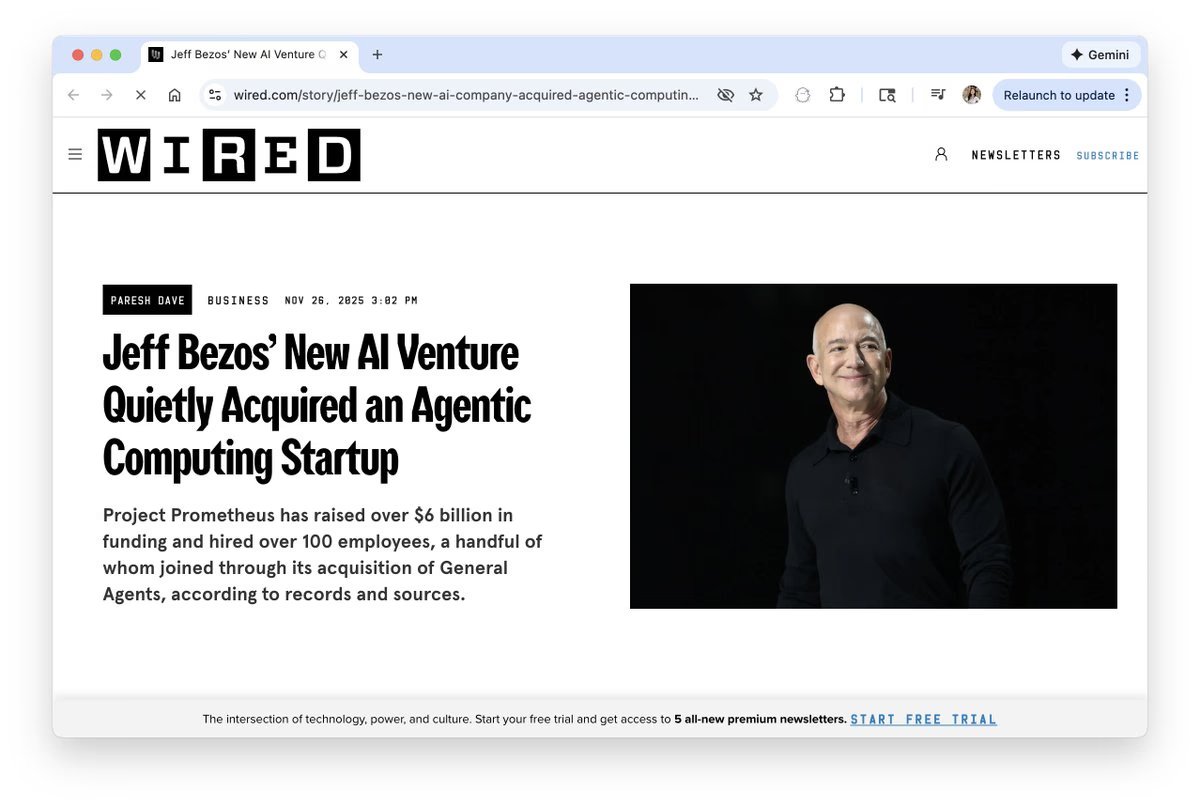
我写下那张支票时,只有 22 岁。我投了 5 万美元给一位朋友,他当时正在悄悄做一件很不寻常的事。人们常常以为,这意味着我一定是在 19 岁时有过疯狂的退出,或者家里很有钱。但事实上,我只是接触到了一个大多数人并不知道其存在的系统。

So if you're angel-curious, especially early in your career and without spare dollars lying around, here's how I got started.

所以,如果你对天使投资有兴趣,尤其是在职业早期、手头又没有闲钱的时候,下面就是我当初如何开始的。

There's a strong misconception that angel investing is about deploying capital.

很多人误以为,天使投资的核心是投入资本。

It is not. Today, we live in a capital-abundant era. In 2025 alone, over $160B was deployed globally into AI and what used to be a $500K pre-seed round is now $2M+. Founders aren't struggling to find money. They're struggling to decide which money is actually worth taking.

并不是。今天,我们生活在一个资本充裕的时代。仅 2025 年,全球投向 AI 的资金就超过 1600 亿美元。过去 50 万美元的 pre-seed 轮,现在已经变成了 200 万美元以上。创始人并不是找不到钱。他们真正纠结的是,到底哪一笔钱值得拿

My first exposure to angels wasn't as an investor. It was as a founder. When I was building my first startup at MIT, our first investment was a $10K check from James Chen, the CTO of Wonder. We eventually raised from two angels and three funds but it was the angels who actually taught us how to build (also shoutout Cory Levy).

我第一次接触天使投资人,并不是作为投资人,而是作为创始人。我在 MIT 做第一个创业项目时,我们拿到的第一笔投资,是 Wonder CTO James Chen 开出的一张 1 万美元支票。后来,我们又拿到了两位天使投资人和三家基金的投资,但真正教会我们如何建设公司的,是那些天使投资人(也感谢 Cory Levy)。

Angel investing is an opportunity for you to support specific teams in the AI (and non-AI) movement beyond the company you work at. It's a way to scale your own impact. The reality today is that early-stage angels can add more real value than venture funds. This is because operators (like yourself) have a lot of unique value, personal experience, and specific expertise to contribute.

天使投资,是让你在自己任职的公司之外,支持 AI(以及非 AI)浪潮中某些具体团队的机会。它是一种放大你自身影响力的方式。 今天的现实是,早期天使投资人能够提供的真实价值,可能比风险投资基金更多。 这是因为像你这样的从业者,往往拥有许多独特价值、个人经验和具体专长可以贡献。

But I have no money?

可是我没有钱?

Today, it is easier than ever to start angel investing, even if you are early in your career or don't have large amounts of excess personal capital.

今天,即使你还处在职业早期,或者没有大量个人闲置资本,也比以往任何时候都更容易开始做天使投资。

Many of my friends and I all started out as angel investors scouting for a VC firm. This is a safe, high-upside way to get started. You invest with a firm's dollars and get a cut of the return if the company you invest in IPOs or gets acquired. Most VC firms have scout programs, like BCV, a16z, Sequoia, Index, KP, etc. And the reality is that most VC firms, even if they don't have an official program, would be open to having scouts.

我身边许多朋友和我自己,最开始都是作为某家 VC 机构的 scout 开始做天使投资的。这是一种安全且上行空间很高的起步方式。你用机构的钱投资,如果你投的公司 IPO 或被收购,你可以获得一部分回报。大多数 VC 机构都有 scout program,比如 BCV、a16z、Sequoia、Index、KP 等。现实是,即便某些 VC 机构没有正式项目,它们通常也会愿意接受 scout。

How to get into a scout program

如何进入 scout program

These programs are largely informal, and the entry process is generally getting to know some of the partners. From my experience, you only need one partner to vouch for you and take you under their wing.

这些项目大多比较非正式,进入方式通常是先认识一些合伙人。根据我的经验,你只需要有一位合伙人为你背书,并愿意带你入门。

However, each fund has pretty different angel investing structures that you should think about. Certain companies give full autonomy, basically 'here's $X per year that you can allocate to whatever companies you'd like'. Other funds work you like an unpaid associate where you only have the power to bring open deals back to the partners who make all of the decisions. Personally, I prefer the former, and have an agreement like that with BCV.

不过, 每家基金的天使投资结构都很不一样,这一点需要认真考虑。有些公司会给你完整自主权,基本上就是,“这里每年有 X 美元,你可以投给任何你想投的公司。” 另一些基金则会把你当作无薪 associate 来用,你唯一能做的就是把开放中的交易带回给合伙人,而所有决定都由他们来做。就我个人而言,我更喜欢前一种模式,我和 BCV 的合作就是这种安排。

After figuring out your source of capital, your next objective is to learn how to invest wisely.

在弄清楚资本来源之后,你的下一个目标,是学会如何明智地投资。

How to become a GOOD angel investor.

如何成为一个优秀的天使投资人。

There are three main pillars for how I like to approach angel investing. Spoiler, I have no performative thesis.

我做天使投资时,主要遵循三根支柱。提前剧透一下,我没有任何表演式 thesis。

Pillar #1: Understand your value

支柱一:理解你的价值

Angel investing is not about money, it is about value.

天使投资的核心不是钱, 而是价值。

As an angel investor, your contribution is not the dollar amount you invest - it is the connections or knowledge that you bring to the table. Good founders are already oversubscribed.

作为天使投资人,你的贡献不在于你投了多少钱,而在于你能带来的连接或知识。优秀创始人的融资轮早就超额认购了。

Start by asking yourself this: Where would my contributions be most valuable?? This will help you filter what companies/domains you talk to, get your check into the round, and grow your own skills.

你可以先问自己这个问题:我的贡献在哪里最有价值??这会帮助你筛选该聊哪些公司和领域,帮助你把支票挤进那一轮融资,也会帮助你提升自己的能力。

There are many flavors to adding value. For example, if you're an absolute devil at GTM, then help the team with GTM. If you work at OpenAI, help a team get early access to models or features.

创造价值有很多种方式。 比如,如果你在 GTM 上特别强,那就帮助团队做 GTM。如果你在 OpenAI 工作,就帮团队获得模型或功能的早期访问权限。

If you do not think in this value-adding way, you will not get allocation and the only founders who will take your money are the ones you shouldn't be backing.

如果你不是以这种创造价值的方式思考,你就拿不到 allocation;而唯一愿意拿你钱的创始人,往往正是你不该支持的人。

Pillar #2: Pick a partner you trust

支柱二:选择一个你信任的合伙人

Your learning rate as an angel is determined entirely by who you're allowed to be wrong next to.

作为天使投资人,你的学习速度完全取决于你被允许在谁身边犯错。

Eons more important that what firm you scout for, is who you scout for. Someone who's own investment methodology you trust who you can call and say, 'hey, here's what I'm thinking about this RL company that I swear is different from all of the other RL companies, what do you think?'

比起你为哪家机构做 scout,重要得多的是你为做 scout。你需要的是一个你信任其投资方法论的人,你可以打电话给他说,“嘿,我最近在看这家 RL 公司,我发誓它和其他所有 RL 公司都不一样,你怎么看?”

You will learn more and make increasingly better decisions this way. At the end of the day, people care about what investments you made, not what firm you scouted for. Don't be vain.

这样你会学到更多,也会越来越能做出更好的判断。归根结底,人们在意的是你投过什么公司,而不是你为哪家机构做过 scout。不要虚荣。

Pillar #3: Best Friends or Michael Jordan

支柱三:最好的朋友,或者迈克尔·乔丹

There are only two kinds of founders you should angel invest in: your best friends or Michael Jordan. Anything else should be a no.

你应该做天使投资的创始人,只有两类:你最好的朋友,或者迈克尔·乔丹。除此之外,一律应该拒绝。

Either you know the founders so intimately that you can underwrite their judgment, resilience, and integrity through inevitable failure, or they are so objectively exceptional that their talent is undeniable even from the outside.

要么你对创始人了解得足够深入,能在不可避免的失败中判断他们的判断力、韧性和正直;要么他们客观上极其出色,出色到即便从外部看,也无法否认他们的才华。

As an angel, your bar for investment should be much higher than a standard VC. This is because VCs can afford things like portfolio dilution and long time horizons. They take many shots. You do not.

作为天使投资人,你的投资门槛应该远高于普通 VC。因为 VC 可以承受投资组合稀释和漫长周期这类事情。他们可以打很多枪。你不可以。

A concluding note

最后一点

Speaking of adding value, here are a few companies I've invested in recently both personally and as a scout. Each one is tackling an ambitious, non-obvious problem and hiring. If you're looking for something new, or just want to work on something that actually matters, I'd encourage you to check them out:

说到创造价值,下面是我最近以个人身份和 scout 身份投资过的几家公司。它们都在解决雄心勃勃且并不显而易见的问题,而且正在招聘。如果你正在寻找新的机会,或者只是想参与一些真正重要的事情,我建议你看看它们:

Applied Compute: is building specific intelligence, custom models and in-house agent workforces trained on a company's proprietary knowledge. The team was started by three brilliant ex-OpenAI researchers. Learn more at appliedcompute.com.

Applied Compute: 正在构建 specific intelligence、定制模型,以及基于公司专有知识训练的内部 agent workforce。团队由三位出色的前 OpenAI 研究员创立。可在 appliedcompute.com 了解更多。

General Agents (Now Project Prometheus): is an AI initiative led by Jeff Bezos focused on "physical AI" for manufacturing and engineering.

General Agents(现为 Project Prometheus): 是由杰夫·贝索斯领导的 AI 项目,专注于面向制造和工程的 “physical AI”。

General Intelligence Company: is building the infrastructure for the one-person billion-dollar company. They just announced their $8.7 Million seed round and are absolutely crushing it. Visit cofounder.co.

General Intelligence Company: 正在为一人十亿美元公司搭建基础设施。他们刚刚宣布完成 870 万美元种子轮融资,而且势头非常强。访问 cofounder.co。

Thanks for reading! If you have any other notes, feedback, or tips to contribute reach out on X @MilksandMatcha

感谢阅读!如果你有其他想法、反馈或建议,欢迎在 X 上联系我 @MilksandMatcha

authors note: I'd love to invest in a few more companies this year, let me know below what you're building if you think I can be helpful :) (reposting from my blog sarahchieng.com/angel)

A few months ago, Jeff Bezos acquired the first company I ever angel-invested in.

When I wrote that check, I was 22 years old. I gave $50K into a friend who was building something quietly extraordinary. People often assume that means I must've had an insane exit at 19 or family money, but I actually just had access to a system most people don't know exist.

So if you're angel-curious, especially early in your career and without spare dollars lying around, here's how I got started.

There's a strong misconception that angel investing is about deploying capital.

It is not. Today, we live in a capital-abundant era. In 2025 alone, over $160B was deployed globally into AI and what used to be a $500K pre-seed round is now $2M+. Founders aren't struggling to find money. They're struggling to decide which money is actually worth taking.

My first exposure to angels wasn't as an investor. It was as a founder. When I was building my first startup at MIT, our first investment was a $10K check from James Chen, the CTO of Wonder. We eventually raised from two angels and three funds but it was the angels who actually taught us how to build (also shoutout Cory Levy).

Angel investing is an opportunity for you to support specific teams in the AI (and non-AI) movement beyond the company you work at. It's a way to scale your own impact. The reality today is that early-stage angels can add more real value than venture funds. This is because operators (like yourself) have a lot of unique value, personal experience, and specific expertise to contribute.

But I have no money?

Today, it is easier than ever to start angel investing, even if you are early in your career or don't have large amounts of excess personal capital.

Many of my friends and I all started out as angel investors scouting for a VC firm. This is a safe, high-upside way to get started. You invest with a firm's dollars and get a cut of the return if the company you invest in IPOs or gets acquired. Most VC firms have scout programs, like BCV, a16z, Sequoia, Index, KP, etc. And the reality is that most VC firms, even if they don't have an official program, would be open to having scouts.

How to get into a scout program

These programs are largely informal, and the entry process is generally getting to know some of the partners. From my experience, you only need one partner to vouch for you and take you under their wing.

However, each fund has pretty different angel investing structures that you should think about. Certain companies give full autonomy, basically 'here's $X per year that you can allocate to whatever companies you'd like'. Other funds work you like an unpaid associate where you only have the power to bring open deals back to the partners who make all of the decisions. Personally, I prefer the former, and have an agreement like that with BCV.

After figuring out your source of capital, your next objective is to learn how to invest wisely.

How to become a GOOD angel investor.

There are three main pillars for how I like to approach angel investing. Spoiler, I have no performative thesis.

Pillar #1: Understand your value

Angel investing is not about money, it is about value.

As an angel investor, your contribution is not the dollar amount you invest - it is the connections or knowledge that you bring to the table. Good founders are already oversubscribed.

Start by asking yourself this: Where would my contributions be most valuable?? This will help you filter what companies/domains you talk to, get your check into the round, and grow your own skills.

There are many flavors to adding value. For example, if you're an absolute devil at GTM, then help the team with GTM. If you work at OpenAI, help a team get early access to models or features.

If you do not think in this value-adding way, you will not get allocation and the only founders who will take your money are the ones you shouldn't be backing.

Pillar #2: Pick a partner you trust

Your learning rate as an angel is determined entirely by who you're allowed to be wrong next to.

Eons more important that what firm you scout for, is who you scout for. Someone who's own investment methodology you trust who you can call and say, 'hey, here's what I'm thinking about this RL company that I swear is different from all of the other RL companies, what do you think?'

You will learn more and make increasingly better decisions this way. At the end of the day, people care about what investments you made, not what firm you scouted for. Don't be vain.

Pillar #3: Best Friends or Michael Jordan

There are only two kinds of founders you should angel invest in: your best friends or Michael Jordan. Anything else should be a no.

Either you know the founders so intimately that you can underwrite their judgment, resilience, and integrity through inevitable failure, or they are so objectively exceptional that their talent is undeniable even from the outside.

As an angel, your bar for investment should be much higher than a standard VC. This is because VCs can afford things like portfolio dilution and long time horizons. They take many shots. You do not.

A concluding note

Speaking of adding value, here are a few companies I've invested in recently both personally and as a scout. Each one is tackling an ambitious, non-obvious problem and hiring. If you're looking for something new, or just want to work on something that actually matters, I'd encourage you to check them out:

Applied Compute: is building specific intelligence, custom models and in-house agent workforces trained on a company's proprietary knowledge. The team was started by three brilliant ex-OpenAI researchers. Learn more at appliedcompute.com.

General Agents (Now Project Prometheus): is an AI initiative led by Jeff Bezos focused on "physical AI" for manufacturing and engineering.

General Intelligence Company: is building the infrastructure for the one-person billion-dollar company. They just announced their $8.7 Million seed round and are absolutely crushing it. Visit cofounder.co.

Thanks for reading! If you have any other notes, feedback, or tips to contribute reach out on X @MilksandMatcha

📋 讨论归档

讨论进行中…