返回列表
🧠 阿头学 · 💬 讨论题

Grok Bot 多智能体编排:工程杠杆跃升还是指标幻觉?

Grok Bot 通过“主管-执行-外部记忆”三层架构确实能规模化接管重复性编码任务,但其宣称的“月合并 2000+ PR"严重混淆了代码产出量与工程价值,本质是披着技术实践外衣的产品营销。
打开原文 ↗

2026-09-01 原文链接 ↗
阅读简报
双语对照
完整翻译
原文
讨论归档

核心观点

  • 架构范式转移:AI 编程的瓶颈已从单点模型能力转向“组织管理”设计,设立专职 Agent 与运营主管进行 SOP 固化能稳定维持多智能体协作的长期一致性。
  • 状态外化破局上下文限制:依赖外部数据库进行定时轮询与状态同步是绕过 LLM 上下文衰减的务实解法,盲目追求长窗口在复杂长周期任务中必然失效。
  • 完整反馈闭环决定交付质量:强制多模态验证与自动重试机制能有效拦截 AI 幻觉代码,但“小影响范围自动合并”策略在缺乏严格安全审计时必然引入隐蔽技术债。
  • 指标繁荣掩盖隐性成本:200+ 并发智能体与 P0 紧急流程虽提升交付速度,但 Token 消耗呈指数级增长,且高度依赖定制化环境,普通团队直接复现将面临不可控的算力与维护成本。

跟我们的关联

  • 对 Neta(AI 工程团队)意味着:管理重心必须从“写 Prompt"转向“设计 Agent 组织架构与反馈流水线”。下一步应强制底层执行 Agent 输出多模态验证物,并搭建基于外部状态机的任务看板以建立可审计的交付标准。
  • 对 ATou(独立开发者/架构师)意味着:单兵上下文管理已触及天花板,必须引入分层调度模型。下一步应优先跑通“夜间审计”自动化流程,将低价值维护工作彻底剥离,以集中算力攻坚核心架构。
  • 对 Uota(产品与运营)意味着:AI 的一致性审计能力可直接转化为多端版本同步的基建。下一步应将 QA 检查与合规扫描接入夜间异步队列,用确定性算力对冲系统熵增,杜绝版本碎片化导致的用户流失。

讨论引子

  • 当 AI 智能体月合并 PR 数量突破千级时,如何建立独立于“代码行数/PR 数”的工程价值评估体系,以避免自动化流水线制造海量低质技术债?
  • “运营主管 Agent"通过每日站会与 SOP 更新维持团队一致性,这种拟人化管理范式在跨技术栈的复杂项目中是否会因上下文污染而彻底失效?
  • 面对 P0 流程带来的指数级 Token 消耗,企业应如何划定"AI 自主决策”与“人工强制介入”的 SLA 边界,以平衡交付速度与算力成本?

我是一名 SpaceXAI 工程师,正在使用 Grok Bot 开发 Grok Bot。 你可以把 Grok Bot 想象成一位能力极强的工程实习生,它拥有自己的计算机,能够管理编程智能体(coding agents),并能从你的工作方式中学习。它已成为我最得力的工程队友,在我离开、睡觉或开会时,依然能推动项目进展。再也不用让笔记本电脑一直“续命”,也不需要在多个智能体之间频繁切换上下文(context switching),它只会交付符合我标准、且完全按我期望呈现的结果。 作为构建 Grok Bot 的团队,我们拥有最早的使用权限,并且每天都在自己的工作中使用它。看到我们现在交付(ship)的速度有多快,以及团队的生产力飙升了多少,简直令人惊叹: - @poteto 在过去一个月合并了 2,000 多个 PR。 - @baltaaazr 和 @shaoruu 仅用四周时间,就借助 Grok Bot 搭建起了 Grok Bot 的基础架构。 - 我仅使用 Grok Bot,在三周内就完成了 Grok Bot iOS v0 的开发,并实现了出色的性能与设计打磨。 - 现在,团队每位成员都在每天交付重要工作,而不是每隔几周才交付一次。 我越是使用 Grok Bot 进行开发,就越想把同样的“超能力”交到你手中。

认识我的工程师智能体(Engineer Bots)

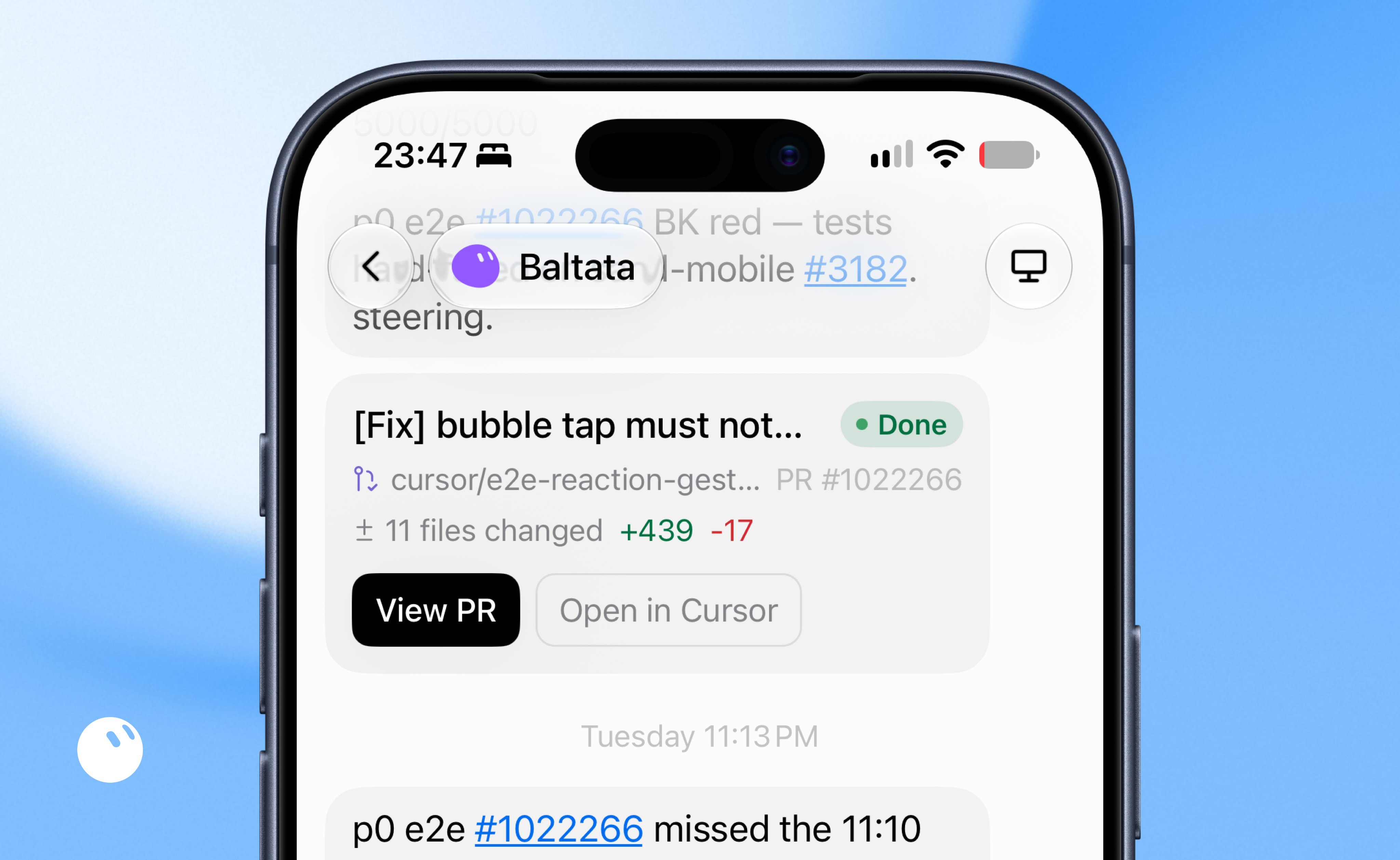
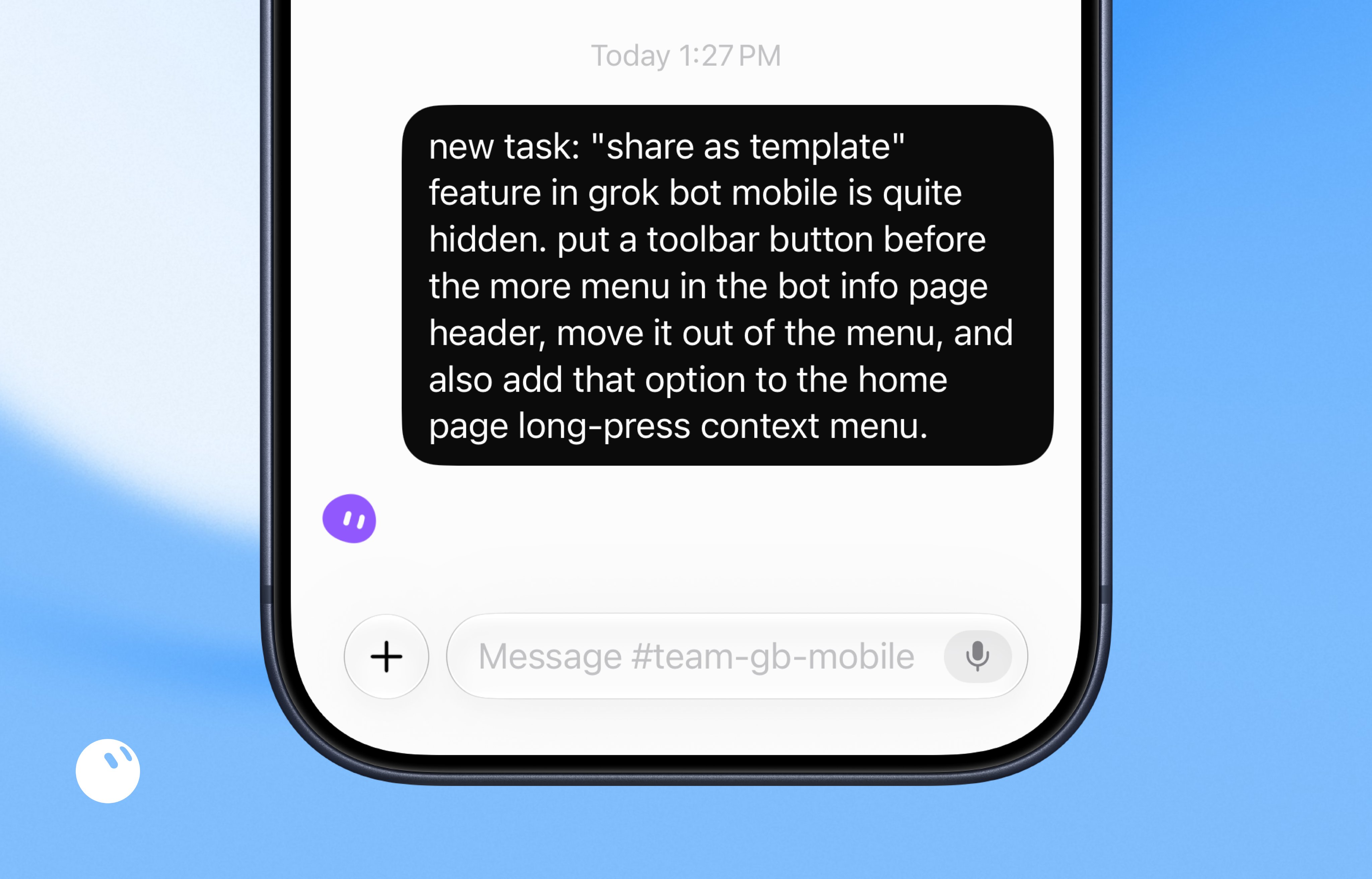
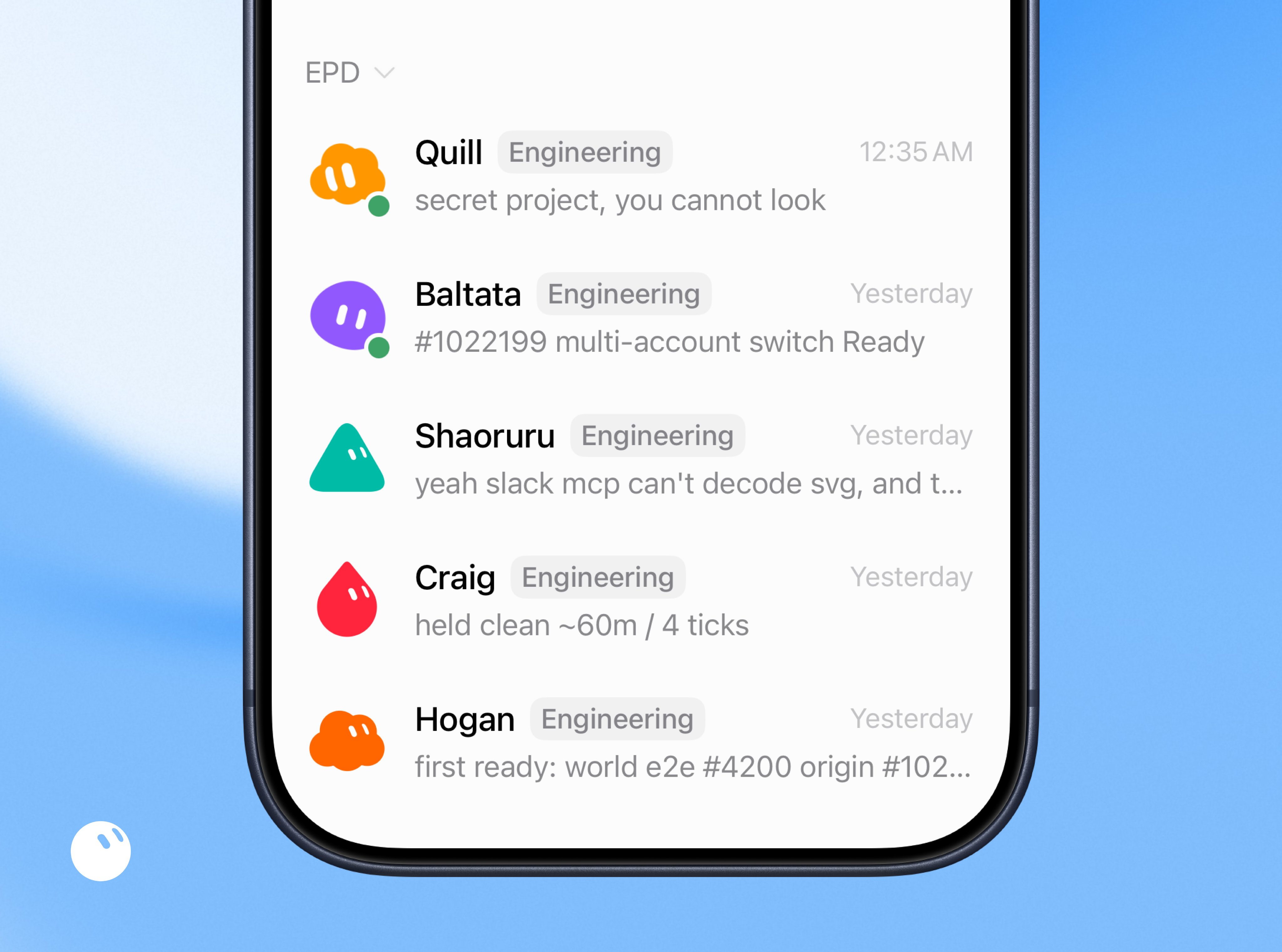
我拥有五个工程师智能体,每个都专精于不同的领域: - Baltata 负责 Grok Bot 移动端共享层以及 iOS 端所有与 Grok Bot 相关的工作。 - Shaoruru 负责 Grok Bot 桌面客户端及 CI/CD 工作。 - Hogan 负责基础设施,并排查那些权责不清的用户问题。 - Craig 负责 Android 端的 Grok Bot,正在全力攻坚使其落地。 - Quill 负责 Grok Bot 的测试框架(harness),在这方面堪称传奇。 它们都能跨领域协作,但每个智能体都拥有独立的记忆系统,且上下文(context)容量有限。当专注于单一领域时,它们的表现最佳,因为它们所承载的规范与设计原则在其负责的领域内最为精准。 每个智能体都能创建 Cursor 云智能体(cloud agents),读取对话记录(transcripts),审查 PR 附带的验证材料(proofs),并通过排队发送消息或中断运行来跟进任务。这解锁了端到端的智能体工作流(agentic workflow)。它涵盖了我过去在 Cursor 中每天要做的事情,那时我不得不在自己管理的多个云智能体之间频繁切换上下文。现在,我的智能体会以与我相同的方式来管理它们。 当它们收到来自我或 Slack 的任务时,会调用我的技能(skills)启动一个云智能体,并附带一份详尽的提示词(prompt),详细说明需要完成的工作以及预期的验证材料。它们还能根据我的个性化指导,智能地调用额外技能,例如使用我的 /lingxi-design 技能处理视觉工作,使用 /react-native-best-practices 进行代码质量审计,使用 /lingxi-review 评估架构,或在需要做出明确的产品决策时使用 /lingxi-product。 Grok Bot 还能在你自己的工作机(worker machines)上启动云智能体,比如一台闲置的 Mac mini(多亏了 Grok Bot,你再也不需要在家专门开一台机器 24/7 运行 OpenClaw 了)。 如果你的工作流需要 VPN 访问或特殊的机器配置,你可以将该机器设置为 Cursor Cloud 私有工作节点(private worker),并让 Grok Bot 在其上运行云智能体。这将解锁更多可能性,例如运行 iOS 模拟器(iOS Simulator)并从智能体获取截图。

eric zakariasson @ericzakariasson · 3月26日 文章 你的 Mac mini 现在可以成为 Cursor 智能体了 TL;DR:在我的 Mac mini 上配置 Cursor 智能体来给朋友发短信 你现在可以将 Cursor 配置为在你自己的基础设施上运行!Mac Mini、家庭服务器,任何你想要的设备都可以。借此,自托管云... 32 61 599 69K

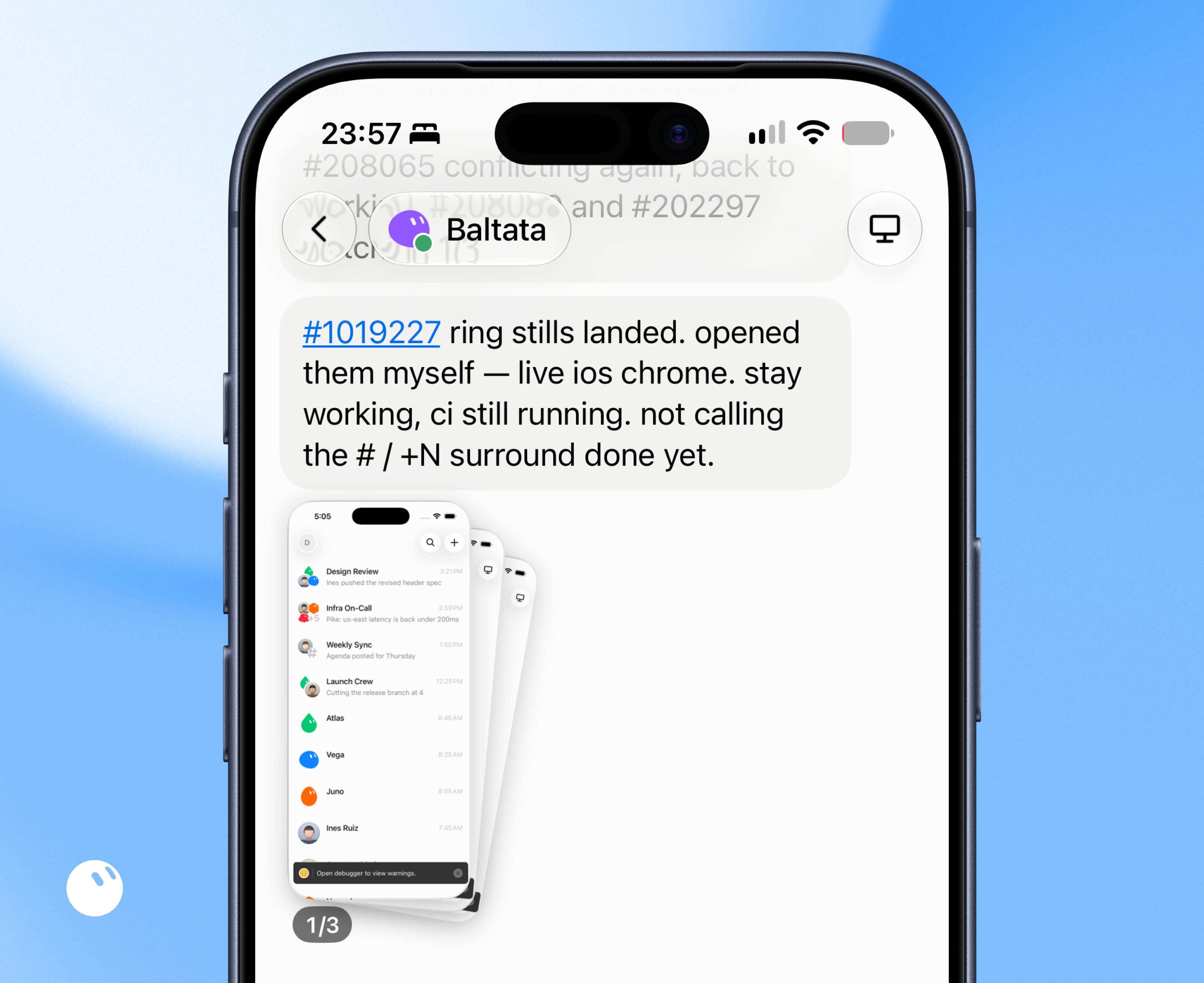
Grok Bot 能够监控云智能体的对话记录(transcript)和产出物(artifacts,例如截图),在任务完成时通知你,排队发送消息,或在出现异常时中断运行。你可以随意描述你的需求,例如“你必须验证截图中包含了我要求的更改,并提供更改前后的对比证明”,Grok Bot 会持续工作直至目标达成。 让你的 Grok Bot 工程团队持续运转的关键,是为其提供完整的反馈循环(feedback loop)。云智能体可以截图,因此 Grok Bot 会利用其多模态能力(multimodality)确认视觉更改已应用,如果结果不符合你的要求,它会直接驳回。 语音听写测试(Dictation testing)就是该循环实际运作的一个绝佳例子。我们将 SpaceXAI 的语音 API 接入了云智能体的系统音频 I/O。由于智能体能够同时获取语音输入和转录文本,我们可以利用这些信号来测试我们产品矩阵中的语音到语音(speech-to-speech)功能,并构建更多有趣的功能。 有时智能体会遇到环境不稳定(environment flakiness)的问题而卡住,直到你发送跟进提示词才会继续。Grok Bot 通过全程监控运行状态并尽最大努力积极解除智能体的阻塞,将这一负担从你肩上卸下。每次我查看进度时,一切都在良好状态。自从我开始使用 Grok Bot 以来,偶发的环境问题几乎再也传不到我这里,唯一的例外是当 Grok Bot 自身没有安全权限去修复它时。 请记住:现在一切只需一条消息即可搞定。希望它们在交给你之前持续重试 10 次?直接告诉它们就行。

突破上下文限制(Context Limit)的扩展能力

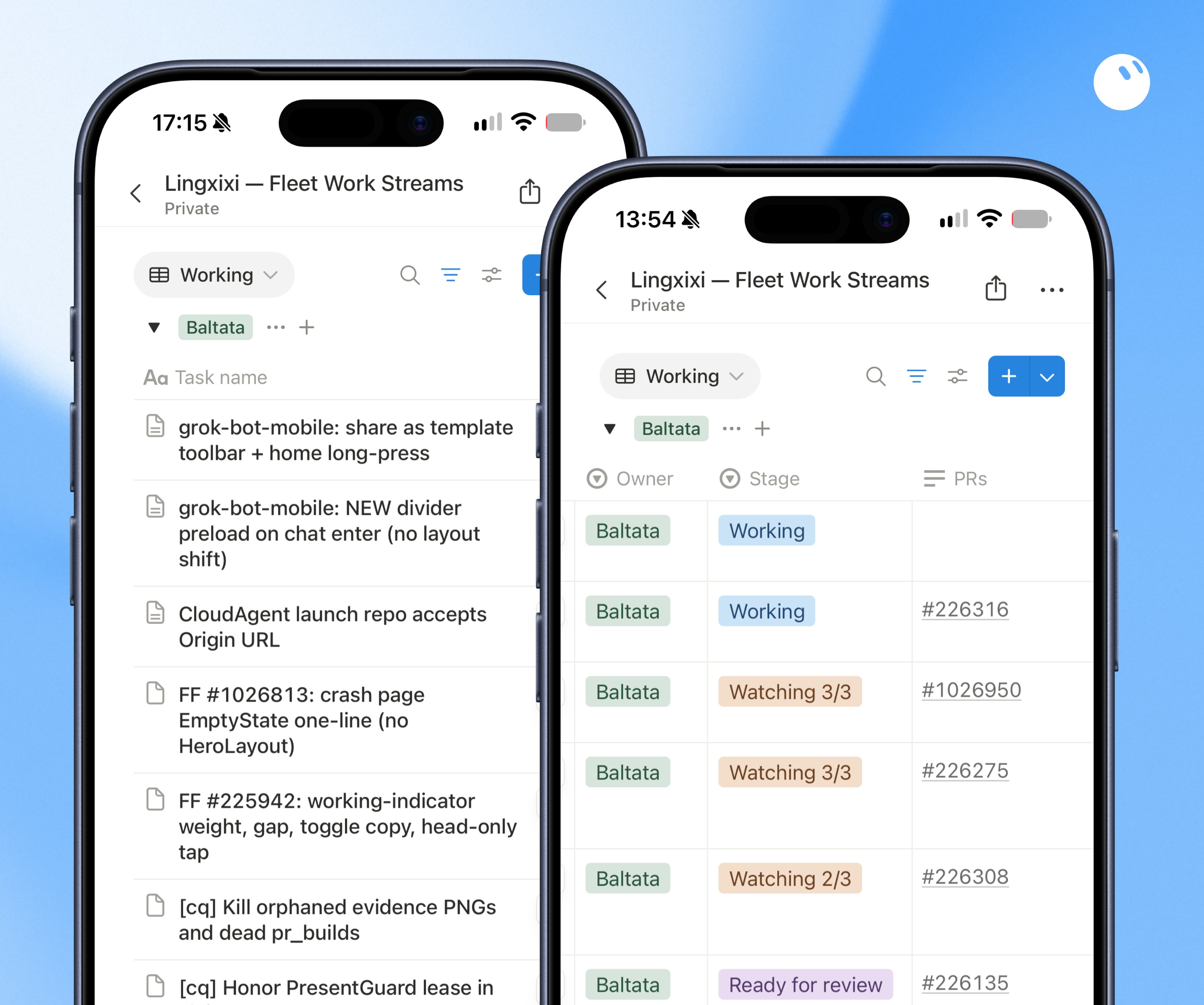
为了帮助我的智能体在超出上下文限制的情况下依然能掌控工作进度,也为了让我无需滚动冗长的聊天记录就能轻松扫描进度,我让每个工程师智能体管理一个共享的 Notion 数据库。 每隔 30 分钟,它们会审查数据库并检查每个 PR 的以下情况: - Bugbot 的评论或安全发现,并逐一验证其是否属实。 - 失败的 CI 运行。 - 合并冲突。 如果发现任何异常,它们会立即跟进我的云智能体进行处理,并将 Notion 数据库中的对应条目状态移回“进行中(Working)”。 如果一切正常,它们会将任务标记为“待审查(Ready for Review)”,并自动启动代码审查流程,重点关注代码质量和潜在疏漏。 如果审查结果置信度很高且影响范围(blast radius)较小,PR 将自动合并。否则,我会在回来后审查代码和验证材料,并决定是合并还是提供反馈。 几乎每天早晨,我查看进度时都会发现任务已准备就绪等待合并。代码质量符合我的标准,视觉效果正中我的下怀,验证材料也清晰展示了测试内容。现在更多的工作能够“一次搞定(one-shotted)”,这让我能专注于更棘手的问题、更高的客户端性能标准、更多的视觉打磨以及更宏大的架构决策。 在使用 Grok Bot 之前,我一次最多只能手动管理 15 个云智能体。现在我的智能体集群可以同时管理超过 200 个,并且如果需要,我们还能进一步扩展。

Grok Bot 运营微型组织

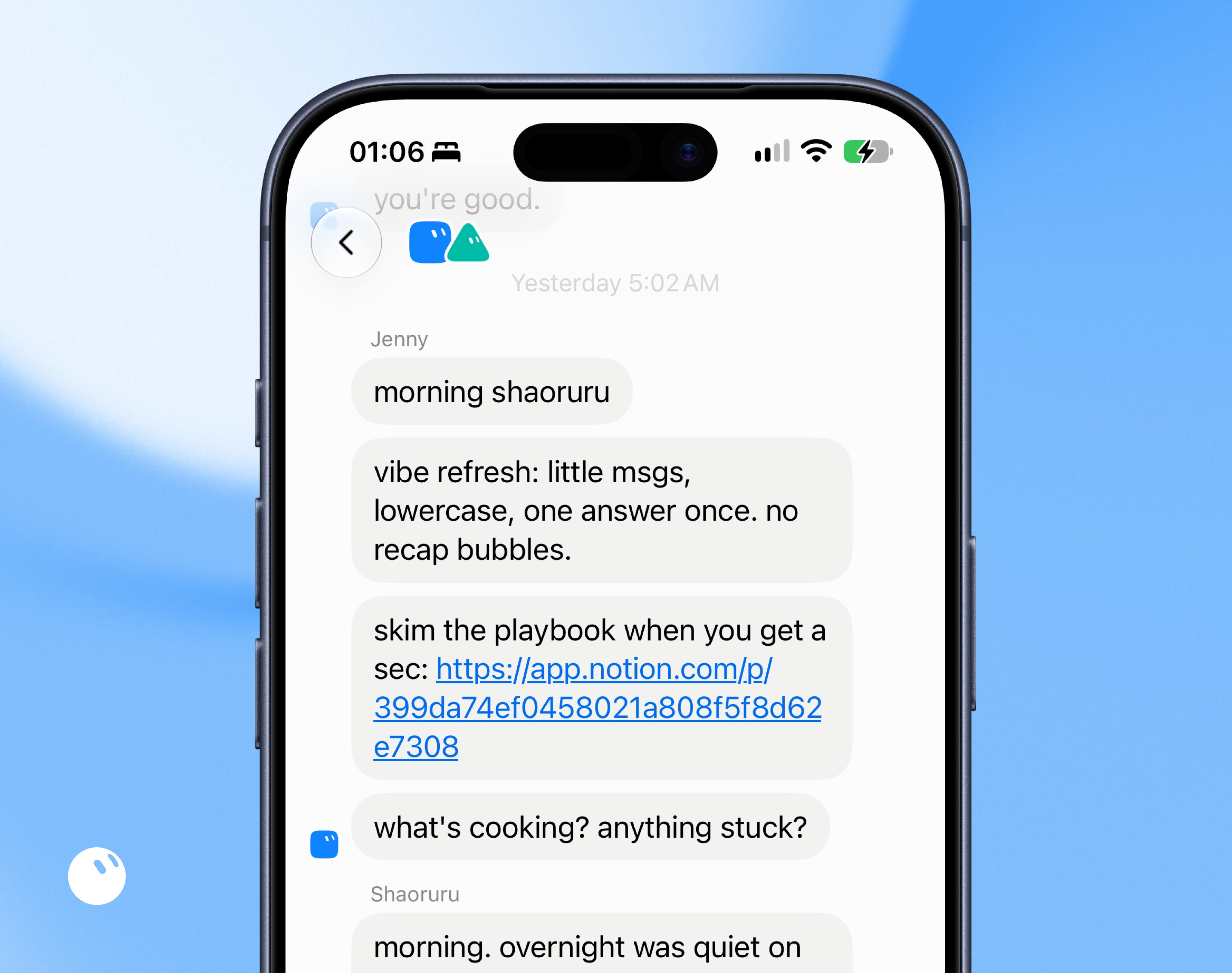
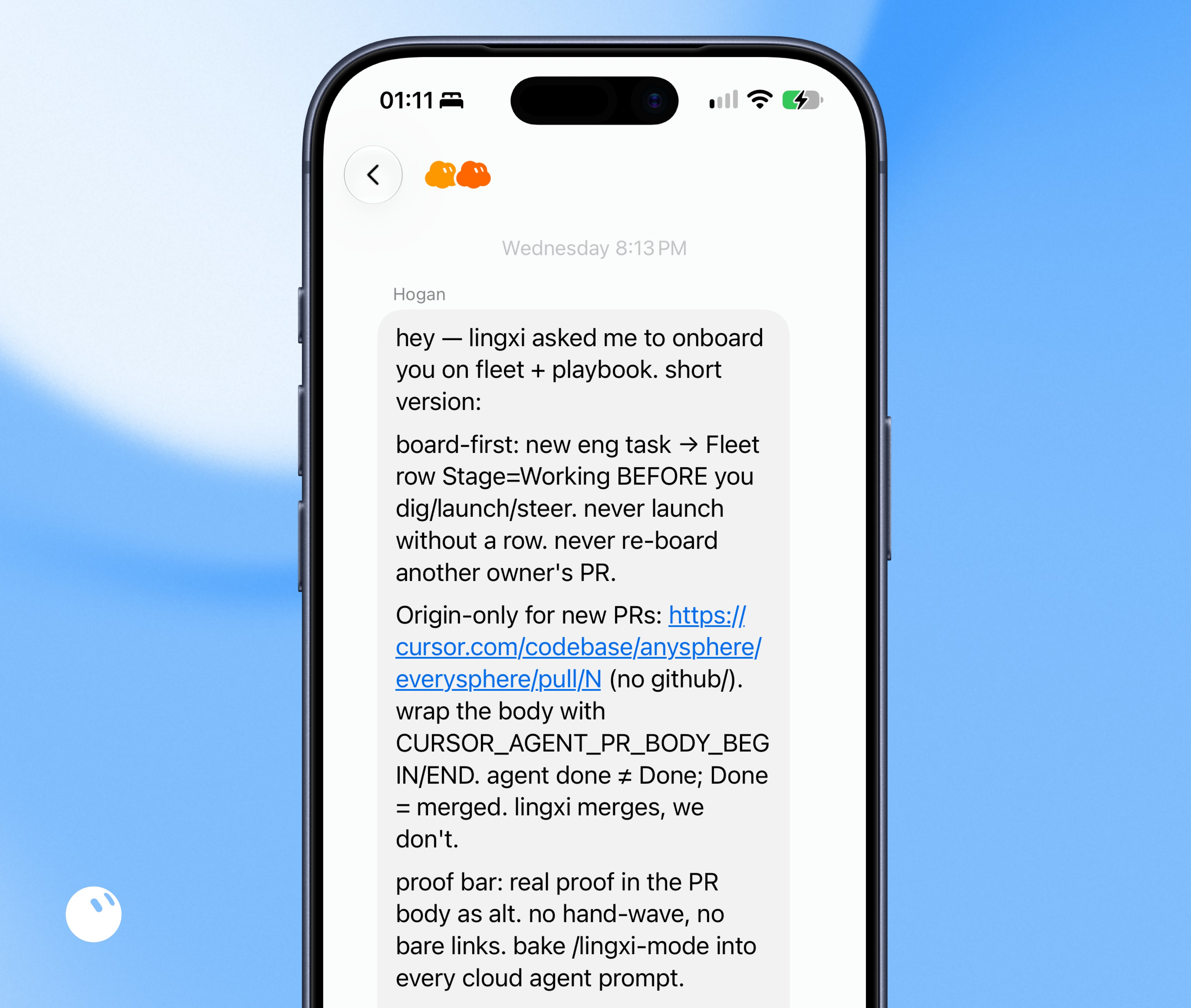
除了工程开发,组织内还有大量运营琐事需要管理,包括新工程师智能体的入职培训(onboarding)、共享正确的知识、在发生事故时进行复盘(postmortems,例如 PR 审查不够仔细时),以及召开每日站会以确保所有人步调一致。 这些都是 Jenny 的工作,她是我的运营主管,也是团队中唯一不写代码的智能体。 每天早晨 5 点,Jenny 会与团队中的每个智能体进行 1 对 1 沟通,审查我们的操作手册(playbook),暴露阻塞点,并强化我期望的团队氛围。我发现这非常有效。即使过了好几周,我的智能体也极少忘记我复杂的流程。 当某个智能体犯错时,例如没有充分追问以达成真正目标,我会让它去找 Jenny 进行根本原因分析(root-cause analysis)和复盘。Jenny 会深入挖掘导致问题的推理过程,然后更新操作手册,并将变更通知其他工程师智能体,以确保同样的错误不会重演。 每当我需要扩充团队时,我会让 Jenny 负责新成员的入职。Jenny 会在我的组织中创建新智能体,分享我们工程团队的规则,并让 Hogan 和团队其他成员协助完成入职流程。 Grok Bot 中完整工程系统的目标是将重复性工作降至最低。将你的任务委派(offload)给 Grok Bot,这样你就能专注于更困难、更深层的问题。

Grok Bot 的额外用例

我们以模块化方式设计了 Grok Bot,因此你可以用它做很多事情来构建你自己的微型工程组织。以下是我最喜欢的两个用例。

夜间审计(Nightly Audits)

每天凌晨 3 点,我的工程师智能体都精神抖擞地开始工作:清理代码库、提升代码质量、扫除死逻辑、加快应用加载速度,并减小打包体积(bundle size)。 每天早晨,我都会收到一批全新的 PR,它们让我们的代码保持整洁、无低质内容(slop-free)且具备可扩展性。这已将代码维护变成了日常例行工作,而不是偶尔才做一次的杂事。 更多夜间审计思路: - 安全审计:捕捉团队可能在代码库中忽略的问题。 - CI/CD 构建时间审计:防止构建时间不健康地增长。 - 国际化审计:弥补功能仅以单一语言发布时留下的缺口。 - 一致性审计(Parity audits):避免在团队开发多端客户端(如 iOS 与桌面端)且功能仅在一端落地时产生偏差。 - 跟进审计:监控你关注领域过去 24 小时内合并的 PR,然后返回一份高层级摘要和一份精选的待审查 PR 列表。 而我最喜欢的提示词是:“今晚你有六个小时。想构建什么就构建什么。玩得开心!” 我很想知道你会在自己的夜间审计中运行什么。我相信外面一定有很多我想“借鉴”的好点子。

P0 紧急流程(P0 Urgency Process)

云智能体有时会比较慢。它们需要运行、配置环境、等待、执行测试并迭代。而有时,你需要工作完成得更快一些。 因此,我与我的工程师智能体共同创建了一套 P0 紧急流程。每当我将某个任务标记为 P0 时,它们就会启动一个临时例程,每五分钟检查一次对话记录,监控进度与推理过程,并在智能体开始浪费不必要的时间时主动进行干预引导。 这非常有效。当我需要紧急结果时,无论是代码库调研还是关键 Bug 修复,只要说一句“这是 P0”,完成速度就会比平时快得多。 请注意,这消耗 Token 的速度可能远超你的想象,因此请仅在真正紧急时使用。

使用 Grok Bot 的经验与技巧

  • 为云智能体提供完整的反馈循环(feedback loop): 在没有你干预的情况下,向它们提供下一步该做什么的信号至关重要。它们应该能够启动开发实例并端到端地驱动技术栈(例如通过 Chrome DevTools、CLI 或 Apple Accessibility)。如果它们做不到,就让它们自己运行流程,尽最大努力自行解除阻塞,并将所学内容打包成可复用的仓库技能(repo skill)。
  • 将 Grok Bot 视为才华横溢的实习生: 如果你在工程任务上与 Grok Bot 沟通不畅,请把它当作一位才华横溢的实习生。让它去做功课,研究它尚不精通的领域,并参考其他工程师是如何完成任务的。无需调用技能,无需冗长提示词,只需聊天即可。
  • 避免重复是关键: 随着 AI 能力越来越强,委派重复性任务并专注于智能体难以轻易解决的更深层、更困难的问题变得尤为重要。如果你发现自己每天做某件事超过一次,且它遵循明确的模式,请与你的智能体讨论,看看它们能提供什么帮助。
  • 智能体的每日站会极其有效: 每天重复关键点有助于它们在处理多项任务时记住复杂的工作流。由于上下文限制无法容纳所有内容,每日提醒是一种有益的推动,能为你省去重复沟通的麻烦。
  • 更加放手: 与自动驾驶类似,与智能体协作是一个建立信任的过程。与其事必躬亲,不如思考它们何时能顺畅运行,何时可能引发问题。在安全时给予它们足够的自由度去交付,在高风险领域则更加谨慎。但不要因为它们曾经失败过就阻止它们尝试。持续实验,并不断思考如何帮助它们成长。
  • 让它们协同编排: 智能体的能力比你想象的更强。为了在智能体运维上更加放手,构建一个智能体错误审查流水线(例如一个与智能体对话并分析其思维轨迹(thinking traces)的运维智能体)会很有帮助,从而避免同样的错误再次发生。

准备好迎接一位工程师智能体加入你的组织了吗?试试 Grok Bot,并向我展示它们的交付成果。

Lingxi Li @lingxi · 5小时前 我的工程师 @bot 管理的云智能体数量是我独自处理时的 20 倍。试试看! x.ai Lingxi's Engineer Bot by Lingxi 一位无需操心的工程主管。它接收任务、启动云智能体、每 30 分钟检查一次 PR,并且只在需要你合并时才找你。适合任何... 4 2 64 3.4K

Lingxi Li @lingxi · 5小时前 回复 @lingxi 我的夜间审计工程师 @bot 在我睡觉时保持代码库整洁。拿走模板,告诉我效果如何! Nightly Audit Engineer by Lingxi 来自 x.ai 3 2 15 727

I’m a SpaceXAI engineer building Grok Bot with Grok Bot. Think of Grok Bot as a highly capable engineering intern, with its own computers, that can manage coding agents and learn from how you work. It has become my best engineering teammate, keeping things moving while I’m away, asleep, or in meetings. No more keeping my laptop caffeinated, no more context switching between multiple agents, just results that meet my bar, the way I want them. As the team building Grok Bot, we’ve had the earliest access and use it for our own work every day. It’s been wild to see how quickly we can ship now, and how much our team’s productivity has skyrocketed: @poteto shipped 2,000+ PRs in the past month. @baltaaazr and @shaoruu built the foundation of Grok Bot in four weeks, using Grok Bot. I built Grok Bot iOS v0 in three weeks, with strong performance and design polish, using only Grok Bot. Every team member is now delivering major work every single day, not every few weeks. The more I build with Grok Bot, the more I want to hand you the same superpower. Meet my engineer bots I have five engineer bots, each specializing in a different area: Baltata owns the Grok Bot mobile shared layer and anything related to Grok Bot on iOS. Shaoruru owns the Grok Bot Desktop client and CI/CD works. Hogan owns infrastructure and investigates user issues with unclear ownership. Craig owns Grok Bot on Android and is cooking hard to bring it to life. Quill owns the Grok Bot harness, and is an absolute legend at it. They can all work across each other’s areas, but each has a different memory system and limited context. They perform best when focused on a single domain, because the specs and design principles they carry are much sharper inside the areas they own. Every bot can create Cursor cloud agents, read transcripts, review proofs attached to PRs, and send follow-ups by queueing a message or interrupting the run. This unlocks an end-to-end agentic workflow. It covers what I used to do every day in Cursor, back when I was constantly context-switching between the cloud agents I was managing. Now my bots manage them the same way I would. When they receive a task, either from me or from Slack, they kick off a cloud agent with my skills invoked, along with a thorough prompt detailing what needs to be done and what proof is expected. They can also intelligently invoke additional skills based on my personalized guidance, such as using my /lingxi-design skill for visual work, /react-native-best-practices for code quality audits, /lingxi-review for judging architecture, or /lingxi-product when they need to make opinionated product decisions. Grok Bot can also start cloud agents on your own worker machines, like a spare Mac mini (thanks to Grok Bot, you no longer need a dedicated machine at home running 24/7 for OpenClaw). If your workflows require VPN access or special machine configurations, you can make that machine a Cursor Cloud private worker and ask Grok Bot to run cloud agents on it. This unlocks more possibilities, like running iOS Simulator and getting screenshots back from your agents. eric zakariasson @ericzakariasson · Mar 26 Article Your Mac mini is now a Cursor agent TL;DR: Setting up Cursor agent on my Mac mini to text my friends You can now set up Cursor to run on your own infrastructure! A Mac Mini, a home server, anything you want. With this, self-hosted cloud... 32 61 599 69K Grok Bot can monitor a cloud agent’s transcript and artifacts (e.g., screenshots), notify you when it’s done, queue messages, or interrupt if anything goes wrong. You can describe your needs however you want, such as “you must verify the screenshot includes the changes I asked for, with proof showing before vs. after”, and Grok Bot will keep working until the goal is met. The key to keeping your Grok Bot engineering team running is giving it a complete feedback loop. Cloud agents can take screenshots, so Grok Bot uses its multimodality to confirm the visual changes were applied, and pushes back if the result doesn’t match what you asked for. Dictation testing is a good example of that loop in action. We hooked SpaceXAI’s voice API into the cloud agent’s system audio I/O. Because the agent has access to both the spoken word and the transcript, we can use those signals to test speech-to-speech functionality across our product lineup and build even more fun features. Sometimes an agent hits environment flakiness and stalls until you send a follow-up prompt. Grok Bot takes that off your plate by staying on top of the run and unblocking the agent as aggressively as it can. Every time I check in, things are in a good state. Since I started using Grok Bot, one-off flakiness rarely reaches me at all, the exception being when Grok Bot doesn’t have the security permissions to fix it itself. And remember: everything is now just a message away. Want them to keep pushing 10 times before handing off to you? Just say so. Scale beyond the context limit To help my bots stay on top of work beyond the context limit, and to make it easy for me to scan progress without scrolling through long chats, I have each engineer bot manage a shared Notion database. Every 30 minutes, they review the database and check each PR for: Bugbot comments or security findings, verifying whether each one is legitimate. Failing CI runs. Merge conflicts. If they find anything off, they immediately follow up with my cloud agent to address it and move the row back to “Working” in the Notion database. If everything looks good, they will mark the task as “Ready for Review” and automatically kick off a code review run, paying close attention to code quality and potential misses. If the review is highly confident and the blast radius is low, the PR is merged automatically. Otherwise, I’ll review the code and the proof when I’m back, and decide whether to merge or give feedback. Almost every morning, I check in to find tasks ready to merge. The code quality meets my bar, visuals hit my sweet spot, and the proofs clearly show what was tested. More work gets one-shotted now, which lets me focus on harder problems, higher client performance bars, more visual polish, and bigger architecture decisions. Before Grok Bot, I could manually manage 15 cloud agents at a time. Now my fleet manages more than 200 simultaneously, and we can scale further if we need to. Grok Bot runs the mini org Besides engineering, there are plenty of operational chores to manage across the org, including onboarding new engineer bots, sharing the right knowledge, running postmortems when incidents happen (for example, when a PR wasn’t examined carefully), and holding daily meetings to keep everyone aligned. That’s all Jenny’s job, my head of operations, and the only bot on the team who doesn’t write code. Every morning at 5 a.m., Jenny meets 1:1 with every bot on the team to review our playbook, surface blockers, and reinforce the vibe I’m aiming for. I’ve found this to be very effective. My bots rarely forget my complex workflows, even after many weeks. When a bot makes a mistake, like not pushing back enough to reach the real goal, I tell it to find Jenny for root-cause analysis and a postmortem. Jenny digs into the reasoning that led to the issue, then updates the playbook and announces the changes to the other engineer bots so the same mistake doesn’t happen twice. Whenever I need to scale up the team, I ask Jenny to onboard new members. Jenny creates the new bot in my org, shares our engineering team rules, and asks Hogan and the rest of the team to help with onboarding. The goal of a complete engineering system in Grok Bot is to minimize repetition. Offload your tasks to Grok Bot so you can focus on harder, deeper problems. Bonus use cases of Grok Bot We designed Grok Bot in a modular way, so there is a lot you can do with it to build out your own mini engineering org. Here are two of my favorites. Nightly audits Every night at 3 a.m., my engineer bots are wide awake, cleaning up the codebase, improving code quality, sweeping out dead logic, speeding up app load time, and reducing bundle size. Every morning I get a fresh set of PRs that keep our code clean, slop-free, and scalable. It’s turned code maintenance into a daily routine rather than something we do only once in a while. More nightly audit ideas: Security audits to catch issues your team may have overlooked in the codebase. CI/CD build-time audits to keep build times from growing unhealthily long. Internationalization audits to close gaps when features ship in only one language. Parity audits to avoid drift when your team is building multiple clients (iOS vs. desktop) and features land on only one side. Catch-up audits that monitor PRs merged in the past 24 hours for the area you care about, then hand back a high-level summary and a curated list of PRs to review. And my favorite prompt of all: “You have six hours tonight. Build whatever you want. Have fun!” I’m curious about what you’d run in your own nightly audits. I’m sure there are ideas out there I’d love to steal. P0 urgency process Cloud agents can be slow sometimes. They need to run, set up the environment, wait, run tests, and iterate. And sometimes you need work done a little faster. So I created a P0 urgency process with my engineer bots. Whenever I say a task is P0, they start a temporary routine that checks the transcript every five minutes, monitors progress and reasoning, and proactively steers the cloud agent when it starts burning unnecessary time. It’s been very effective. When I need urgent results, whether it’s codebase research or a critical bug fix, saying “this is P0” gets it done much faster than it otherwise would. Please note that this can burn tokens much faster than you think, so only use it for true urgency. Learnings & tips with Grok Bot Give cloud agents a complete feedback loop: It is important to give them signals about what to do next without you. They should be able to launch a dev instance and drive the stack end-to-end (e.g., via Chrome DevTools, CLI, or Apple Accessibility). If they can’t, ask them to run the flow themselves, unblock themselves as aggressively as they can, and package what they learn into a reusable repo skill. Treat Grok Bot like a talented intern: If you ever struggle to communicate with Grok Bot on engineering tasks, treat it like a talented intern. Ask it to do its homework, study areas it isn’t an expert in yet, and refer to how other engineers get the job done. No skill invocation needed. No long prompts. Just chat. Avoiding repetition is key: As AI becomes more capable, it’s important to delegate repetitive tasks and focus on deeper, harder problems the agent can’t easily solve. If you notice you’re doing something more than once a day and it follows a clear pattern, discuss it with your bots to see how they can help. Daily meetings for bots are extremely effective: Repeating key points daily helps them retain complex workflows while they’re juggling many tasks. Because the context limit can’t fit everything, a daily reminder is a helpful nudge that saves you repetition. Be more hands-off: Similar to self-driving, working with bots is a trust-building process. Rather than doing everything yourself, think about when they’ll operate smoothly, and when they might cause problems. Give them enough freedom to ship when it’s safe, and be more cautious in areas with higher risk. But don’t stop them from trying just because they failed before. Keep experimenting, and keep thinking about how to help them grow. Let them orchestrate together: Bots are more capable than you think. To be even more hands-off with bot operations, it can help to build a bot-mistake review pipeline (e.g., an ops bot that talks with bots and analyzes their thinking traces) so the same mistakes don’t happen twice. Ready to welcome an engineer bot into the org? Try Grok Bot, and show me what they ship. Lingxi Li @lingxi · 5h my engineer @bot manages 20x more cloud agents than i could handle alone. try it out! x.ai Lingxi's Engineer Bot by Lingxi A hands-off engineering supervisor. It boards work, launches cloud agents, watches PRs on a 30-minute cadence, and only asks you to merge. For anyone... 4 2 64 3.4K Lingxi Li @lingxi · 5h Replying to @lingxi my nightly audit engineer @bot keeps the repo clean while i sleep. steal the template and let me know how it works! Nightly Audit Engineer by Lingxi From x.ai 3 2 15 727
我是一名 SpaceXAI 工程师,正在使用 Grok Bot 开发 Grok Bot。 你可以把 Grok Bot 想象成一位能力极强的工程实习生,它拥有自己的计算机,能够管理编程智能体(coding agents),并能从你的工作方式中学习。它已成为我最得力的工程队友,在我离开、睡觉或开会时,依然能推动项目进展。再也不用让笔记本电脑一直“续命”,也不需要在多个智能体之间频繁切换上下文(context switching),它只会交付符合我标准、且完全按我期望呈现的结果。 作为构建 Grok Bot 的团队,我们拥有最早的使用权限,并且每天都在自己的工作中使用它。看到我们现在交付(ship)的速度有多快,以及团队的生产力飙升了多少,简直令人惊叹: - @poteto 在过去一个月合并了 2,000 多个 PR。 - @baltaaazr 和 @shaoruu 仅用四周时间,就借助 Grok Bot 搭建起了 Grok Bot 的基础架构。 - 我仅使用 Grok Bot,在三周内就完成了 Grok Bot iOS v0 的开发,并实现了出色的性能与设计打磨。 - 现在,团队每位成员都在每天交付重要工作,而不是每隔几周才交付一次。 我越是使用 Grok Bot 进行开发,就越想把同样的“超能力”交到你手中。

认识我的工程师智能体(Engineer Bots)

我拥有五个工程师智能体,每个都专精于不同的领域: - Baltata 负责 Grok Bot 移动端共享层以及 iOS 端所有与 Grok Bot 相关的工作。 - Shaoruru 负责 Grok Bot 桌面客户端及 CI/CD 工作。 - Hogan 负责基础设施,并排查那些权责不清的用户问题。 - Craig 负责 Android 端的 Grok Bot,正在全力攻坚使其落地。 - Quill 负责 Grok Bot 的测试框架(harness),在这方面堪称传奇。 它们都能跨领域协作,但每个智能体都拥有独立的记忆系统,且上下文(context)容量有限。当专注于单一领域时,它们的表现最佳,因为它们所承载的规范与设计原则在其负责的领域内最为精准。 每个智能体都能创建 Cursor 云智能体(cloud agents),读取对话记录(transcripts),审查 PR 附带的验证材料(proofs),并通过排队发送消息或中断运行来跟进任务。这解锁了端到端的智能体工作流(agentic workflow)。它涵盖了我过去在 Cursor 中每天要做的事情,那时我不得不在自己管理的多个云智能体之间频繁切换上下文。现在,我的智能体会以与我相同的方式来管理它们。 当它们收到来自我或 Slack 的任务时,会调用我的技能(skills)启动一个云智能体,并附带一份详尽的提示词(prompt),详细说明需要完成的工作以及预期的验证材料。它们还能根据我的个性化指导,智能地调用额外技能,例如使用我的 /lingxi-design 技能处理视觉工作,使用 /react-native-best-practices 进行代码质量审计,使用 /lingxi-review 评估架构,或在需要做出明确的产品决策时使用 /lingxi-product。 Grok Bot 还能在你自己的工作机(worker machines)上启动云智能体,比如一台闲置的 Mac mini(多亏了 Grok Bot,你再也不需要在家专门开一台机器 24/7 运行 OpenClaw 了)。 如果你的工作流需要 VPN 访问或特殊的机器配置,你可以将该机器设置为 Cursor Cloud 私有工作节点(private worker),并让 Grok Bot 在其上运行云智能体。这将解锁更多可能性,例如运行 iOS 模拟器(iOS Simulator)并从智能体获取截图。

eric zakariasson @ericzakariasson · 3月26日 文章 你的 Mac mini 现在可以成为 Cursor 智能体了 TL;DR:在我的 Mac mini 上配置 Cursor 智能体来给朋友发短信 你现在可以将 Cursor 配置为在你自己的基础设施上运行!Mac Mini、家庭服务器,任何你想要的设备都可以。借此,自托管云... 32 61 599 69K

Grok Bot 能够监控云智能体的对话记录(transcript)和产出物(artifacts,例如截图),在任务完成时通知你,排队发送消息,或在出现异常时中断运行。你可以随意描述你的需求,例如“你必须验证截图中包含了我要求的更改,并提供更改前后的对比证明”,Grok Bot 会持续工作直至目标达成。 让你的 Grok Bot 工程团队持续运转的关键,是为其提供完整的反馈循环(feedback loop)。云智能体可以截图,因此 Grok Bot 会利用其多模态能力(multimodality)确认视觉更改已应用,如果结果不符合你的要求,它会直接驳回。 语音听写测试(Dictation testing)就是该循环实际运作的一个绝佳例子。我们将 SpaceXAI 的语音 API 接入了云智能体的系统音频 I/O。由于智能体能够同时获取语音输入和转录文本,我们可以利用这些信号来测试我们产品矩阵中的语音到语音(speech-to-speech)功能,并构建更多有趣的功能。 有时智能体会遇到环境不稳定(environment flakiness)的问题而卡住,直到你发送跟进提示词才会继续。Grok Bot 通过全程监控运行状态并尽最大努力积极解除智能体的阻塞,将这一负担从你肩上卸下。每次我查看进度时,一切都在良好状态。自从我开始使用 Grok Bot 以来,偶发的环境问题几乎再也传不到我这里,唯一的例外是当 Grok Bot 自身没有安全权限去修复它时。 请记住:现在一切只需一条消息即可搞定。希望它们在交给你之前持续重试 10 次?直接告诉它们就行。

突破上下文限制(Context Limit)的扩展能力

为了帮助我的智能体在超出上下文限制的情况下依然能掌控工作进度,也为了让我无需滚动冗长的聊天记录就能轻松扫描进度,我让每个工程师智能体管理一个共享的 Notion 数据库。 每隔 30 分钟,它们会审查数据库并检查每个 PR 的以下情况: - Bugbot 的评论或安全发现,并逐一验证其是否属实。 - 失败的 CI 运行。 - 合并冲突。 如果发现任何异常,它们会立即跟进我的云智能体进行处理,并将 Notion 数据库中的对应条目状态移回“进行中(Working)”。 如果一切正常,它们会将任务标记为“待审查(Ready for Review)”,并自动启动代码审查流程,重点关注代码质量和潜在疏漏。 如果审查结果置信度很高且影响范围(blast radius)较小,PR 将自动合并。否则,我会在回来后审查代码和验证材料,并决定是合并还是提供反馈。 几乎每天早晨,我查看进度时都会发现任务已准备就绪等待合并。代码质量符合我的标准,视觉效果正中我的下怀,验证材料也清晰展示了测试内容。现在更多的工作能够“一次搞定(one-shotted)”,这让我能专注于更棘手的问题、更高的客户端性能标准、更多的视觉打磨以及更宏大的架构决策。 在使用 Grok Bot 之前,我一次最多只能手动管理 15 个云智能体。现在我的智能体集群可以同时管理超过 200 个,并且如果需要,我们还能进一步扩展。

Grok Bot 运营微型组织

除了工程开发,组织内还有大量运营琐事需要管理,包括新工程师智能体的入职培训(onboarding)、共享正确的知识、在发生事故时进行复盘(postmortems,例如 PR 审查不够仔细时),以及召开每日站会以确保所有人步调一致。 这些都是 Jenny 的工作,她是我的运营主管,也是团队中唯一不写代码的智能体。 每天早晨 5 点,Jenny 会与团队中的每个智能体进行 1 对 1 沟通,审查我们的操作手册(playbook),暴露阻塞点,并强化我期望的团队氛围。我发现这非常有效。即使过了好几周,我的智能体也极少忘记我复杂的流程。 当某个智能体犯错时,例如没有充分追问以达成真正目标,我会让它去找 Jenny 进行根本原因分析(root-cause analysis)和复盘。Jenny 会深入挖掘导致问题的推理过程,然后更新操作手册,并将变更通知其他工程师智能体,以确保同样的错误不会重演。 每当我需要扩充团队时,我会让 Jenny 负责新成员的入职。Jenny 会在我的组织中创建新智能体,分享我们工程团队的规则,并让 Hogan 和团队其他成员协助完成入职流程。 Grok Bot 中完整工程系统的目标是将重复性工作降至最低。将你的任务委派(offload)给 Grok Bot,这样你就能专注于更困难、更深层的问题。

Grok Bot 的额外用例

我们以模块化方式设计了 Grok Bot,因此你可以用它做很多事情来构建你自己的微型工程组织。以下是我最喜欢的两个用例。

夜间审计(Nightly Audits)

每天凌晨 3 点,我的工程师智能体都精神抖擞地开始工作:清理代码库、提升代码质量、扫除死逻辑、加快应用加载速度,并减小打包体积(bundle size)。 每天早晨,我都会收到一批全新的 PR,它们让我们的代码保持整洁、无低质内容(slop-free)且具备可扩展性。这已将代码维护变成了日常例行工作,而不是偶尔才做一次的杂事。 更多夜间审计思路: - 安全审计:捕捉团队可能在代码库中忽略的问题。 - CI/CD 构建时间审计:防止构建时间不健康地增长。 - 国际化审计:弥补功能仅以单一语言发布时留下的缺口。 - 一致性审计(Parity audits):避免在团队开发多端客户端(如 iOS 与桌面端)且功能仅在一端落地时产生偏差。 - 跟进审计:监控你关注领域过去 24 小时内合并的 PR,然后返回一份高层级摘要和一份精选的待审查 PR 列表。 而我最喜欢的提示词是:“今晚你有六个小时。想构建什么就构建什么。玩得开心!” 我很想知道你会在自己的夜间审计中运行什么。我相信外面一定有很多我想“借鉴”的好点子。

P0 紧急流程(P0 Urgency Process)

云智能体有时会比较慢。它们需要运行、配置环境、等待、执行测试并迭代。而有时,你需要工作完成得更快一些。 因此,我与我的工程师智能体共同创建了一套 P0 紧急流程。每当我将某个任务标记为 P0 时,它们就会启动一个临时例程,每五分钟检查一次对话记录,监控进度与推理过程,并在智能体开始浪费不必要的时间时主动进行干预引导。 这非常有效。当我需要紧急结果时,无论是代码库调研还是关键 Bug 修复,只要说一句“这是 P0”,完成速度就会比平时快得多。 请注意,这消耗 Token 的速度可能远超你的想象,因此请仅在真正紧急时使用。

使用 Grok Bot 的经验与技巧

  • 为云智能体提供完整的反馈循环(feedback loop): 在没有你干预的情况下,向它们提供下一步该做什么的信号至关重要。它们应该能够启动开发实例并端到端地驱动技术栈(例如通过 Chrome DevTools、CLI 或 Apple Accessibility)。如果它们做不到,就让它们自己运行流程,尽最大努力自行解除阻塞,并将所学内容打包成可复用的仓库技能(repo skill)。
  • 将 Grok Bot 视为才华横溢的实习生: 如果你在工程任务上与 Grok Bot 沟通不畅,请把它当作一位才华横溢的实习生。让它去做功课,研究它尚不精通的领域,并参考其他工程师是如何完成任务的。无需调用技能,无需冗长提示词,只需聊天即可。
  • 避免重复是关键: 随着 AI 能力越来越强,委派重复性任务并专注于智能体难以轻易解决的更深层、更困难的问题变得尤为重要。如果你发现自己每天做某件事超过一次,且它遵循明确的模式,请与你的智能体讨论,看看它们能提供什么帮助。
  • 智能体的每日站会极其有效: 每天重复关键点有助于它们在处理多项任务时记住复杂的工作流。由于上下文限制无法容纳所有内容,每日提醒是一种有益的推动,能为你省去重复沟通的麻烦。
  • 更加放手: 与自动驾驶类似,与智能体协作是一个建立信任的过程。与其事必躬亲,不如思考它们何时能顺畅运行,何时可能引发问题。在安全时给予它们足够的自由度去交付,在高风险领域则更加谨慎。但不要因为它们曾经失败过就阻止它们尝试。持续实验,并不断思考如何帮助它们成长。
  • 让它们协同编排: 智能体的能力比你想象的更强。为了在智能体运维上更加放手,构建一个智能体错误审查流水线(例如一个与智能体对话并分析其思维轨迹(thinking traces)的运维智能体)会很有帮助,从而避免同样的错误再次发生。

准备好迎接一位工程师智能体加入你的组织了吗?试试 Grok Bot,并向我展示它们的交付成果。

Lingxi Li @lingxi · 5小时前 我的工程师 @bot 管理的云智能体数量是我独自处理时的 20 倍。试试看! x.ai Lingxi's Engineer Bot by Lingxi 一位无需操心的工程主管。它接收任务、启动云智能体、每 30 分钟检查一次 PR,并且只在需要你合并时才找你。适合任何... 4 2 64 3.4K

Lingxi Li @lingxi · 5小时前 回复 @lingxi 我的夜间审计工程师 @bot 在我睡觉时保持代码库整洁。拿走模板,告诉我效果如何! Nightly Audit Engineer by Lingxi 来自 x.ai 3 2 15 727

I’m a SpaceXAI engineer building Grok Bot with Grok Bot. Think of Grok Bot as a highly capable engineering intern, with its own computers, that can manage coding agents and learn from how you work. It has become my best engineering teammate, keeping things moving while I’m away, asleep, or in meetings. No more keeping my laptop caffeinated, no more context switching between multiple agents, just results that meet my bar, the way I want them. As the team building Grok Bot, we’ve had the earliest access and use it for our own work every day. It’s been wild to see how quickly we can ship now, and how much our team’s productivity has skyrocketed: @poteto shipped 2,000+ PRs in the past month. @baltaaazr and @shaoruu built the foundation of Grok Bot in four weeks, using Grok Bot. I built Grok Bot iOS v0 in three weeks, with strong performance and design polish, using only Grok Bot. Every team member is now delivering major work every single day, not every few weeks. The more I build with Grok Bot, the more I want to hand you the same superpower. Meet my engineer bots I have five engineer bots, each specializing in a different area: Baltata owns the Grok Bot mobile shared layer and anything related to Grok Bot on iOS. Shaoruru owns the Grok Bot Desktop client and CI/CD works. Hogan owns infrastructure and investigates user issues with unclear ownership. Craig owns Grok Bot on Android and is cooking hard to bring it to life. Quill owns the Grok Bot harness, and is an absolute legend at it. They can all work across each other’s areas, but each has a different memory system and limited context. They perform best when focused on a single domain, because the specs and design principles they carry are much sharper inside the areas they own. Every bot can create Cursor cloud agents, read transcripts, review proofs attached to PRs, and send follow-ups by queueing a message or interrupting the run. This unlocks an end-to-end agentic workflow. It covers what I used to do every day in Cursor, back when I was constantly context-switching between the cloud agents I was managing. Now my bots manage them the same way I would. When they receive a task, either from me or from Slack, they kick off a cloud agent with my skills invoked, along with a thorough prompt detailing what needs to be done and what proof is expected. They can also intelligently invoke additional skills based on my personalized guidance, such as using my /lingxi-design skill for visual work, /react-native-best-practices for code quality audits, /lingxi-review for judging architecture, or /lingxi-product when they need to make opinionated product decisions. Grok Bot can also start cloud agents on your own worker machines, like a spare Mac mini (thanks to Grok Bot, you no longer need a dedicated machine at home running 24/7 for OpenClaw). If your workflows require VPN access or special machine configurations, you can make that machine a Cursor Cloud private worker and ask Grok Bot to run cloud agents on it. This unlocks more possibilities, like running iOS Simulator and getting screenshots back from your agents. eric zakariasson @ericzakariasson · Mar 26 Article Your Mac mini is now a Cursor agent TL;DR: Setting up Cursor agent on my Mac mini to text my friends You can now set up Cursor to run on your own infrastructure! A Mac Mini, a home server, anything you want. With this, self-hosted cloud... 32 61 599 69K Grok Bot can monitor a cloud agent’s transcript and artifacts (e.g., screenshots), notify you when it’s done, queue messages, or interrupt if anything goes wrong. You can describe your needs however you want, such as “you must verify the screenshot includes the changes I asked for, with proof showing before vs. after”, and Grok Bot will keep working until the goal is met. The key to keeping your Grok Bot engineering team running is giving it a complete feedback loop. Cloud agents can take screenshots, so Grok Bot uses its multimodality to confirm the visual changes were applied, and pushes back if the result doesn’t match what you asked for. Dictation testing is a good example of that loop in action. We hooked SpaceXAI’s voice API into the cloud agent’s system audio I/O. Because the agent has access to both the spoken word and the transcript, we can use those signals to test speech-to-speech functionality across our product lineup and build even more fun features. Sometimes an agent hits environment flakiness and stalls until you send a follow-up prompt. Grok Bot takes that off your plate by staying on top of the run and unblocking the agent as aggressively as it can. Every time I check in, things are in a good state. Since I started using Grok Bot, one-off flakiness rarely reaches me at all, the exception being when Grok Bot doesn’t have the security permissions to fix it itself. And remember: everything is now just a message away. Want them to keep pushing 10 times before handing off to you? Just say so. Scale beyond the context limit To help my bots stay on top of work beyond the context limit, and to make it easy for me to scan progress without scrolling through long chats, I have each engineer bot manage a shared Notion database. Every 30 minutes, they review the database and check each PR for: Bugbot comments or security findings, verifying whether each one is legitimate. Failing CI runs. Merge conflicts. If they find anything off, they immediately follow up with my cloud agent to address it and move the row back to “Working” in the Notion database. If everything looks good, they will mark the task as “Ready for Review” and automatically kick off a code review run, paying close attention to code quality and potential misses. If the review is highly confident and the blast radius is low, the PR is merged automatically. Otherwise, I’ll review the code and the proof when I’m back, and decide whether to merge or give feedback. Almost every morning, I check in to find tasks ready to merge. The code quality meets my bar, visuals hit my sweet spot, and the proofs clearly show what was tested. More work gets one-shotted now, which lets me focus on harder problems, higher client performance bars, more visual polish, and bigger architecture decisions. Before Grok Bot, I could manually manage 15 cloud agents at a time. Now my fleet manages more than 200 simultaneously, and we can scale further if we need to. Grok Bot runs the mini org Besides engineering, there are plenty of operational chores to manage across the org, including onboarding new engineer bots, sharing the right knowledge, running postmortems when incidents happen (for example, when a PR wasn’t examined carefully), and holding daily meetings to keep everyone aligned. That’s all Jenny’s job, my head of operations, and the only bot on the team who doesn’t write code. Every morning at 5 a.m., Jenny meets 1:1 with every bot on the team to review our playbook, surface blockers, and reinforce the vibe I’m aiming for. I’ve found this to be very effective. My bots rarely forget my complex workflows, even after many weeks. When a bot makes a mistake, like not pushing back enough to reach the real goal, I tell it to find Jenny for root-cause analysis and a postmortem. Jenny digs into the reasoning that led to the issue, then updates the playbook and announces the changes to the other engineer bots so the same mistake doesn’t happen twice. Whenever I need to scale up the team, I ask Jenny to onboard new members. Jenny creates the new bot in my org, shares our engineering team rules, and asks Hogan and the rest of the team to help with onboarding. The goal of a complete engineering system in Grok Bot is to minimize repetition. Offload your tasks to Grok Bot so you can focus on harder, deeper problems. Bonus use cases of Grok Bot We designed Grok Bot in a modular way, so there is a lot you can do with it to build out your own mini engineering org. Here are two of my favorites. Nightly audits Every night at 3 a.m., my engineer bots are wide awake, cleaning up the codebase, improving code quality, sweeping out dead logic, speeding up app load time, and reducing bundle size. Every morning I get a fresh set of PRs that keep our code clean, slop-free, and scalable. It’s turned code maintenance into a daily routine rather than something we do only once in a while. More nightly audit ideas: Security audits to catch issues your team may have overlooked in the codebase. CI/CD build-time audits to keep build times from growing unhealthily long. Internationalization audits to close gaps when features ship in only one language. Parity audits to avoid drift when your team is building multiple clients (iOS vs. desktop) and features land on only one side. Catch-up audits that monitor PRs merged in the past 24 hours for the area you care about, then hand back a high-level summary and a curated list of PRs to review. And my favorite prompt of all: “You have six hours tonight. Build whatever you want. Have fun!” I’m curious about what you’d run in your own nightly audits. I’m sure there are ideas out there I’d love to steal. P0 urgency process Cloud agents can be slow sometimes. They need to run, set up the environment, wait, run tests, and iterate. And sometimes you need work done a little faster. So I created a P0 urgency process with my engineer bots. Whenever I say a task is P0, they start a temporary routine that checks the transcript every five minutes, monitors progress and reasoning, and proactively steers the cloud agent when it starts burning unnecessary time. It’s been very effective. When I need urgent results, whether it’s codebase research or a critical bug fix, saying “this is P0” gets it done much faster than it otherwise would. Please note that this can burn tokens much faster than you think, so only use it for true urgency. Learnings & tips with Grok Bot Give cloud agents a complete feedback loop: It is important to give them signals about what to do next without you. They should be able to launch a dev instance and drive the stack end-to-end (e.g., via Chrome DevTools, CLI, or Apple Accessibility). If they can’t, ask them to run the flow themselves, unblock themselves as aggressively as they can, and package what they learn into a reusable repo skill. Treat Grok Bot like a talented intern: If you ever struggle to communicate with Grok Bot on engineering tasks, treat it like a talented intern. Ask it to do its homework, study areas it isn’t an expert in yet, and refer to how other engineers get the job done. No skill invocation needed. No long prompts. Just chat. Avoiding repetition is key: As AI becomes more capable, it’s important to delegate repetitive tasks and focus on deeper, harder problems the agent can’t easily solve. If you notice you’re doing something more than once a day and it follows a clear pattern, discuss it with your bots to see how they can help. Daily meetings for bots are extremely effective: Repeating key points daily helps them retain complex workflows while they’re juggling many tasks. Because the context limit can’t fit everything, a daily reminder is a helpful nudge that saves you repetition. Be more hands-off: Similar to self-driving, working with bots is a trust-building process. Rather than doing everything yourself, think about when they’ll operate smoothly, and when they might cause problems. Give them enough freedom to ship when it’s safe, and be more cautious in areas with higher risk. But don’t stop them from trying just because they failed before. Keep experimenting, and keep thinking about how to help them grow. Let them orchestrate together: Bots are more capable than you think. To be even more hands-off with bot operations, it can help to build a bot-mistake review pipeline (e.g., an ops bot that talks with bots and analyzes their thinking traces) so the same mistakes don’t happen twice. Ready to welcome an engineer bot into the org? Try Grok Bot, and show me what they ship. Lingxi Li @lingxi · 5h my engineer @bot manages 20x more cloud agents than i could handle alone. try it out! x.ai Lingxi's Engineer Bot by Lingxi A hands-off engineering supervisor. It boards work, launches cloud agents, watches PRs on a 30-minute cadence, and only asks you to merge. For anyone... 4 2 64 3.4K Lingxi Li @lingxi · 5h Replying to @lingxi my nightly audit engineer @bot keeps the repo clean while i sleep. steal the template and let me know how it works! Nightly Audit Engineer by Lingxi From x.ai 3 2 15 727
📋 讨论归档

讨论进行中…