返回列表
🪞 Uota学 · 🧠 阿头学

Factory 2.0 宣言:软件工厂是 AI 工程范式的升维,还是 DevOps 的旧酒新瓶?

Factory 2.0 将 DevOps 流水线重包装为“软件工厂”,其模型路由与主权智能切中了企业级 AI 的务实痛点,但长周期自主代理的级联失效风险与“工程师更重要”的安抚话术存在难以调和的逻辑矛盾。
打开原文 ↗

2026-07-08 原文链接 ↗
阅读简报
双语对照
完整翻译
原文
讨论归档

核心观点

  • 范式转移:从效率工具到生产系统 当前 AI 编码竞赛仍聚焦单个开发者速度,但 Factory 提出以 AI 代理为增量单元、打通全软件生命周期(SDLC)反馈回路的“软件工厂”,这标志着企业级 AI 产品正从“卖工具”转向“卖系统”,其壁垒在于工作流互联与组织上下文,而非单点模型能力。
  • 渐进式自主是少数站得住脚的落地框架 没有任何组织能直接运行完全自主的软件工厂,必须经历从单点 Droid、流程自动化、持久化执行到多代理 Missions 的阶梯式成熟过程,且前提是先完成工作流编码化与流程标准化;这种不画大饼的务实路径符合 B 端客户的风险控制逻辑。
  • “主权智能”精准击中企业合规焦虑,但与其平台锁定本质存在张力 支持本地部署、自带密钥(BYOK)、VPC 隔离及无外部网络访问的部署模式,确实抓住了大型金融机构和科技企业采购 AI 时的数据主权痛点;然而文章所描绘的“共享同一个代理核心、同一个模型路由器、同一份组织上下文”的闭环,恰恰要求企业将知识深度注入 Factory 的专有系统,形成极高的迁移壁垒,这与“主权拥有者”的定义存在根本矛盾。
  • 客户背书是缺乏验证的“Logo dropping” 文章列举 NVIDIA、Adobe、Blackstone 等巨头声称其已“投入生产使用”,但未披露使用范围(核心产线还是边缘 POC)、代理规模或产出基准对比,“工程产出迅速提升”更是无数据支撑的绝对化宣称,这种背书在企业级 SaaS 营销中水分极大。
  • 模型路由的理性假设背后隐藏着黑箱风险与时效性脆弱 主张按成本、性能、速度动态路由多模型是符合当前模型能力参差不齐现实的理性架构判断,但若 Router 的调度逻辑不透明且由 Factory 专有系统控制,组织实际上是从依赖单一模型转向依赖单一供应商的路由策略;此外,若未来 1-2 年内某一大模型在代码能力上形成绝对垄断,或开源模型彻底白菜价,该“动态路由”的核心卖点将迅速贬值。

跟我们的关联

  • 对 ATou 意味着什么:AI 编程的终局不是更聪明的 Copilot,而是可观测的全链路反馈系统;下一步应优先审计团队当前 SDLC 的“仪表化”程度与管理标准化水平,而非急于采购 Agent,因为管理混乱的团队引入自主代理只会放大 chaos,AI 本质上是组织管理水平的放大器而非遮羞布。
  • 对 Neta 意味着什么:必须警惕“工程师角色更重要”的安抚性话术——当需求分诊、构建、测试、审查被 AI 接管后,普通开发岗位的需求量必然断崖式下跌,所谓“建造工厂的工程师”只是少数平台架构师与大量被替代者之间的残酷分化;下一步应将个人技能从代码产出转向治理规则、安全边界与可复用工作流的设计。
  • 对 Uota 意味着什么:Factory 提出的“自主性阶梯模型”(Droid → Automation → Computer → Missions)可直接作为 AI 产品商业化分级与定价的框架;其“主权智能”话术也揭示了海外 Enterprise 销售的终极抓手是数据边界与合规架构(BYOK/自托管),而非模型性能榜单;下一步做 B2B 出海时,应将部署架构与数据平面方案置于功能演示之前。

讨论引子

1. 如果 AI 代理在闭环中持续生成有偏见的代码或错误假设,一个高度互联的“软件工厂”是否会指数级放大技术债务与安全风险,而非单向“自我改进”?人类应在哪些关键节点保留强干预权以避免级联故障? 2. 当企业必须先完成“工作流编码化和标准化”才能引入自主代理时,这实际上是在要求企业为 AI 改造组织;那么 AI 到底是组织效率的放大器,还是首先成了组织变革的强制性成本?管理混乱的企业是否反而会被挡在红利之外? 3. “主权智能”要求数据与记忆留在组织边界内,但 Factory 的专有平台(代理核心、Router、组织上下文)本身构成了极高的迁移壁垒——这到底是真正的技术主权,还是一种更隐蔽、更深层的供应商锁定?

2023 年,我们推出了 Factory,使命是把自主性带入软件工程。彼时,其他人还在用模型提升编码速度,而我们已经着手在企业软件开发生命周期的各个环节部署自主 Droid。今天,我们宣布软件工程未来的下一阶段。

只提升单个工程师的生产力,已经不够了。要释放整个组织范围内的生产力,需要一个彼此联通、原生面向代理、端到端的系统。这个系统必须能够通过观察自身而不断改进。这个系统的增量单元是 AI 代理。这个系统将由工程师建造,反过来,它也将建造他们的软件。

这个系统就是 软件工厂

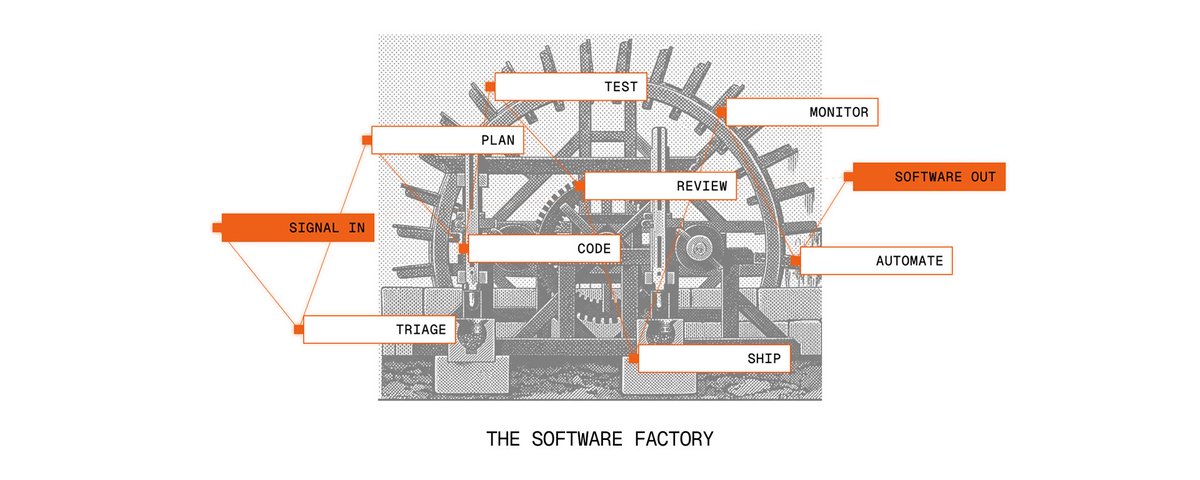
软件工厂始于来自外部世界的信号:缺陷报告、内部对话、客户反馈、业务需求。这些信号会被分诊并转化为计划中的变更。这些变更会被构建、测试、审查、加固、发布并监控。对已部署软件的监控又会产生更多信号。整个系统是一个持续运转的反馈回路。几乎还没有人真正为这个回路做好充分的仪表化,使其能够完全由 AI 驱动。我们仍处于早期阶段,但软件工厂的普及将会来得非常快。

一个健壮的软件工厂必须具备:

模型独立性。 每个模型在成本、性能和速度之间都有不同的权衡。没有任何一个模型能够满足企业内部的所有需求。你的软件工厂必须允许组织有意识地选择不同模型,或者依赖一个 Router,为特定任务自动选择或按规则选择最优*模型。随着模型逐渐商品化,成本会下降,而速度和性能会提升。

主权智能。 你必须成为自己软件工厂的主权拥有者。无论是完全托管在云上、自带密钥、使用自托管数据平面、面向欧盟的特定部署,还是完全隔离、没有任何外部网络访问。主权的含义不只是决定系统运行在哪里。它还意味着拥有一个能够从自身学习的系统,把每一次代理会话、代码审查和已解决的事故都重新反馈进回路。你对软件工厂投入越多,它就会变得越强,而这种能力会留在你这里,留在你的边界之内,受你掌控。

持续学习与自我改进。 软件开发生命周期的每个阶段都必须实现仪表化。当代码审查、安全分析、文档、QA 和事故响应都运行在同一个平台上时,它们共享同一个代理核心、同一个模型路由器、同一份组织上下文。一次安全发现会反哺代码审查。一次部署会触发文档更新。一次事故会和引发它的 PR 关联起来。每一项新增的自动化、集成或定制,都会立刻流向整个组织。路由器本身也会学习如何优化资源。流水线应该覆盖整个软件工厂的全场。

https://factory.ai/news/missions

过去几个月里,我们一直在与客户一起构建软件工厂。如今,软件工厂已经在全球一些最大的组织中投入生产使用,包括 NVIDIA、EY、Adobe、Palo Alto Networks、Adyen、Blackstone、Wipro、Comarch 等等。

https://factory.ai/news/agent-readiness

没有任何组织会从一个完全自主的软件工厂起步。自主性是一个逐步成熟的过程,而且会因每个组织的准备程度和舒适区不同而有所差异。要把自主性部署到整个组织,需要有意识的工程投入,把工作流编码化,并将流程标准化。

Factory 让组织能够随着时间推移逐步获得不同层级的自主性。并不是每个流程都适合使用长周期的自主任务。定义清晰、可衡量的任务,可以由简单的 Droid 代理或技能来执行。自动化能力会围绕共同目标和共享记忆来协调重复性工作流。远程和持久化执行则借助 Droid Computers 来支持长时间运行的代理或本地代理。名为 Missions 的多代理自主执行,会通过把工作拆解成可并行处理的多条轨道,在数小时或数天内解决复杂任务。根据所需的人类指导程度、信息敏感性以及 Agent Readiness 的水平,不同自主流程会被用于满足不同需求。

那些投资于自主软件开发的组织,将看到工程产出迅速提升,同时仍然掌握成本、质量和上下文方面的决策权。在这个新时代,工程师的角色只会更加重要。他们将不再只是构建软件的唯一守护者。相反,他们将负责构建那些用来构建软件的工厂。随之而来的,是治理、安全以及业务结果归属方面的责任。软件开发的下一个时代将由工程主导,工程职责也会扩展到整个业务本身。

软件工厂不是一天建成的,但开始建设你的 Factory 的最佳时机,就是今天。

今天,我们正在扩展这项能力,让你可以直接在 Factory Desktop App 中获得管理软件工厂所需的可见性。

* 最优可以按成本、性能、速度,或它们的某种组合来设定。

In 2023, we launched Factory with the mission to bring autonomy to software engineering. While others were using models to speed up coding, we set out to deploy autonomous Droids across the enterprise software development lifecycle. Today we are announcing the next phase in the future of software engineering.

2023 年,我们推出了 Factory,使命是把自主性带入软件工程。彼时,其他人还在用模型提升编码速度,而我们已经着手在企业软件开发生命周期的各个环节部署自主 Droid。今天,我们宣布软件工程未来的下一阶段。

Improving the productivity of individual engineers is no longer enough. Unlocking organization-wide productivity requires an interconnected, agent-native, end-to-end system. This system must improve over time by observing itself. The incremental units of this system are AI agents. This system will be built by engineers, and in turn will build their software.

只提升单个工程师的生产力,已经不够了。要释放整个组织范围内的生产力,需要一个彼此联通、原生面向代理、端到端的系统。这个系统必须能够通过观察自身而不断改进。这个系统的增量单元是 AI 代理。这个系统将由工程师建造,反过来,它也将建造他们的软件。

This system is the software factory.

这个系统就是 软件工厂

The software factory starts with signals from the outside world: bug reports, internal conversations, customer feedback, business requirements. These signals get triaged and turned into planned changes. These changes are built, tested, reviewed, secured, shipped, and monitored. Monitoring that deployed software generates more signals. The entire system is a continuous feedback loop. Almost no one has meaningfully instrumented this loop to be fully AI-driven. We are still early, but the proliferation of software factories is going to happen very quickly.

软件工厂始于来自外部世界的信号:缺陷报告、内部对话、客户反馈、业务需求。这些信号会被分诊并转化为计划中的变更。这些变更会被构建、测试、审查、加固、发布并监控。对已部署软件的监控又会产生更多信号。整个系统是一个持续运转的反馈回路。几乎还没有人真正为这个回路做好充分的仪表化,使其能够完全由 AI 驱动。我们仍处于早期阶段,但软件工厂的普及将会来得非常快。

A robust software factory must have:

一个健壮的软件工厂必须具备:

Model Independence. Every model has a different trade-off of cost, performance, and speed. No one model fits every need within an enterprise. Your software factory must allow your organization to deliberately choose different models, or rely on a Router to automatically (or rule-based) select the best* model for any given task. As models commoditize, costs decrease while speed and performance increase.

模型独立性。 每个模型在成本、性能和速度之间都有不同的权衡。没有任何一个模型能够满足企业内部的所有需求。你的软件工厂必须允许组织有意识地选择不同模型,或者依赖一个 Router,为特定任务自动选择或按规则选择最优*模型。随着模型逐渐商品化,成本会下降,而速度和性能会提升。

Sovereign Intelligence. You must be the sovereign of your software factory. Whether fully hosted in the cloud, bring-your-own-key, self-hosted data plane, EU-specific, or completely air-gapped with no external network access. Sovereignty means more than choosing where the system runs. It means owning a system that learns from itself, feeding every agent session, code review, and resolved incident back into the loop. The more you invest in your software factory, the more capable it becomes, and that capability stays with you, inside your walls, under your control.

主权智能。 你必须成为自己软件工厂的主权拥有者。无论是完全托管在云上、自带密钥、使用自托管数据平面、面向欧盟的特定部署,还是完全隔离、没有任何外部网络访问。主权的含义不只是决定系统运行在哪里。它还意味着拥有一个能够从自身学习的系统,把每一次代理会话、代码审查和已解决的事故都重新反馈进回路。你对软件工厂投入越多,它就会变得越强,而这种能力会留在你这里,留在你的边界之内,受你掌控。

Continual Learning and Self-Improvement. Every stage of the software development lifecycle must be instrumented. When code review, security analysis, documentation, QA, and incident response all run on the same platform, they share the same agent core, the same model router, the same organizational context. A security finding informs the code review. A deployment triggers a documentation update. An incident correlates with the PR that caused it. Every additional automation, integration, or customization flows to the entire organization at once. The router itself learns to optimizes resources. The assembly line should span the full floor of the software factory.

持续学习与自我改进。 软件开发生命周期的每个阶段都必须实现仪表化。当代码审查、安全分析、文档、QA 和事故响应都运行在同一个平台上时,它们共享同一个代理核心、同一个模型路由器、同一份组织上下文。一次安全发现会反哺代码审查。一次部署会触发文档更新。一次事故会和引发它的 PR 关联起来。每一项新增的自动化、集成或定制,都会立刻流向整个组织。路由器本身也会学习如何优化资源。流水线应该覆盖整个软件工厂的全场。

We have been building software factories with our customers for the last few months. Software factories are already in production across the world’s largest organizations including NVIDIA, EY, Adobe, Palo Alto Networks, Adyen, Blackstone, Wipro, Comarch and more.

过去几个月里,我们一直在与客户一起构建软件工厂。如今,软件工厂已经在全球一些最大的组织中投入生产使用,包括 NVIDIA、EY、Adobe、Palo Alto Networks、Adyen、Blackstone、Wipro、Comarch 等等。

No organization starts with a fully autonomous software factory. Autonomy is a maturation process that is gradual and specific to every organization’s readiness and comfort level. Deploying autonomy across the organization happens through deliberate engineering effort to codify workflows and standardize processes.

没有任何组织会从一个完全自主的软件工厂起步。自主性是一个逐步成熟的过程,而且会因每个组织的准备程度和舒适区不同而有所差异。要把自主性部署到整个组织,需要有意识的工程投入,把工作流编码化,并将流程标准化。

Factory enables a spectrum of autonomy over time. Not every process should use long-horizon autonomous tasks. Well-defined, measurable tasks run with simple Droid agents or skills. Automations coordinate recurring workflows with a shared objective and memory. Remote and persistent execution leverages Droid Computers for long running or local agents. Multi-agent autonomous execution called Missions solve complex tasks over hours or days by decomposing work into parallel tracks to handle. Different autonomous processes are used for varying requirements based on the level of human guidance required, the information sensitivity, and the level of Agent Readiness.

Factory 让组织能够随着时间推移逐步获得不同层级的自主性。并不是每个流程都适合使用长周期的自主任务。定义清晰、可衡量的任务,可以由简单的 Droid 代理或技能来执行。自动化能力会围绕共同目标和共享记忆来协调重复性工作流。远程和持久化执行则借助 Droid Computers 来支持长时间运行的代理或本地代理。名为 Missions 的多代理自主执行,会通过把工作拆解成可并行处理的多条轨道,在数小时或数天内解决复杂任务。根据所需的人类指导程度、信息敏感性以及 Agent Readiness 的水平,不同自主流程会被用于满足不同需求。

Organizations that invest in their autonomous software development will see engineering outcomes surge, while owning decisions around cost, quality and context. The role of engineers is all the more important in this new era. No longer will they be the sole custodians of building the software. Instead, they will be responsible for building the factories that build the software. With this comes the responsibility of governance, safety, and the ownership of business outcomes. The next era of software development will be engineering-led and will see engineering responsibilities grow to span across the business itself.

那些投资于自主软件开发的组织,将看到工程产出迅速提升,同时仍然掌握成本、质量和上下文方面的决策权。在这个新时代,工程师的角色只会更加重要。他们将不再只是构建软件的唯一守护者。相反,他们将负责构建那些用来构建软件的工厂。随之而来的,是治理、安全以及业务结果归属方面的责任。软件开发的下一个时代将由工程主导,工程职责也会扩展到整个业务本身。

Software factories are not built in a day, but the best day to start building your Factory is today.

软件工厂不是一天建成的,但开始建设你的 Factory 的最佳时机,就是今天。

Today we are expanding this functionality with visibility to manage your software factory directly in the Factory Desktop App.
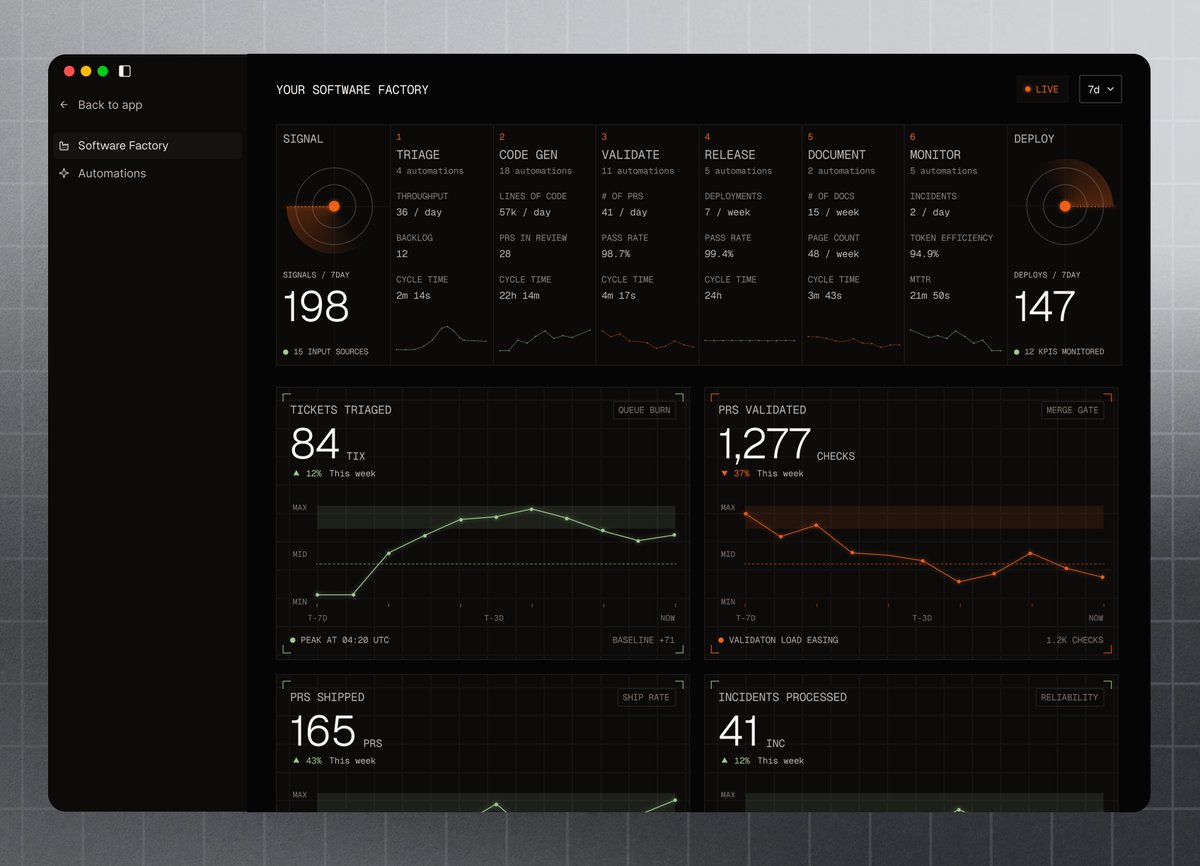
今天,我们正在扩展这项能力,让你可以直接在 Factory Desktop App 中获得管理软件工厂所需的可见性。

* best can be set according to cost, performance, speed, or some combination.

* 最优可以按成本、性能、速度,或它们的某种组合来设定。

In 2023, we launched Factory with the mission to bring autonomy to software engineering. While others were using models to speed up coding, we set out to deploy autonomous Droids across the enterprise software development lifecycle. Today we are announcing the next phase in the future of software engineering.

Improving the productivity of individual engineers is no longer enough. Unlocking organization-wide productivity requires an interconnected, agent-native, end-to-end system. This system must improve over time by observing itself. The incremental units of this system are AI agents. This system will be built by engineers, and in turn will build their software.

This system is the software factory.

The software factory starts with signals from the outside world: bug reports, internal conversations, customer feedback, business requirements. These signals get triaged and turned into planned changes. These changes are built, tested, reviewed, secured, shipped, and monitored. Monitoring that deployed software generates more signals. The entire system is a continuous feedback loop. Almost no one has meaningfully instrumented this loop to be fully AI-driven. We are still early, but the proliferation of software factories is going to happen very quickly.

A robust software factory must have:

Model Independence. Every model has a different trade-off of cost, performance, and speed. No one model fits every need within an enterprise. Your software factory must allow your organization to deliberately choose different models, or rely on a Router to automatically (or rule-based) select the best* model for any given task. As models commoditize, costs decrease while speed and performance increase.

Sovereign Intelligence. You must be the sovereign of your software factory. Whether fully hosted in the cloud, bring-your-own-key, self-hosted data plane, EU-specific, or completely air-gapped with no external network access. Sovereignty means more than choosing where the system runs. It means owning a system that learns from itself, feeding every agent session, code review, and resolved incident back into the loop. The more you invest in your software factory, the more capable it becomes, and that capability stays with you, inside your walls, under your control.

Continual Learning and Self-Improvement. Every stage of the software development lifecycle must be instrumented. When code review, security analysis, documentation, QA, and incident response all run on the same platform, they share the same agent core, the same model router, the same organizational context. A security finding informs the code review. A deployment triggers a documentation update. An incident correlates with the PR that caused it. Every additional automation, integration, or customization flows to the entire organization at once. The router itself learns to optimizes resources. The assembly line should span the full floor of the software factory.

https://factory.ai/news/missions

We have been building software factories with our customers for the last few months. Software factories are already in production across the world’s largest organizations including NVIDIA, EY, Adobe, Palo Alto Networks, Adyen, Blackstone, Wipro, Comarch and more.

https://factory.ai/news/agent-readiness

No organization starts with a fully autonomous software factory. Autonomy is a maturation process that is gradual and specific to every organization’s readiness and comfort level. Deploying autonomy across the organization happens through deliberate engineering effort to codify workflows and standardize processes.

Factory enables a spectrum of autonomy over time. Not every process should use long-horizon autonomous tasks. Well-defined, measurable tasks run with simple Droid agents or skills. Automations coordinate recurring workflows with a shared objective and memory. Remote and persistent execution leverages Droid Computers for long running or local agents. Multi-agent autonomous execution called Missions solve complex tasks over hours or days by decomposing work into parallel tracks to handle. Different autonomous processes are used for varying requirements based on the level of human guidance required, the information sensitivity, and the level of Agent Readiness.

Organizations that invest in their autonomous software development will see engineering outcomes surge, while owning decisions around cost, quality and context. The role of engineers is all the more important in this new era. No longer will they be the sole custodians of building the software. Instead, they will be responsible for building the factories that build the software. With this comes the responsibility of governance, safety, and the ownership of business outcomes. The next era of software development will be engineering-led and will see engineering responsibilities grow to span across the business itself.

Software factories are not built in a day, but the best day to start building your Factory is today.

Today we are expanding this functionality with visibility to manage your software factory directly in the Factory Desktop App.

* best can be set according to cost, performance, speed, or some combination.

📋 讨论归档

讨论进行中…