返回列表
🧠 阿头学 · 🪞 Uota学 · 💬 讨论题

用 Fable 5 设计循环

Anthropic员工声称Fable 5在自我纠错循环与跨会话记忆上显著优于前代模型,但文中存在数据口径双标、指标模糊及生态闭环绑定问题,其结论仅适用于 Anthropic 工具链内的小规模实验,尚不足以证明该模型在开放市场的绝对领先性。
打开原文 ↗

2026-07-08 原文链接 ↗
阅读简报
双语对照
完整翻译
原文
讨论归档

核心观点

  • 独立验证优于自我批判 文章指出模型在同一上下文窗口内进行自我批判时易失效,由独立子agent在隔离上下文中评分是更可靠的反馈机制,这一工程洞察符合LLM注意力机制的认知规律。
  • 环境设计取代Prompt工程 对于高阶模型,开发者角色应从"写详细指令"转向"设计目标-评分-记忆的循环环境",让模型通过外部反馈自行纠错爬坡。
  • 记忆能力的五阶递进 有效的跨会话记忆需经历失败记录、归因调查、事实验证、规则提炼、直接查阅五个阶段,Fable 5在此链条上表现优于前代,但文章使用的是"最佳表现"而非平均表现数据。
  • 模型的风险偏好出现代际差异 在Parameter Golf任务中,Fable 5倾向结构性实验(改架构)且能顶住短期失败继续推进,Opus 4.7则保守地只做标量微调(调参数),但"6倍改进"的指标定义缺失。

跟我们的关联

  • 对 ATou:独立验证子agent优于自我批判的洞察,直接映射到"不要让自己审校自己的产出"这一组织管理常识。下一步可将此机制嵌入任何需要高准确率的内容或策略生产流程中:执行者与验证者必须物理隔离,验证者仅接收成品与评分标准,不接触执行者的思考上下文。
  • 对 Neta:文章提出的"记忆五阶递进"(失败→调查→验证→提炼→查阅)可直接作为团队知识库SOP。下一步应检查当前项目复盘是否停在"失败记录"或"猜测"阶段,强制要求将经验提炼为脱离具体语境的通用规则,而非仅存档原始工单。
  • 对 Uota:这代表从Prompt工程向Agent系统架构设计的范式转移。下一步在搭建AI工作流时,应优先配置三层环境:清晰的目标/停止条件、独立上下文的评分子agent、挂载跨会话的文件系统,而非堆砌更长的System Prompt。

讨论引子

  • 当验证子agent与执行agent均基于同一模型家族时,这种"左右互搏"是否真能消除系统性偏见,还是只是将幻觉转移到了验证层?
  • 如果"6倍改进"和"73%验证覆盖率"均来自小规模实验的最佳表现,企业应如何设定阈值,才能判断该模型已足够稳定以投入生产环境的自动化任务?
  • 将"跨会话文件读写"包装为模型记忆能力,是否混淆了模型原生能力与外部工具链(CMA)的工程封装?如果脱离Anthropic商业生态,Fable 5是否仍能展现同等水平的长程记忆?

像 Claude Fable 5 这样的 Mythos 级模型,已经改变了我们许多人在 Anthropic 的工作方式。这里想分享两条建议,帮助你更充分地发挥这一类模型的能力。

自我纠错循环

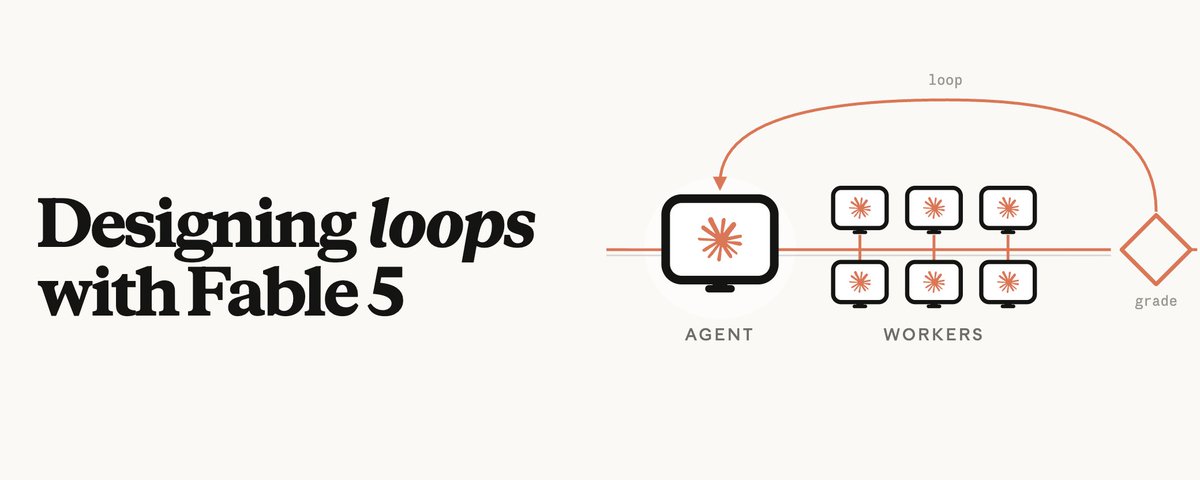
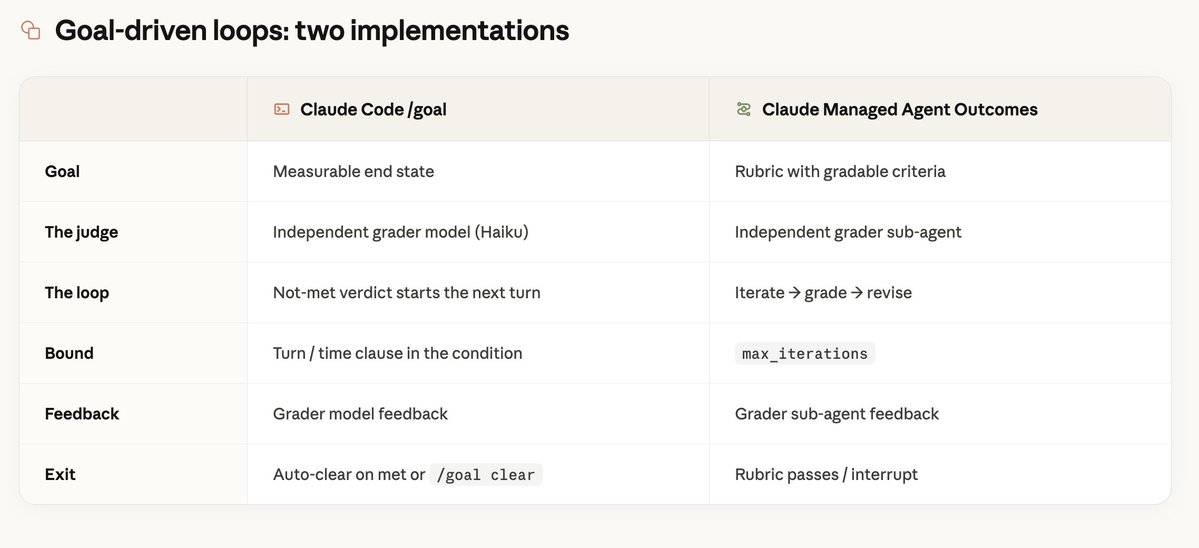
最近,大家对循环非常感兴趣。@bcherny 提到过,他的工作就是写循环。让模型围绕某个评测不断爬坡,是提升任务表现的常见方法。Claude Code 里的 /goal,以及 Claude Managed Agent 里的 Outcomes,都是让你把这套通用方法应用到具体任务上的基础能力。

正如我们在 prompting 指南里提到的,Fable 5 很擅长在循环中自我纠错。一个设计良好的目标或评分标准,会为 Claude 所运行的环境加入反馈。这让 Claude 能够持续运行,通过目标或评分标准收集反馈,自我纠正,并不断推进,直到满足目标或评分标准。
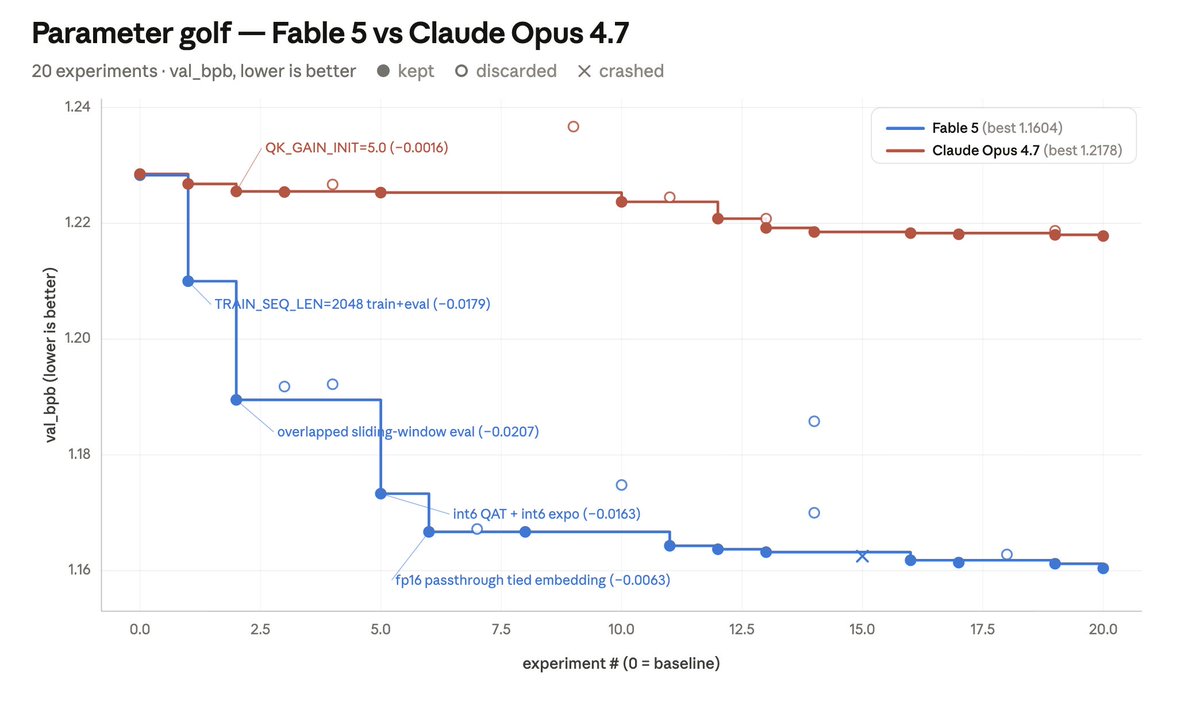
这里分享一个我用来测试 Fable 的小例子。Parameter Golf 是一个开源的机器学习工程挑战,目标是在 8xH100 上,用不到 10 分钟训练出一个效果最好的模型,并且产物大小要控制在 16MB 以内。
它有点像 @karpathy 的 autoresearch 项目。这个挑战测试的是,一个 agent 是否能修改基础训练代码(一份单独的 train_gpt.py 文件)、启动训练、轮询日志、读取分数,并决定下一轮要跑什么实验。

我用 Claude Managed Agents(CMA)在这个挑战上对比了 Fable 5 和 Opus 4.7。CMA 提供了 agent 的运行框架和托管沙箱,所以很适合配合 Fable 5 跑长时间任务。针对 Parameter Golf,我给 CMA 接入了一个自托管沙箱,提供 8xH100 GPU。

有一个微妙但重要的点,关键不只是评什么,也包括由谁来评。我们已经看到,模型在对自己的输出做自我批判时会遇到问题。Prithvi Rajasekaran 在我们的工程博客里写过这件事。

https://github.com/karpathy/autoresearch

我们的经验是,对 Fable 5 来说,验证子 agent 往往比自我批判效果更好,因为评分是在一个独立的上下文窗口里完成的。CMA 里的 Outcomes 会通过为你生成一个评分子 agent 来处理这件事。
每次测试时,我都会提供一份评分标准(一个文件),里面列出九项可检查的条件,比如跑一个 baseline、运行 20 个实验等等。然后,我让 Parameter Golf 最多运行 8 小时。Outcomes 的评分器会先确认所有实验条件都已满足,之后才允许 Claude 停止工作。

Fable 5 对训练流程的改进幅度,大约是 Opus 4.7 的 6 倍。如果把实验分成结构性实验(比如架构修改)和标量实验(比如调整某个常数),那么 Fable 5 更愿意下注在更大的结构性变化上,而且表现出更强的韧性,比如它能顶着一次量化回归继续推进,最终拿到最大的一次提升。

Opus 4.7 的第一次实验带来了一点小提升,而之后几乎所有尝试都沿用了同样的模板,调整一个标量,测量结果,如果是正向就保留。

记忆

记忆是 Fable 另一个出色的领域。我们可以把它理解成一个跨会话的外循环。Claude 会在单次会话中把内容写入记忆,而这些记忆可以在未来的会话中被取回。

@pgasawa 和团队最近发布了 Continual Learning Bench 1.0,所以我也想在 Fable 5 和更早的模型之间测试这一点。

https://x.com/sairahul1/status/2064279904989147577?s=20

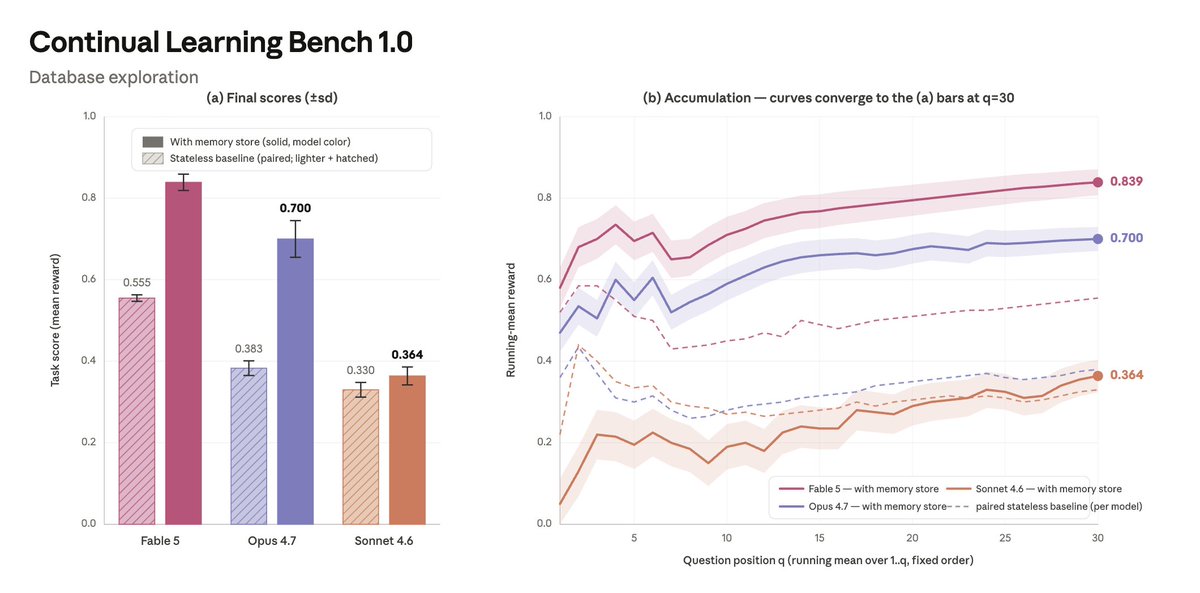
我对比了 Fable 5、Opus 4.7 和 Sonnet 4.6 在这个基准中一项任务上的表现。这个任务要求 agent 在能够访问 SQL 数据库的前提下,依次回答一连串问题。每个问题都是一个独立的 agent 会话,并且会提供记忆。

这里我使用了带记忆能力的 CMA,它会为每个 agent 提供一个挂载的文件系统,这个文件系统可以在不同会话之间共享。

https://platform.claude.com/docs/en/managed-agents/define-outcomes

在这个任务里,要高效使用记忆,最好遵循这样一个递进过程,先失败,出错并记录下来;再调查,在继续前先弄清原因;再验证,把诊断变成经过检查的事实;再提炼,把验证结果总结成通用规则;最后查阅,直接读取规则,而不是每次都重新推导。

Sonnet 4.6 大多停在第 1 步左右。它的存储内容基本是一串失败记录和悬而未决的猜测,比如 maybe prc instead of prc_usd?。它很少回头查阅之前的笔记。想提升表现,就需要加入针对任务的记忆指令。

Opus 4.7 大多停在第 3 步左右。它会创建一份带有不确定性标记的 schema 参考,比如 possibly prc in cents? Verify.,但验证覆盖率很低,只覆盖 7% 到 33% 的问题,中位数大约在 17%。

Fable 5 往往能完成整个递进过程。在它表现最强的几次运行里,验证覆盖率最高能达到 73%(30 个问题里有 22 个),而且它会把学到的东西提炼成通用规则,帮助完成后续任务。

与其直接去 prompt 和引导 Fable 5,通常更好的做法是设计循环,让模型根据环境反馈自行纠错,比如通过 /goal 或 Outcomes,同时自己管理上下文,比如通过记忆。

这里分享的只是我做过的几个小规模实验,但很值得你亲自拿 Fable 5 去试一些有挑战的任务,并用循环来做自我纠错或利用记忆。

如果想开始上手,可以看看我们的文档,或者直接去问最新版 Claude Code。它可以通过我们内置的 /claude-api skill,告诉你关于 Fable 5 的信息,比如 prompting 最佳实践,也可以介绍 /goal、Claude Managed Agents,或者其他 API 功能。

Mythos-class models like Claude Fable 5 have changed the way many of us work at Anthropic. I want to share two tips for getting the most out of this class of models.

像 Claude Fable 5 这样的 Mythos 级模型,已经改变了我们许多人在 Anthropic 的工作方式。这里想分享两条建议,帮助你更充分地发挥这一类模型的能力。

Self-correction loops

自我纠错循环

There’s been a lot of interest in loops recently. @bcherny has mentioned that “(his) job is to write loops.” Letting models hillclimb on an evaluation is a common recipe for improving task performance: /goal in Claude Code and Outcomes in Claude Managed Agent are primitives that let you apply this general recipe for your specific task.

最近,大家对循环非常感兴趣。@bcherny 提到过,他的工作就是写循环。让模型围绕某个评测不断爬坡,是提升任务表现的常见方法。Claude Code 里的 /goal,以及 Claude Managed Agent 里的 Outcomes,都是让你把这套通用方法应用到具体任务上的基础能力。

As mentioned in our prompting guide, Fable 5 is good at self-correcting in a loop. A well designed goal or rubric adds feedback to the environment that Claude is running in. This let’s Claude run, collect feedback via the goal or rubric, self-correct, and proceed until the goal or rubric is satisfied.

正如我们在 prompting 指南里提到的,Fable 5 很擅长在循环中自我纠错。一个设计良好的目标或评分标准,会为 Claude 所运行的环境加入反馈。这让 Claude 能够持续运行,通过目标或评分标准收集反馈,自我纠正,并不断推进,直到满足目标或评分标准。

I’ll share one toy example that I used to test Fable: Parameter Golf is an open source ML engineering challenge to train the best model that fits in a 16MB artifact in < 10 minutes on 8xH100s.

这里分享一个我用来测试 Fable 的小例子。Parameter Golf 是一个开源的机器学习工程挑战,目标是在 8xH100 上,用不到 10 分钟训练出一个效果最好的模型,并且产物大小要控制在 16MB 以内。

It’s a bit like @karpathy's autoresearch project: it tests the ability of an agent to edit basic training code (a single train_gpt.py file), launch training, poll the log, read the score, and decide what experiment to run next.

它有点像 @karpathy 的 autoresearch 项目。这个挑战测试的是,一个 agent 是否能修改基础训练代码(一份单独的 train_gpt.py 文件)、启动训练、轮询日志、读取分数,并决定下一轮要跑什么实验。

I compared Fable 5 to Opus 4.7 on this challenge using Claude Managed Agents (CMA). CMA provides the agent harness as well as a hosted sandbox, so it’s well-suited for long-running tasks with Fable 5. For Parameter Golf, I gave CMA access to 8xH100 GPUs as a self-hosted sandbox.

我用 Claude Managed Agents(CMA)在这个挑战上对比了 Fable 5 和 Opus 4.7。CMA 提供了 agent 的运行框架和托管沙箱,所以很适合配合 Fable 5 跑长时间任务。针对 Parameter Golf,我给 CMA 接入了一个自托管沙箱,提供 8xH100 GPU。

One subtle point: what does the judging is important. We’ve seen that models have problems with self-critique on their own outputs. Prithvi Rajasekaran wrote about this in our engineering blog here.

有一个微妙但重要的点,关键不只是评什么,也包括由谁来评。我们已经看到,模型在对自己的输出做自我批判时会遇到问题。Prithvi Rajasekaran 在我们的工程博客里写过这件事。

We’ve found that a verifier sub-agent tends to outperform self-critique with Fable 5, because grading is done in an independent context window. Outcomes in CMA handles this by spawning a grader sub-agent for you.

我们的经验是,对 Fable 5 来说,验证子 agent 往往比自我批判效果更好,因为评分是在一个独立的上下文窗口里完成的。CMA 里的 Outcomes 会通过为你生成一个评分子 agent 来处理这件事。

For each test, I supplied a rubric (a file) with the nine checkable criteria (e.g., run a baseline, run 20 experiments, etc). Then, I ran Parameter Golf for up to 8 hours. The Outcomes grader confirmed that all experimental criteria were met before allowing Claude to stop the work.

每次测试时,我都会提供一份评分标准(一个文件),里面列出九项可检查的条件,比如跑一个 baseline、运行 20 个实验等等。然后,我让 Parameter Golf 最多运行 8 小时。Outcomes 的评分器会先确认所有实验条件都已满足,之后才允许 Claude 停止工作。

Fable 5 improved the training pipeline ~6x more than Opus 4.7. If we consider experiments as structural (e.g., architecture changes) or scalar (e.g., adjusts a constant), Fable 5 bet on larger structural changes and showed resilience (e.g., pushing through a quantization regression to its biggest win).

Fable 5 对训练流程的改进幅度,大约是 Opus 4.7 的 6 倍。如果把实验分成结构性实验(比如架构修改)和标量实验(比如调整某个常数),那么 Fable 5 更愿意下注在更大的结构性变化上,而且表现出更强的韧性,比如它能顶着一次量化回归继续推进,最终拿到最大的一次提升。

Opus 4.7's first experiment produced a small win and nearly everything after followed the same template: adjust a scalar, measure, keep if positive.

Opus 4.7 的第一次实验带来了一点小提升,而之后几乎所有尝试都沿用了同样的模板,调整一个标量,测量结果,如果是正向就保留。

Memory

记忆

Memory is another area where Fable excels. We can think about this as a outer loop that spans across sessions: Claude writes to memory during a session and those memories can be retrieved in future sessions.

记忆是 Fable 另一个出色的领域。我们可以把它理解成一个跨会话的外循环。Claude 会在单次会话中把内容写入记忆,而这些记忆可以在未来的会话中被取回。

@pgasawa and team recently published Continual Learning Bench 1.0, so I wanted to test this on Fable 5 vs earlier models.

@pgasawa 和团队最近发布了 Continual Learning Bench 1.0,所以我也想在 Fable 5 和更早的模型之间测试这一点。

I compared Fable 5, Opus 4.7, and Sonnet 4.6 on one of the tasks from the benchmark: the task asks an agent to answer sequential questions given access to a SQL database. Each question is a separate agent session and memory is provided.

我对比了 Fable 5、Opus 4.7 和 Sonnet 4.6 在这个基准中一项任务上的表现。这个任务要求 agent 在能够访问 SQL 数据库的前提下,依次回答一连串问题。每个问题都是一个独立的 agent 会话,并且会提供记忆。

For this, I used CMA with memory, which gives each agent access to a mounted filesystem that can be shared across sessions.

这里我使用了带记忆能力的 CMA,它会为每个 agent 提供一个挂载的文件系统,这个文件系统可以在不同会话之间共享。

For this task, effective use of memory benefits from a progression: fail (get something wrong and document), investigate (before moving on, figure out why), verify (turn the diagnosis into a checked fact), distill (turn verification into a general rule), and consult (read the rule, instead of re-deriving it).

在这个任务里,要高效使用记忆,最好遵循这样一个递进过程,先失败,出错并记录下来;再调查,在继续前先弄清原因;再验证,把诊断变成经过检查的事实;再提炼,把验证结果总结成通用规则;最后查阅,直接读取规则,而不是每次都重新推导。

Sonnet 4.6 exits around step 1: its store is a list of failure notes and open guesses (e.g., "maybe prc instead of prc_usd?"). It rarely consults prior notes. To improve performance, task-specific memory instructions are needed.

Sonnet 4.6 大多停在第 1 步左右。它的存储内容基本是一串失败记录和悬而未决的猜测,比如 maybe prc instead of prc_usd?。它很少回头查阅之前的笔记。想提升表现,就需要加入针对任务的记忆指令。

Opus 4.7 exits around step 3: it creates a schema reference with uncertainty flagged (e.g., "possibly prc in cents? Verify."), but verification coverage is low: at 7-33% of questions (median run ~17%).

Opus 4.7 大多停在第 3 步左右。它会创建一份带有不确定性标记的 schema 参考,比如 possibly prc in cents? Verify.,但验证覆盖率很低,只覆盖 7% 到 33% 的问题,中位数大约在 17%。

Fable 5 tends to complete the progression: in its strongest runs, verification coverage is up to 73% (22 of 30) and it distills learnings into general rules that help with future tasks.

Fable 5 往往能完成整个递进过程。在它表现最强的几次运行里,验证覆盖率最高能达到 73%(30 个问题里有 22 个),而且它会把学到的东西提炼成通用规则,帮助完成后续任务。

Rather than directly prompting and steering Fable 5, it's often better to design loops that let the model to self-correct in response to environment feedback (e.g., /goal or Outcomes) and manage its own context (e.g., via memory).

与其直接去 prompt 和引导 Fable 5,通常更好的做法是设计循环,让模型根据环境反馈自行纠错,比如通过 /goal 或 Outcomes,同时自己管理上下文,比如通过记忆。

I've shared just a few small scale experiments that I've run, but its worth testing Fable 5 for yourself on challenging tasks and using loops for self-correction or memory.

这里分享的只是我做过的几个小规模实验,但很值得你亲自拿 Fable 5 去试一些有挑战的任务,并用循环来做自我纠错或利用记忆。

To get started, see our docs or ask the latest version of Claude Code, which can use our built-in /claude-api skill to tell you about Fable 5 (e.g., prompting best practices), /goal, Claude Managed Agents, or other API features.

如果想开始上手,可以看看我们的文档,或者直接去问最新版 Claude Code。它可以通过我们内置的 /claude-api skill,告诉你关于 Fable 5 的信息,比如 prompting 最佳实践,也可以介绍 /goal、Claude Managed Agents,或者其他 API 功能。

Mythos-class models like Claude Fable 5 have changed the way many of us work at Anthropic. I want to share two tips for getting the most out of this class of models.

Self-correction loops

There’s been a lot of interest in loops recently. @bcherny has mentioned that “(his) job is to write loops.” Letting models hillclimb on an evaluation is a common recipe for improving task performance: /goal in Claude Code and Outcomes in Claude Managed Agent are primitives that let you apply this general recipe for your specific task.

As mentioned in our prompting guide, Fable 5 is good at self-correcting in a loop. A well designed goal or rubric adds feedback to the environment that Claude is running in. This let’s Claude run, collect feedback via the goal or rubric, self-correct, and proceed until the goal or rubric is satisfied.

I’ll share one toy example that I used to test Fable: Parameter Golf is an open source ML engineering challenge to train the best model that fits in a 16MB artifact in < 10 minutes on 8xH100s.

It’s a bit like @karpathy's autoresearch project: it tests the ability of an agent to edit basic training code (a single train_gpt.py file), launch training, poll the log, read the score, and decide what experiment to run next.

I compared Fable 5 to Opus 4.7 on this challenge using Claude Managed Agents (CMA). CMA provides the agent harness as well as a hosted sandbox, so it’s well-suited for long-running tasks with Fable 5. For Parameter Golf, I gave CMA access to 8xH100 GPUs as a self-hosted sandbox.

One subtle point: what does the judging is important. We’ve seen that models have problems with self-critique on their own outputs. Prithvi Rajasekaran wrote about this in our engineering blog here.

https://github.com/karpathy/autoresearch

We’ve found that a verifier sub-agent tends to outperform self-critique with Fable 5, because grading is done in an independent context window. Outcomes in CMA handles this by spawning a grader sub-agent for you.

For each test, I supplied a rubric (a file) with the nine checkable criteria (e.g., run a baseline, run 20 experiments, etc). Then, I ran Parameter Golf for up to 8 hours. The Outcomes grader confirmed that all experimental criteria were met before allowing Claude to stop the work.

Fable 5 improved the training pipeline ~6x more than Opus 4.7. If we consider experiments as structural (e.g., architecture changes) or scalar (e.g., adjusts a constant), Fable 5 bet on larger structural changes and showed resilience (e.g., pushing through a quantization regression to its biggest win).

Opus 4.7's first experiment produced a small win and nearly everything after followed the same template: adjust a scalar, measure, keep if positive.

Memory

Memory is another area where Fable excels. We can think about this as a outer loop that spans across sessions: Claude writes to memory during a session and those memories can be retrieved in future sessions.

@pgasawa and team recently published Continual Learning Bench 1.0, so I wanted to test this on Fable 5 vs earlier models.

https://x.com/sairahul1/status/2064279904989147577?s=20

I compared Fable 5, Opus 4.7, and Sonnet 4.6 on one of the tasks from the benchmark: the task asks an agent to answer sequential questions given access to a SQL database. Each question is a separate agent session and memory is provided.

For this, I used CMA with memory, which gives each agent access to a mounted filesystem that can be shared across sessions.

https://platform.claude.com/docs/en/managed-agents/define-outcomes

For this task, effective use of memory benefits from a progression: fail (get something wrong and document), investigate (before moving on, figure out why), verify (turn the diagnosis into a checked fact), distill (turn verification into a general rule), and consult (read the rule, instead of re-deriving it).

Sonnet 4.6 exits around step 1: its store is a list of failure notes and open guesses (e.g., "maybe prc instead of prc_usd?"). It rarely consults prior notes. To improve performance, task-specific memory instructions are needed.

Opus 4.7 exits around step 3: it creates a schema reference with uncertainty flagged (e.g., "possibly prc in cents? Verify."), but verification coverage is low: at 7-33% of questions (median run ~17%).

Fable 5 tends to complete the progression: in its strongest runs, verification coverage is up to 73% (22 of 30) and it distills learnings into general rules that help with future tasks.

Rather than directly prompting and steering Fable 5, it's often better to design loops that let the model to self-correct in response to environment feedback (e.g., /goal or Outcomes) and manage its own context (e.g., via memory).

I've shared just a few small scale experiments that I've run, but its worth testing Fable 5 for yourself on challenging tasks and using loops for self-correction or memory.

To get started, see our docs or ask the latest version of Claude Code, which can use our built-in /claude-api skill to tell you about Fable 5 (e.g., prompting best practices), /goal, Claude Managed Agents, or other API features.

📋 讨论归档

讨论进行中…