返回列表
🧠 阿头学 · 💬 讨论题

成瘾即麻醉:底层痛苦的系统性解法

将成瘾重构为应对底层痛苦的局部最优策略虽能有效破除意志力羞耻感,但该论点严重混淆了心理代偿与生理依赖,且其“消除痛苦即可自然戒断”的结论在缺乏临床实证与普适资源的前提下属于精英主义的空谈。
打开原文 ↗

2026-10-30 原文链接 ↗
阅读简报
双语对照
完整翻译
原文
讨论归档

核心观点

  • 成瘾是局部最优的麻醉策略 个体在面临结构性痛苦时会理性选择成瘾行为作为情绪缓冲阀,强行剥夺该缓冲阀必然导致系统崩溃或行为替代。
  • 意志力戒断注定触发打地鼠效应 仅靠压制表层症状而不处理底层冲突,成瘾行为只会转移至其他载体,证明单纯的行为矫正无法实现长期干预。
  • 成瘾是系统摩擦的高精度仪表盘 高频的成瘾行为直接映射个体或组织内部的资源错配与目标模糊,将其视为报警信号而非道德污点能大幅降低干预阻力。
  • 社群连接是根除成瘾的唯一长效解药 真正能替代麻醉手段的应对机制是高质量的人际关系,尽管其构建成本远高于即时满足的数字化娱乐。

跟我们的关联

  • 对 ATou 意味着 个人习惯管理必须放弃意志力对抗逻辑,转而采用“症状标记-痛苦溯源-结构优化”的干预路径;下一步需将自身高频低效行为直接视为系统报警,优先排查目标缺失或情绪过载等底层摩擦。
  • 对 Neta 意味着 团队管理中的“摸鱼”或“无效加班”是组织机制失效的必然产物,抓考勤只会引发更隐蔽的内耗;下一步必须通过重构权责边界与削减冗余流程来消除系统性痛苦,深度协作才会自然涌现。
  • 对 Uota 意味着 产品留存策略若依赖制造多巴胺陷阱的“伪成瘾”设计,必将面临用户境遇改善后的断崖式流失;下一步应运用切斯特顿原则审视现有功能,做减法消除核心路径的认知摩擦,以真实价值替代情绪麻醉。

讨论引子

  • 当成瘾行为已造成明确的财务破产或器质性健康损害时,继续将其合理化为“保护性麻醉”是否会导致临床干预的致命延误?
  • 在缺乏高资源支持(如心理咨询、经济安全网)的普通群体中,“消除底层痛苦”这一解法是否彻底沦为无法落地的特权叙事?
  • 如何建立一套可量化的临床指标,以精准区分“适应性情绪缓冲”与“病理性神经依赖”,从而避免干预策略的严重错配?

我尊重的许多人误解了成瘾:他们认为自己“对”刷手机、抽电子烟、过度工作等上瘾——而没有认识到成瘾其实是一种策略。 正因为如此,当他们试图克制成瘾却无济于事时,往往会感到惊讶:他们要么失败了,进而相信自己“缺乏意志力”;要么成功戒掉了某一种成瘾,却发现自己又染上了新的: 关于成瘾的局部最优(Locally Optimal)观点认为,成瘾起到了麻醉(anesthesia)的作用。它们是管理痛苦的策略。 比如说,如果你正处于痛苦之中,采用某种麻醉手段通常是明智的。 ……这也意味着,如果你正处于痛苦之中,却强行戒除你的成瘾(麻醉),你要么会被痛苦淹没,要么就会去寻找另一种麻木自己的方式。 成瘾能缓解痛苦,是因为麻醉能缓解痛苦。 因此,同时戒除所有成瘾的方法,是消除底层的痛苦。只要痛苦还在,就会发生一种“成瘾打地鼠(whac-a-mole)”的现象。没有了痛苦,就不再需要任何形式的麻醉。 成瘾是我偏爱的衡量痛苦与内在冲突的指标之一。如果你有自己不喜欢的成瘾行为,你的系统里很可能存在痛苦。人们通常意识不到,成瘾的存在是为了麻醉更深层的痛苦。(对此我感到很遗憾。) 但这是一件好事。 在我的研究中,我专门与特定人群进行一对一合作,这些人的处境使他们能够在不面临可怕后果风险的情况下去消除底层的痛苦。但许多人尚未处于这样的位置。对于这些人来说,成瘾往往已经是他们应对当下痛苦所能采取的最佳手段。 这就是为什么当我看到盲目建议人们戒除成瘾的忠告时,我会感到担忧。嘿,别忘了切斯特顿栅栏(Chesterton's Fence)!综合来看,像刷手机这样的成瘾行为,对许多人来说可能恰恰是最好的应对机制(copes)! (注:最高尚的应对机制是社群与人际关系。问题在于,它们也是最不方便的。) 与此同时,当底层的痛苦消失时,你会发现成瘾行为也会在不依赖意志力的情况下随之消散: “在平常的一天里(在我们合作之前),我可能会工作大约六到八个小时,然后花五到六个小时直接回家,以某种形式瘫着发呆……看 YouTube……而(自那以后),我这样做的频率大大降低了。更多的时间只是用来和朋友交谈,或者进行有深度的对话。” ——一位对齐研究员(alignment researcher) (直到我们进行三个月后的跟进调查时,我才知道他曾经有过成瘾问题。) 你是否曾注意到,在你最快乐的那些时光里,你并没有产生成瘾的冲动?——在过去的工作中,在过去的关系中,在你所爱之人的身边,在度假时,在冥想或使用致幻剂(psychedelics)之后,在更年轻的时候,在生活更稳定的时候,在你对自己的感觉有所不同的时候……或许是因为那时你并没有需要麻醉的痛苦。

成瘾即麻醉 关于 | 为助力 ASI 顺利发展的人寻找并移除瓶颈

Many people I respect misunderstand addictions: they believe they’re addicted “to” scrolling, vaping, overworking, etc.—instead of recognizing addictions as strategies.

我尊重的许多人误解了成瘾:他们认为自己“对”刷手机、抽电子烟、过度工作等上瘾——而没有认识到成瘾其实是一种策略。

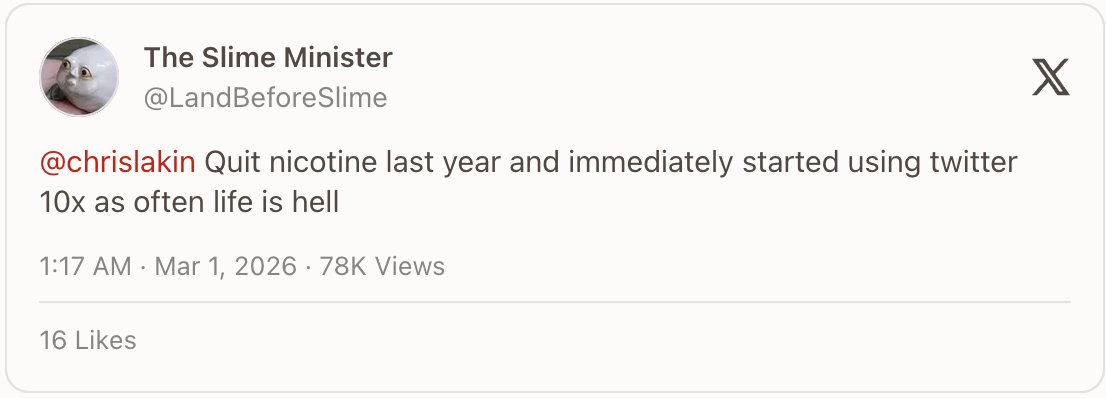
Because of this, they’re surprised when their attempts to curb addictions don’t work: they either fail, and come to believe that the “lack willpower”, or they succeed at dropping one addiction, but find themselves picking up new ones:

正因为如此,当他们试图克制成瘾却无济于事时,往往会感到惊讶:他们要么失败了,进而相信自己“缺乏意志力”;要么成功戒掉了某一种成瘾,却发现自己又染上了新的:

The Locally Optimal view of addictions is that addictions function as anesthesia. As strategies for managing suffering.

关于成瘾的局部最优(Locally Optimal)观点认为,成瘾起到了麻醉(anesthesia)的作用。它们是管理痛苦的策略。

Like, if you’re in pain, it’s often wise to employ some method of anesthesia.

比如说,如果你正处于痛苦之中,采用某种麻醉手段通常是明智的。

…which also means that if you’re in pain and you forcibly remove your addictions (anesthesia), either you’re going to get overwhelmed, or you’re going to find another way to numb.

……这也意味着,如果你正处于痛苦之中,却强行戒除你的成瘾(麻醉),你要么会被痛苦淹没,要么就会去寻找另一种麻木自己的方式。

Addictions help with suffering because anesthesia helps with suffering.

成瘾能缓解痛苦,是因为麻醉能缓解痛苦。

Therefore, the way to unlearn all addictions simultaneously is to remove the underlying suffering. With suffering, there is a sort of “addiction whac-a-mole” that happens. Without suffering, there is no need for any kind of anesthesia.

因此,同时戒除所有成瘾的方法,是消除底层的痛苦。只要痛苦还在,就会发生一种“成瘾打地鼠(whac-a-mole)”的现象。没有了痛苦,就不再需要任何形式的麻醉。

Addictions are one of my preferred measures of suffering and internal conflict. If you have addictions you dislike, there’s probably suffering in your system. It’s common not to realize that addictions are present to anesthetize deeper pain. (I’m sorry.)

成瘾是我偏爱的衡量痛苦与内在冲突的指标之一。如果你有自己不喜欢的成瘾行为,你的系统里很可能存在痛苦。人们通常意识不到,成瘾的存在是为了麻醉更深层的痛苦。(对此我感到很遗憾。)

But this is a good thing.

但这是一件好事。

In my research, I’ve specialized in working 1:1 with people who are situated such that they can remove underlying suffering without risking terrible consequences. But many people aren’t in this position yet. For these people, addictions often are the best they can do to manage the current suffering.

在我的研究中,我专门与特定人群进行一对一合作,这些人的处境使他们能够在不面临可怕后果风险的情况下去消除底层的痛苦。但许多人尚未处于这样的位置。对于这些人来说,成瘾往往已经是他们应对当下痛苦所能采取的最佳手段。

This is why I get concerned when I see advice that blindly recommends people tear down their addictions. Hey, Chesterton’s Fence! All things considered, addictions like scrolling can be some of the best copes for many people!

这就是为什么当我看到盲目建议人们戒除成瘾的忠告时,我会感到担忧。嘿,别忘了切斯特顿栅栏(Chesterton's Fence)!综合来看,像刷手机这样的成瘾行为,对许多人来说可能恰恰是最好的应对机制(copes)!

(Note: The most virtuous copes are community and relationships. The problem is that they’re also the least convenient.)

(注:最高尚的应对机制是社群与人际关系。问题在于,它们也是最不方便的。)

Meanwhile, when underlying suffering disappears, you’ll see addictions disappear without using willpower:

与此同时,当底层的痛苦消失时,你会发现成瘾行为也会在不依赖意志力的情况下随之消散:

“On an average day [before our work together] I might do around six to eight hours of work and then five to six hours of just going home and vegging out in some form... watching YouTube... And [since then] I do it a lot less. A lot more of it is just talking to friends or having thoughtful conversations.” —alignment researcher

“在平常的一天里(在我们合作之前),我可能会工作大约六到八个小时,然后花五到六个小时直接回家,以某种形式瘫着发呆……看 YouTube……而(自那以后),我这样做的频率大大降低了。更多的时间只是用来和朋友交谈,或者进行有深度的对话。” ——一位对齐研究员(alignment researcher)

(Until our 3mo follow-up, I didn’t even know he’d had addictions.)

(直到我们进行三个月后的跟进调查时,我才知道他曾经有过成瘾问题。)

Have you ever noticed that you didn’t get addictive urges during the times you were happiest? — in a past role, in a past relationship, around people you love, while on vacation, after meditation or psychedelics, when younger, when life was more stable, when you felt differently about yourself… Perhaps it was because there was no suffering for which you needed anesthesia.

你是否曾注意到,在你最快乐的那些时光里,你并没有产生成瘾的冲动?——在过去的工作中,在过去的关系中,在你所爱之人的身边,在度假时,在冥想或使用致幻剂(psychedelics)之后,在更年轻的时候,在生活更稳定的时候,在你对自己的感觉有所不同的时候……或许是因为那时你并没有需要麻醉的痛苦。

Addictions are anesthesia

成瘾即麻醉

About | Finding & removing bottlenecks for people helping ASI go well

关于 | 为助力 ASI 顺利发展的人寻找并移除瓶颈

Many people I respect misunderstand addictions: they believe they’re addicted “to” scrolling, vaping, overworking, etc.—instead of recognizing addictions as strategies. Because of this, they’re surprised when their attempts to curb addictions don’t work: they either fail, and come to believe that the “lack willpower”, or they succeed at dropping one addiction, but find themselves picking up new ones: The Locally Optimal view of addictions is that addictions function as anesthesia. As strategies for managing suffering. Like, if you’re in pain, it’s often wise to employ some method of anesthesia. …which also means that if you’re in pain and you forcibly remove your addictions (anesthesia), either you’re going to get overwhelmed, or you’re going to find another way to numb. Addictions help with suffering because anesthesia helps with suffering. Therefore, the way to unlearn all addictions simultaneously is to remove the underlying suffering. With suffering, there is a sort of “addiction whac-a-mole” that happens. Without suffering, there is no need for any kind of anesthesia. Addictions are one of my preferred measures of suffering and internal conflict. If you have addictions you dislike, there’s probably suffering in your system. It’s common not to realize that addictions are present to anesthetize deeper pain. (I’m sorry.) But this is a good thing. In my research, I’ve specialized in working 1:1 with people who are situated such that they can remove underlying suffering without risking terrible consequences. But many people aren’t in this position yet. For these people, addictions often are the best they can do to manage the current suffering. This is why I get concerned when I see advice that blindly recommends people tear down their addictions. Hey, Chesterton’s Fence! All things considered, addictions like scrolling can be some of the best copes for many people! (Note: The most virtuous copes are community and relationships. The problem is that they’re also the least convenient.) Meanwhile, when underlying suffering disappears, you’ll see addictions disappear without using willpower: “On an average day [before our work together] I might do around six to eight hours of work and then five to six hours of just going home and vegging out in some form... watching YouTube... And [since then] I do it a lot less. A lot more of it is just talking to friends or having thoughtful conversations.” —alignment researcher (Until our 3mo follow-up, I didn’t even know he’d had addictions.) Have you ever noticed that you didn’t get addictive urges during the times you were happiest? — in a past role, in a past relationship, around people you love, while on vacation, after meditation or psychedelics, when younger, when life was more stable, when you felt differently about yourself… Perhaps it was because there was no suffering for which you needed anesthesia. Addictions are anesthesia About | Finding & removing bottlenecks for people helping ASI go well

📋 讨论归档

讨论进行中…